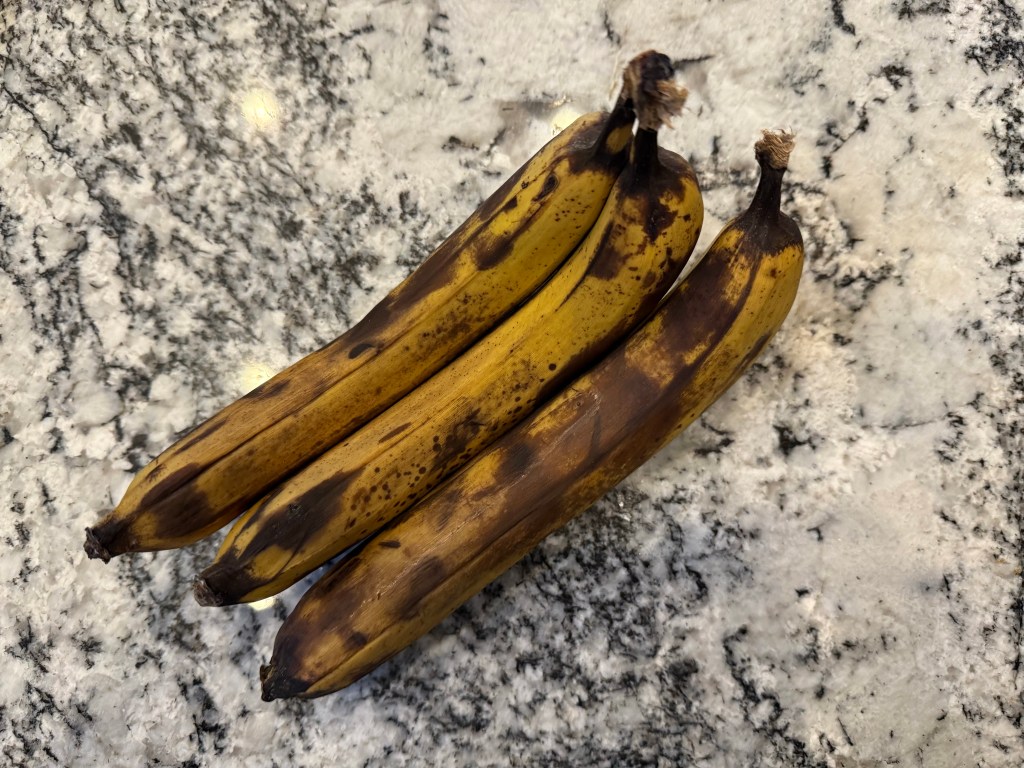
Are you familiar with the phrase, “When life gives you lemons, make lemonade?” I think we should start using its corrolary: When your bananas go sad and bown, make banana bread. Catchy, no? This recipe is from King Arthur’s Whole Grain Baking.
Here are the very ripe bananas in question:
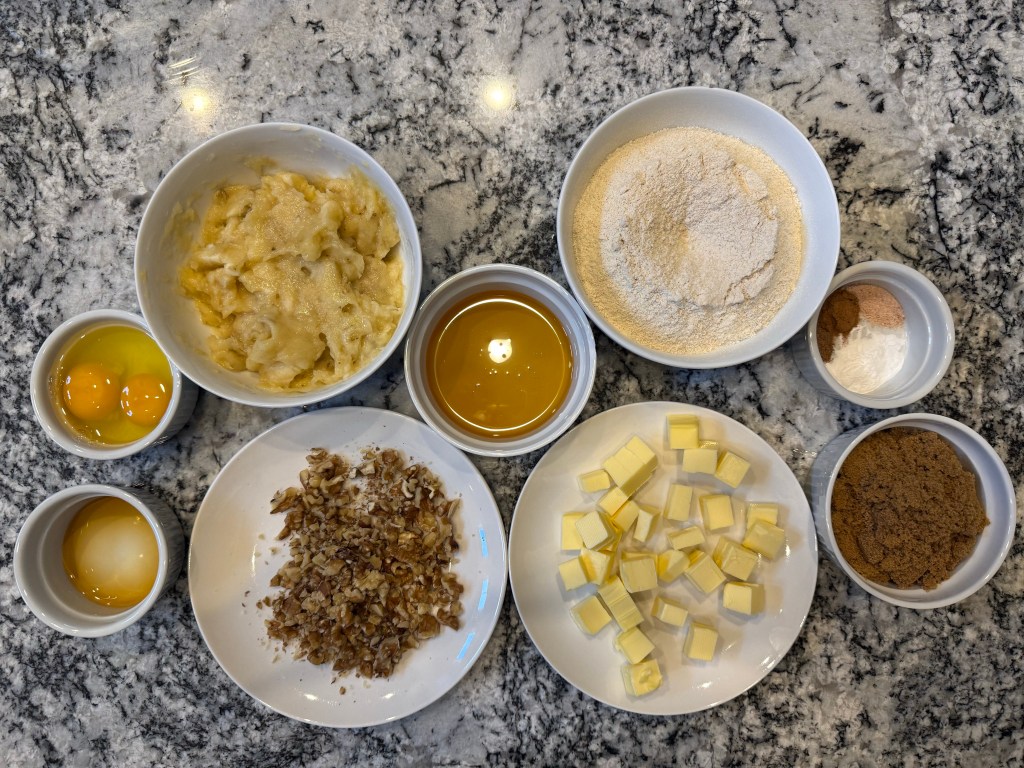
I smashed up the bananas and gathered the mise en place.
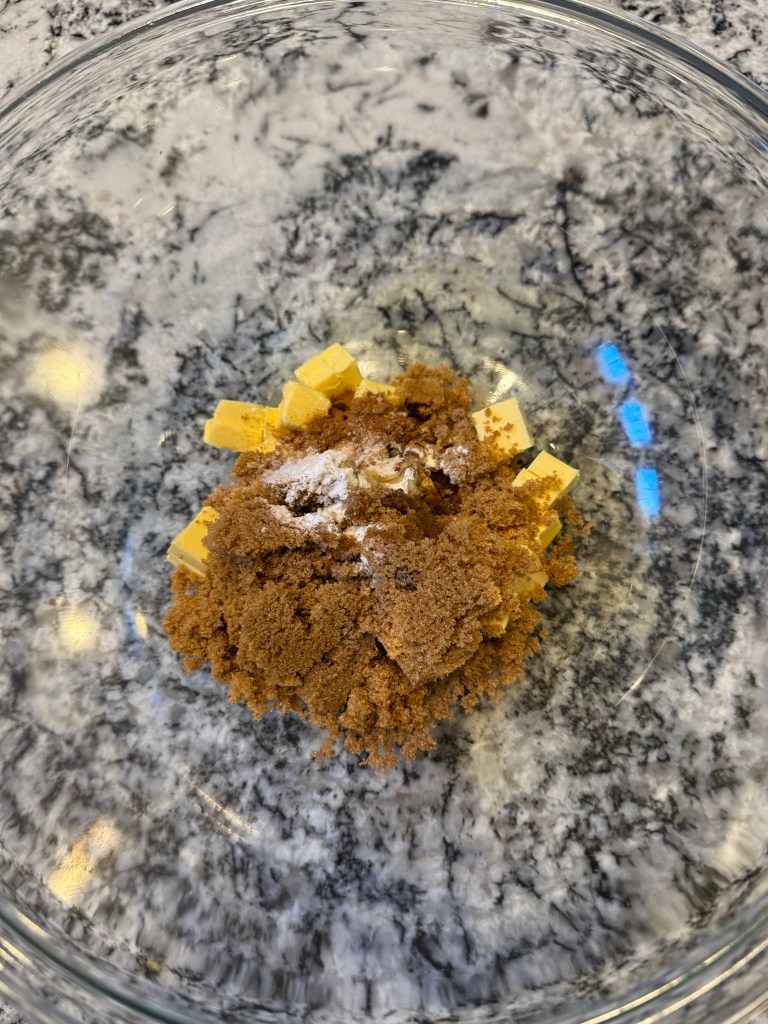
I mixed the butter, sugar, and spices. I initially tried to do this with the handheld mixer in a bowl, but the butter refused to incorporate with the sugars, so I switched to the stand mixer. This worked much better.
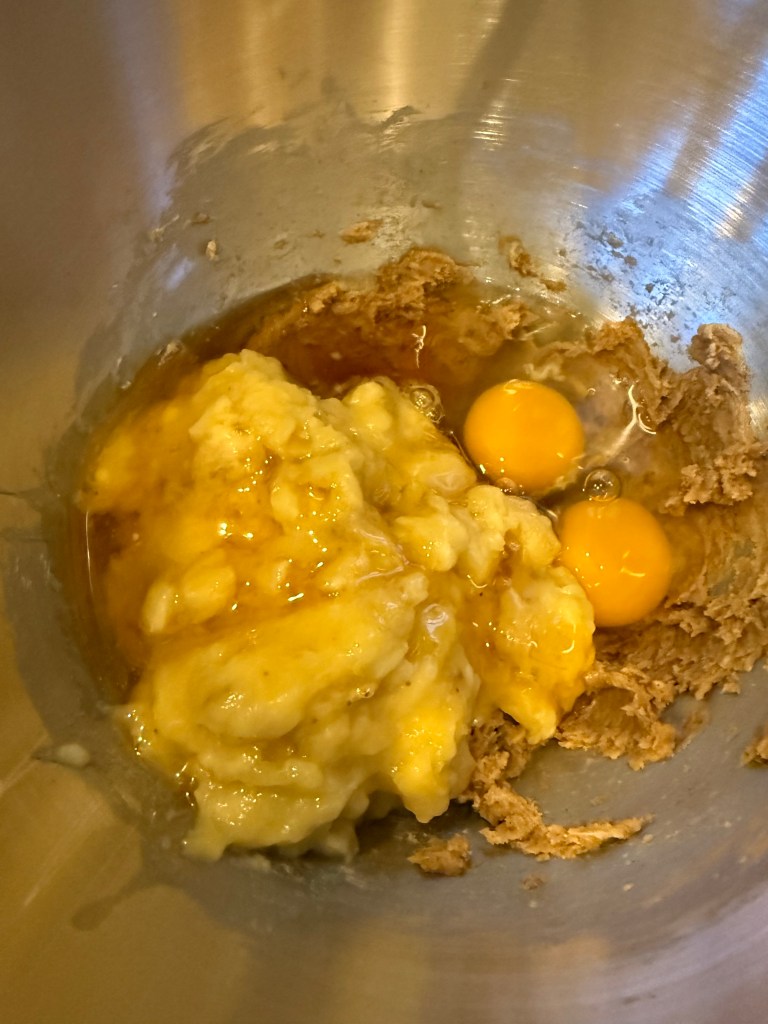
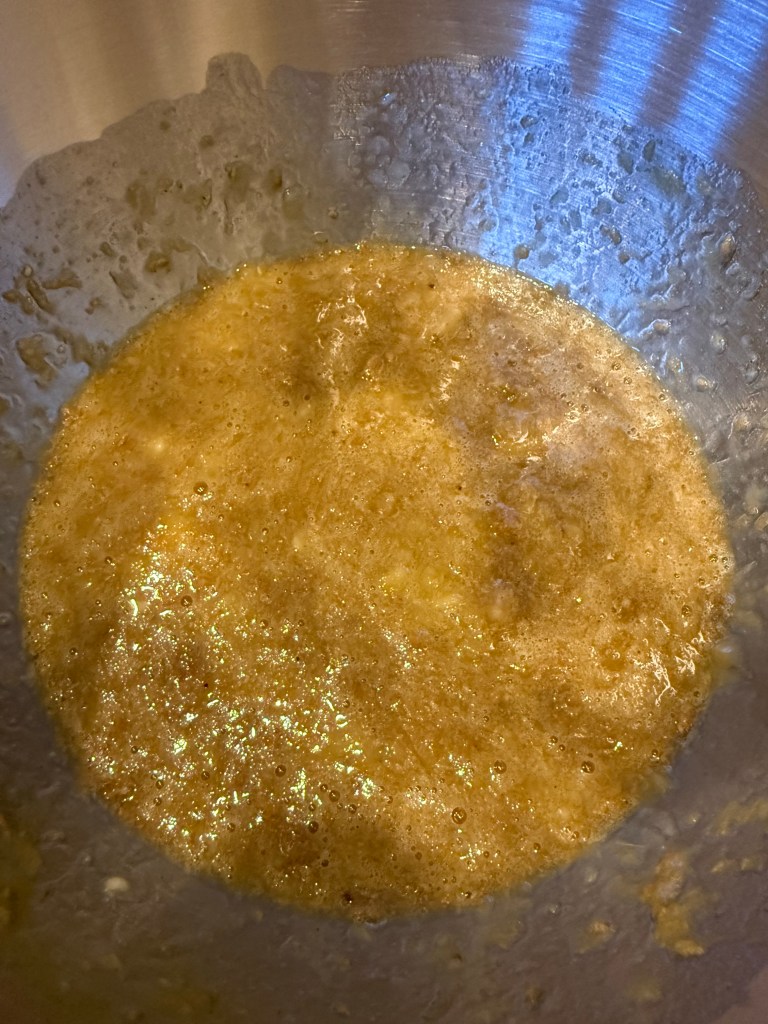
I added the honey, eggs, and banana…
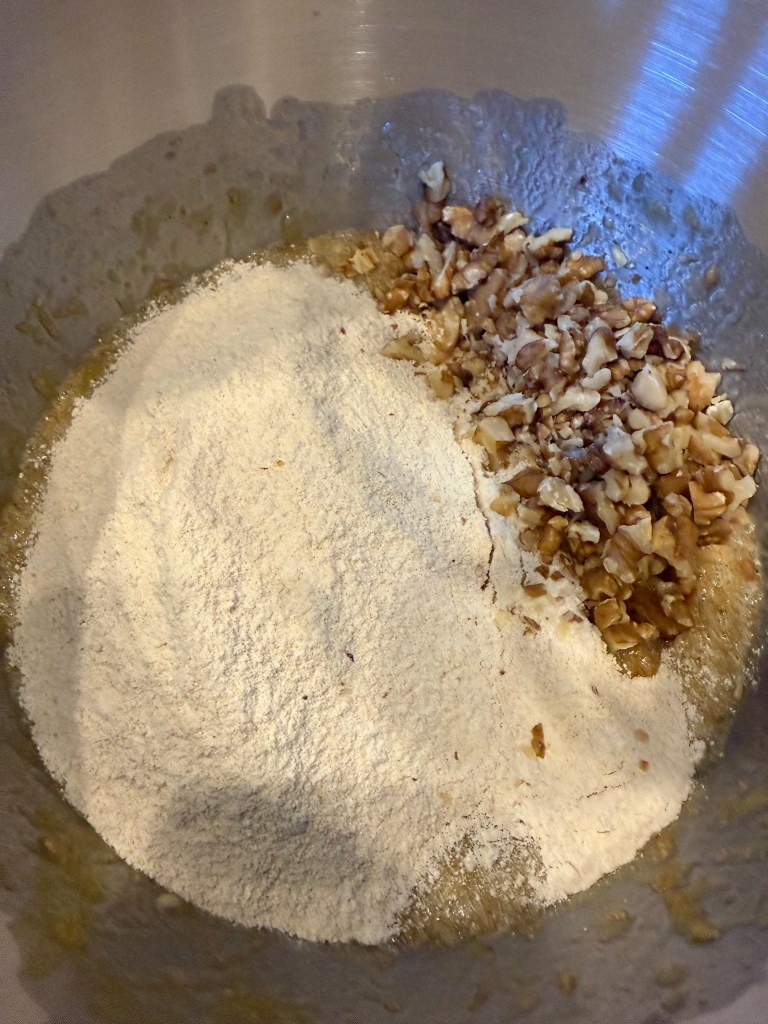
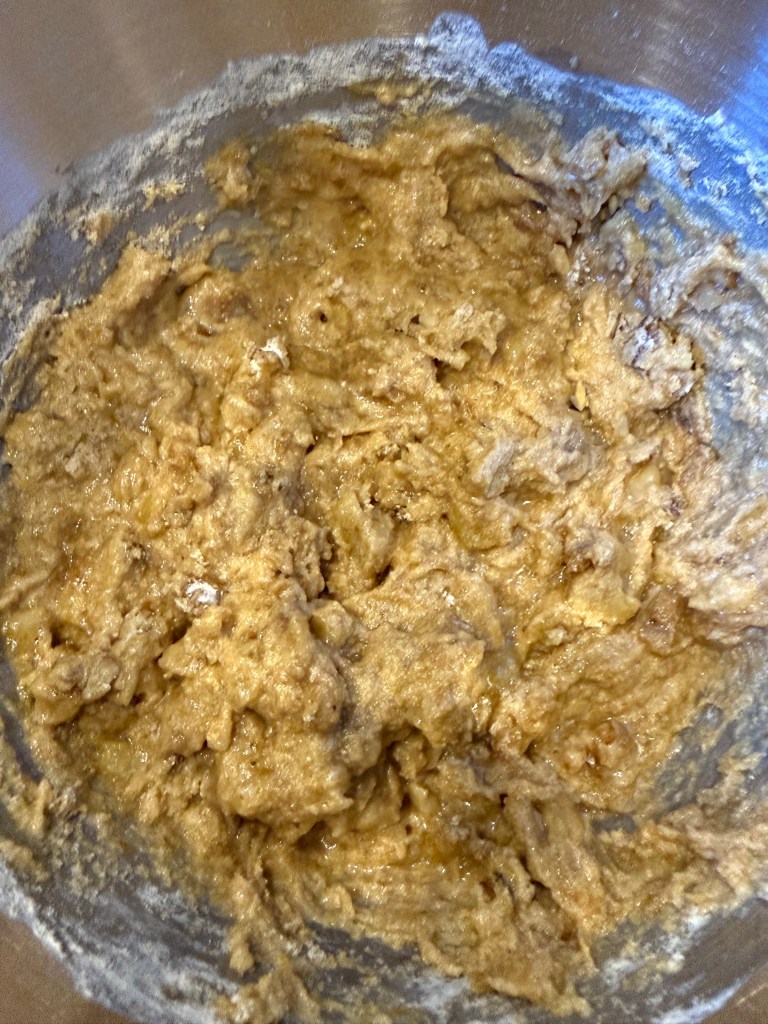
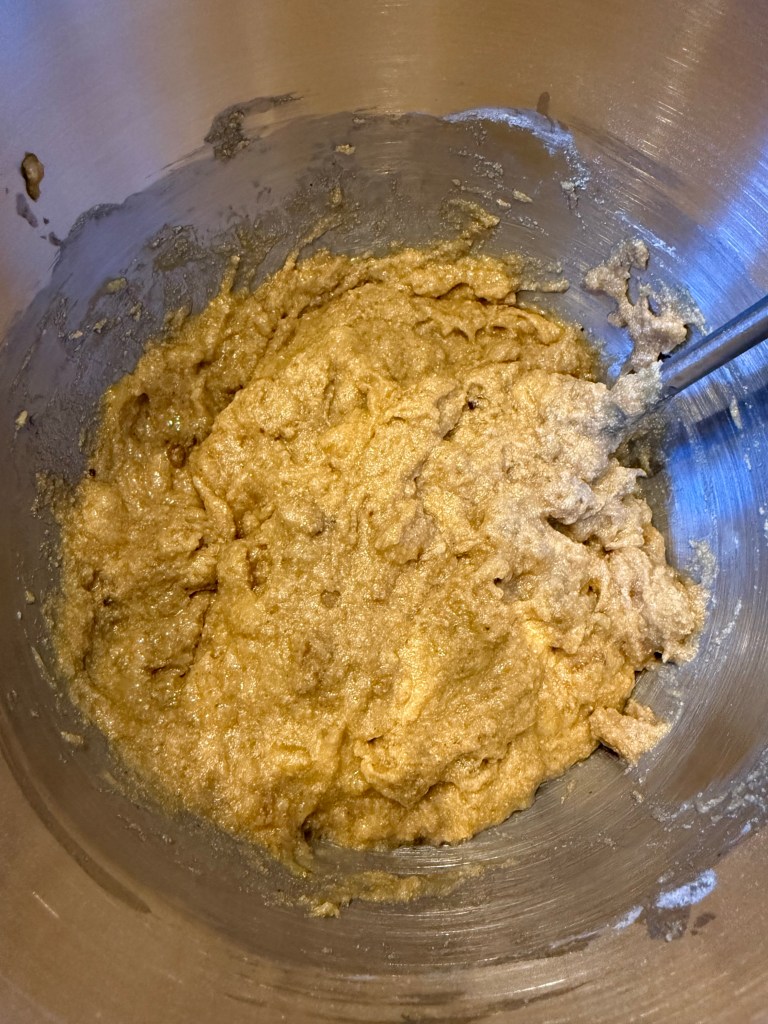
then added the flour and nuts and mixed in the stand mixer until the flour was mostly incorporated. To prevent overmixing and keep the loaf as tender as possible, I finished the mixing by hand.
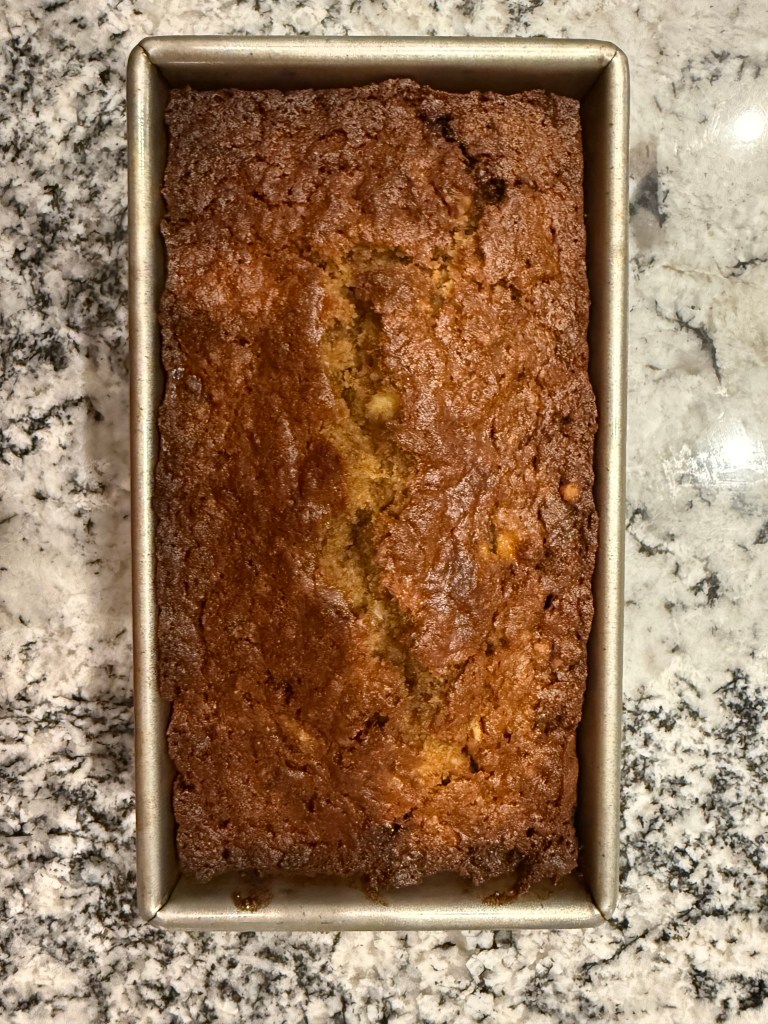
I poured the batter into a greased loaf pan and baked it for 50 minutes.
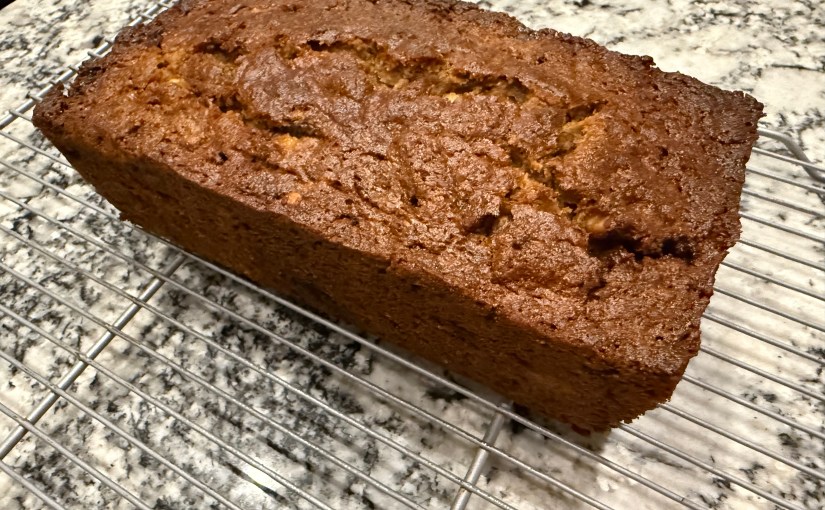
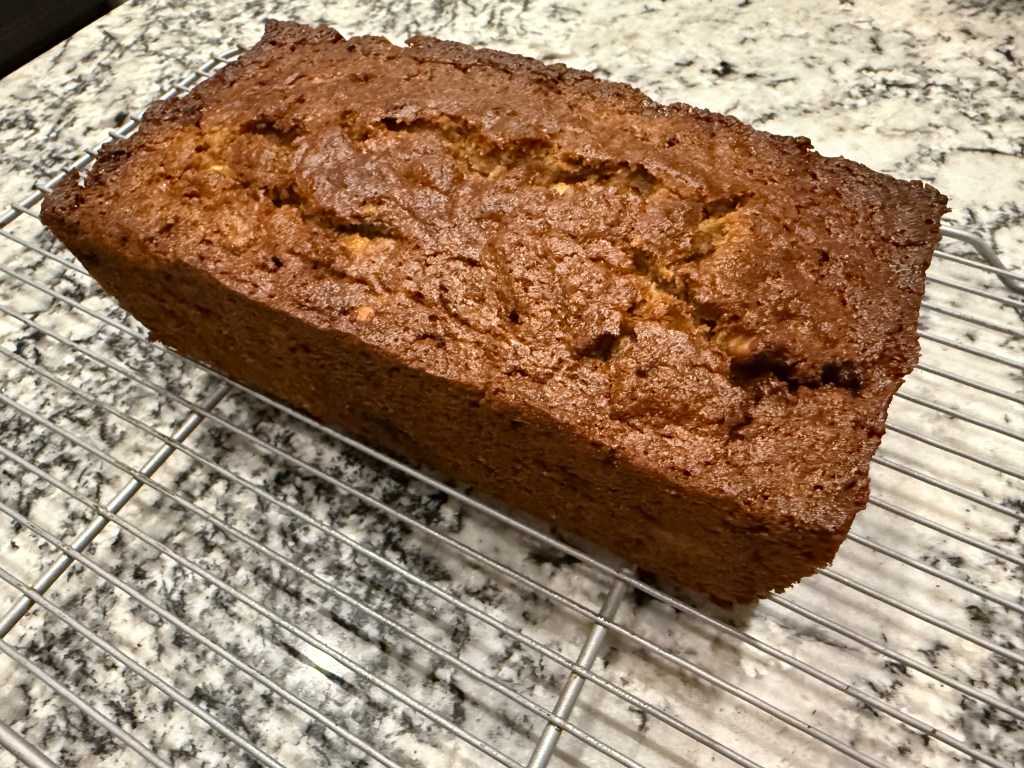
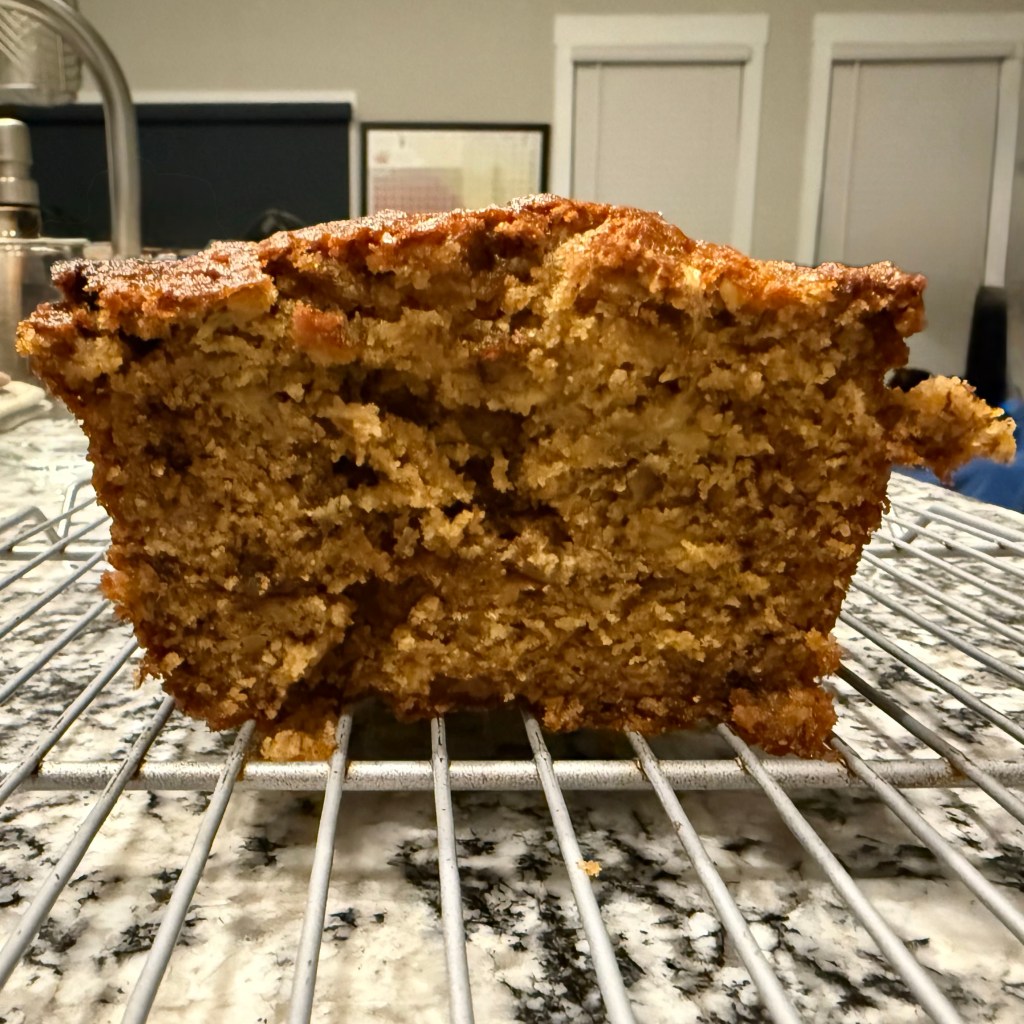
The loaf baked up beautifully and even came out of its pan very nicely.
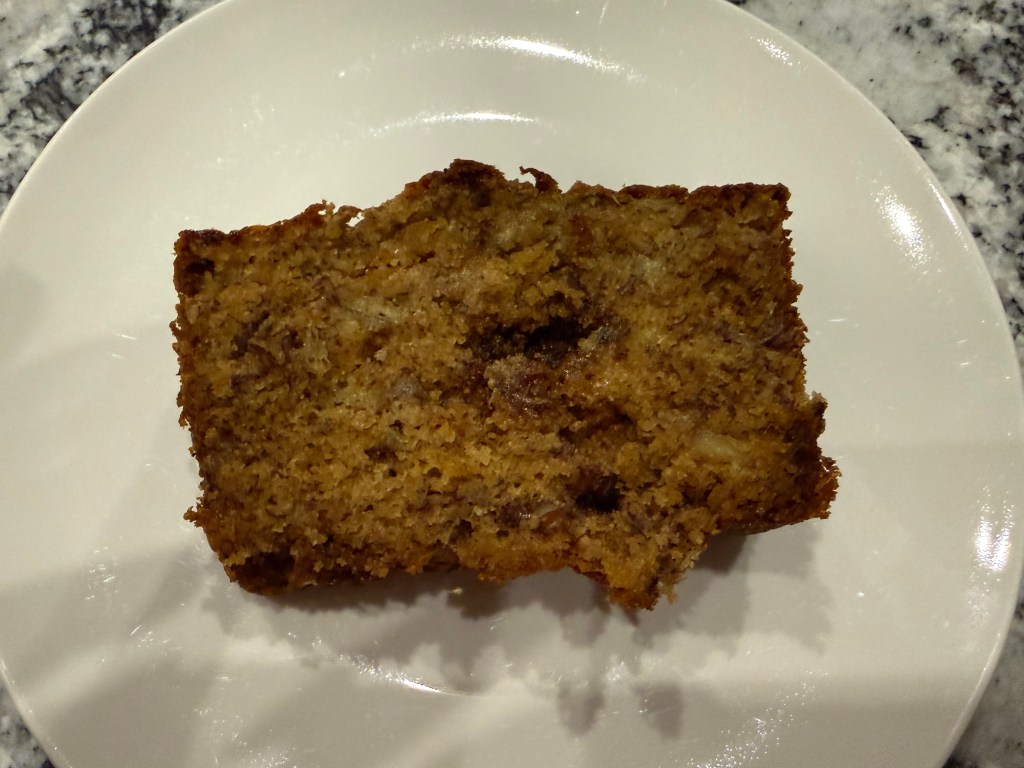
This bread is delicious! It’s dense, but not stodgy (as the British would say). It’s banana-y, but not too much. It’s sweet, but not too sweet. It’s made with whole wheat flour, but you would never guess it from the flavor or texture. This is another winner from the Whole Grain Baking book.
Until the next time: may your yeast always rise and your flour never run out.
Ever since I bought the starter from Alaska I’ve wanted to see how it compares to my own starter, Constance. It took a few months, but I finally set up an experiment to see if there is a difference in rise, flavor, and bread texture between the starters. In the process I made a lot of bread and learned a little about how hard Science is, especially in relation to setting up experiments.
I’ll start off with a brief explanation of my methodology. I keep both starters in similarly-sized glass crocks. I feed them the same amount of flour and water (both ingredients at the same temperature for both doughs), and mix them with separate tools. I do my best to avoid cross-contamination, but I am only human, and I work in a kitchen, not a lab, so cross-contamination is entirely possible. Both starters have been kept in my kitchen and baked with periodically for several months (at least), and both starters rise consistently and are very healthy. When working with the doughs I always worked with Constance first. This helped keep the timings between the doughs more or less consistent. Knowing the possibility of cross-contamination, working with Constance first also helps me limit the possibility of contaminating her with the Alaska starter. Finally, a caveat: I am very fond of Constance, and I should acknowledge that seeing her come out better in every way than the Alaska starter would make me very happy.
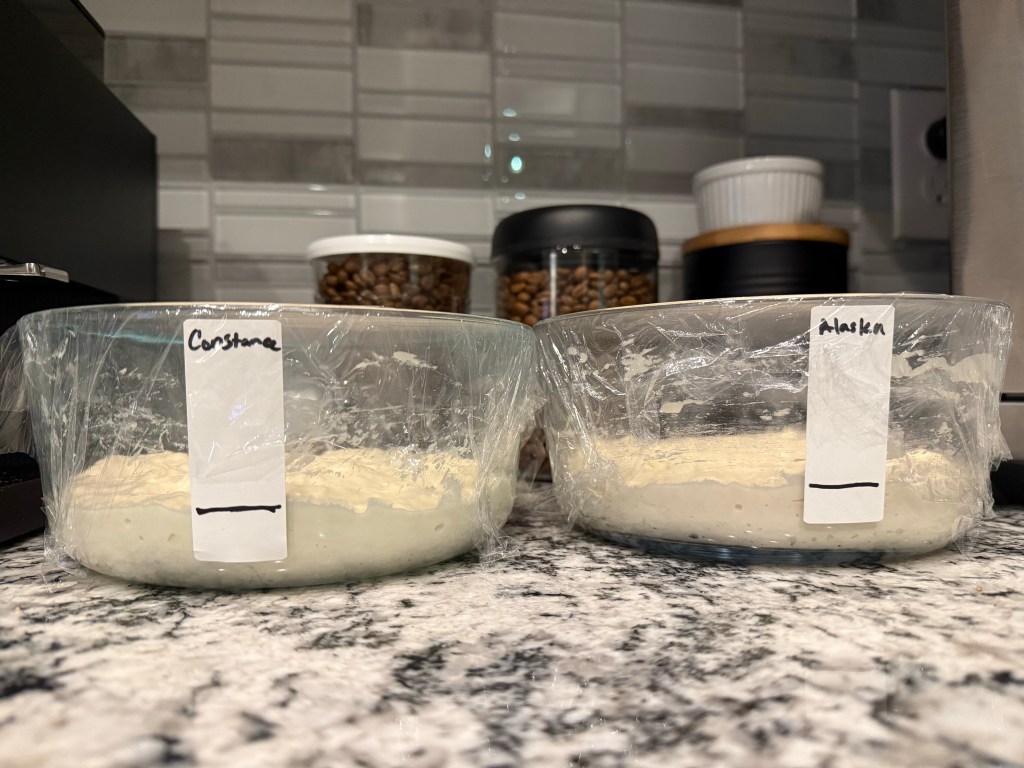
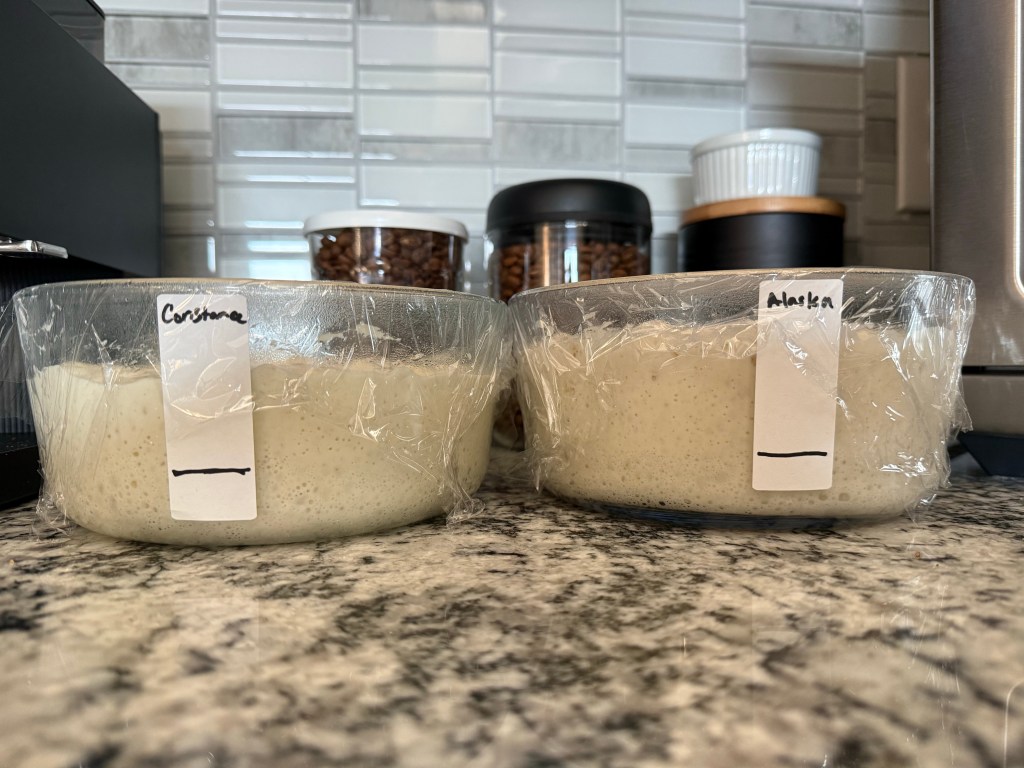
I mixed both levains the night before baking, and by the next morning it was already apparent that the Alaska starter rose more than Constance.
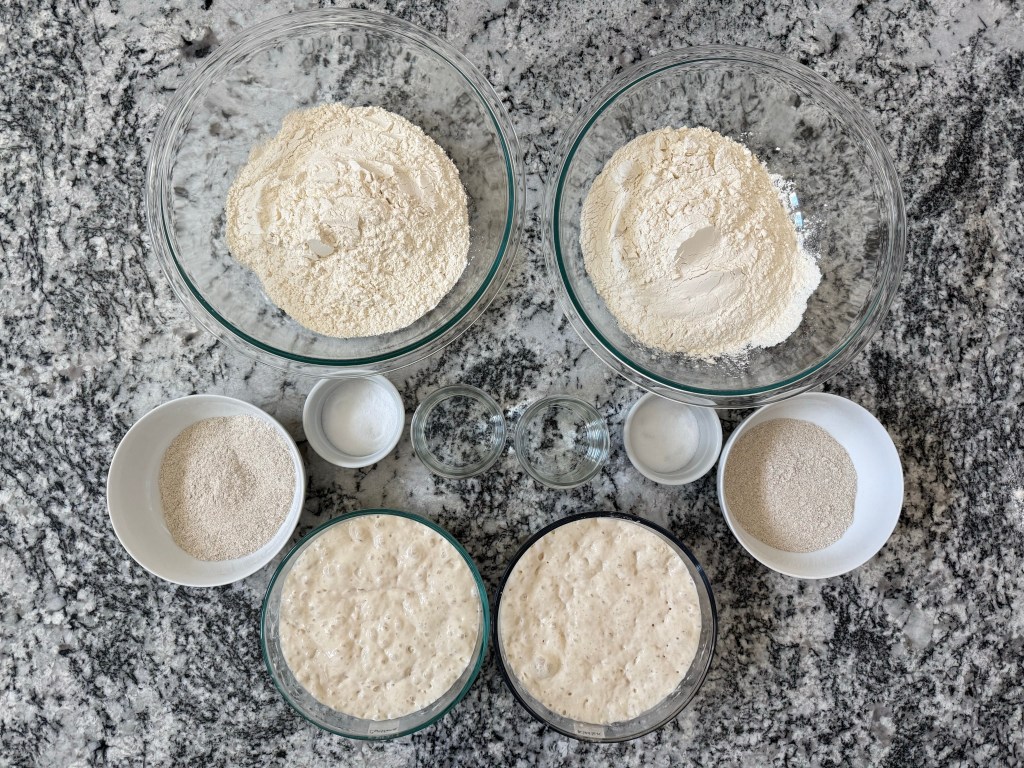
I gathered the mise en place for both doughs:
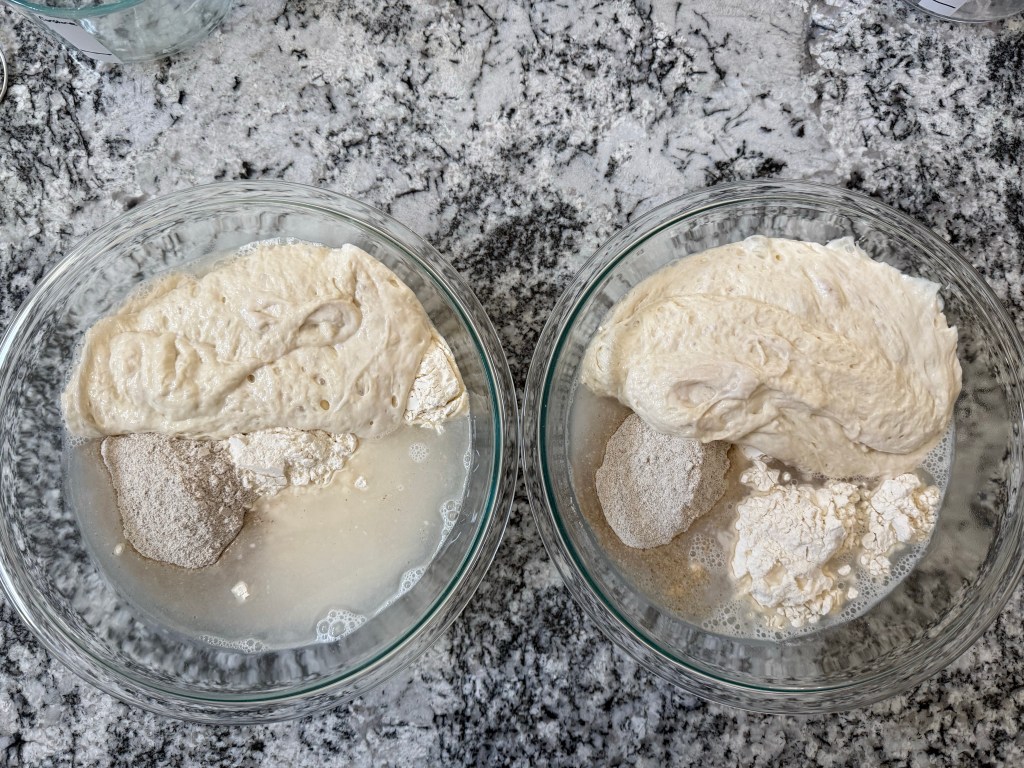
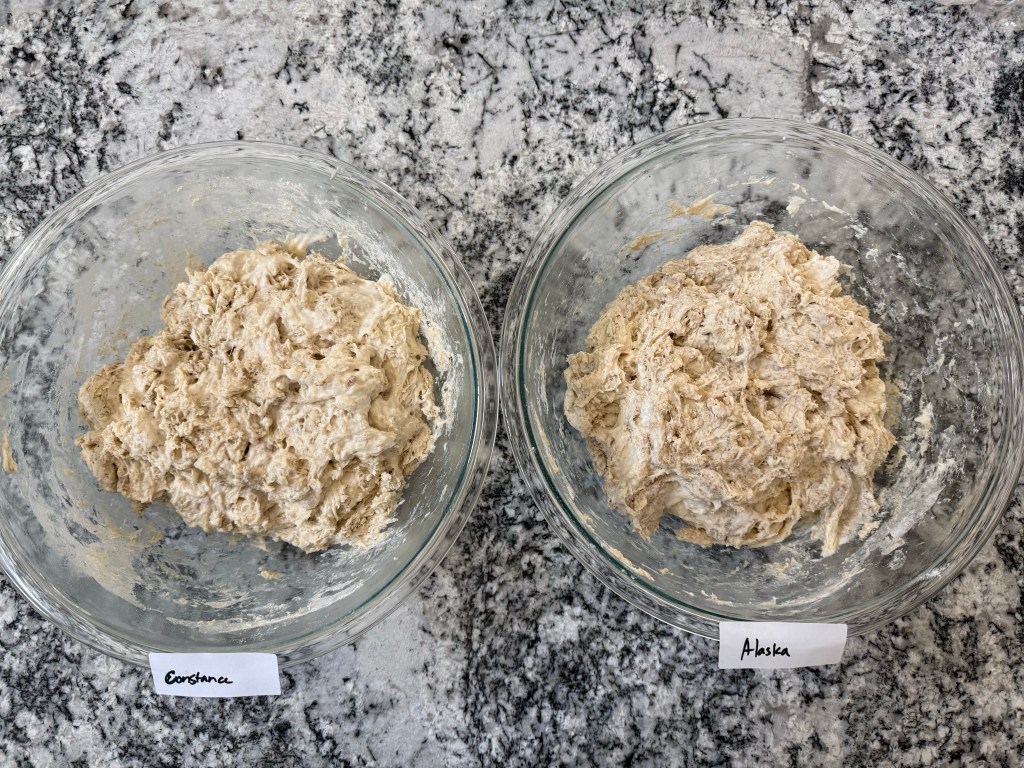
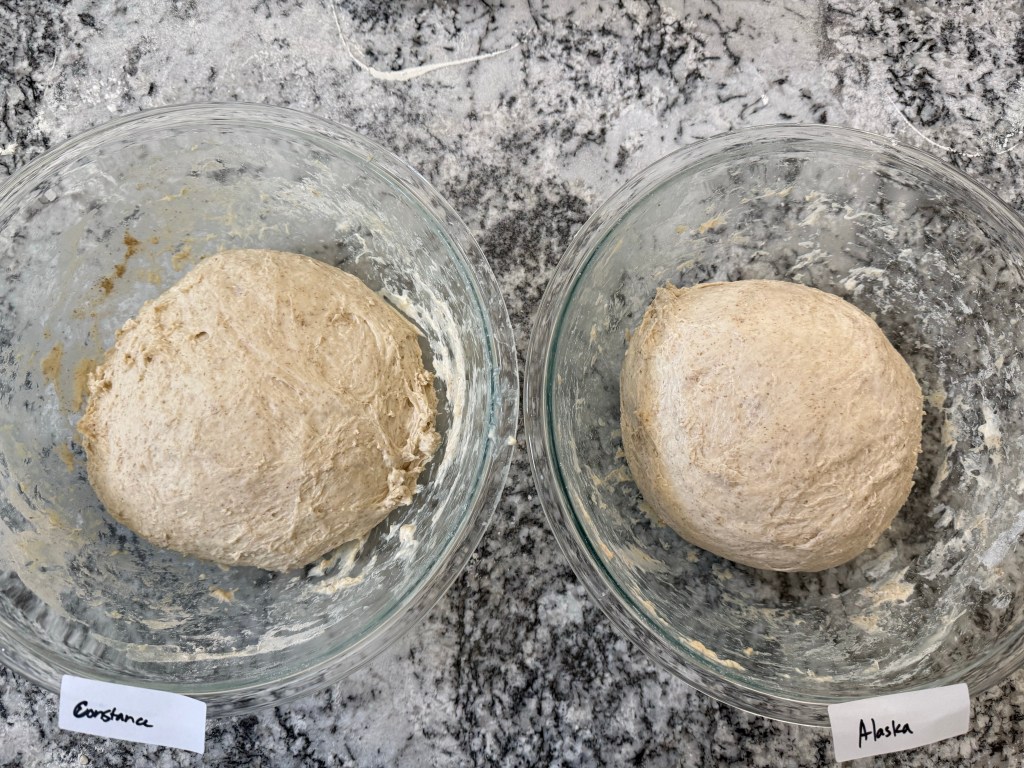
I added all the ingredients except salt to both bowls and mixed until shaggy, then kneaded each using a modified slap-and-fold technique.
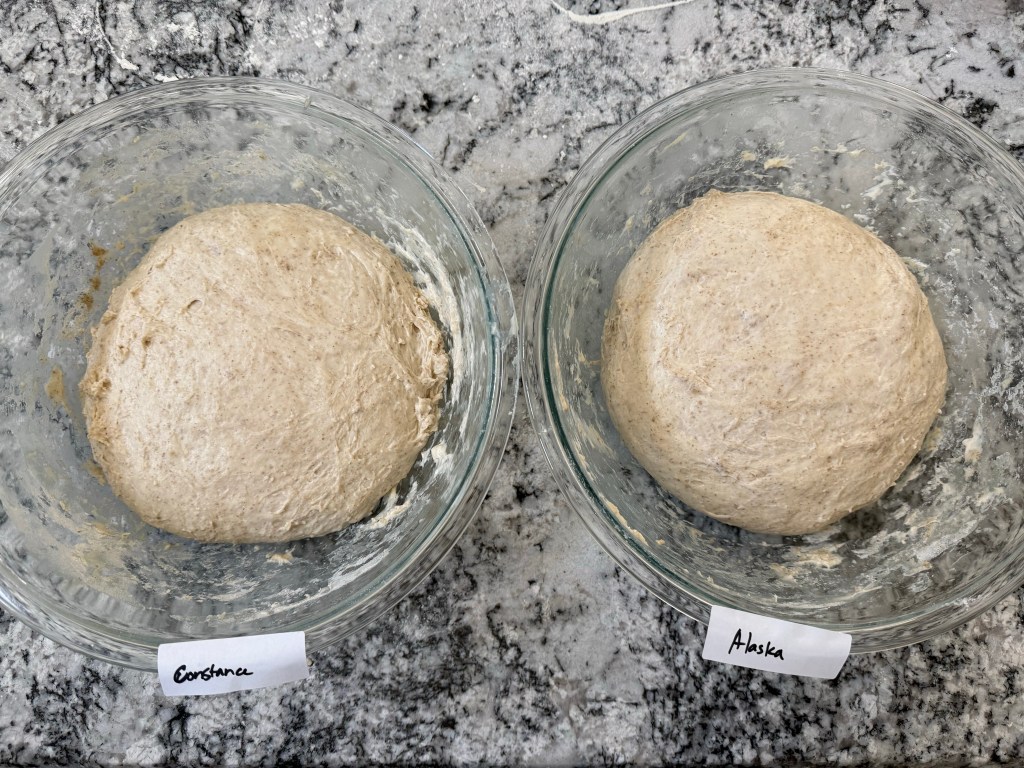
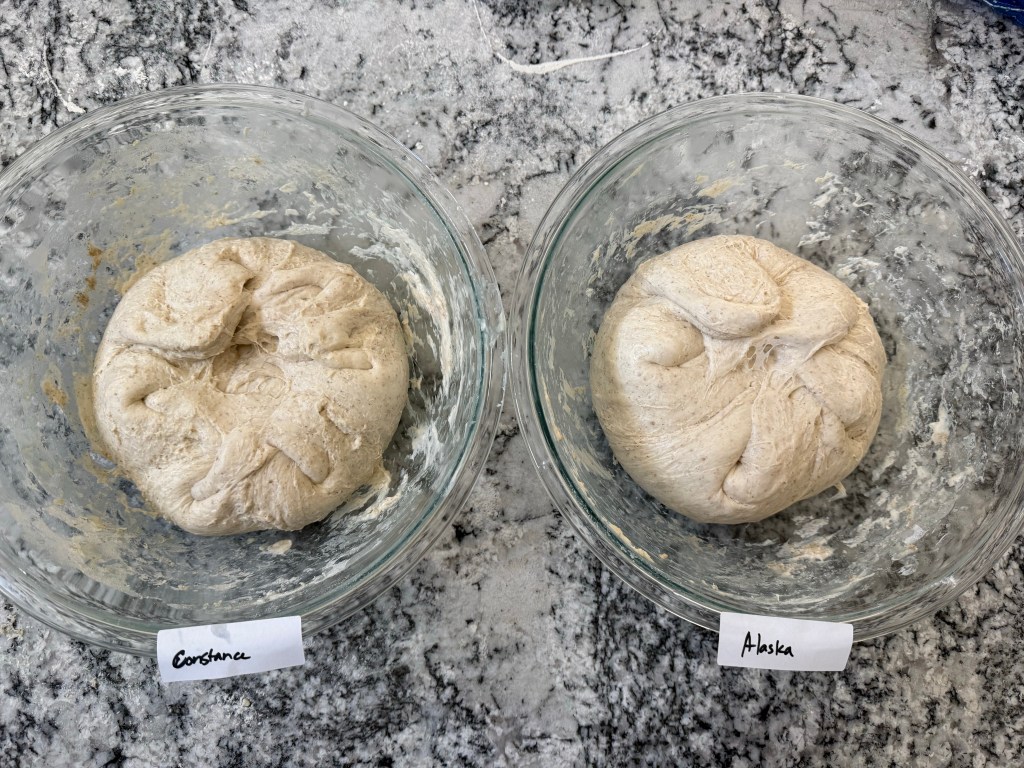
The doughs rose for 45 minutes in a warm environment, then I performed bowl-folds, going twice around each bowl.
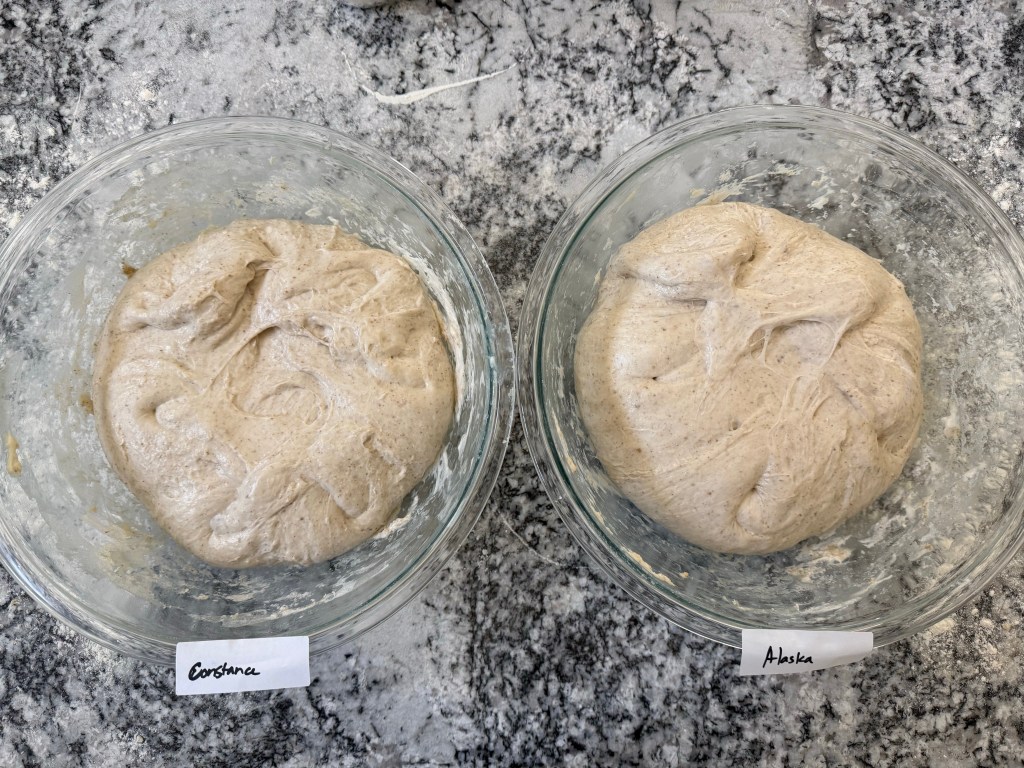
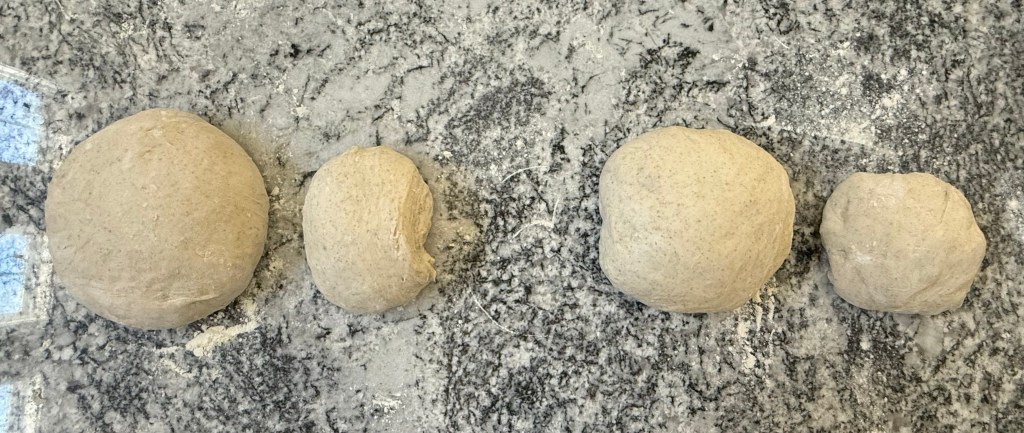
The dough rose again for another hour and 15 minutes (2 hours bulk ferment in total). I divided and preshaped both doughs.
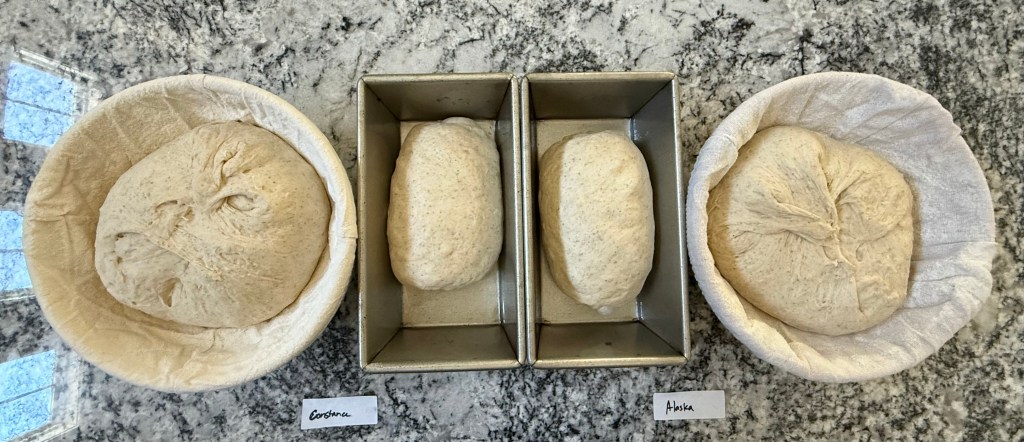
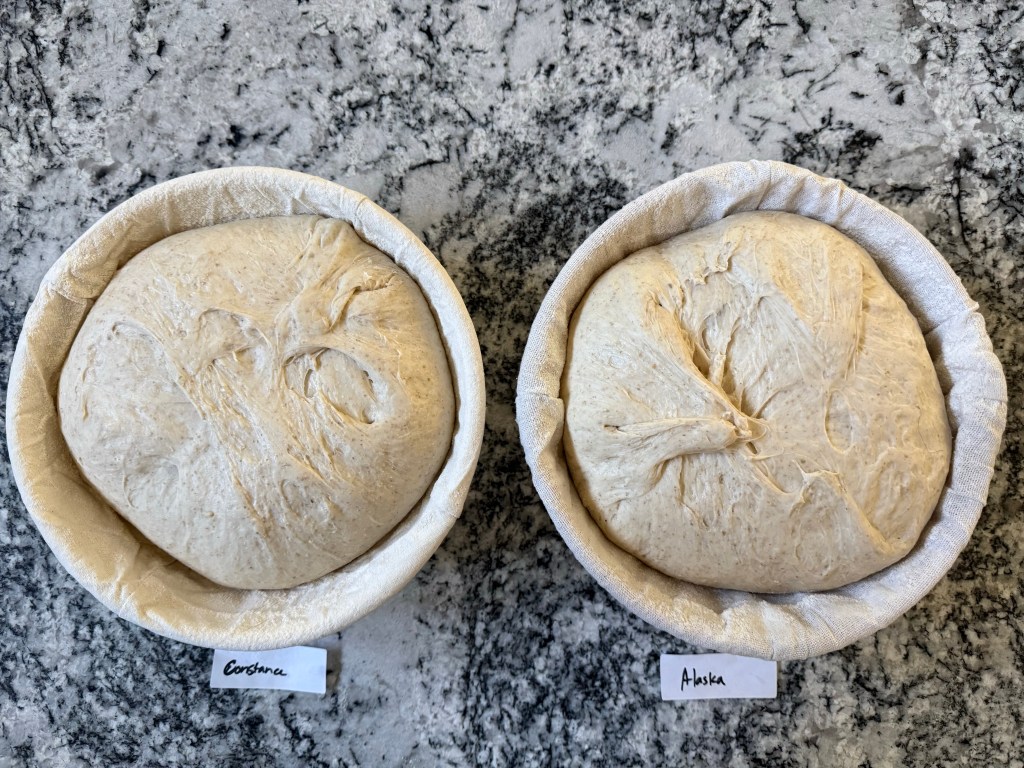
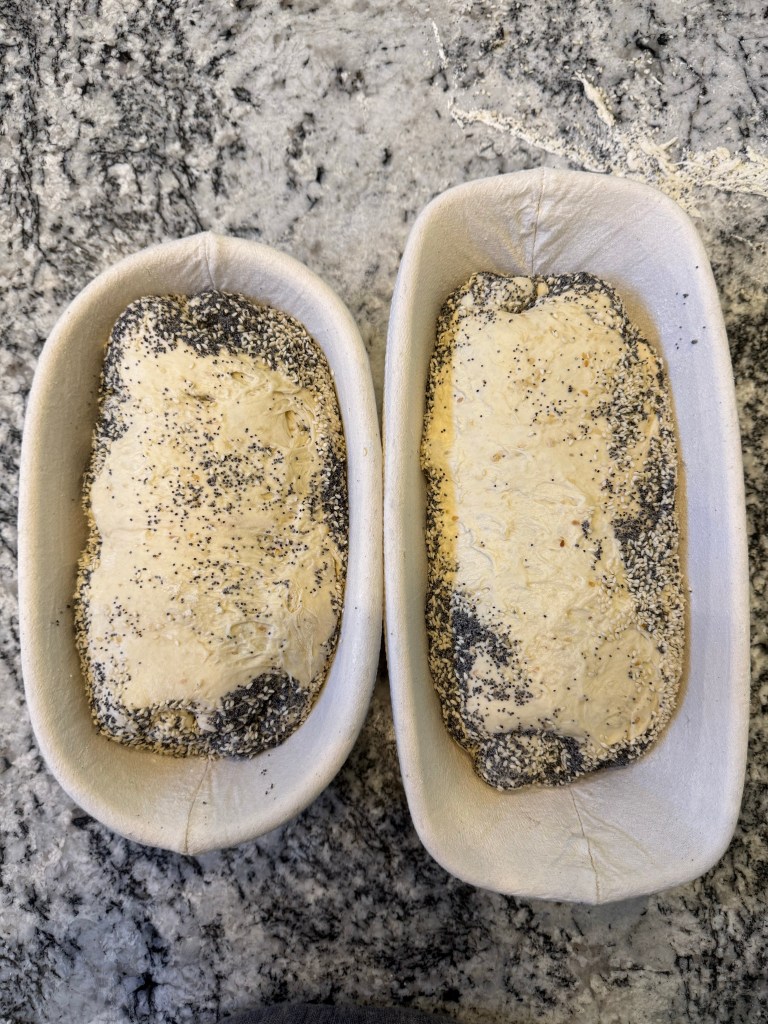
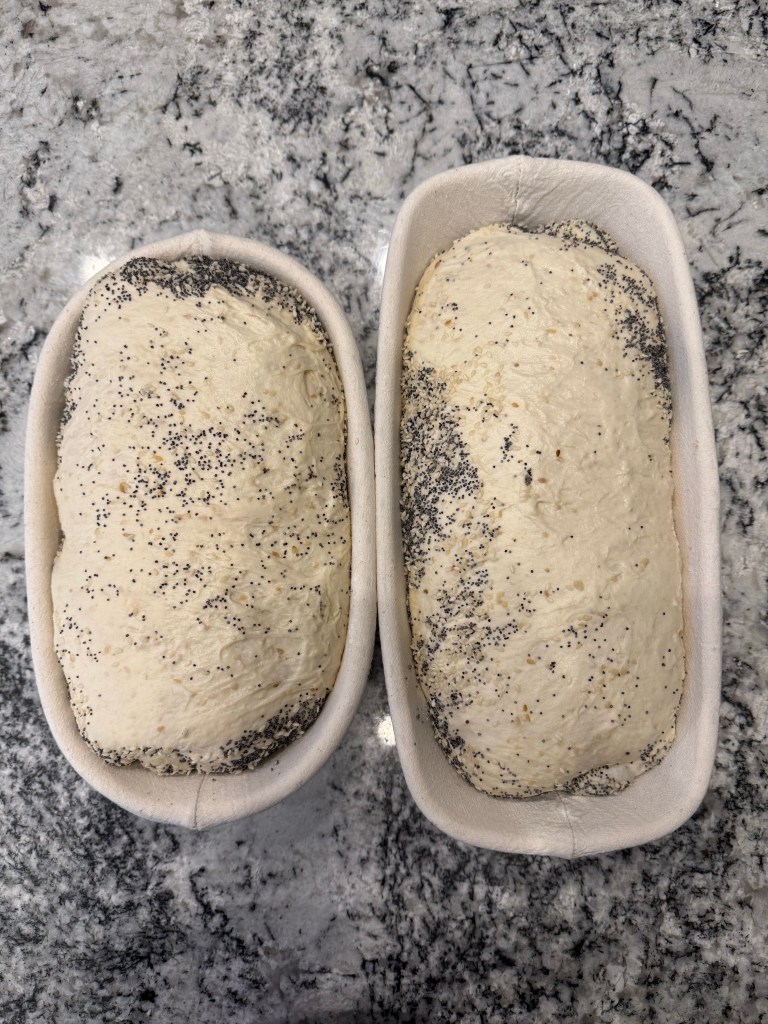
The doughs rested on the cool counter for 20 minutes, then I shaped them. Each dough was divided into a larger and smaller loaf. The smaller loaves completed their final rise directly in (identical) loaf tins. The larger loaves rose in floured bannetons.
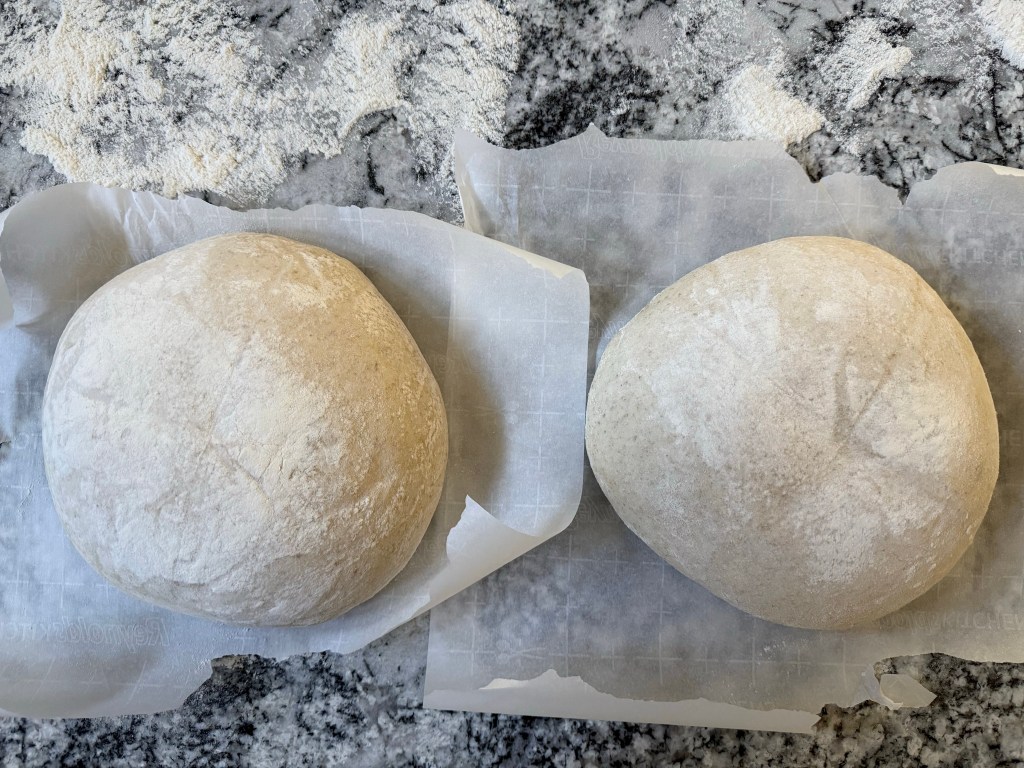
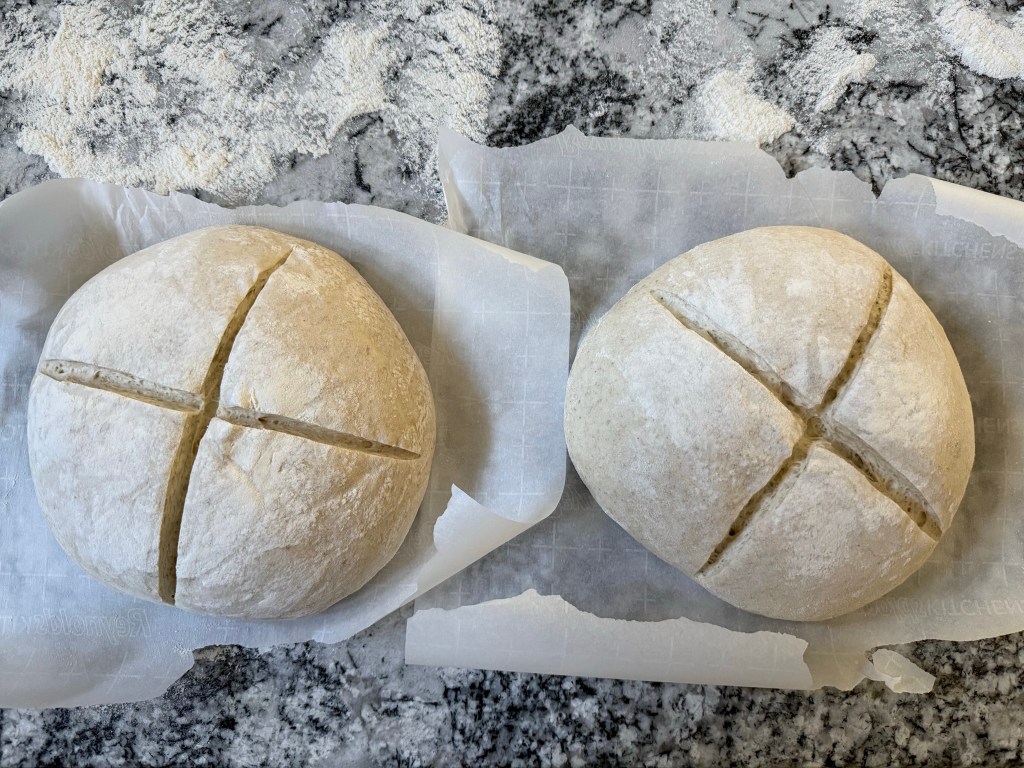
The doughs proofed for 2 hours before I prepped and scored the larger loaves. My oven is not big enough to accommodate all 4 loaves at once, so I am baking these in 2 batches.
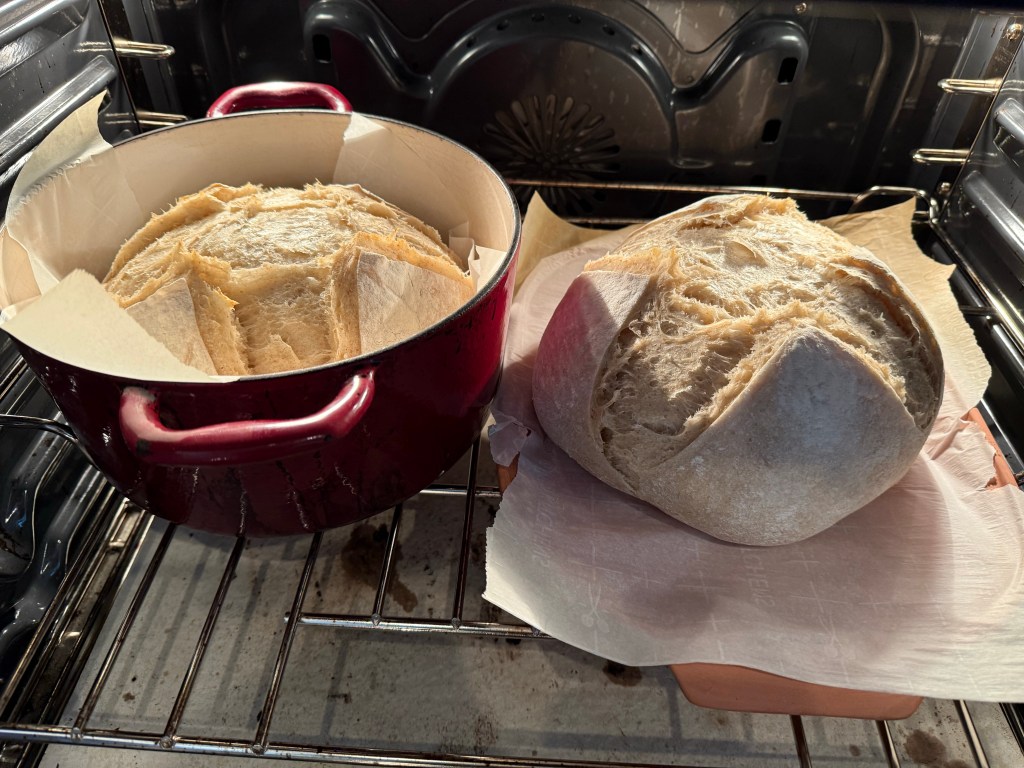
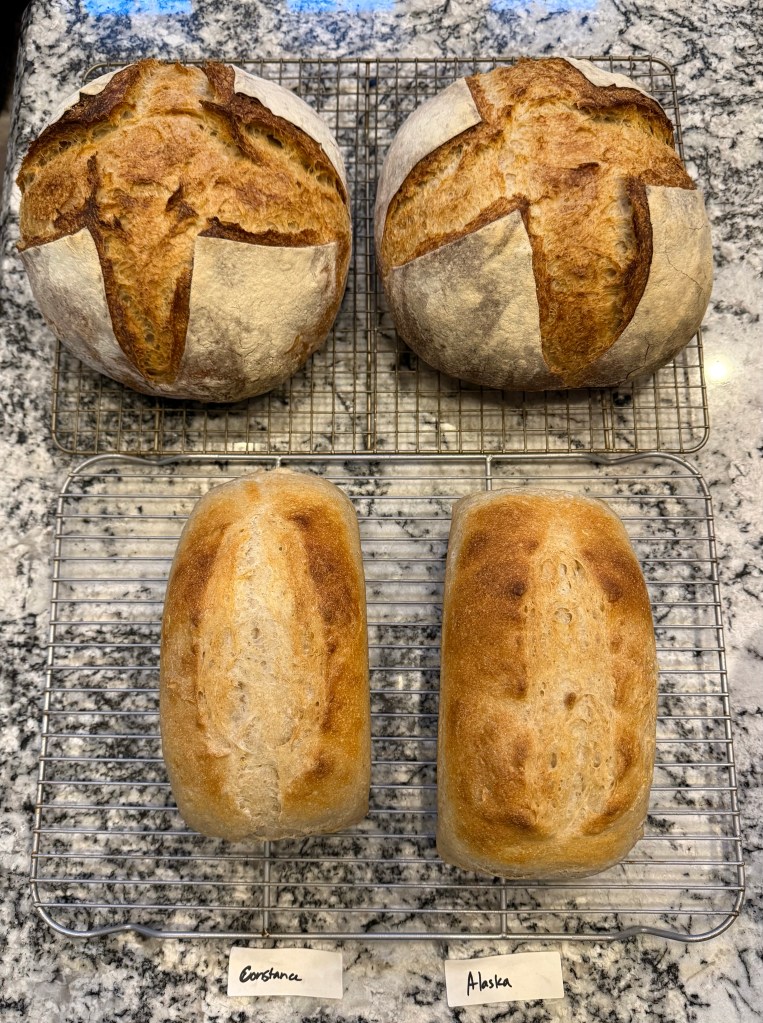
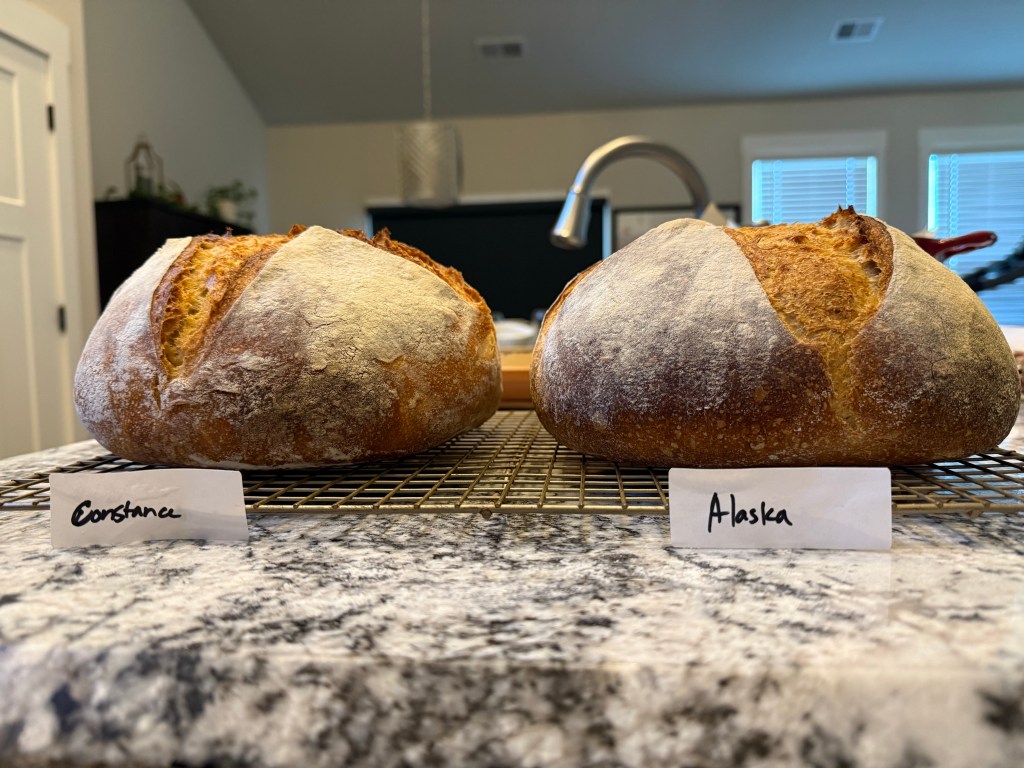
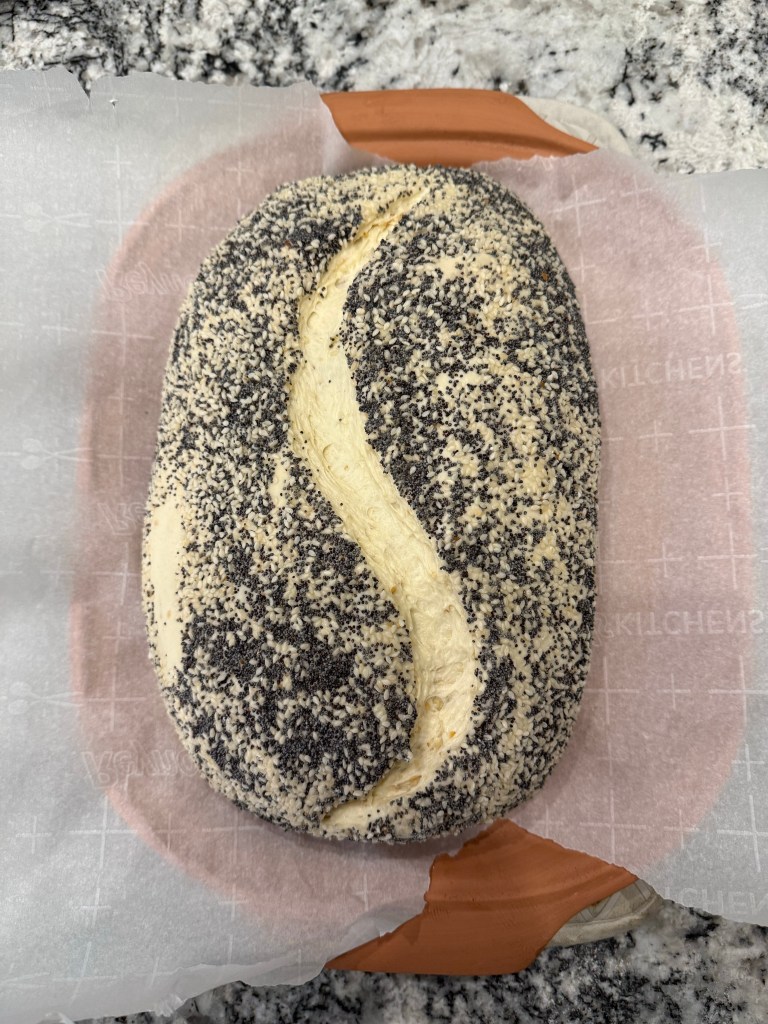
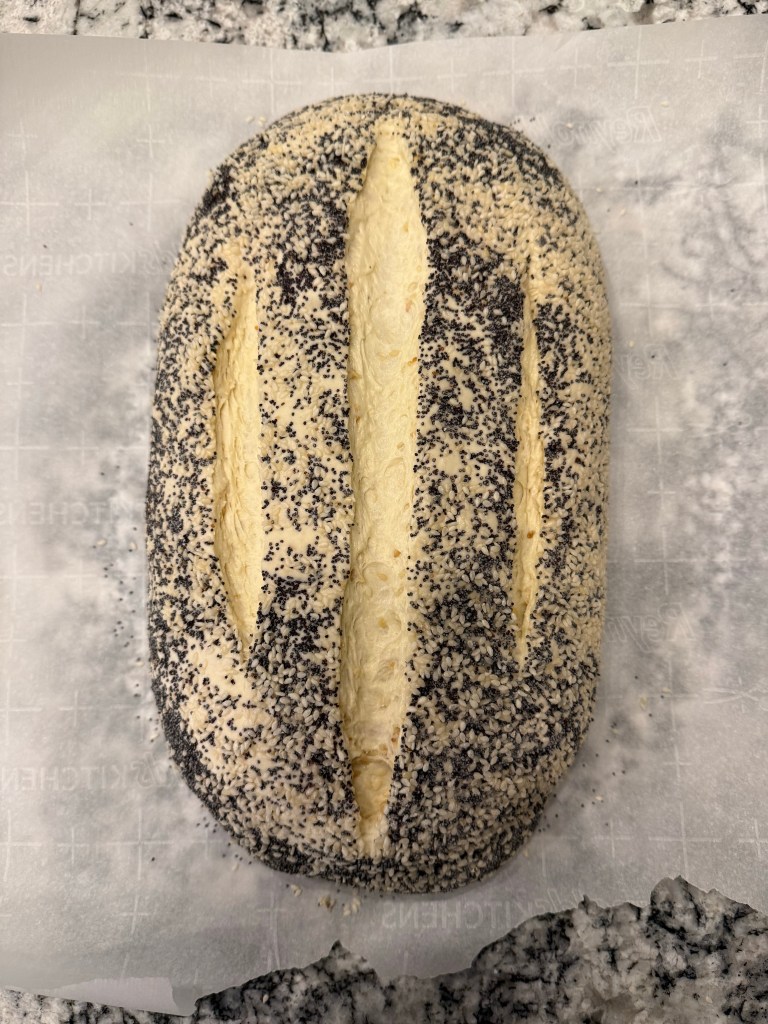
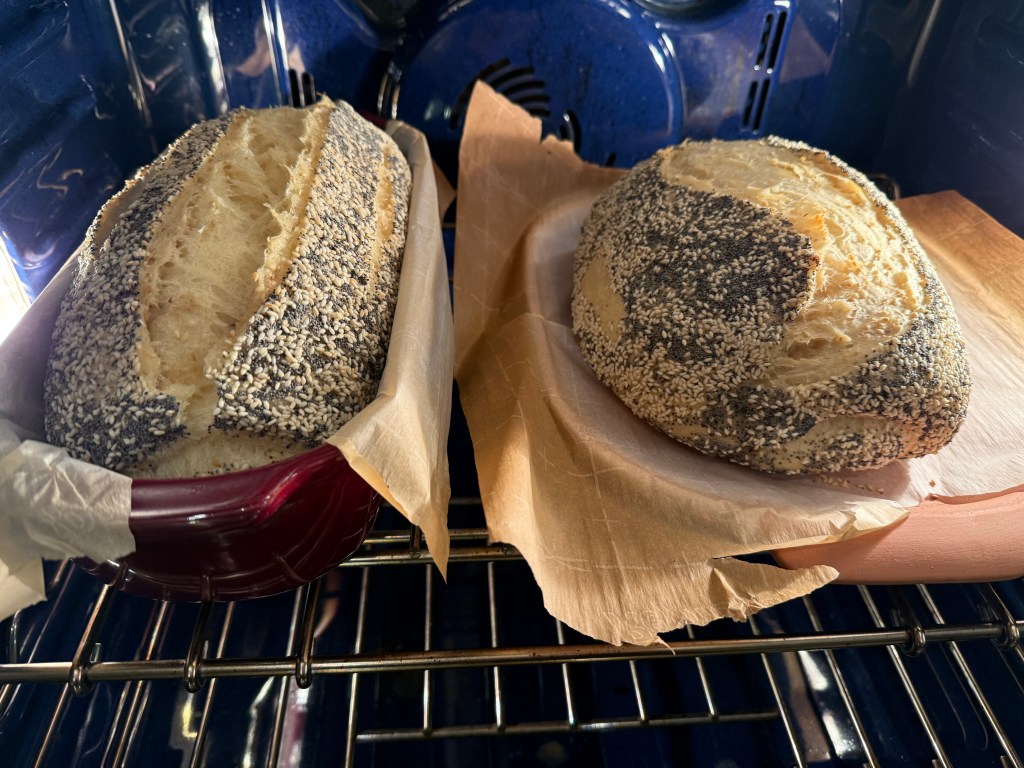
I baked larger loaves, and this is the biggest hole in my experiment. While I have identical bread tins for the smaller loaves, for the larger loaves I have a Dutch Oven and a Clay Baker. I have a fondness for Constance, so I put her in the Dutch Oven, which I suspected was the better baking vessel. Alaska’s loaf went in the clay baker. Both loaves had great oven spring, but Constance did rise higher than Alaska in the oven.
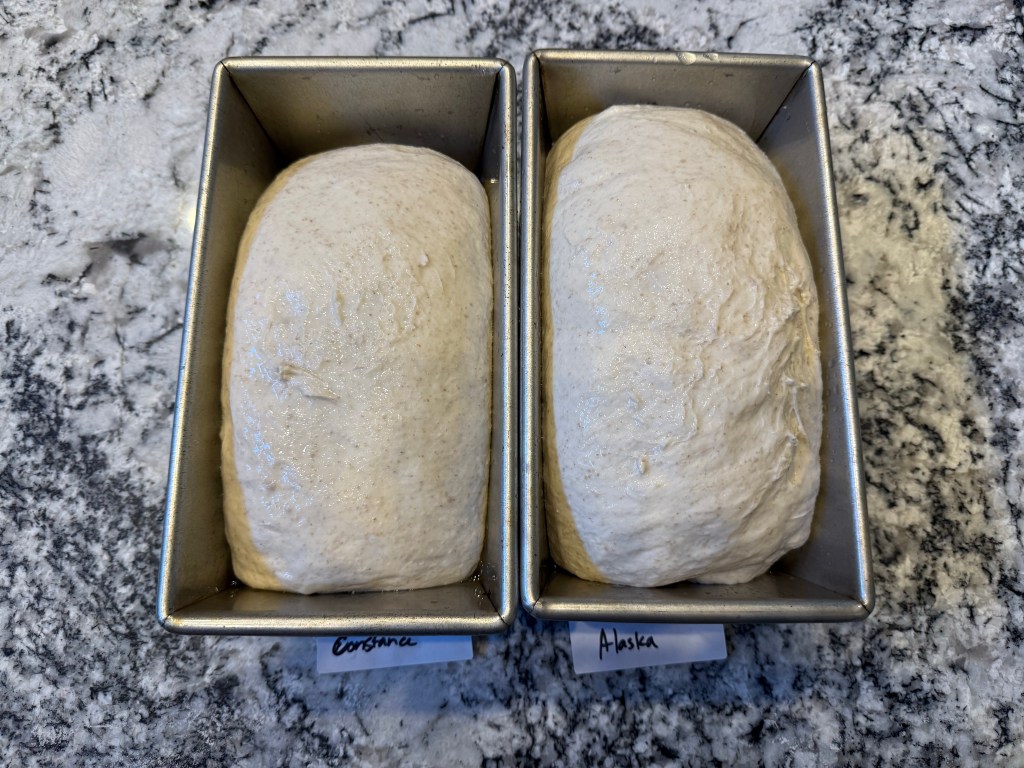
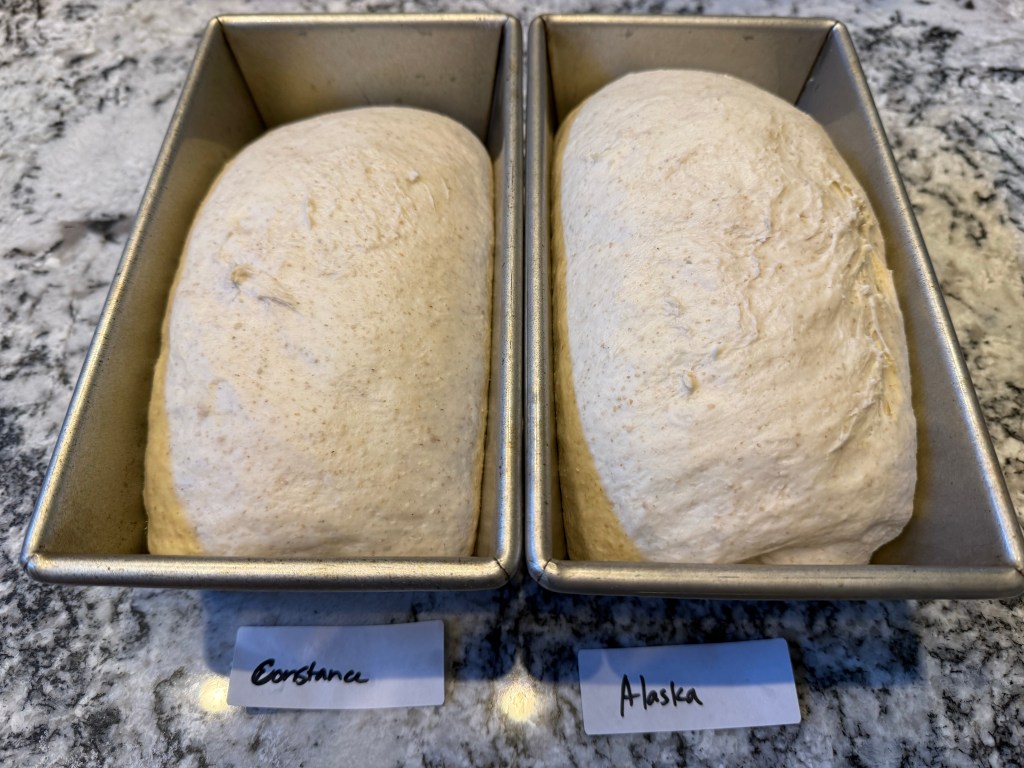
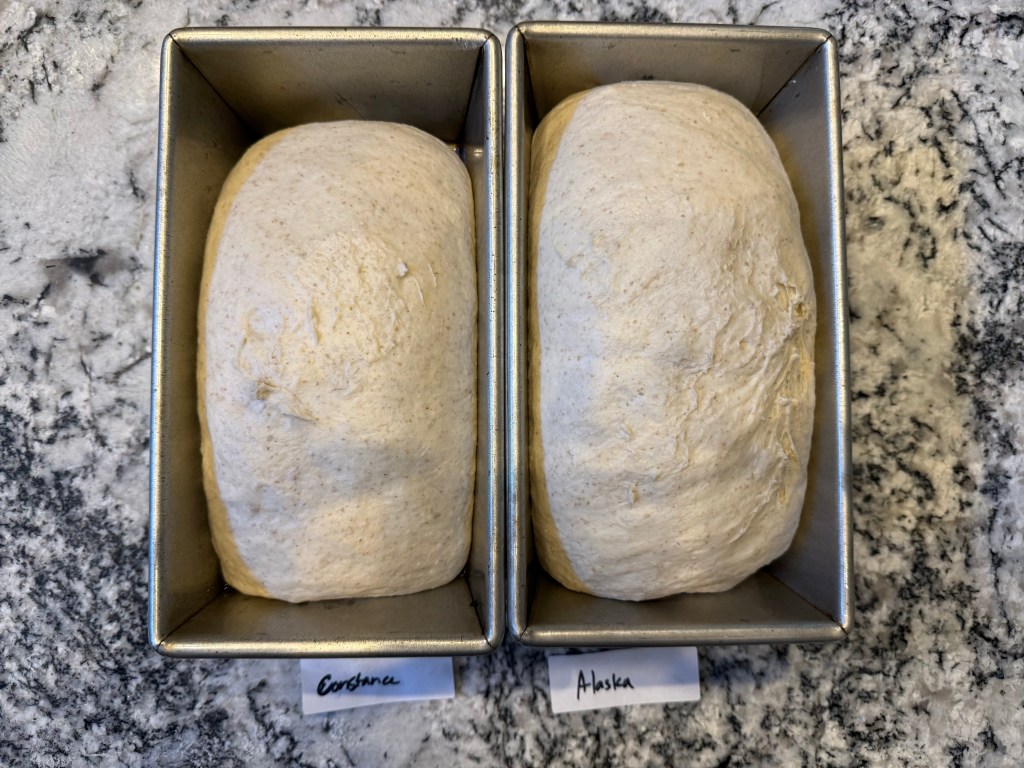
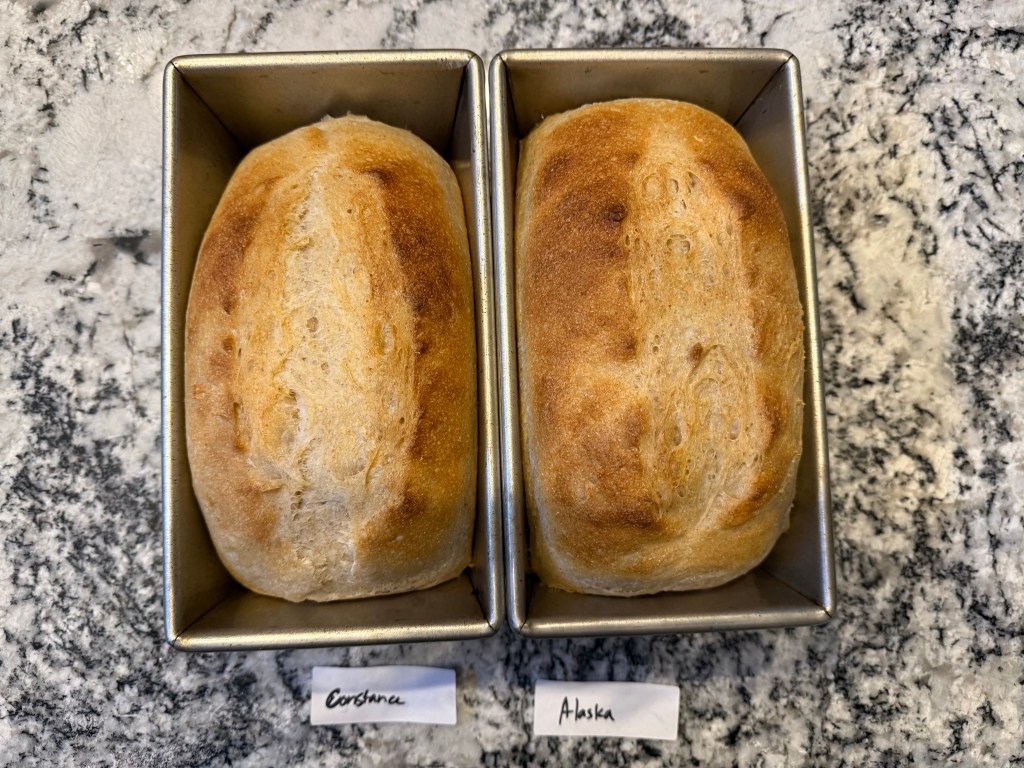
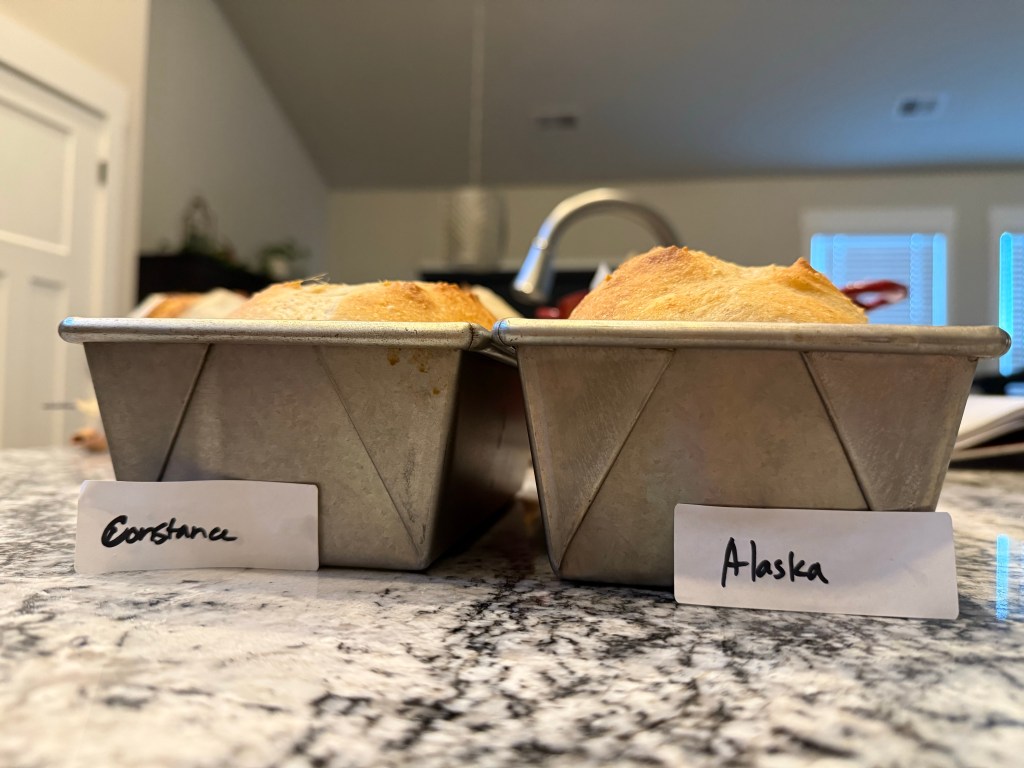
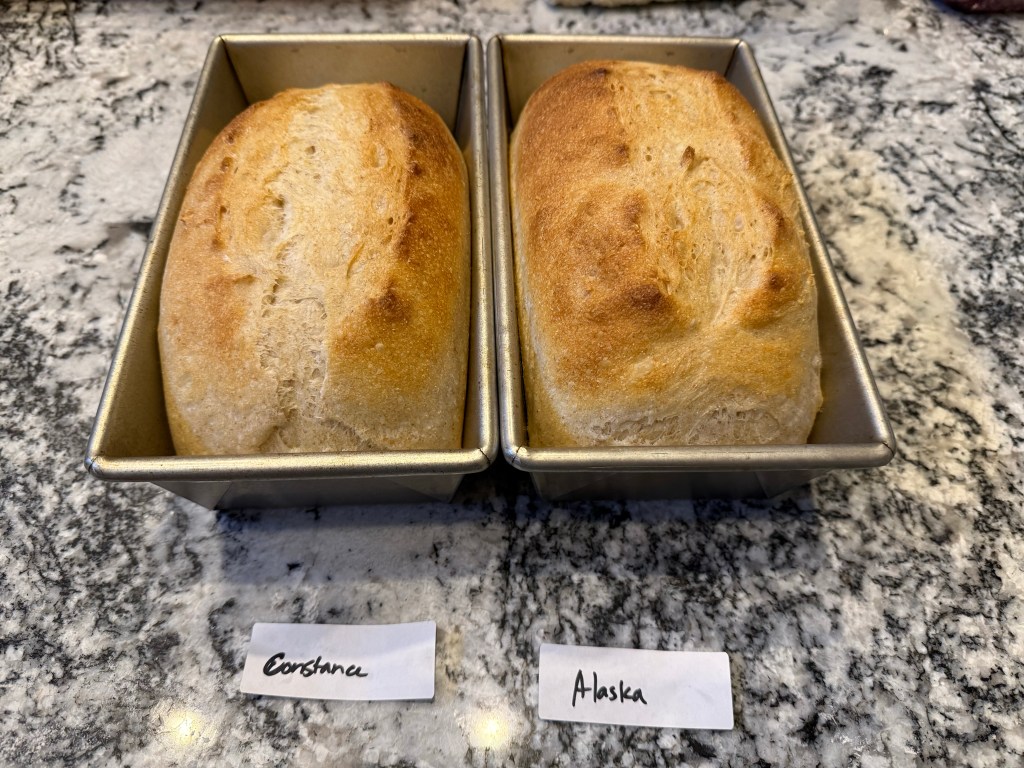
Once the large loaves were out of the oven I baked the pan loaves. This was the truly fair experiment. Throughout the final rise Alaska rose higher than Constance. I brushed both loaves with water and scored them down the middle before putting them in the oven for an open bake. This time the Alaska loaf kept its size advantage throughout the bake.
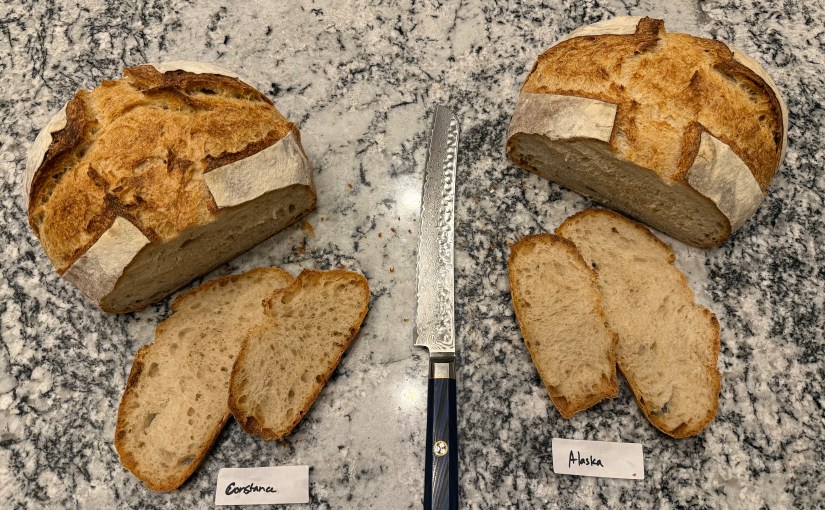
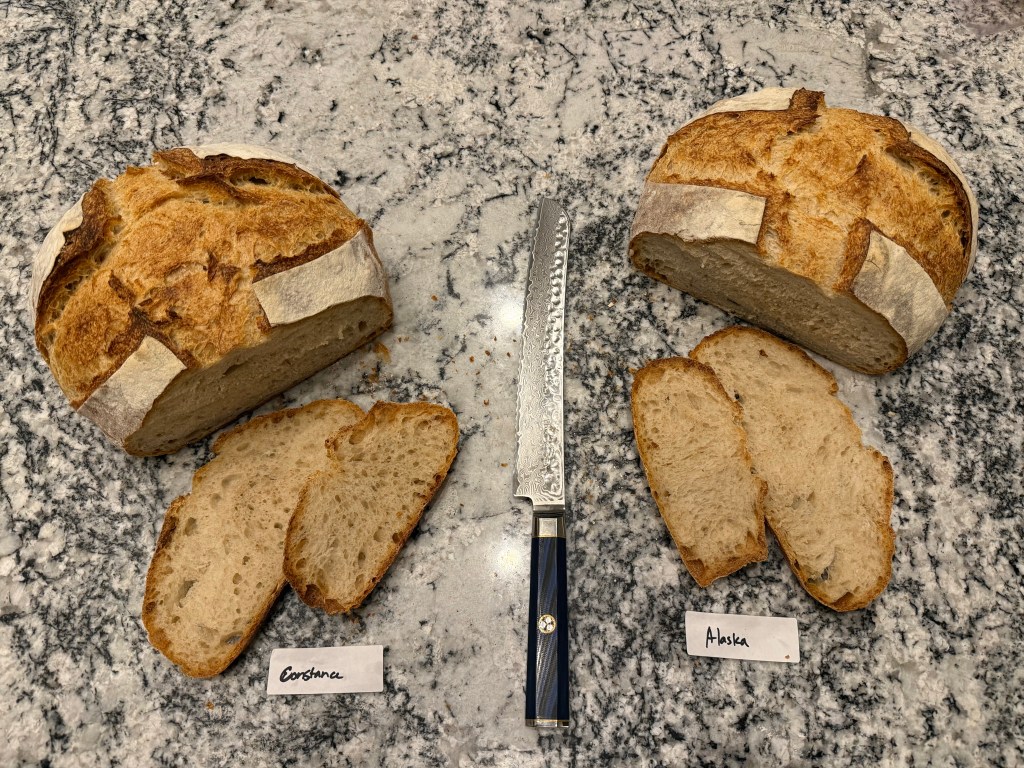
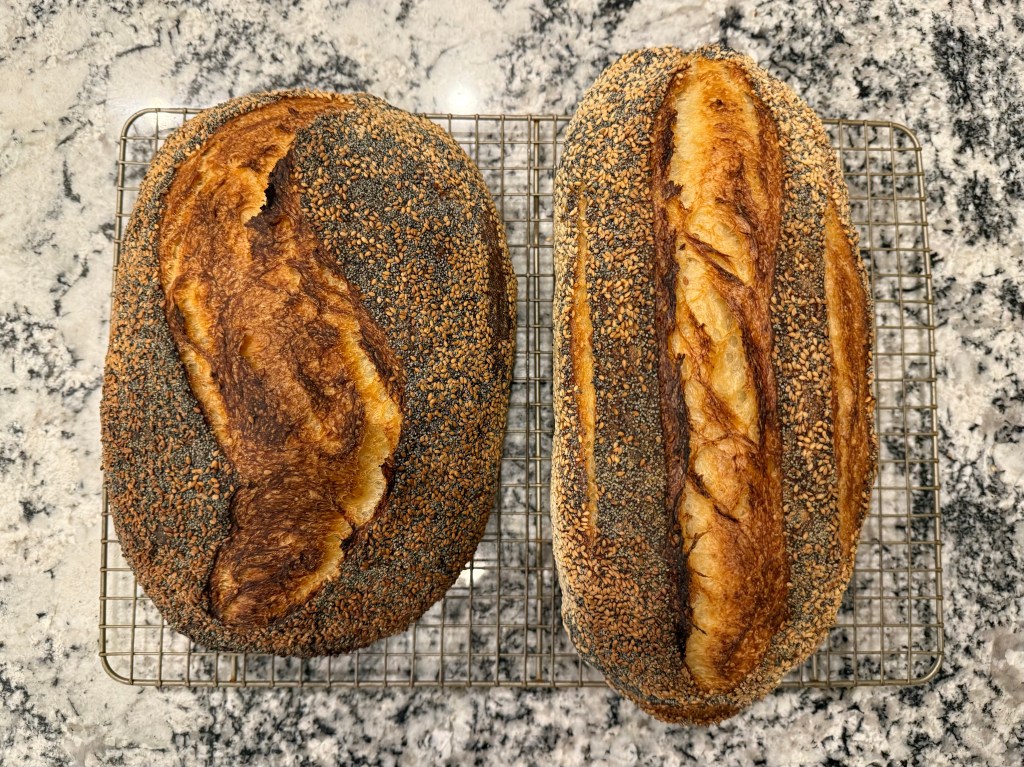
Here are a few side-by-side comparisons of both loaves. For the large loaves, Constance rose slightly higher, but the Alaska loaf is significantly wider.
For the smaller loaves, the Alaska loaf rose higher and filled its pan up more than the Constance loaf.
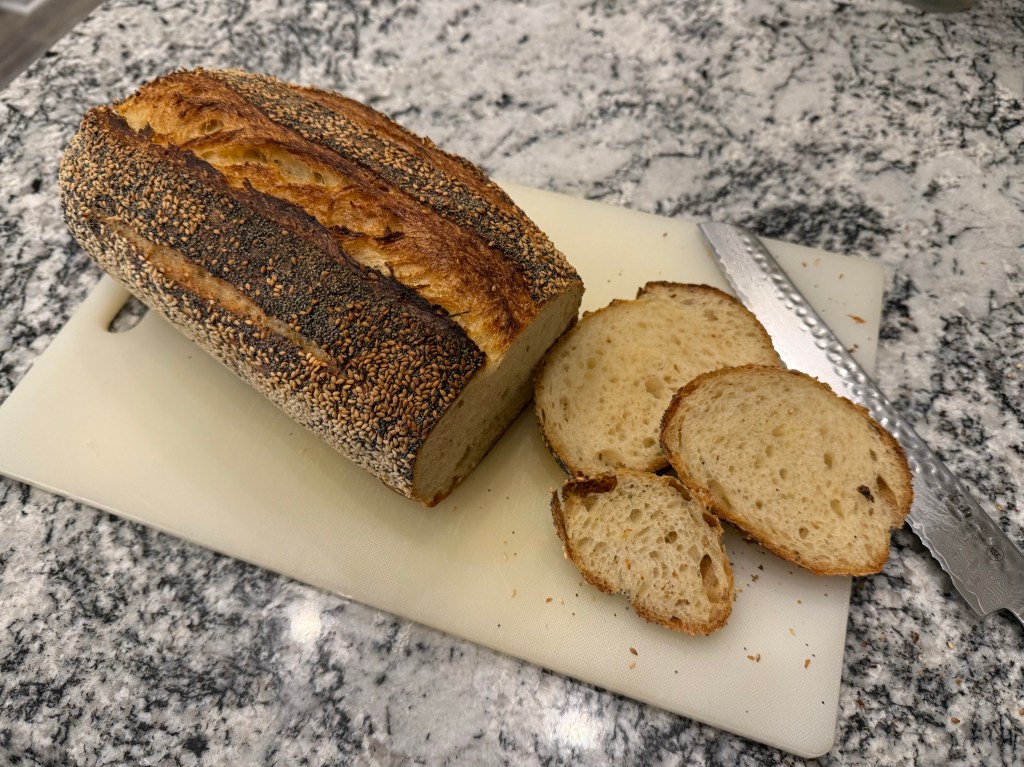
The crumb: both loaves have a lovely crumb, but Constance’s crumb is slightly more open. I didn’t cut into the smaller loaves since they’re easier to freeze or give away, so perhaps the crumb comparison is unfair due to the difference in baking vessels.
And finally, the taste: Both loaves are delicious! Constance had a bit more sourness than the Alaska, but the loaf was still quite mild in flavor. The Alaska loaf was hardly sour at all, almost tasting like a long-fermented yeast bread. It also rose higher at every stage.
So. What did I learn from this experiment?
Despite living in my kitchen, being fed the same food, and possible cross-contamination, these starters are distinct from each other. They make breads with different levels of rise and sourness. This supports the idea that once a sourdough colony is established, and assuming it is cared for in relatively stable conditions, it resists changes to its microbiome.
Baking conditions matter a lot. An enameled Dutch Oven retains more steam than an unglazed clay baker, and that impacts the oven spring. I suspect that a glazed clay baker would perform similarly to an enameled Dutch Oven.
Science is hard! I washed my hands so many times in an effort to avoid cross-contamination. Everything was harder and took longer because I was working with more dough and because I couldn’t let anything touch anything else. Getting timings perfectly even between both batches of dough was impossible. As hard as I tried, I knew the experiment was flawed from the beginning.
I learned so much from this experiment, and despite how hard it was to setup and perform, it raises so many other questions for me. I want to see the effect of the different baking vessels on the same dough. I want to try breads with different flours or different hydration. I don’t know that I’ll ever be a true bread scientist, but I am having a lot of fun learning.
Until the next time: may your yeast always rise and your flour never run out.
This semolina sourdough recipe is from Tartine Bread by Chad Robertson. This is the book I learned to make sourdough bread from, so this recipe feels like a bit of a homecoming for me.
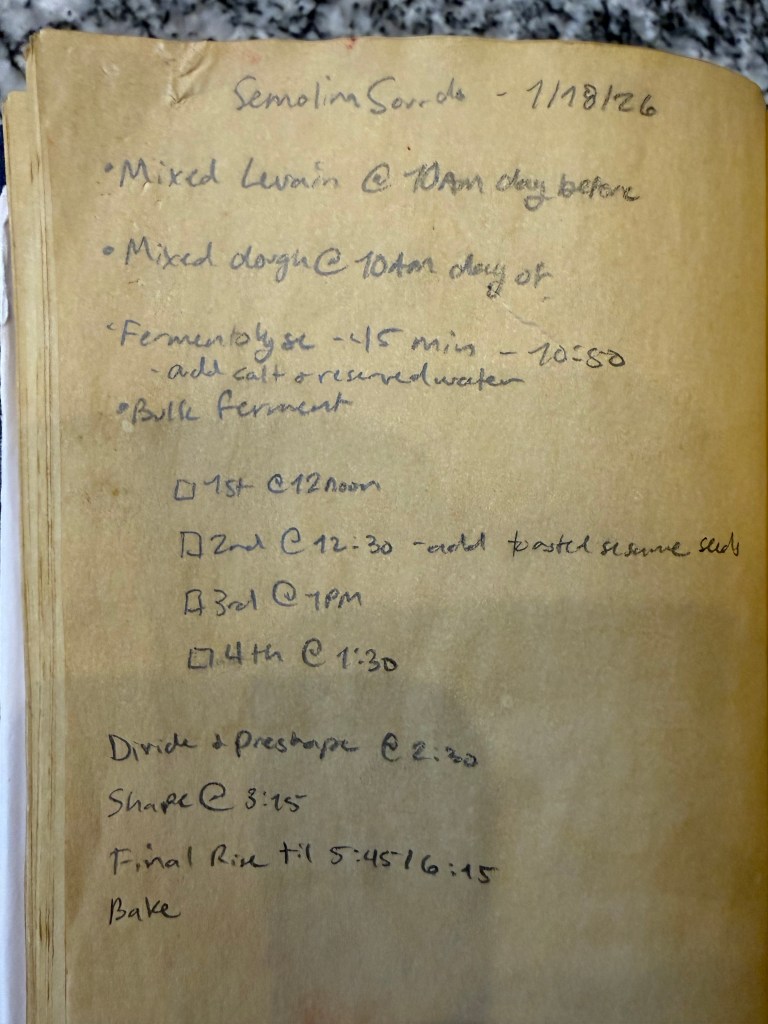
Whenever I mix a dough that needs to ferment for more than a few hours I like to build myself a schedule. This helps me make sure I don’t have any scheduling overlaps and that I know when I can be away from my dough for a while if needed.
I gathered the mise en place:
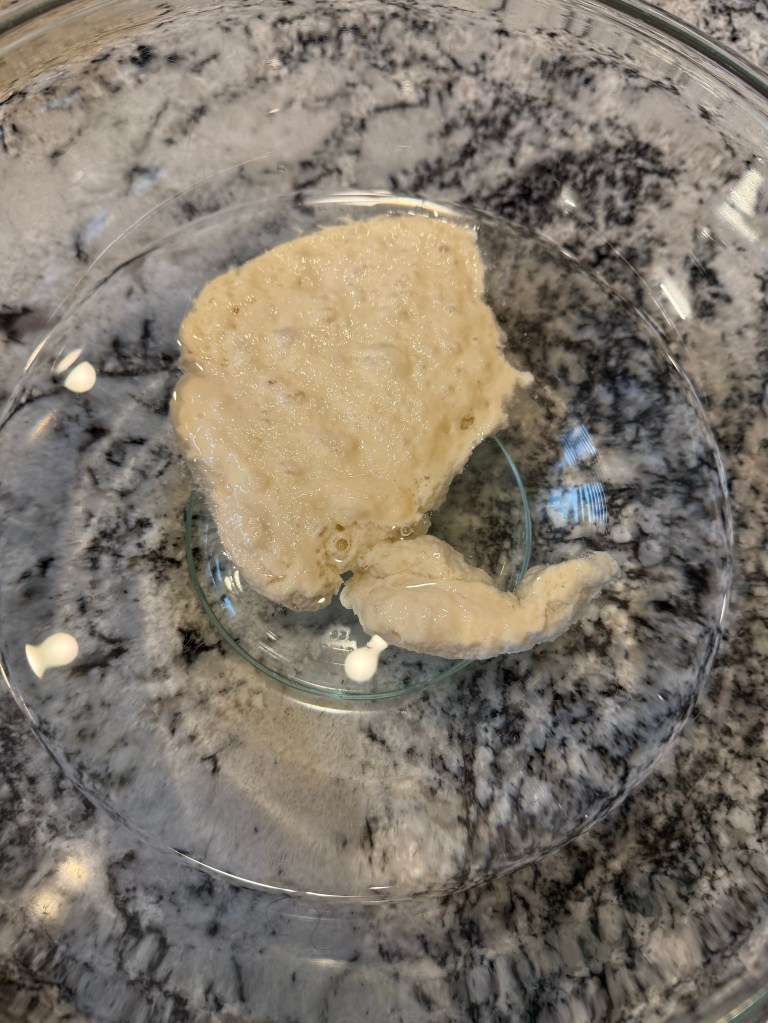
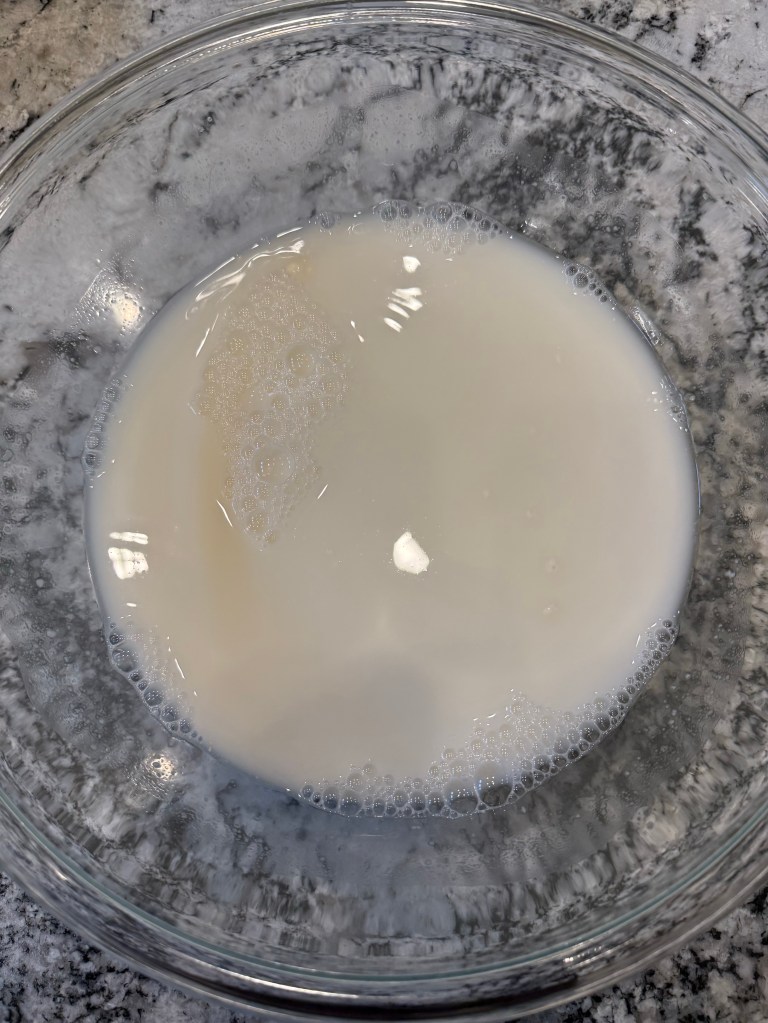
I started by pouring my starter into the water and marvelled that it floats. I’ve been baking sourdough bread since 2019, and floating starter still amazes me every single time. I mixed the starter into the water until reasonably-well distributed and the mixture looked milky. Do not be deceived: There were still small chunks of starter beneath the surface of the mixture.
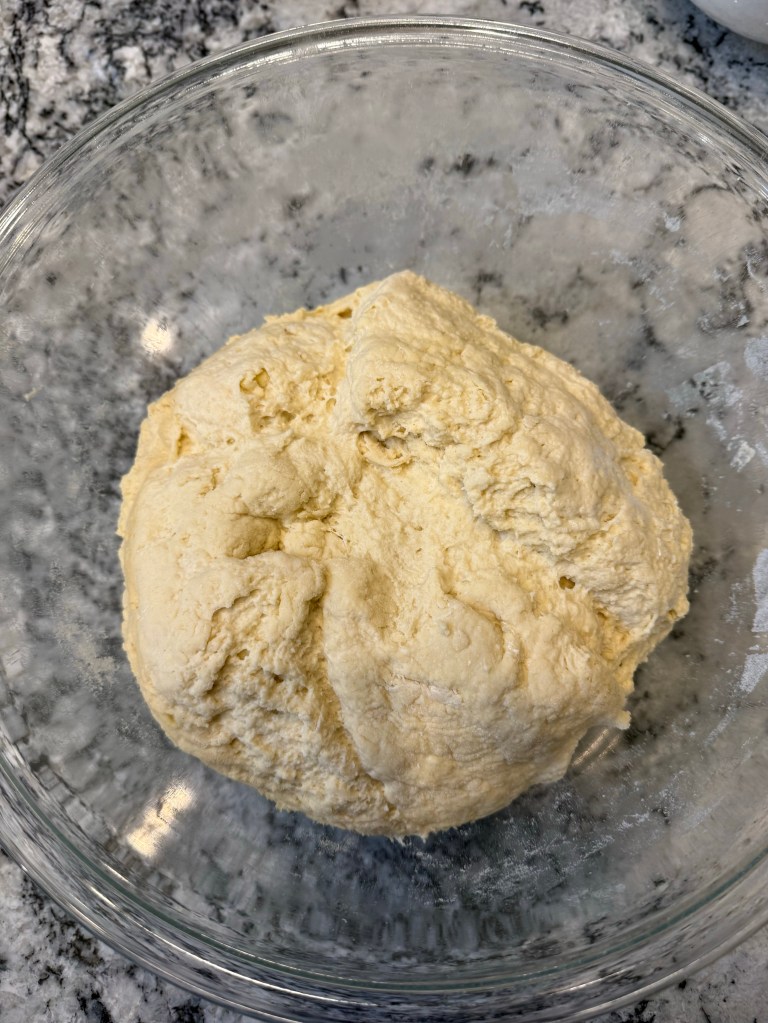
I mixed in the semolina and All-Purpose flours until the dough was shaggy. I set the dough aside to rest for 45 minutes. Chad describes this resting step as an autolyse, but technically an autolyse only includes flour and starter, and does not include any leavener. I’ve heard this step referred to as a fermentolyse when the starter is included. Since it is January and my kitchen is cold I put the dough in my countertop oven on the “Proof” setting (80 degrees Fahrenheit) to speed up the rise and hopefully limit sourness in the final loaf.
Regardless of what the rest is called, when 45 minutes had passed I added the salt and 50 grams of water that had been reserved at the beginning and mixed the dough well.
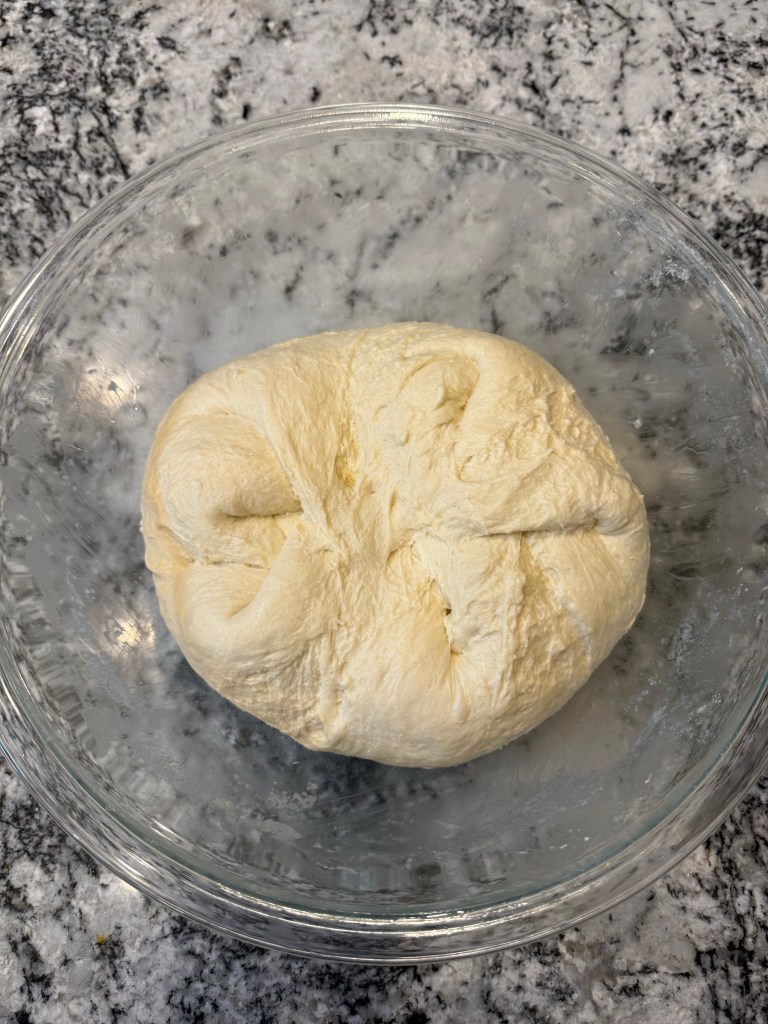
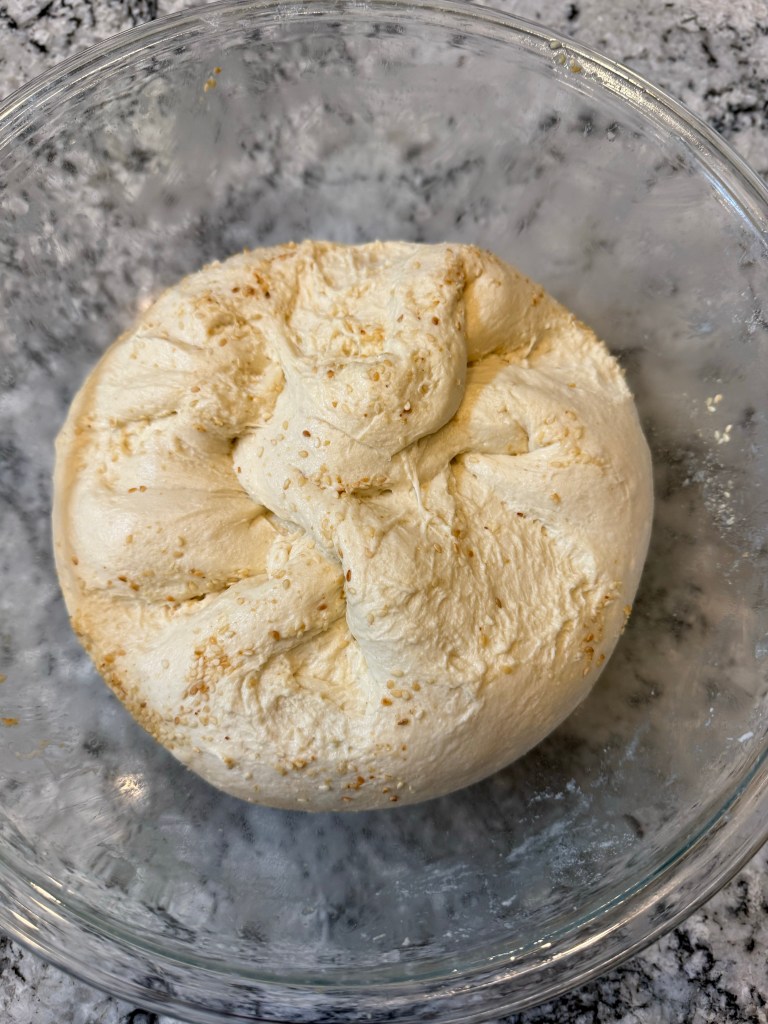
From here I did 4 “turns” or dough-folds in the bowl, every half hour. First turn (30 minutes in):
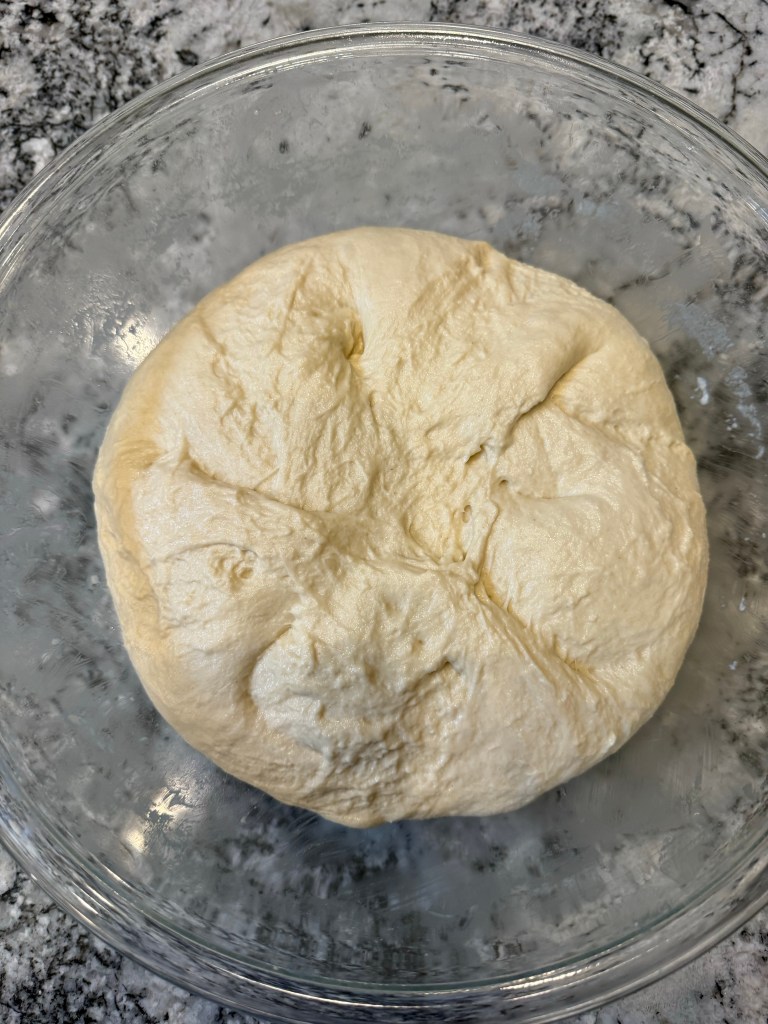
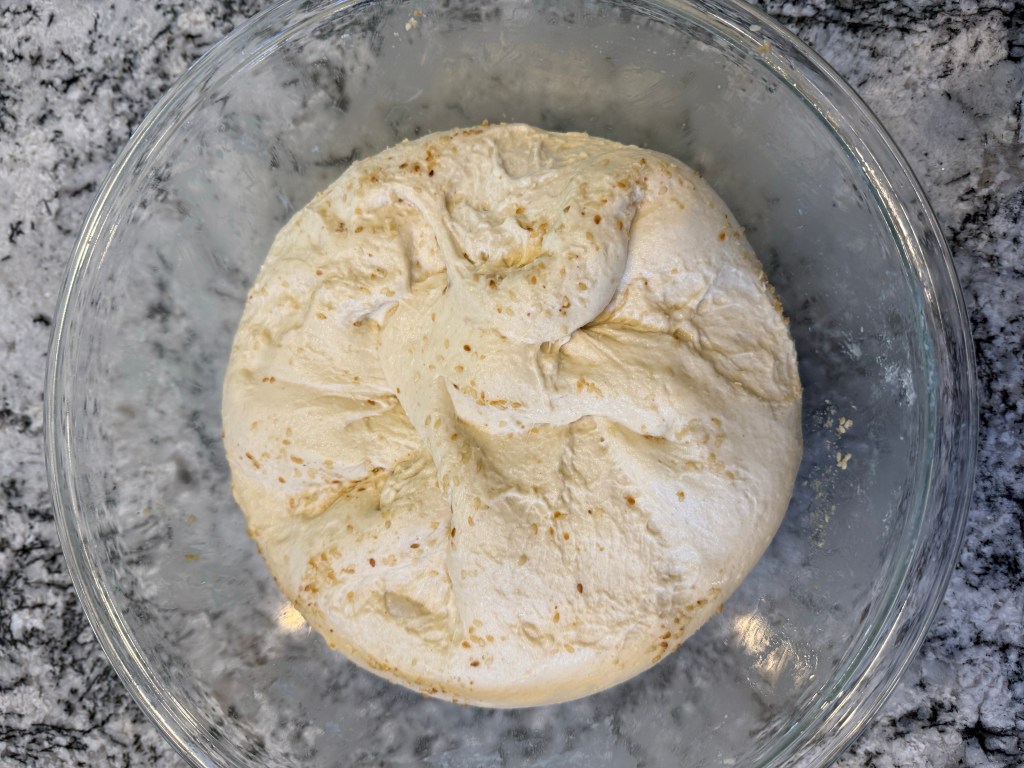
2nd turn (1 hour in):
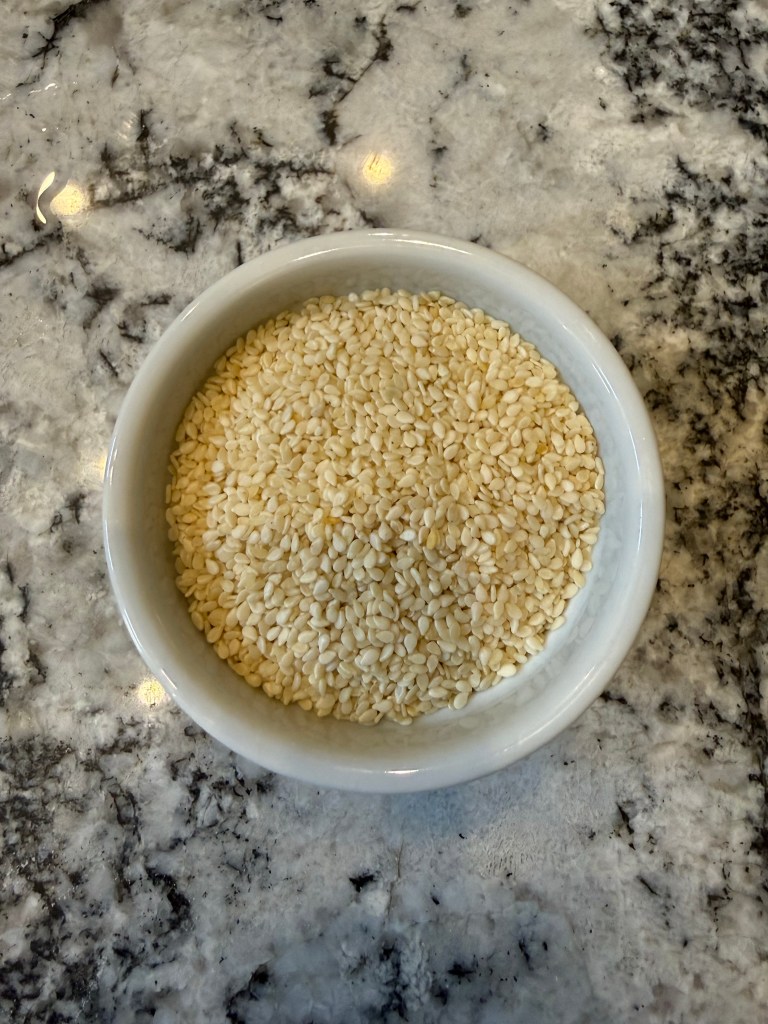
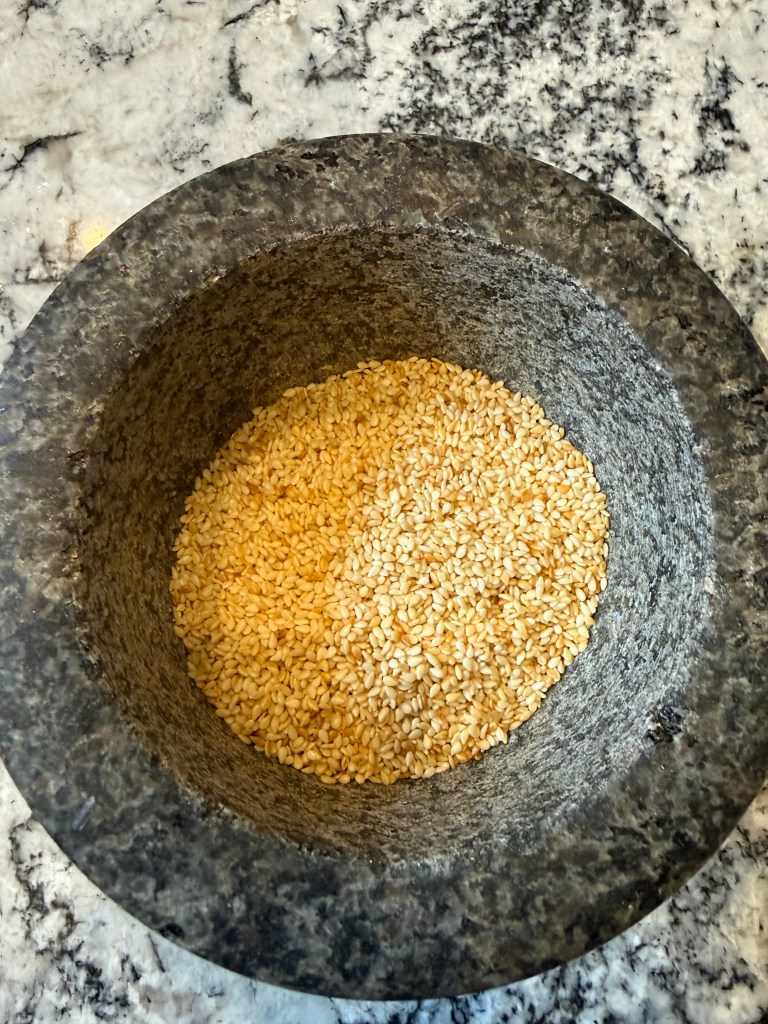
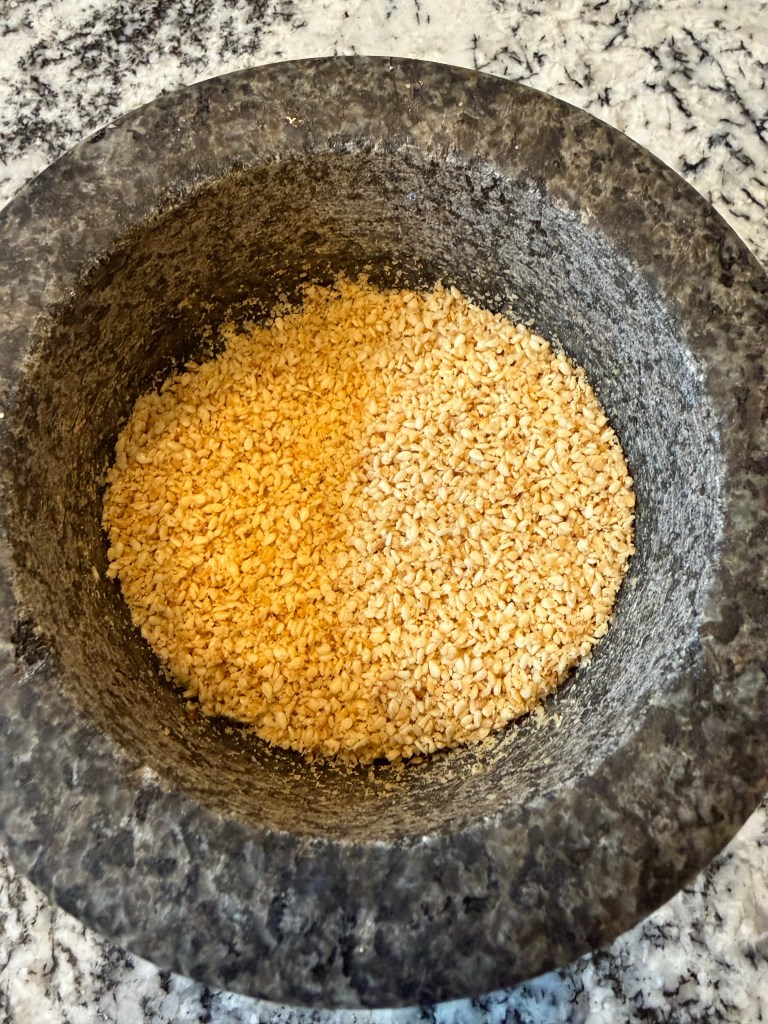
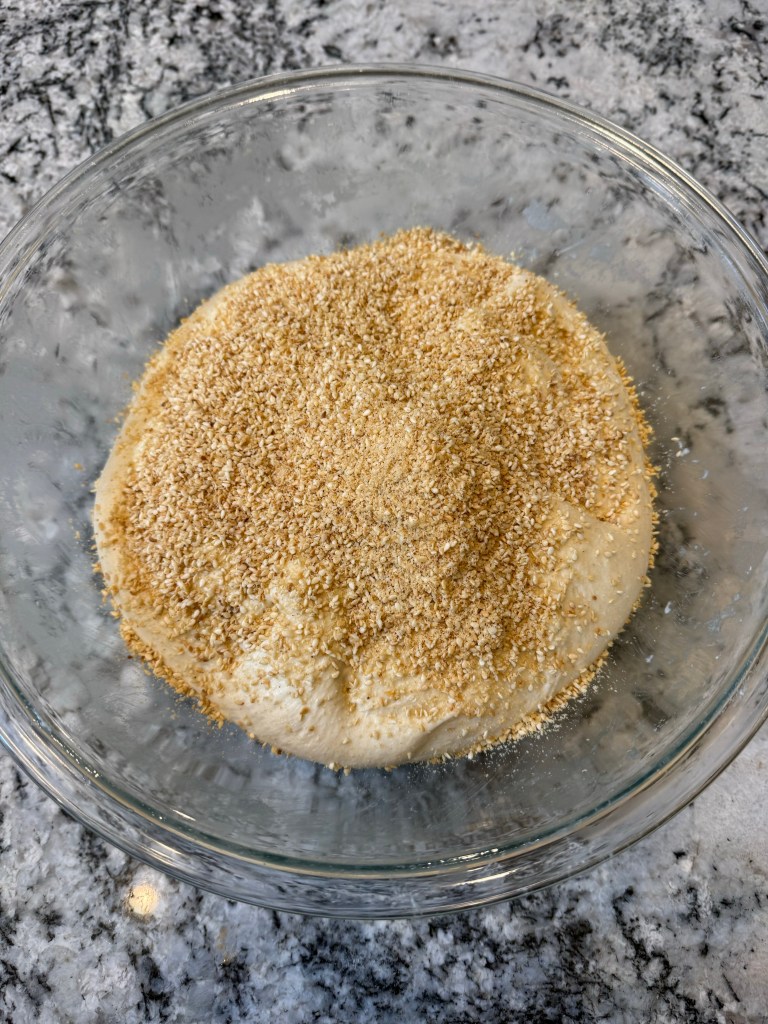
I was meant to add in some toasted and lightly ground sesame seeds during the 2nd turn, but I forgot, so I added them during the 3rd turn.
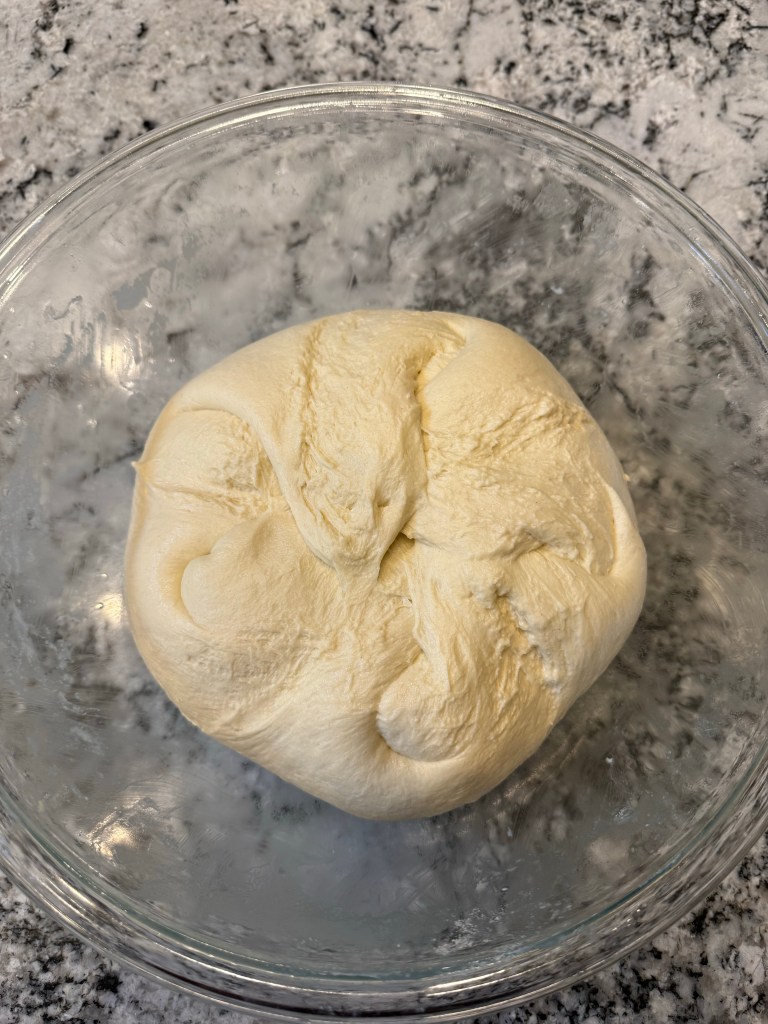
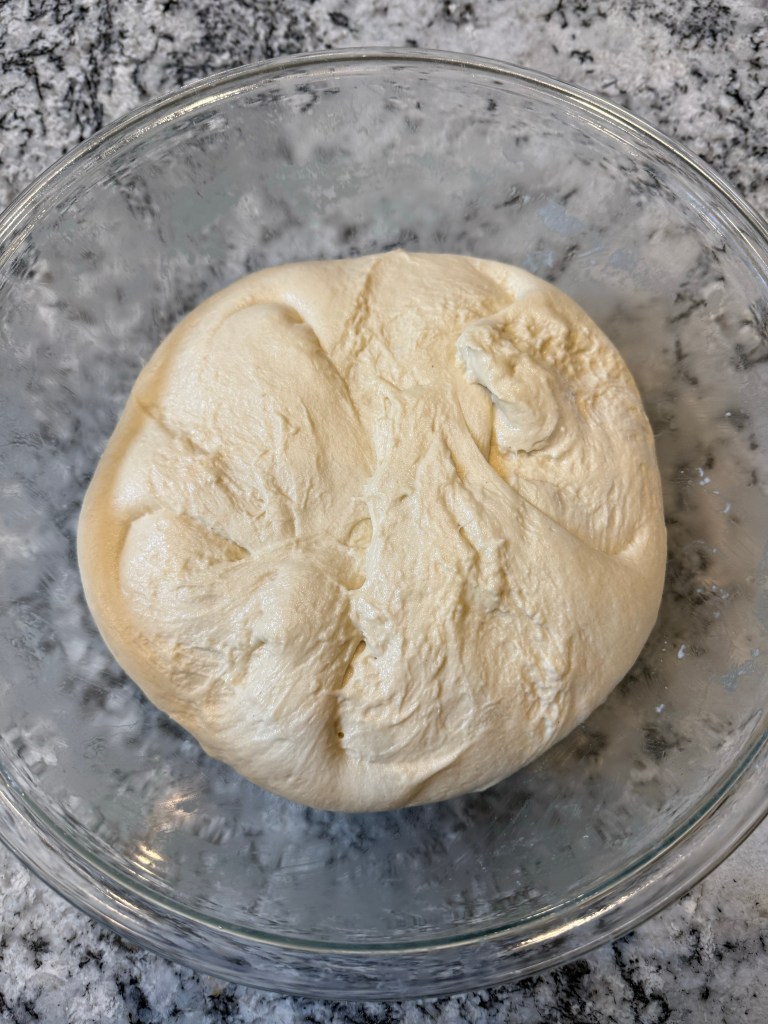
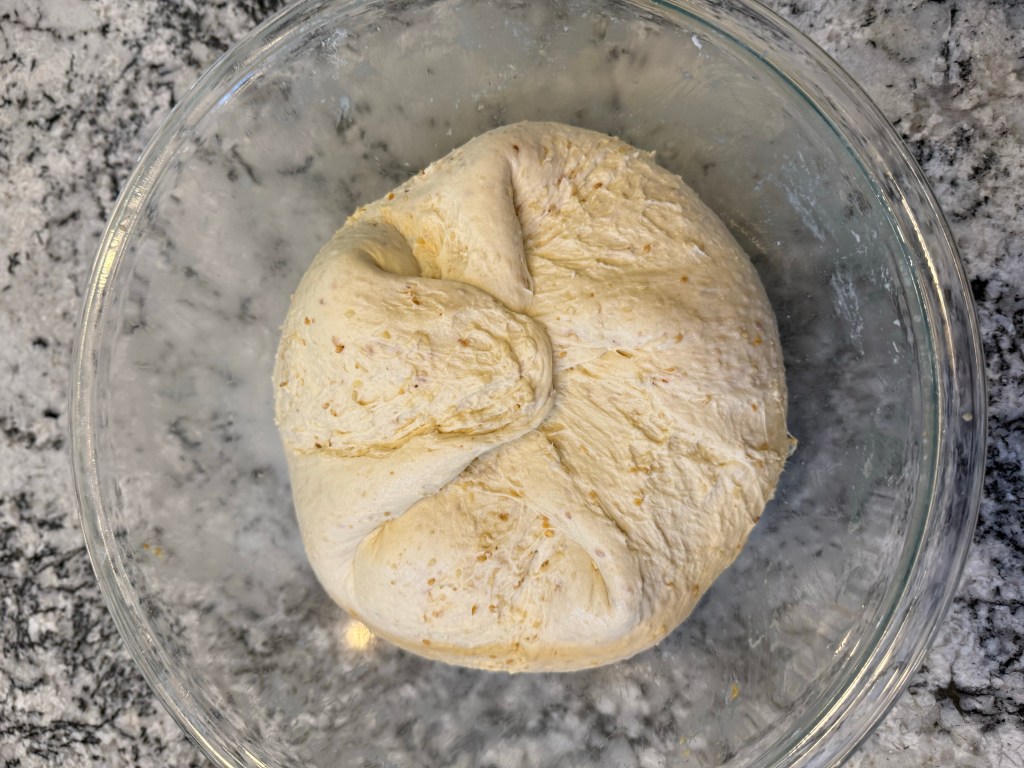
3rd turn (90 minutes in) with sesame addition and a little extra water to facilitate mixing:
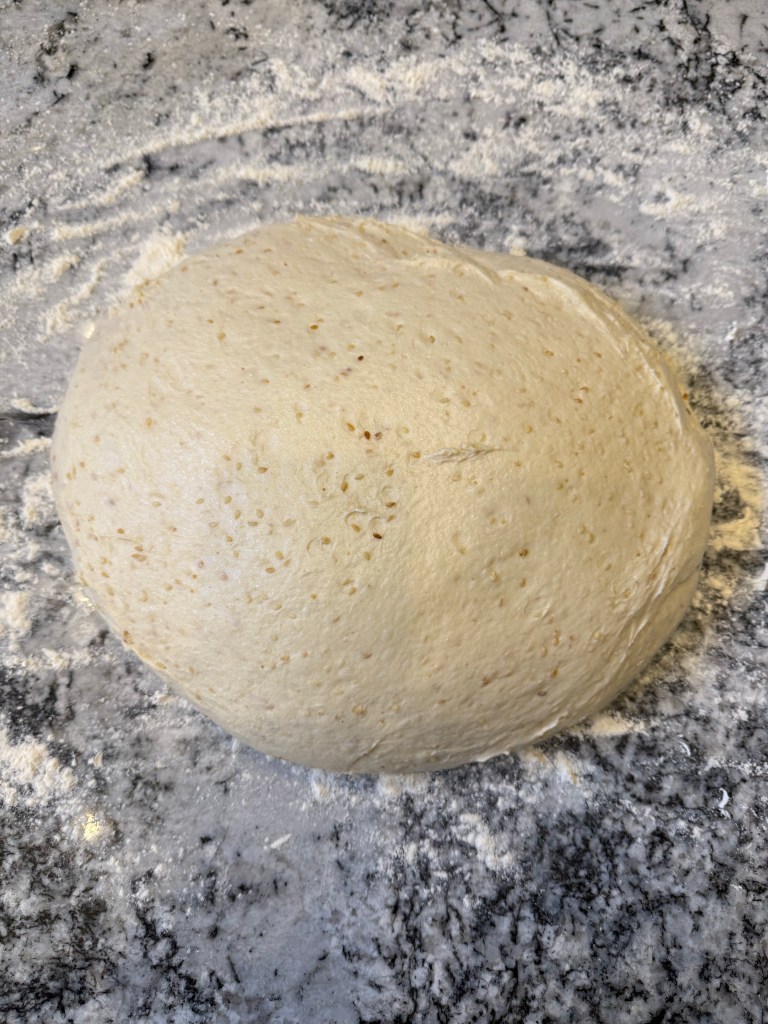
4th turn (2 hours in):
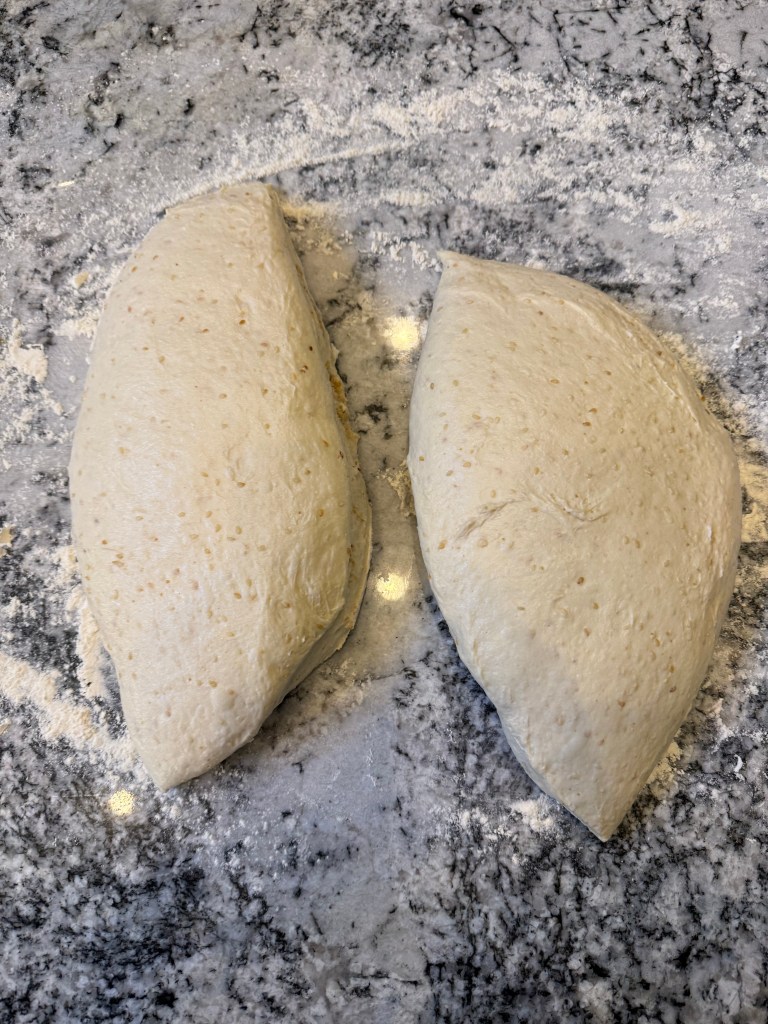
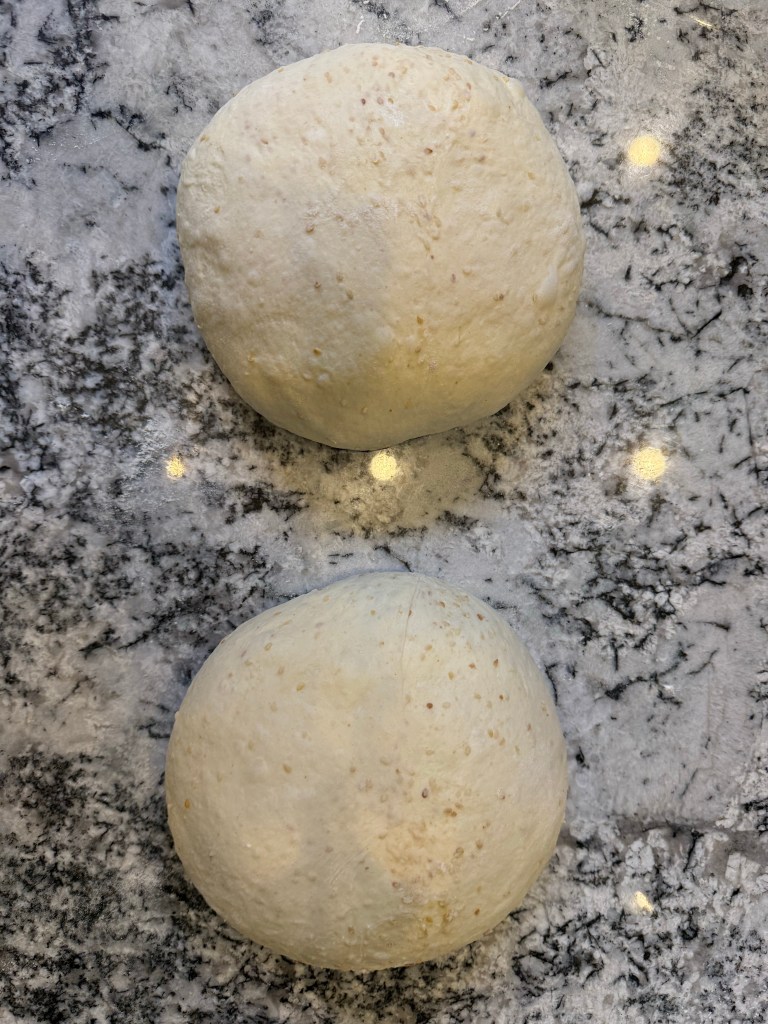
After the 4th turn I waited another hour, then divided and preshaped the dough into two rounds.
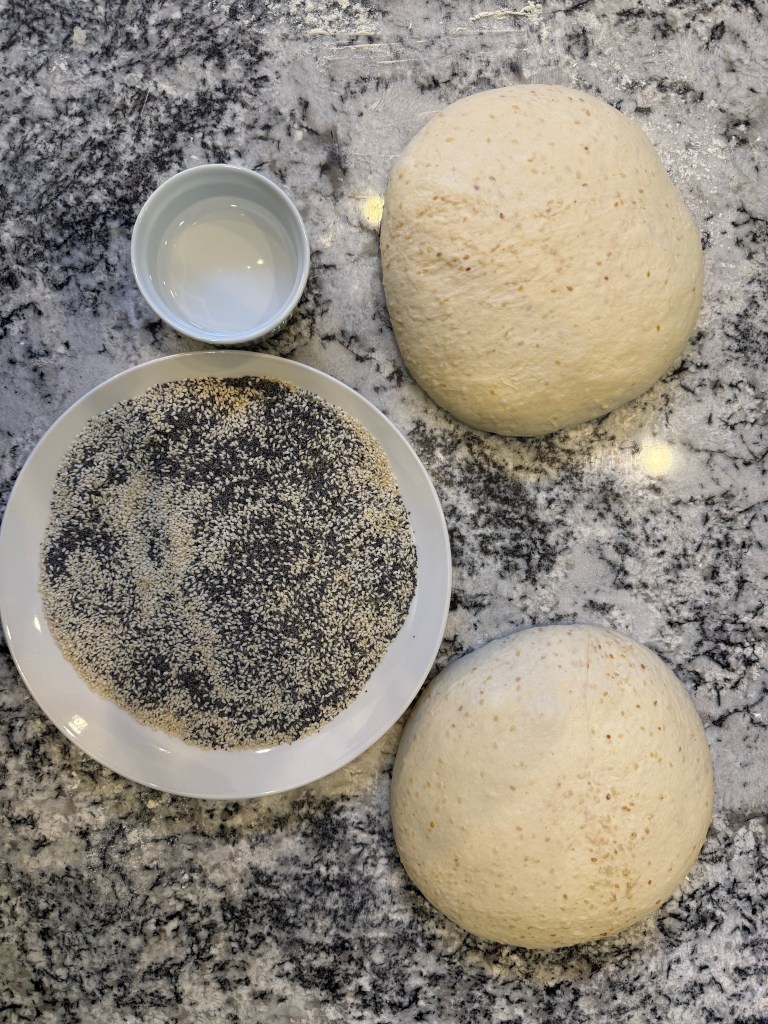
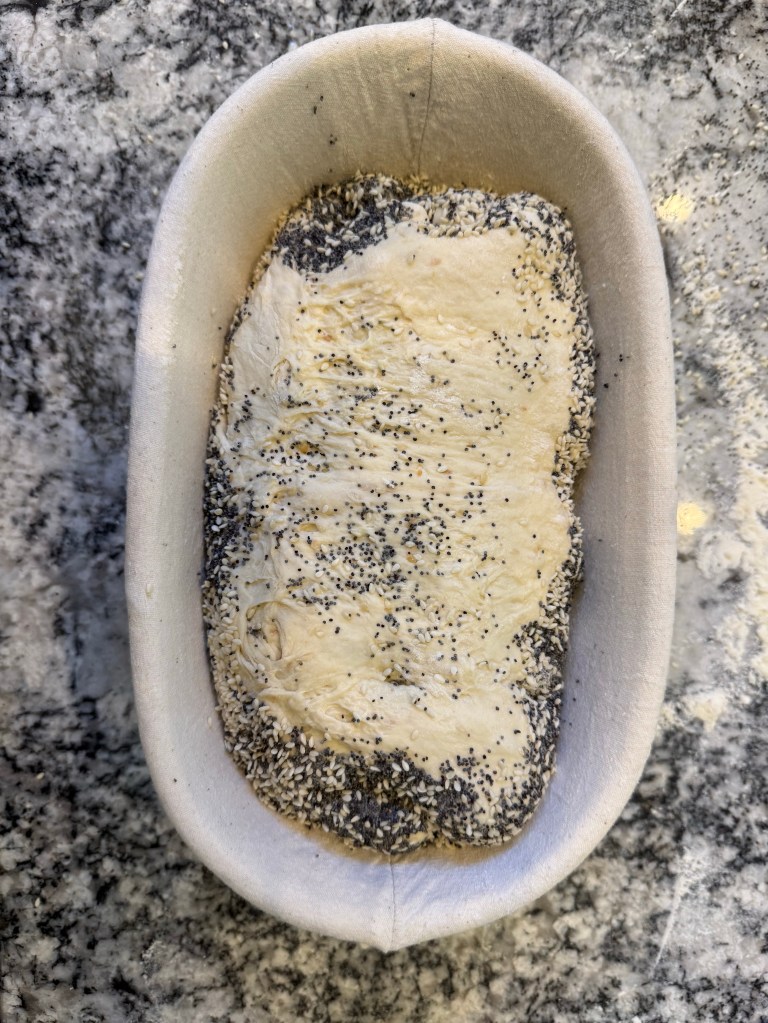
The rounds rested for 30 minutes before their final shaping. Before putting the dough into the bannetons I brushed each loaf with water and rolled them in a mix of sesame and poppy seeds.
The dough rose for 2 hours. I was so pleased with how much rise I got during this time!
While the dough was rising I preheated my oven to 500 degrees Fahrenheit. Before baking I turned the dough out onto parchment paper and scored it.
I placed each loaf into a covered baker, put them in the oven, and reduced the temperature down to 475 degrees Fahrenheit. I took the lids off 15 minutes into the bake, then let the loaves bake for another 30 minutes.
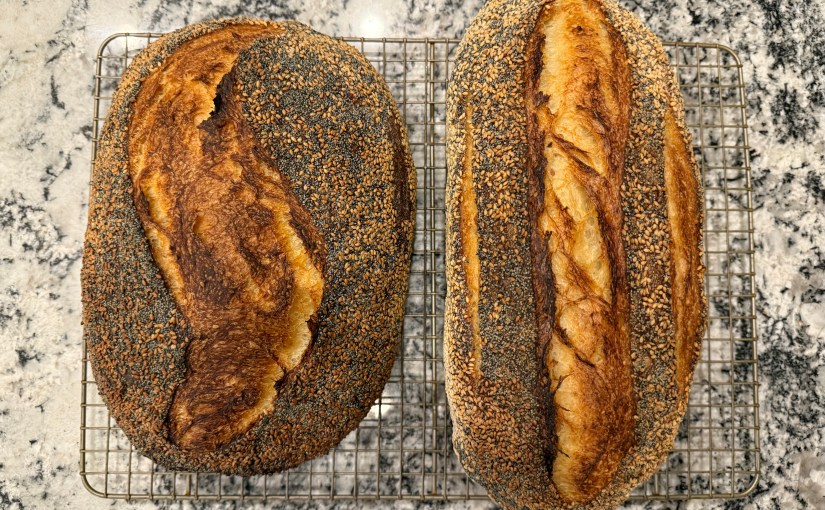
When I pulled these loaves out of the oven I was amazed at how beautiful they are! The seeded crust is just so gorgeous!
I am so pleased with how this bread turned out! The bread is lightly sour, which is something I was aiming for with the warmer and shorter proofing. It has a fluffy grain with a combination of large and small holes. The seeds on the crust are a little overwhelming. I think this dough could also use some additional salt – maybe 2.5% instead of 2% to help stand up to the nutty flavors.
I can see a definite improvement in the rise of these loaves compared to my usual sourdough. I think this is due to a combination of factors: 1) the warm proofing environment; 2) additional folds during the bulk ferment – I went around the bowl twice per instance instead of once; and 3) Better shaping technique, specifically around building lots of tension in the dough prior to placing it in the Banneton.
It’s only been a few days and we’ve already eaten more than half of the first loaf. It’s so yummy.
Until the next time: may your yeast always rise and your flour never run out.
A while ago I read about a sourdough chocolate chip cookie recipe that was next level. My starter wasn’t active at the time, so I’ve been waiting to try this recipe for quite a while, and this seemed like the right time. The recipe can be found here.
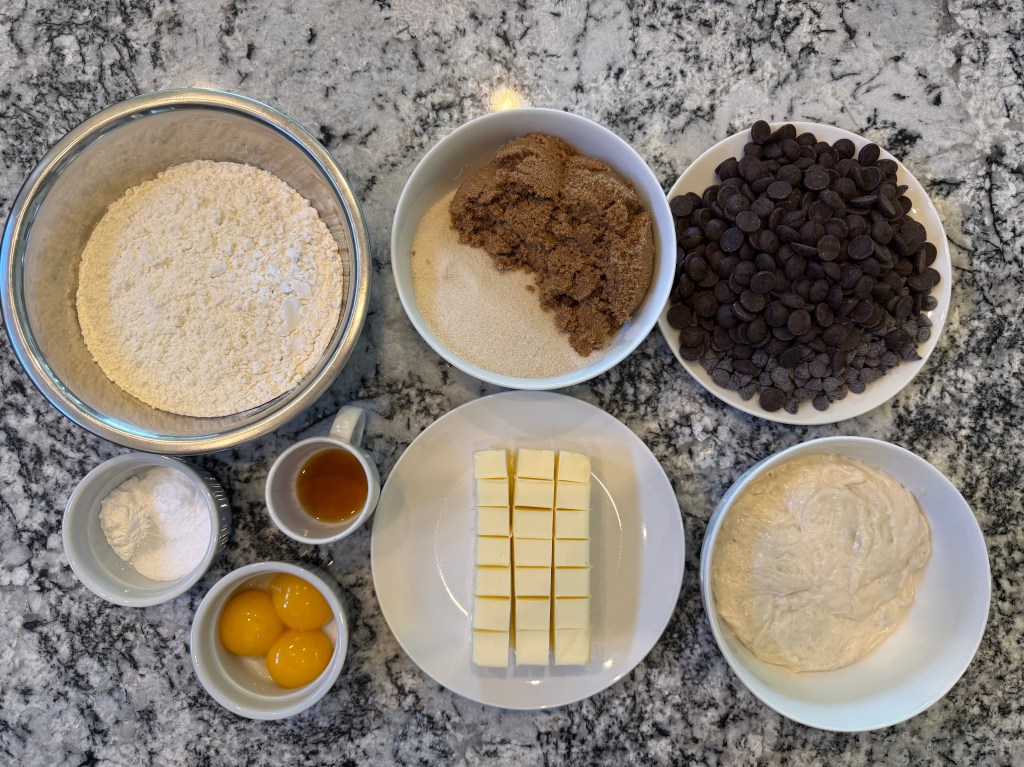
I gathered the mise en place:
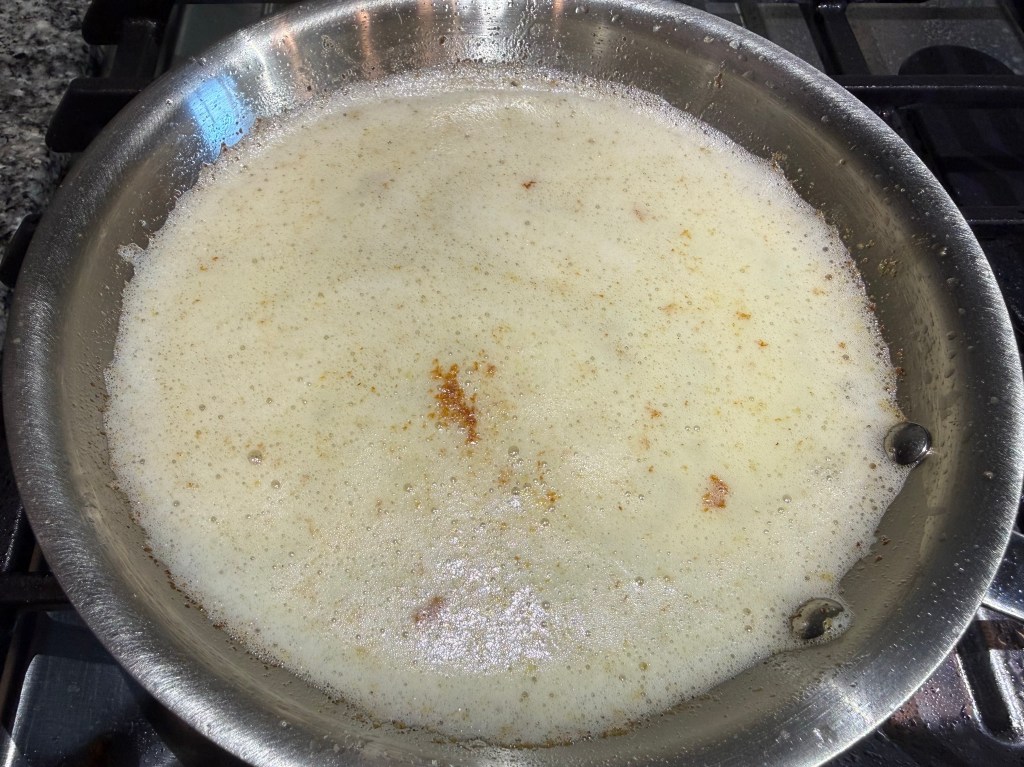
Before I could start mixing up cookies I had to brown the butter to get all the water content out of it. This lost water will be made up with some of the water in the sourdough starter. The goal is to start with 225g of butter and end up with 185g.
Once the butter was very foamy and the milk solids had browned I let it cool just enough that it would no longer burn me through the bowl. I weighed the browned butter and was tickled pink to see it weigh exactly 185g. I also combined the flour with the leaveners and salt at this stage.
Here’s my updated mise en place:
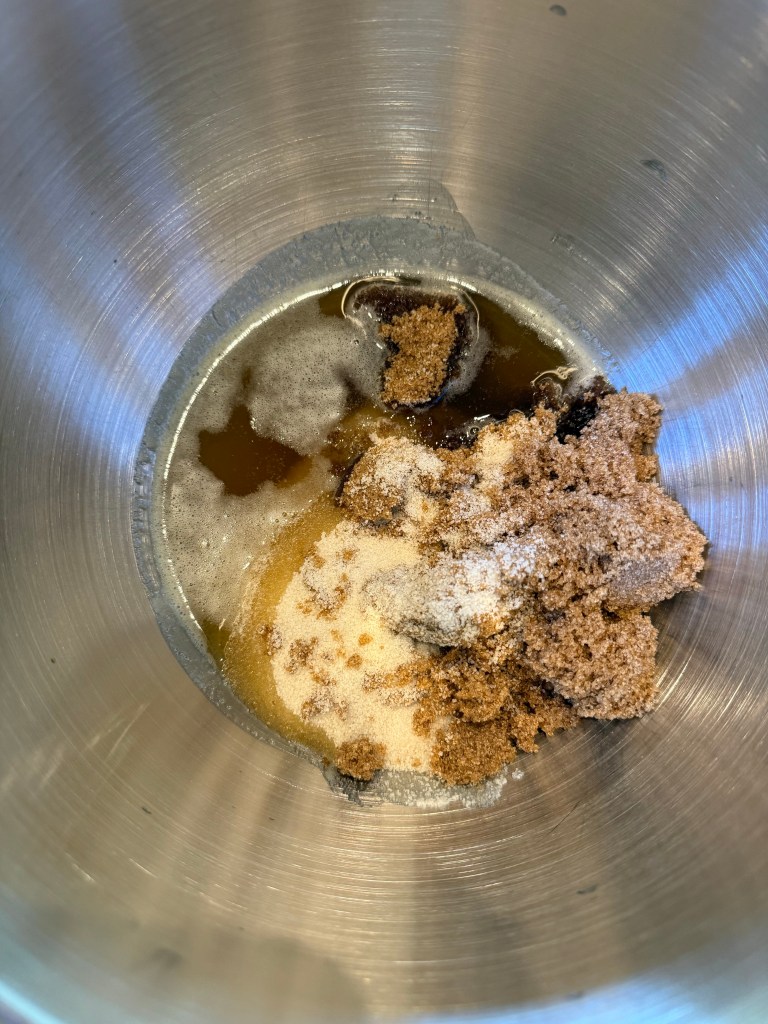
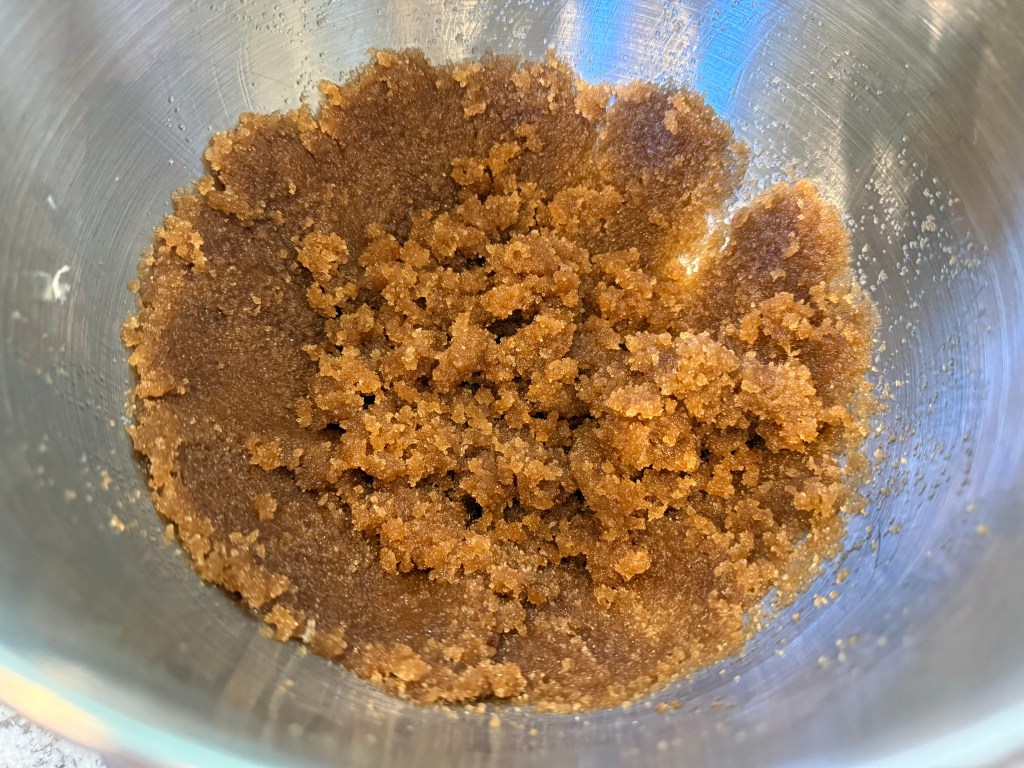
I mixed the butter and sugars.
Then I added the egg yolks and creamed the mixture. Normally I would cream the butter and sugar before adding anything else, but since the butter no longer has any water content it won’t cream with the sugar properly. The egg yolks have just enough water content to get the sugar to cream up nicely.
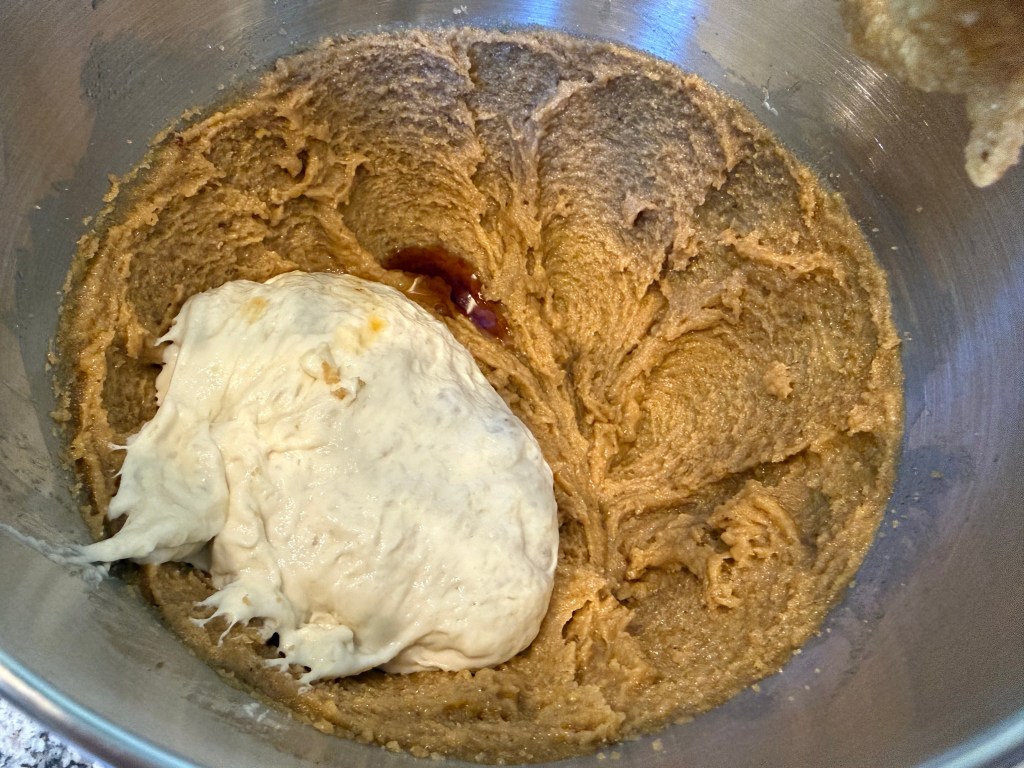
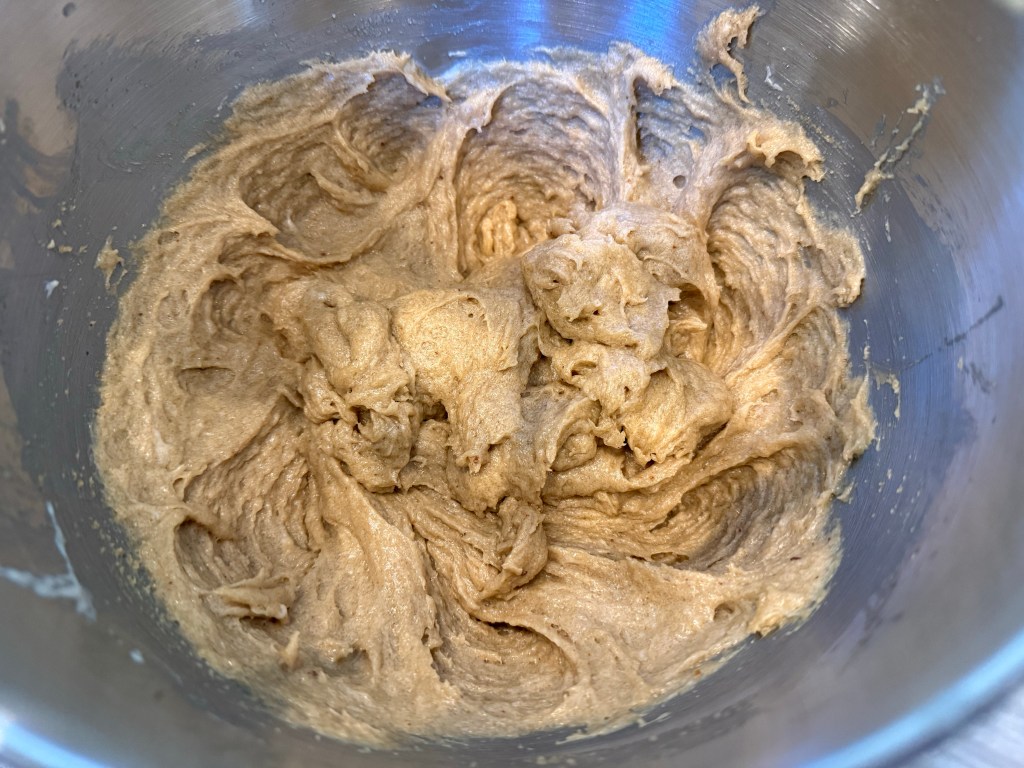
I added the starter and vanilla and mixed until homogeneous.
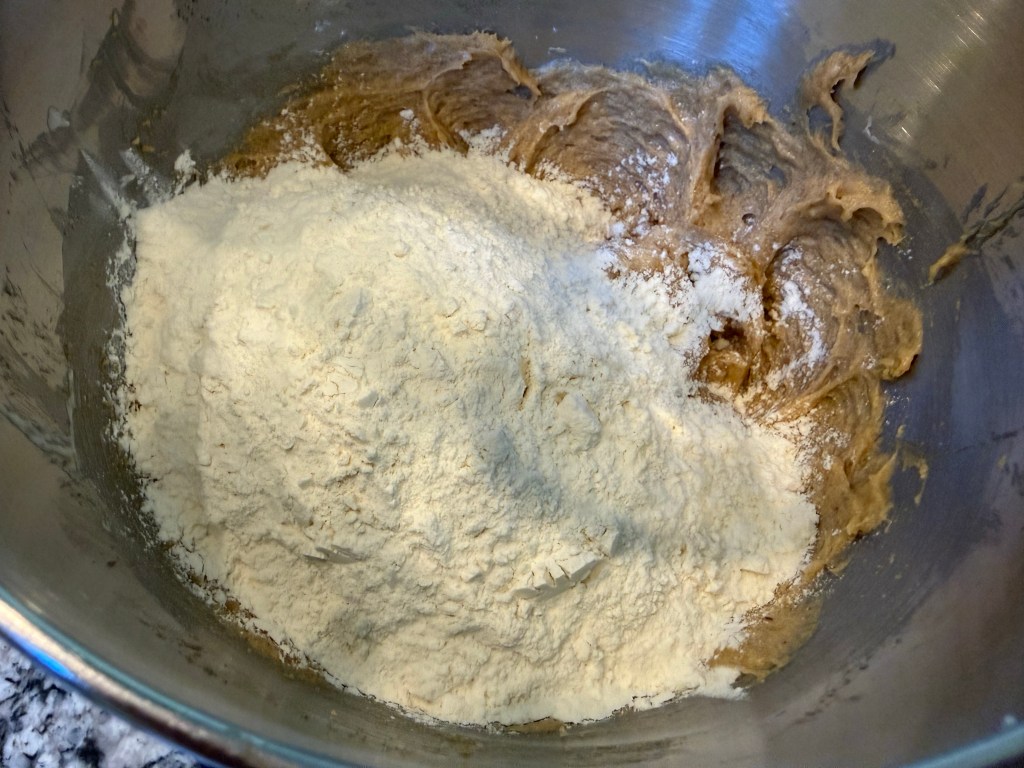
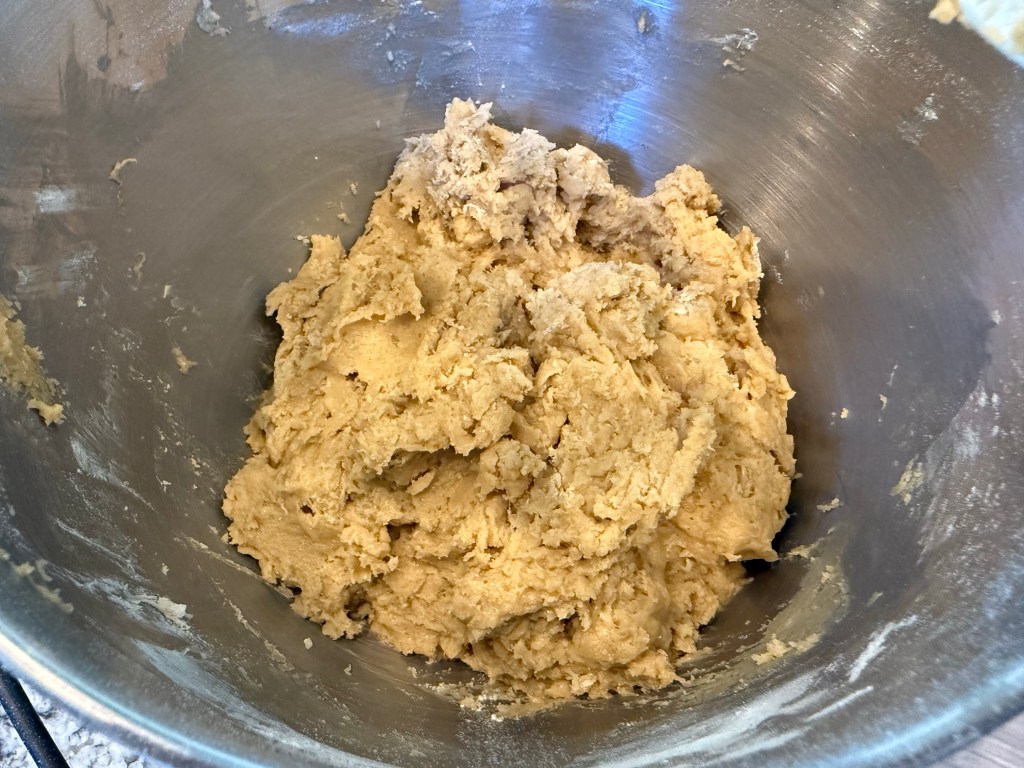
I added the flour and mixed until just combined.
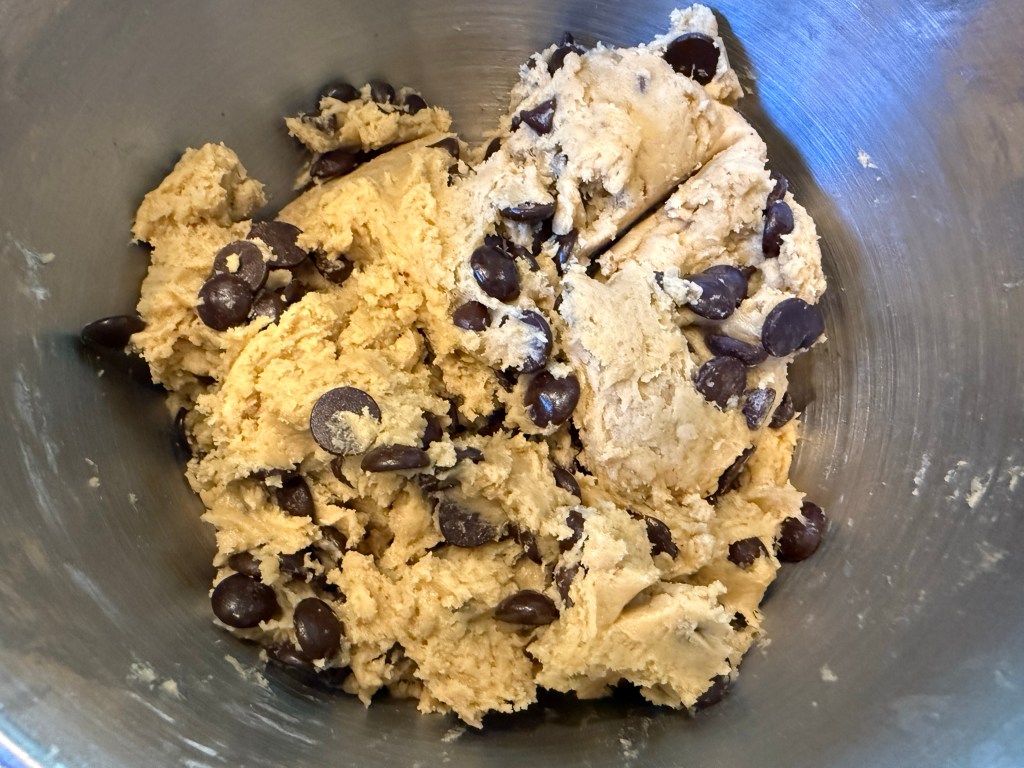
Finally, I added the chocolate chips and pulsed in my stand mixer for just a few seconds until the chocolate was well-incorporated. At this stage the dough was very soft and malleable and quite easy to mix.
I refrigerated the dough for 4 hours (apparently that is the minimum amount of time to chill a cookie dough incorporating melted butter for the cookie to still have good structure when baked).
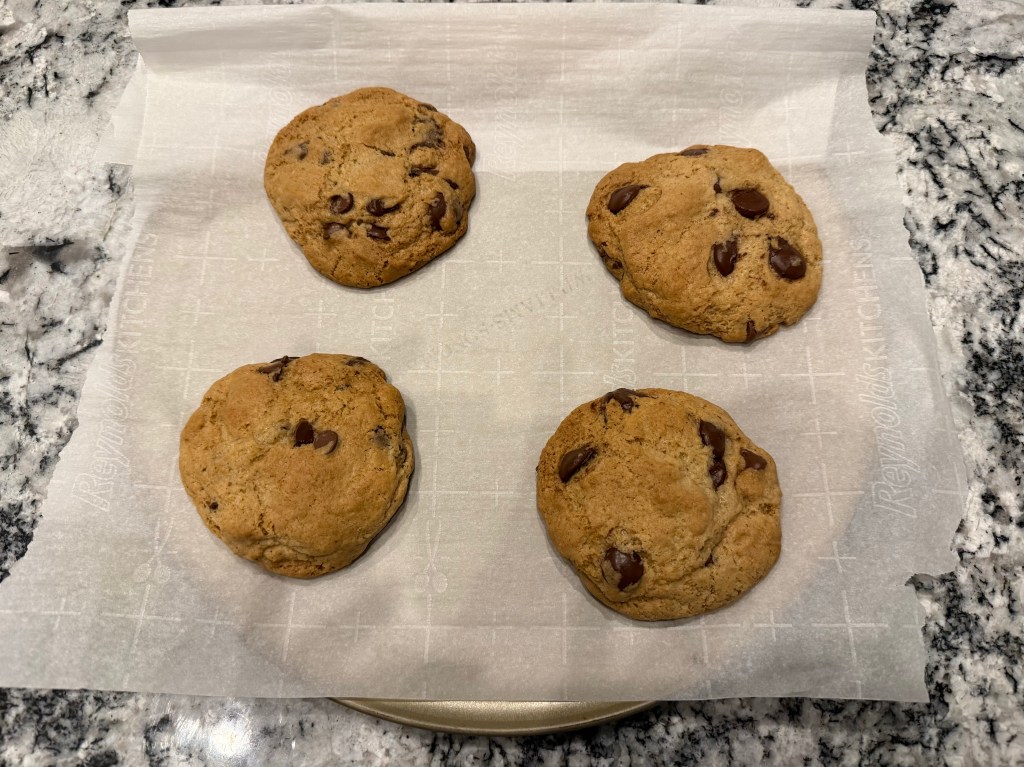
Once the dough was thoroughly chilled I measured the dough into 70g portions as directed and rolled each portion into a ball. I baked a few, and froze the rest.
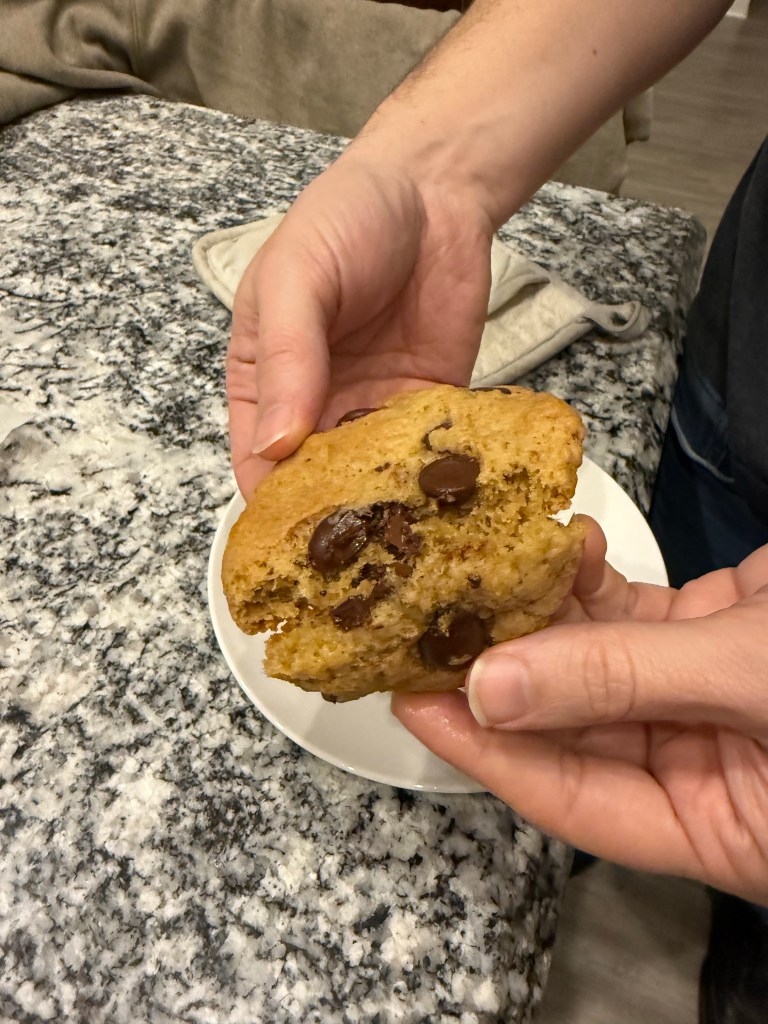
So: the good: The cookies are soft and pillowy inside. They have good flavor, and my husband is very much enjoying being able to pull cookie dough out of the freezer and bake a fresh cookie on demand. This recipe makes A LOT of cookies.
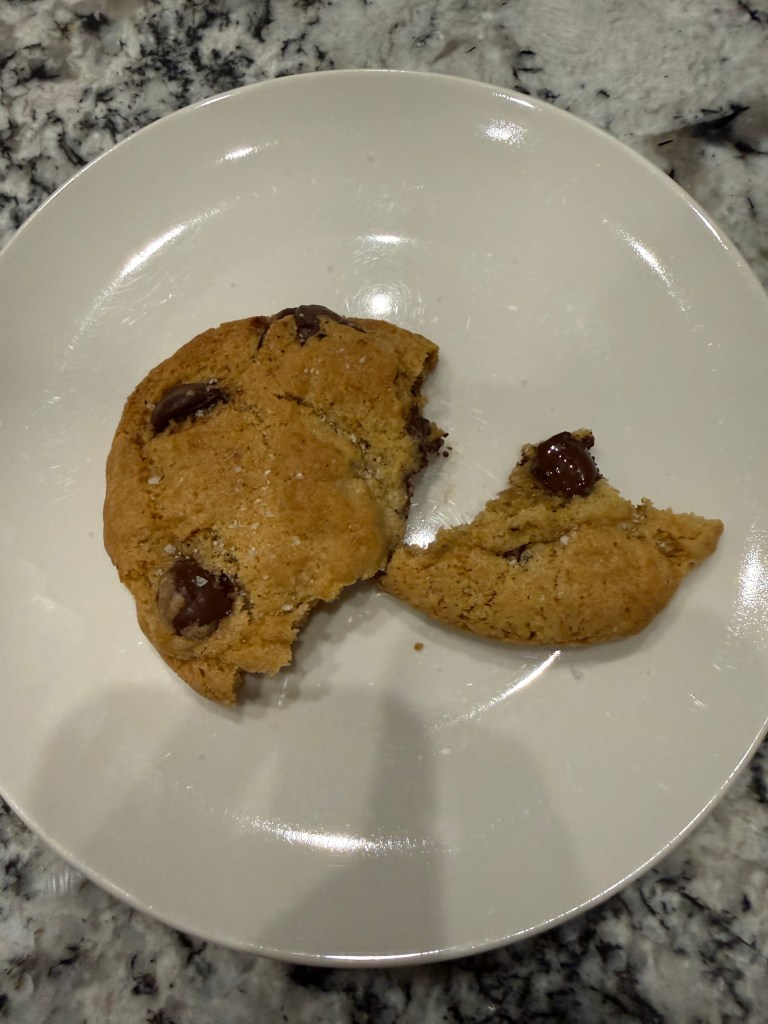
The not so good: The cookies are are just a touch cakey, which is not my preferred cookie texture. This is likely in part because of the natural yeasts in the sourdough starter. Because the cookies go onto the baking tray cold they also don’t spread as wide or as thin as cookies that are baked straight from the mixing bowl.
The cookies don’t have enough salt to my taste, but a sprinkling of flakey salt on top solved that problem and made me feel fancy.
They also seem a bit too sweet to me. If I made these again I would use 3/4 of the sugar in the recipe. Sugar helps cookies form their structure, so this does make me worry that the texture of the cookies could be impacted by a smaller amount of sugar.
These are big cookies, but not absolutely ginormous. If I made these again I would measure out 50g portions instead of 70g.
I had such high hopes for these cookies, but after making them I feel pretty ‘Meh’ about the final product. It felt like a lot of effort to make these for a pretty average tasting cookie. I probably will not make these again (our current favourite chocolate chip cookie recipe is this one).
BUT! I learned so much from reading about the process of creating the recipe and making these cookies, and that is a huge win in my book!
Until the next time: may your yeast always rise and your flour never run out.
The King Arthur Baking School takes us into the world of Sourdough baking gently. The next recipe is for Sourdough sandwich bread, but while it does incorporate sourdough starter, it is mainly leavened with baker’s yeast. This gives us some advantages of both worlds: the bread has better flavor and keeping qualities because of the sourdough, but it rises more quickly and isn’t as sour as true sourdough bread.
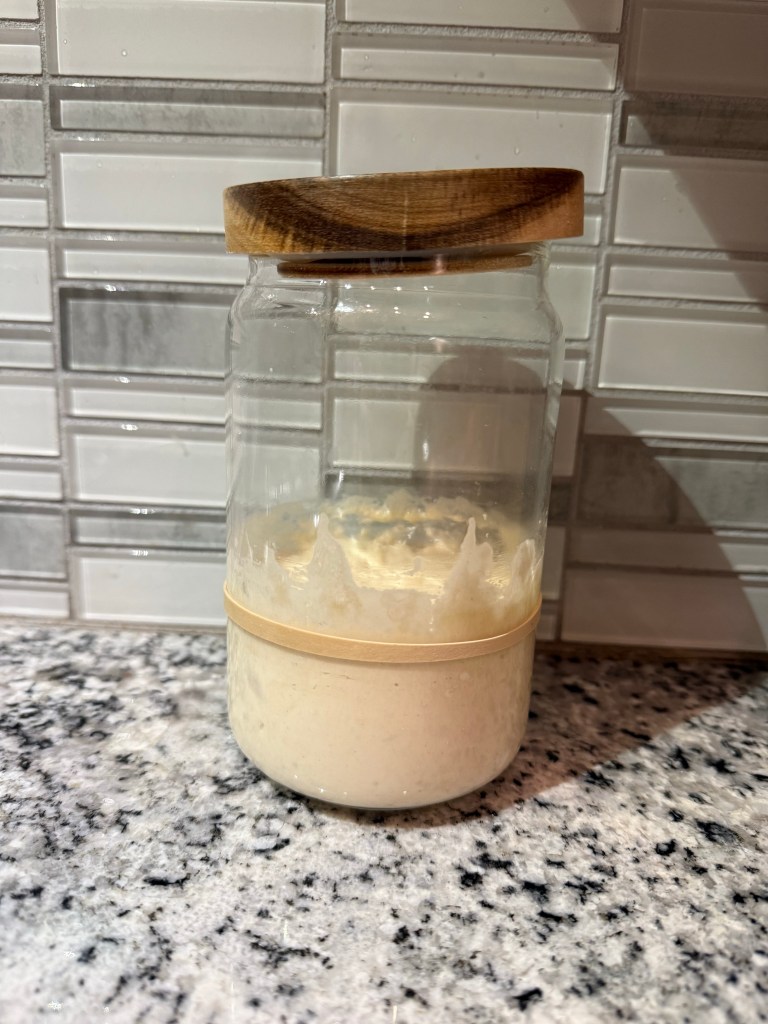
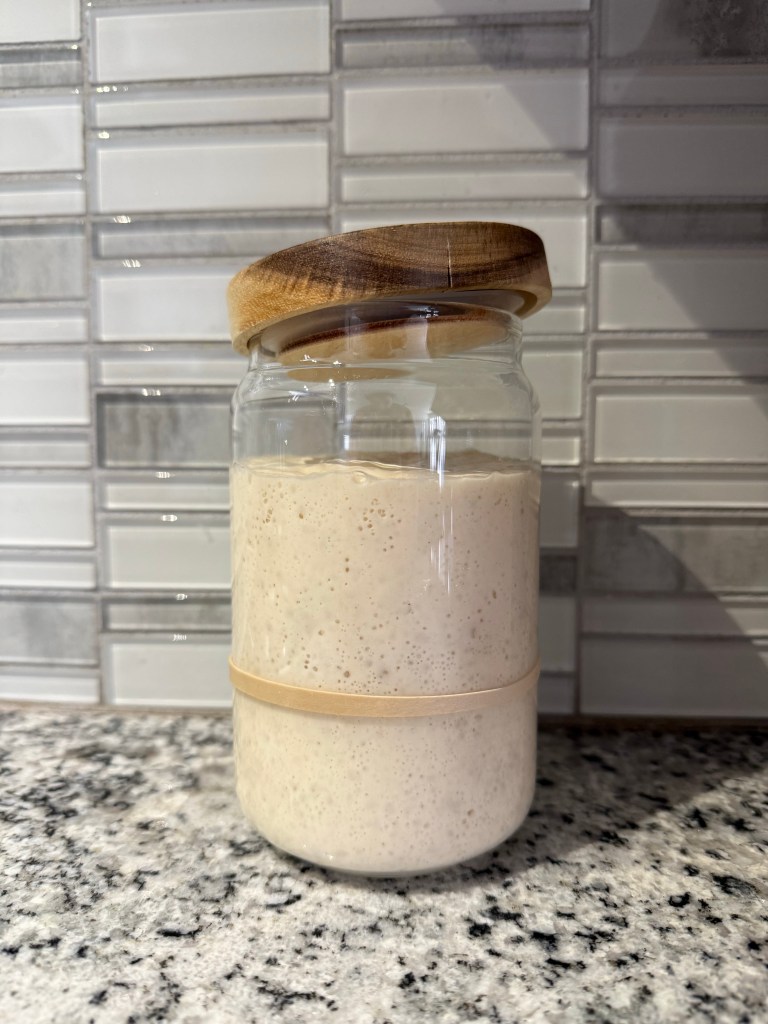
I prepped my starter the night before baking. I used to feed my starter exclusively with whole-wheat flour, but I recently learned (through following the directions in the Baking School book) that starters are able to rise much higher when using an all-purpose flour than when using whole wheat. Who knew?
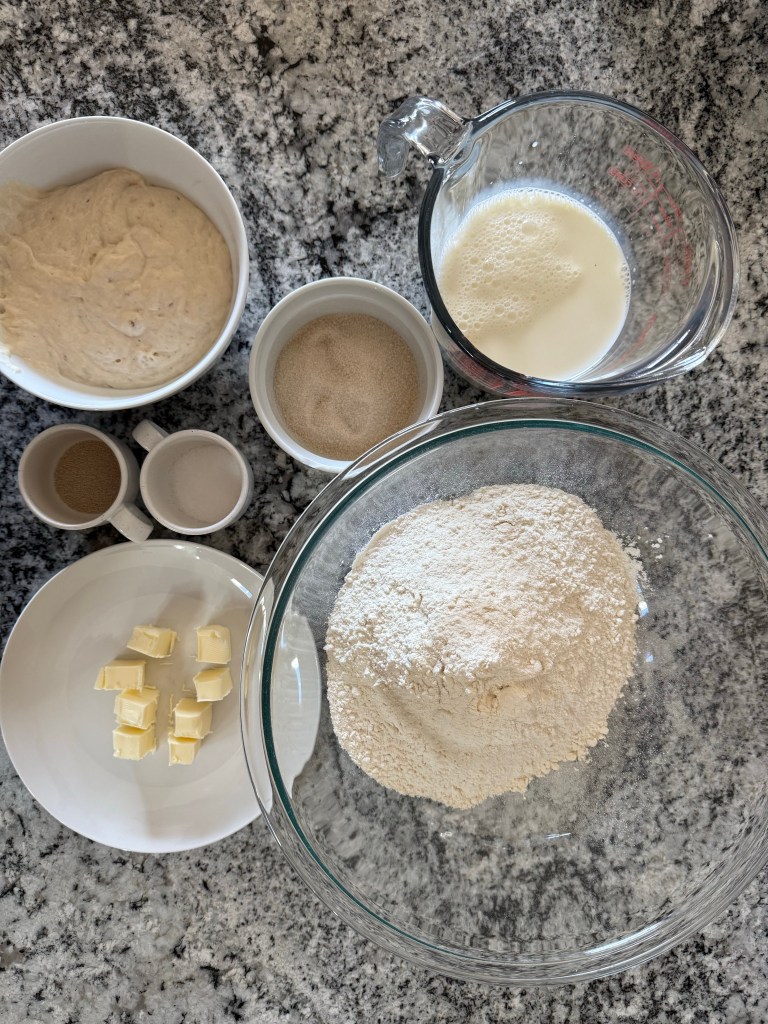
With my starter risen I gathered my mise en place.
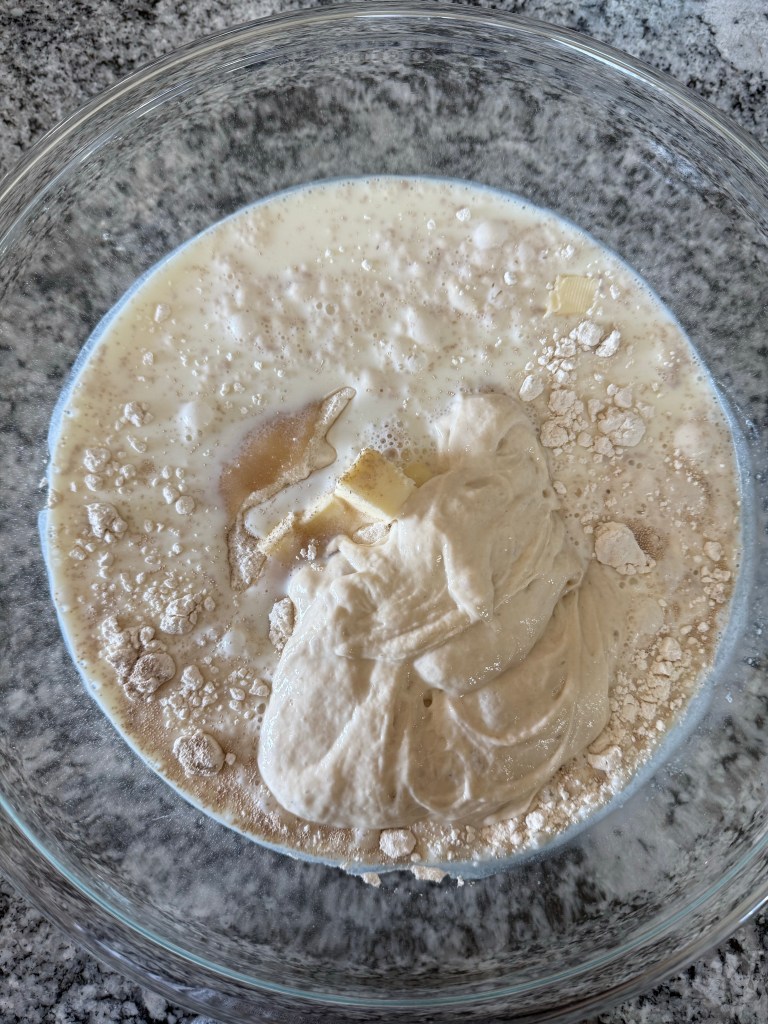
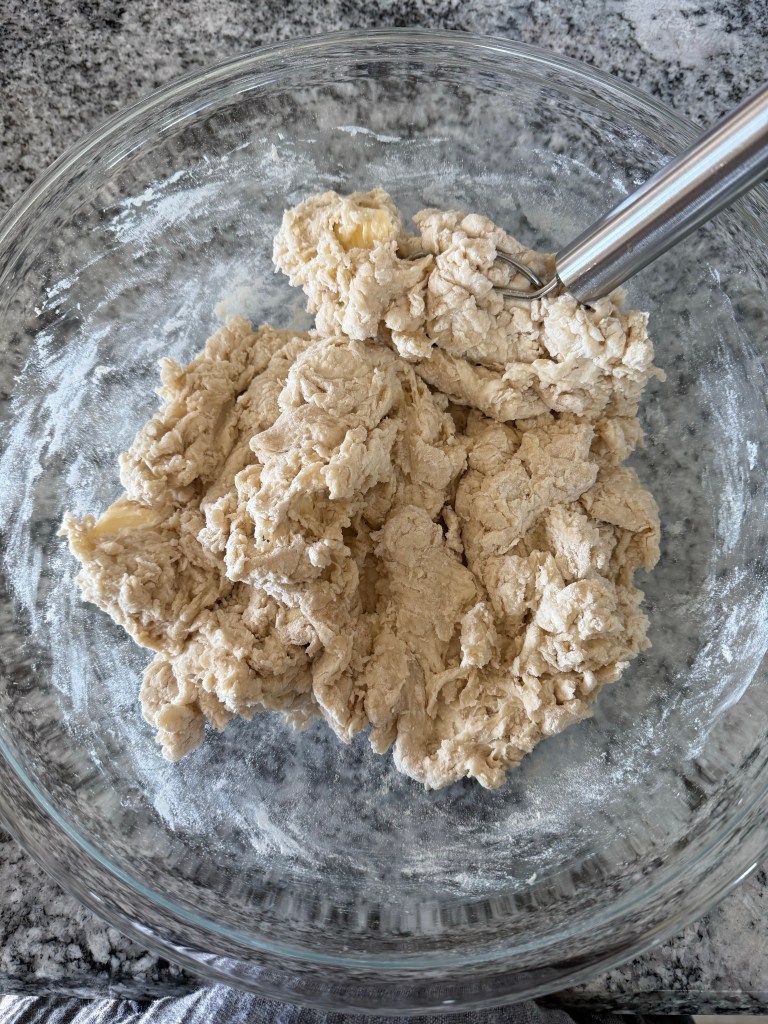
I mixed all the ingredients into a shaggy dough. My kitchen was cold, so the butter didn’t incorporate well. I probably should have let the butter soften for longer before mixing my dough, but that’s how we learn.
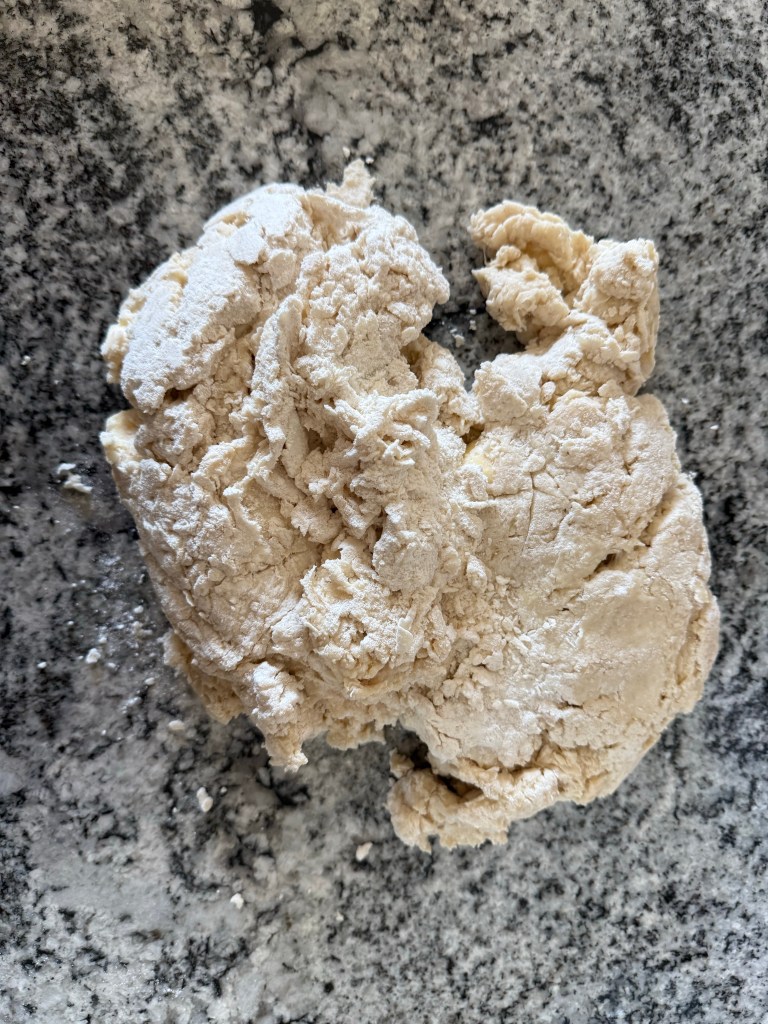
After mixing I kneaded the dough by hand for 5 minutes, adding flour only once the butter started to melt out of the dough and stick to the counter.
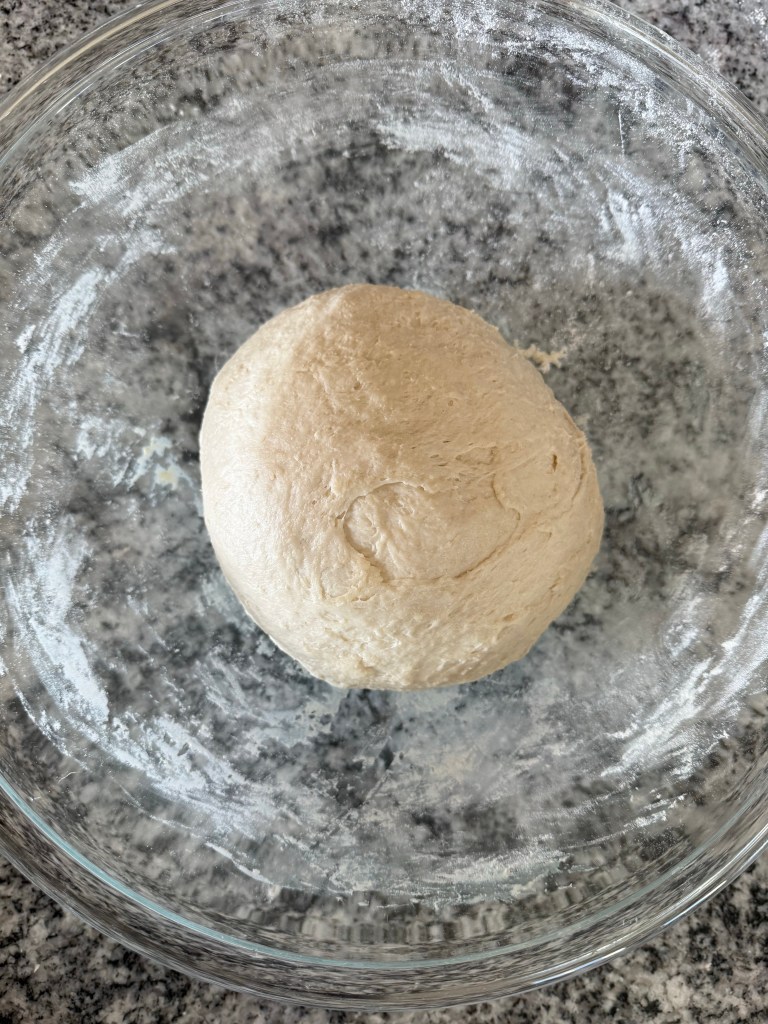
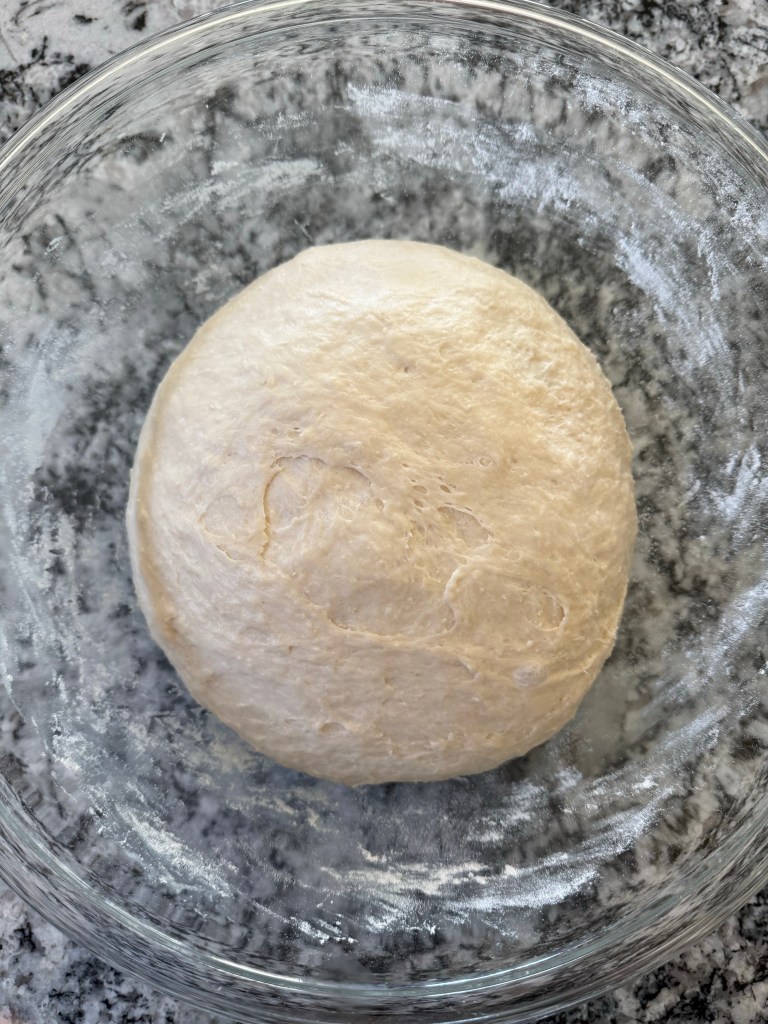
I set the dough aside to rise for 2 1/2 hours rather than the 2 hours directed in the book (it is winter, and my kitchen is cold).
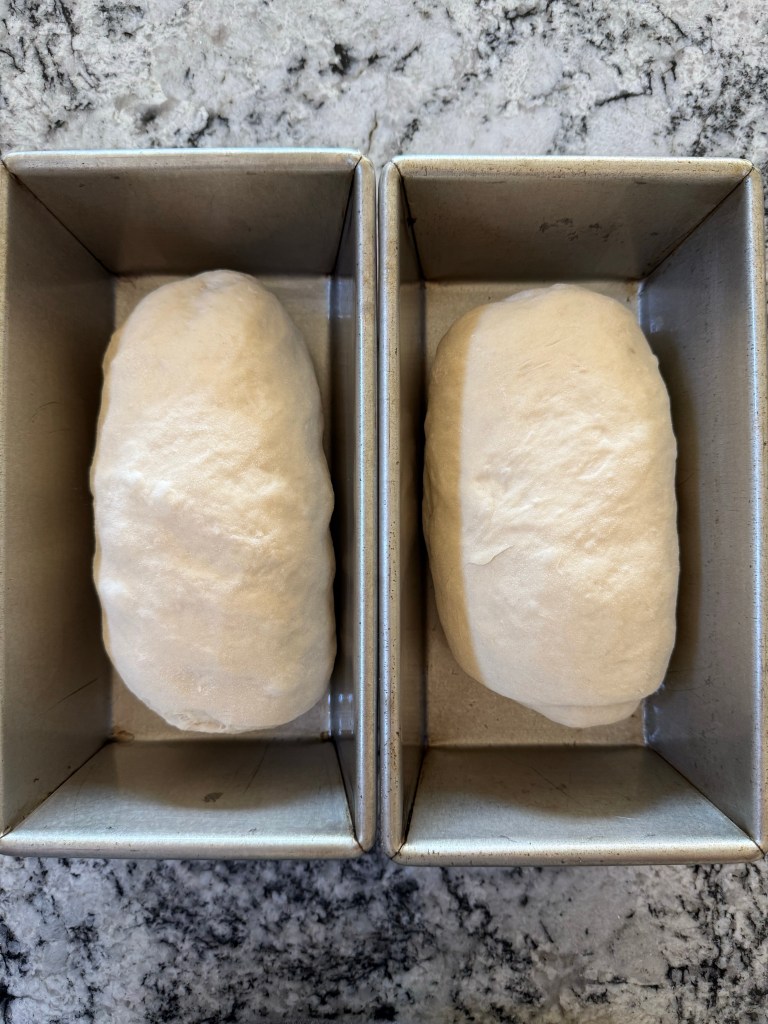
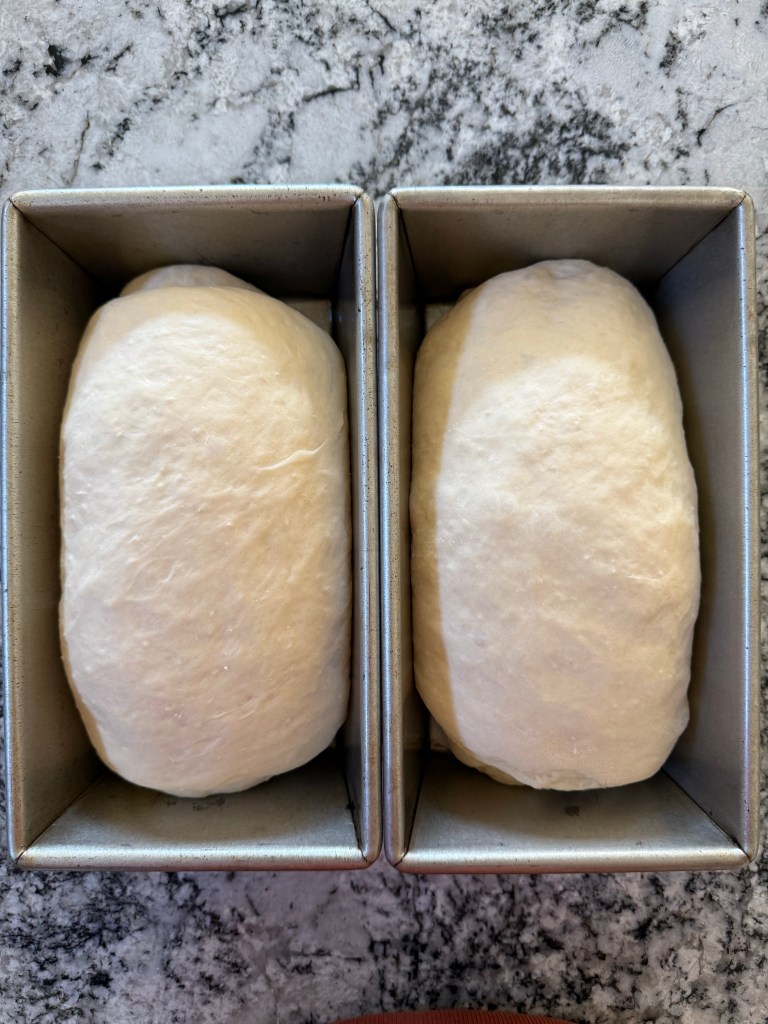
I divided the dough into two and shaped each half into a loaf, then put the loaves into loaf pans to rise. The book instructs to allow the dough to rise for 2 more hours, but I was coming up against a hard stop and needed to speed the last rise up. I put the loaf pans into the oven with the proofing setting on (80 degrees Fahrenheit) for 1 hour, then increased the tempterature to 95 degrees for half an hour for a total rise time of 1 1/2 hours.
I could have probably let the dough rise for another 20-30 minutes, but I was out of time, so I preheated the oven and baked the bread.
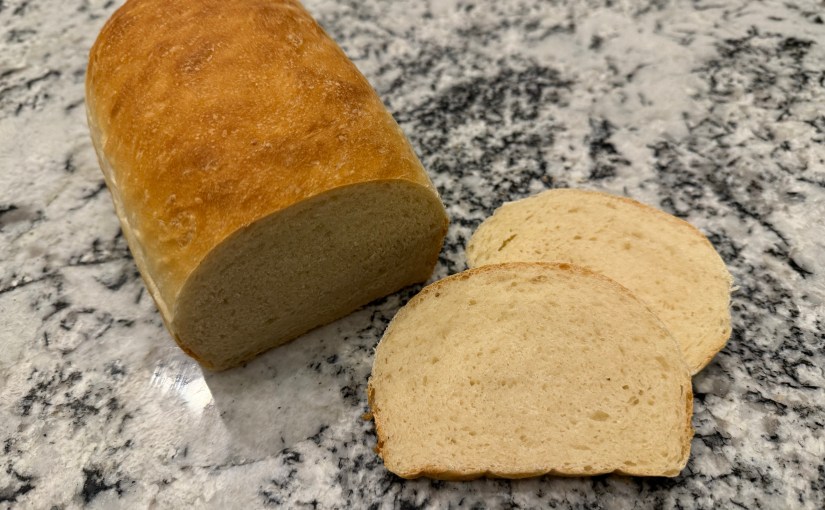
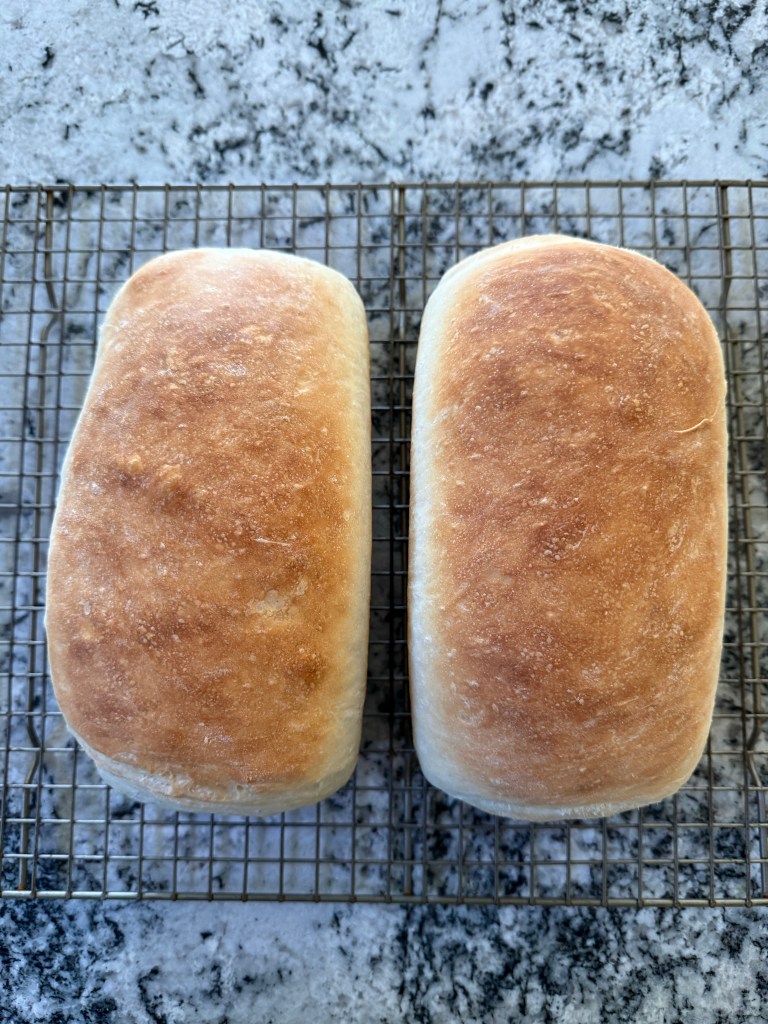
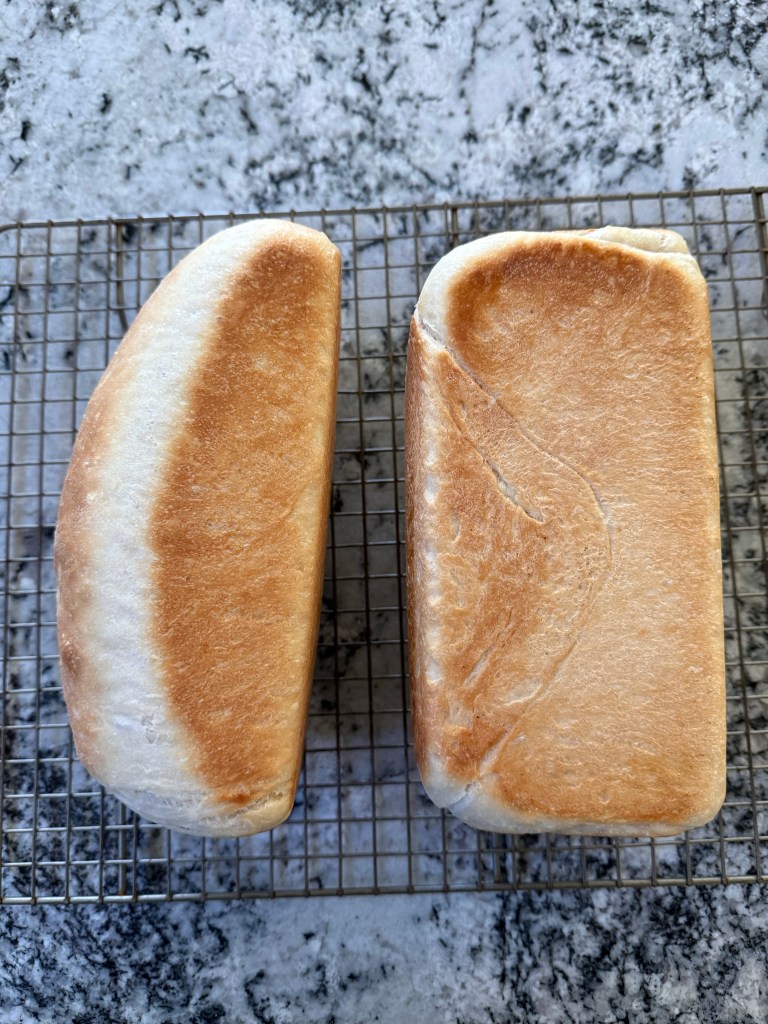
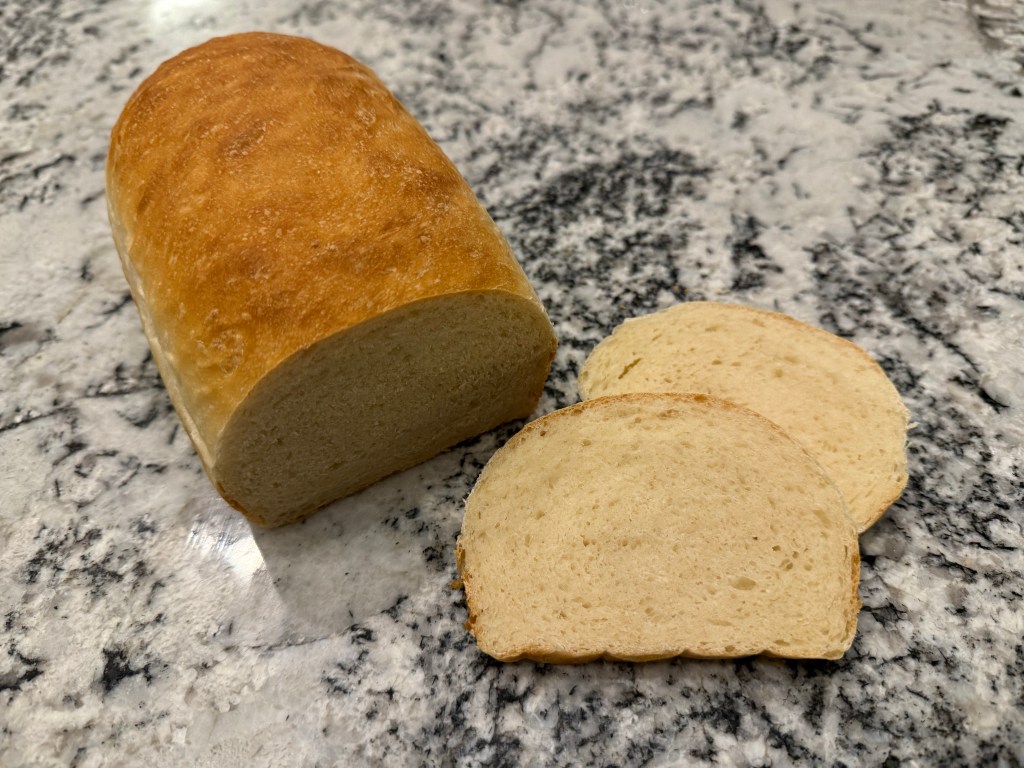
The finished bread smells like sourdough, but tastes sweet, almost like a dinner roll. It has a tight crumb and chewy texture. It would stand up to a sandwich without crumbling, which is better than I can say for most homemade sandwich breads. The bread toasts well and would be good in BLTs. This may be my new go-to sandwich bread.
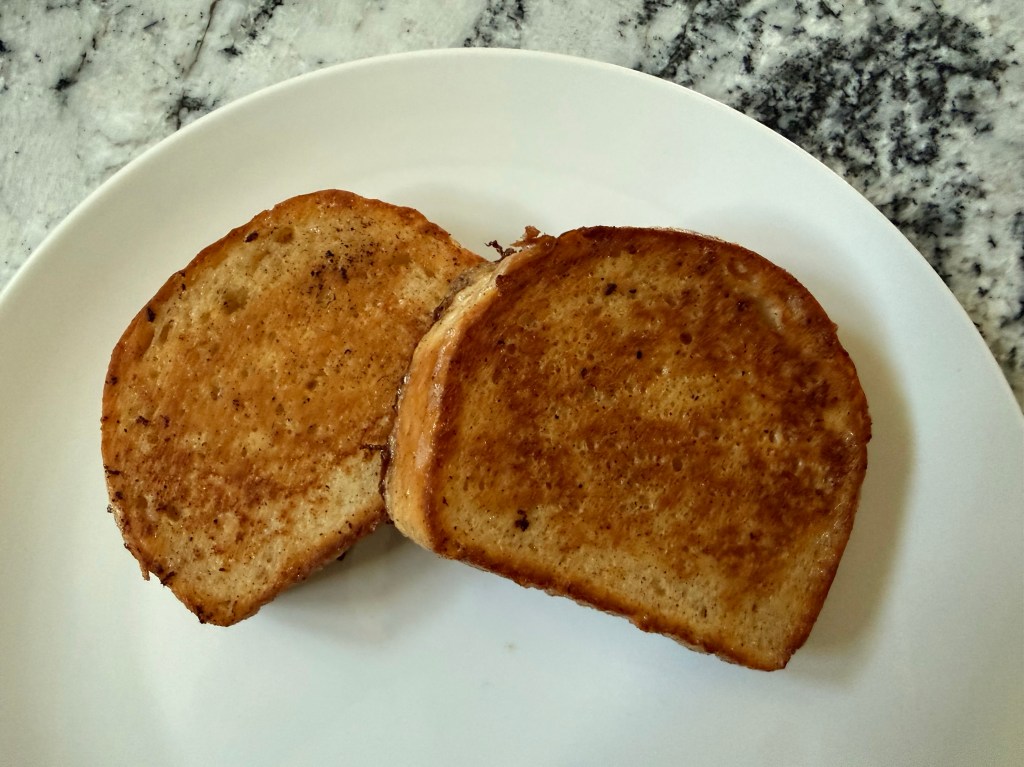
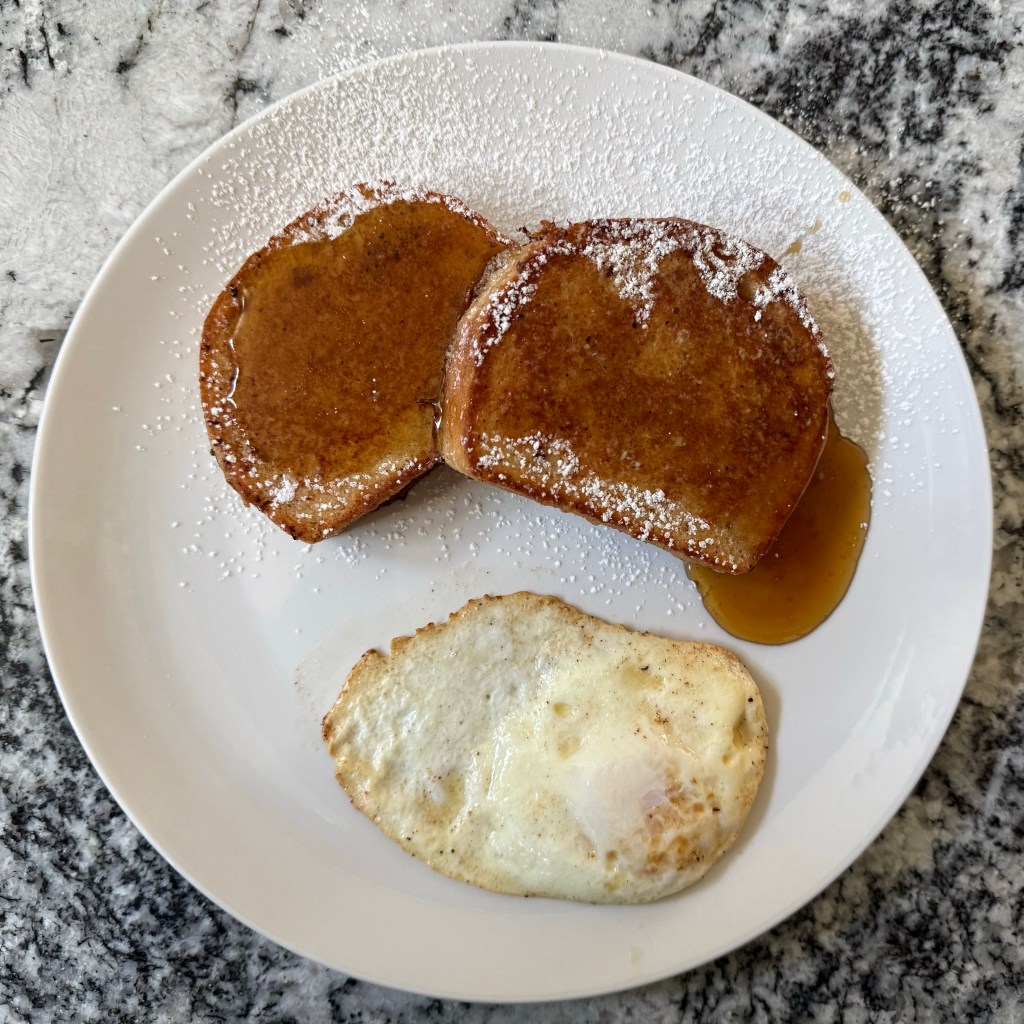
We made excellent French Toast using this bread. The hint of sourness sets off the sweet sugar and syrup beautifully.
Until the next time: may your yeast always rise and your flour never run out.
As a kid I never really liked English Muffins. It turns out there’s a good reason for that: store-bought English Muffins are dry and don’t have much flavor (this is true of most commercially-available bread). It also turns out that homemade English Muffins are moist, tender, and full of flavor. The flavor is even better when sourdough starter is incorporated. Also, did you know that incorporating sourdough into your dough helps the finished bread keep longer on the counter without staling or molding?
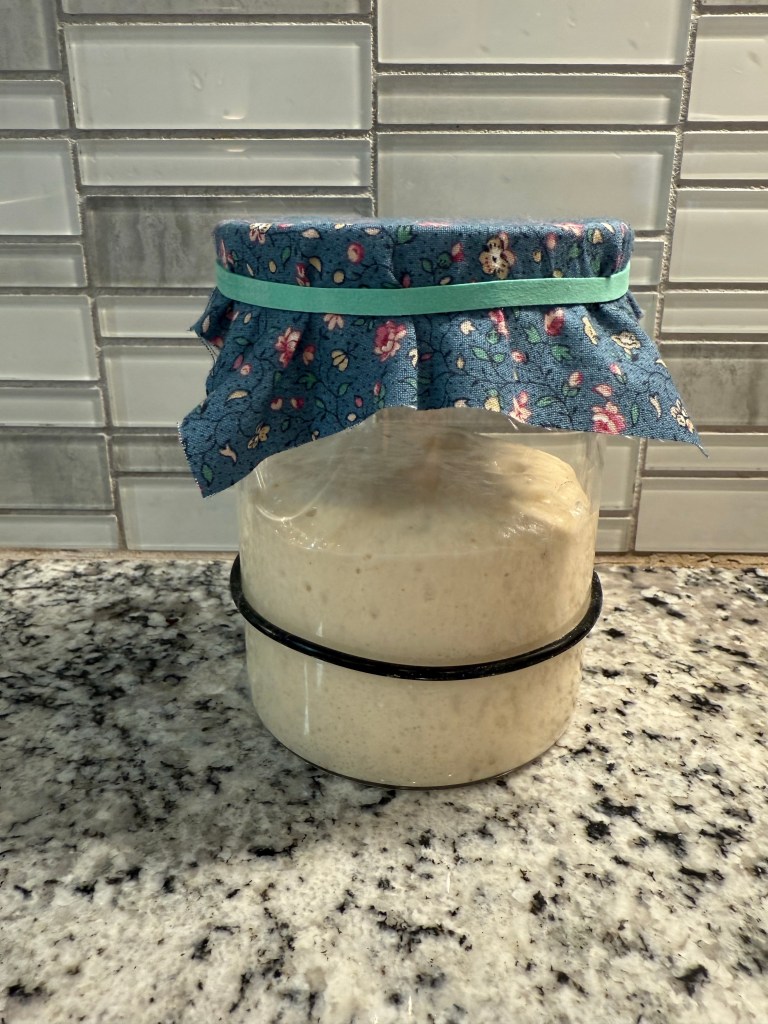
As with most Sourdough recipes, I started by feeding my starter the night before (I used my Alaska Frontier starter for this bake). In the morning the level of the starter had doubled.
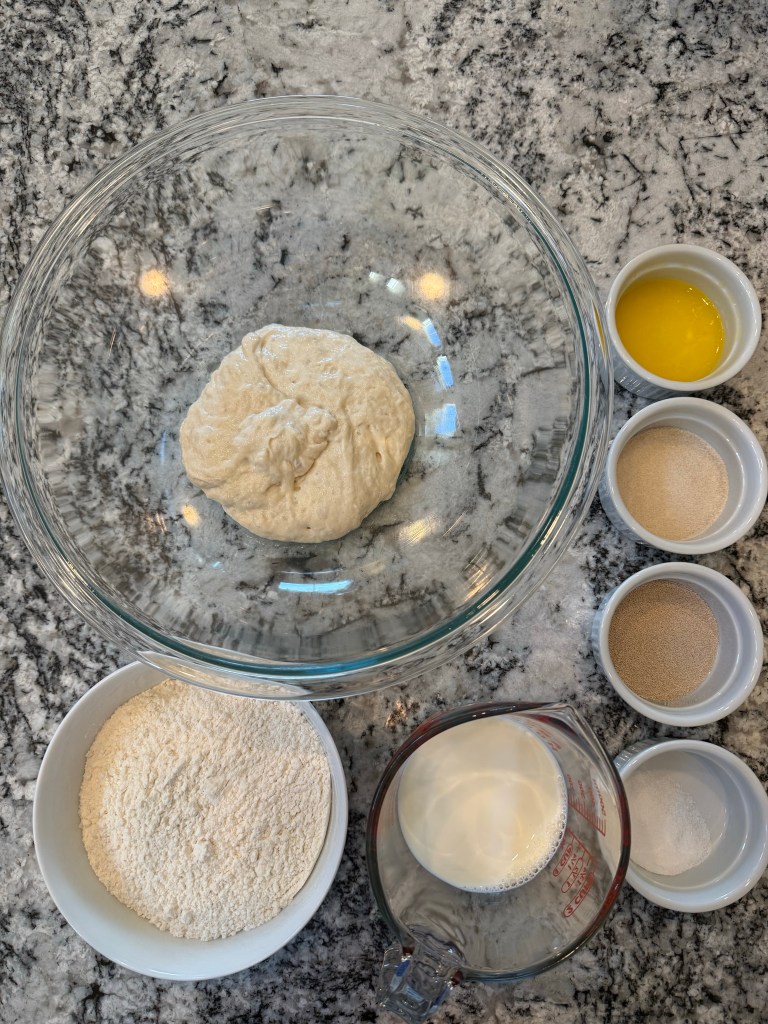
I gathered my mise en place:
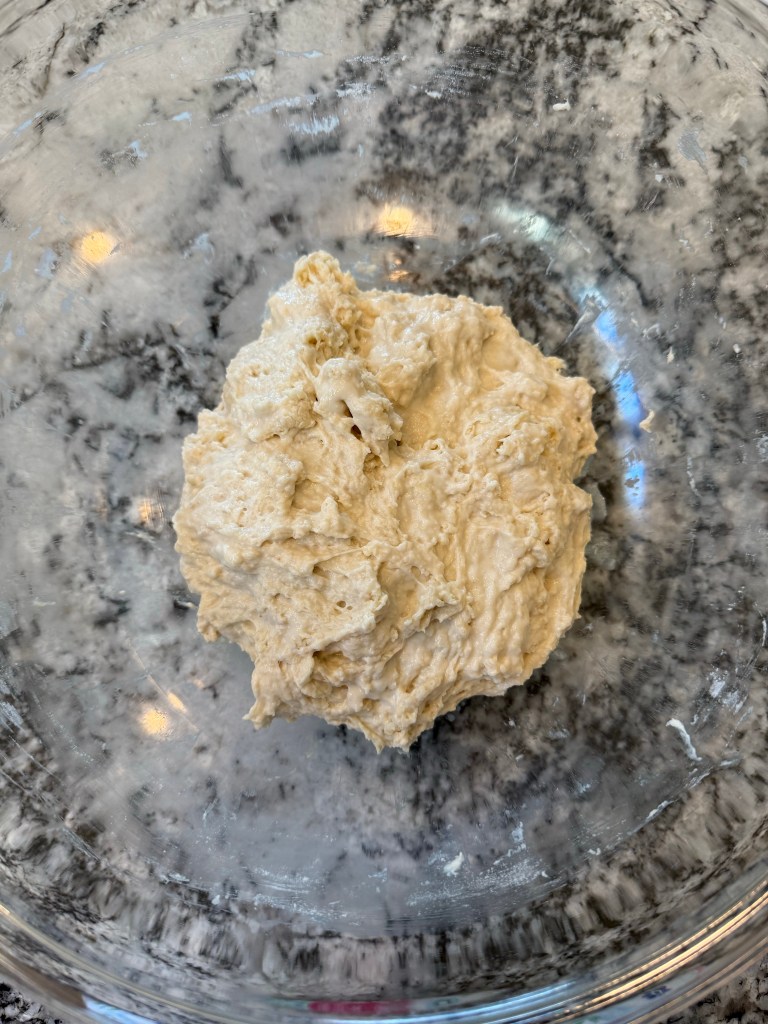
The mixing was very easy as I just combined all the ingredients and mixed by hand until everything was thoroughly incorporated.
I let the dough rise for 1 hour.
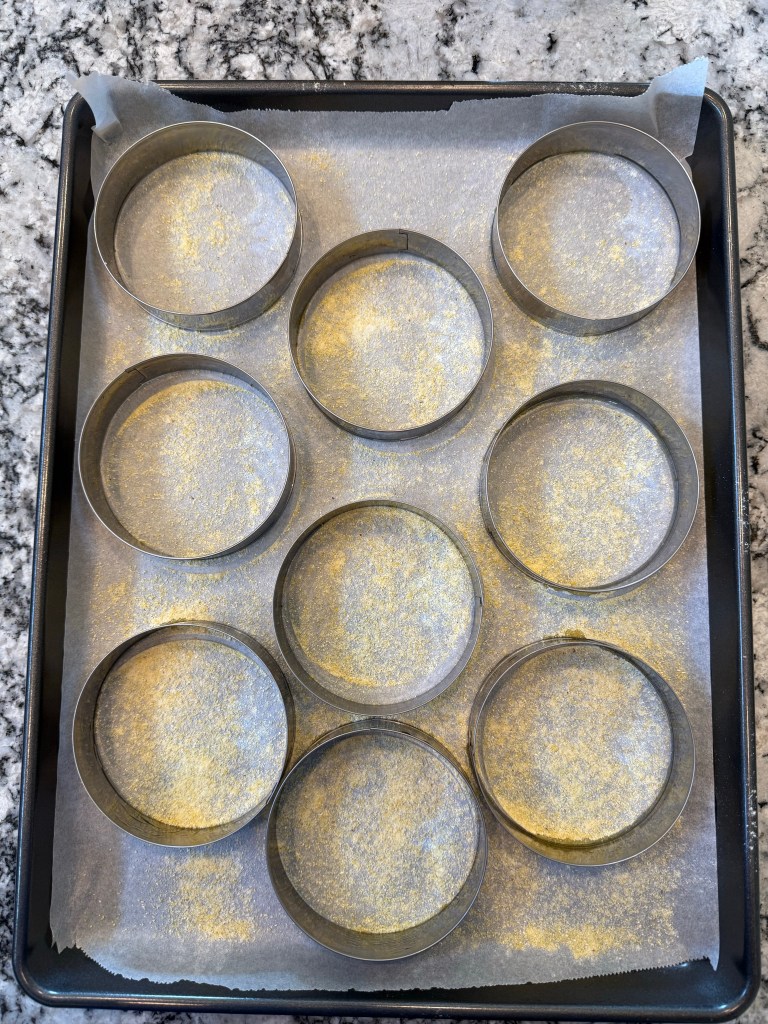
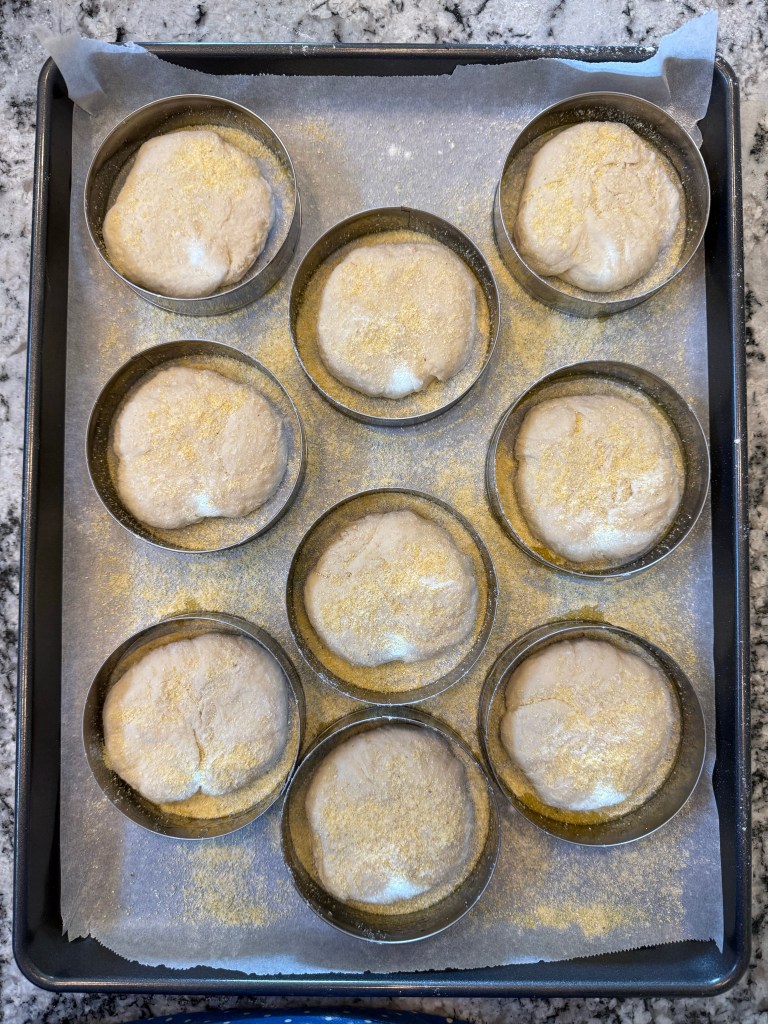
This next step is the part that separates English Muffins from a sandwich loaf. I greased 9 English Muffin rings and sprinkled cornmeal on a baking sheet.
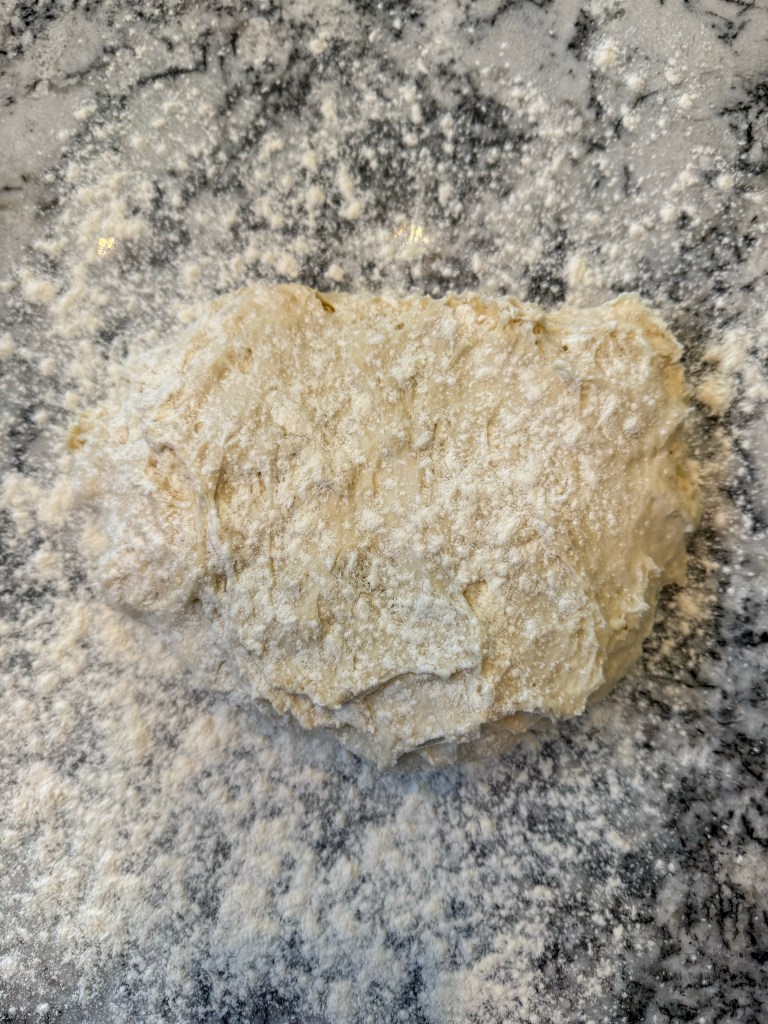
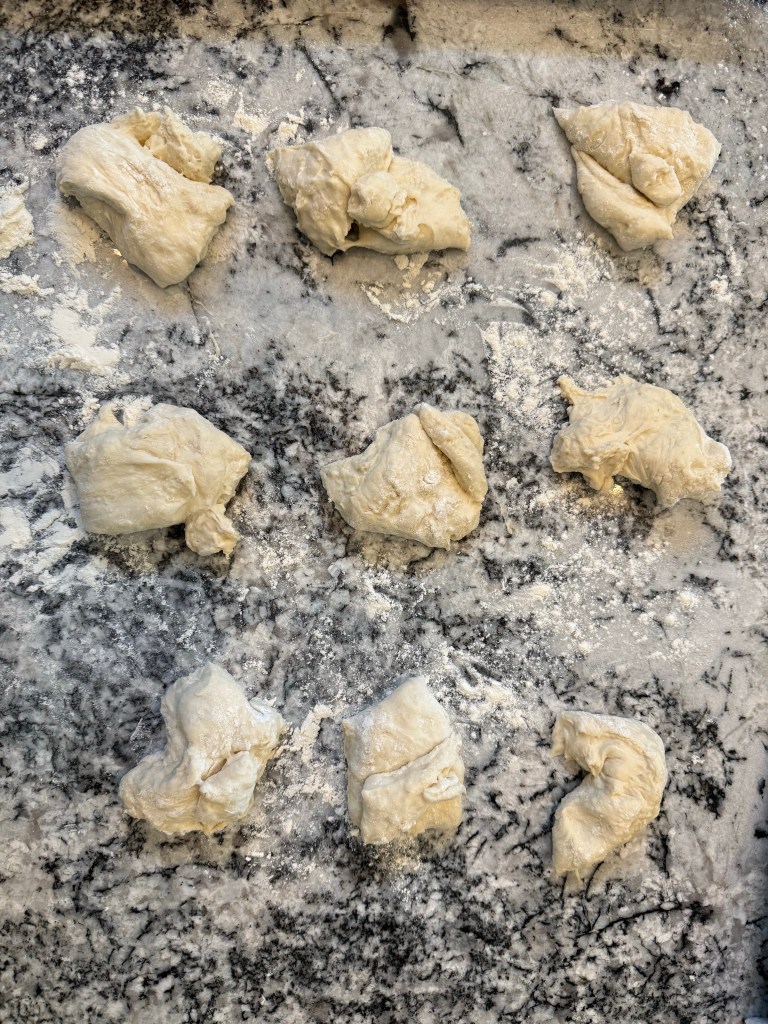
Then I turned the dough out onto a floured counter and divided it into 9 pieces.
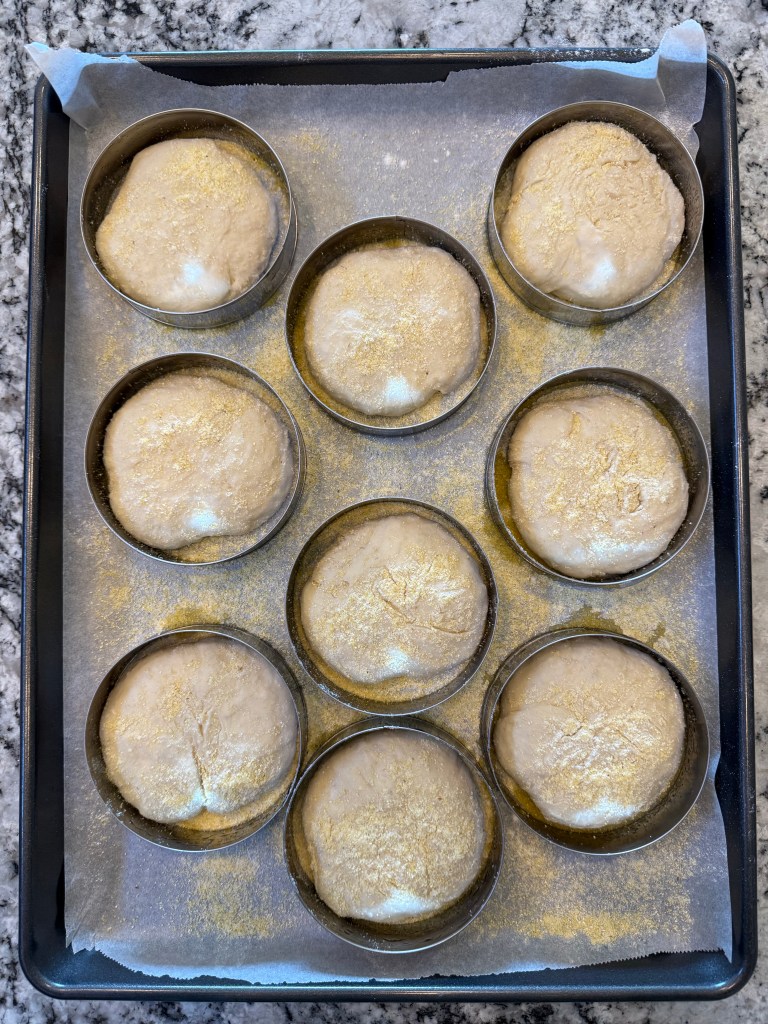
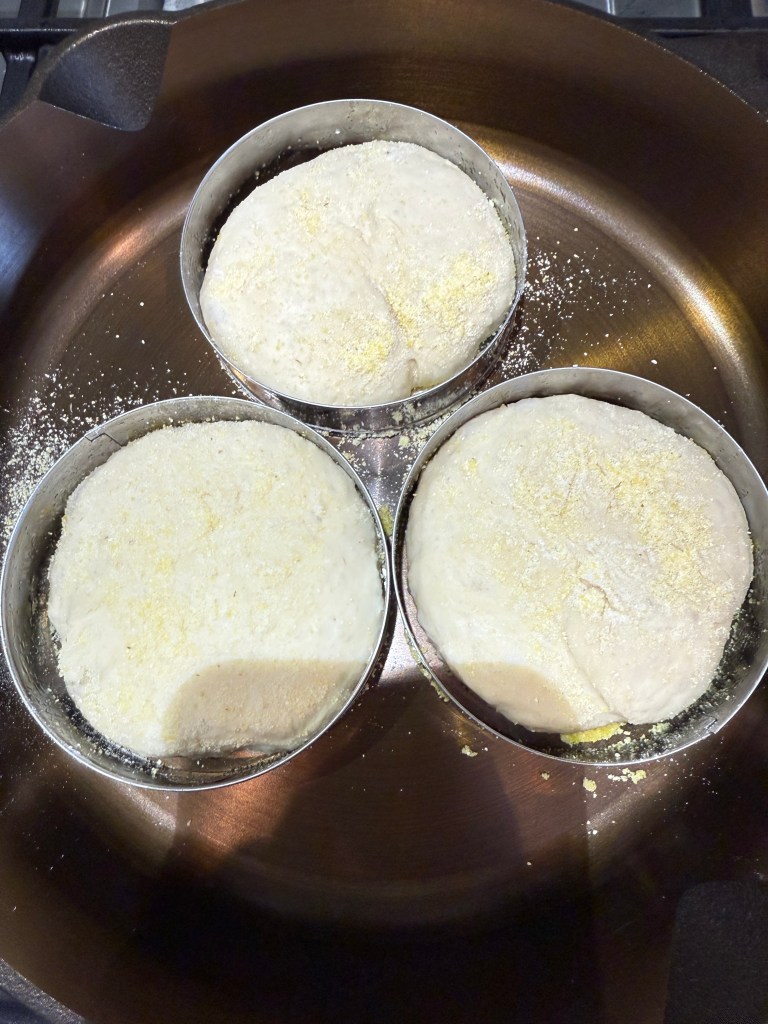
I rolled each piece into a flattened round, placed each piece into a ring, sprinkled them all with cornmeal, and let them rise for another hour. After an hour they had expanded significantly, but weren’t fully filling the rings.
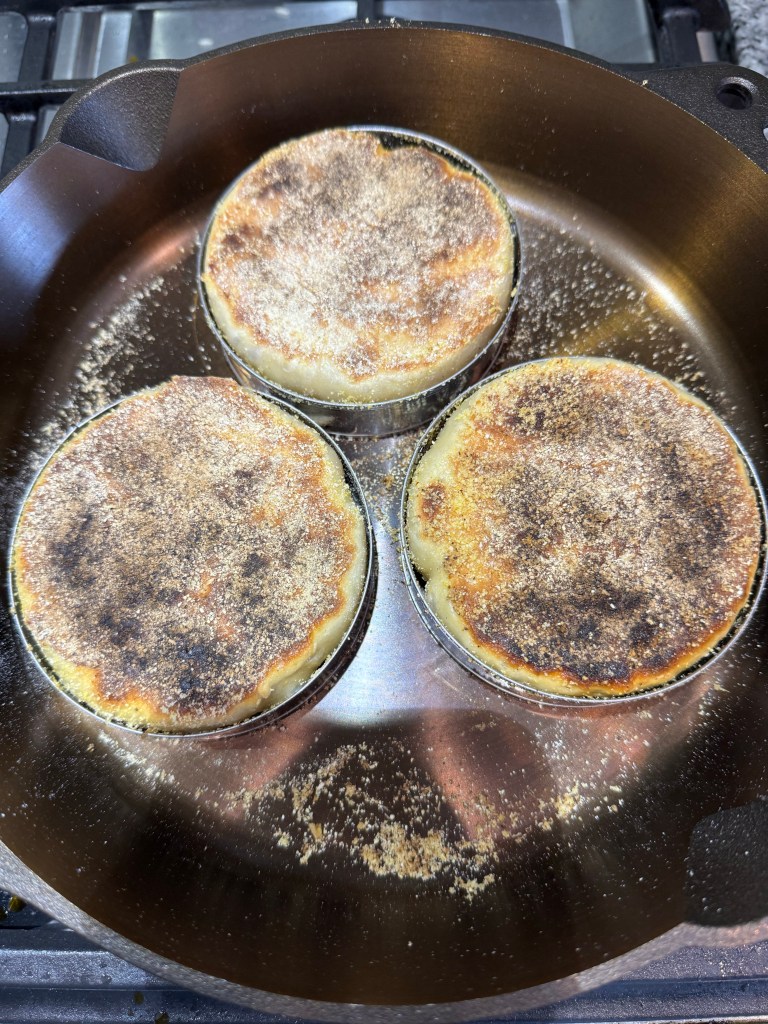
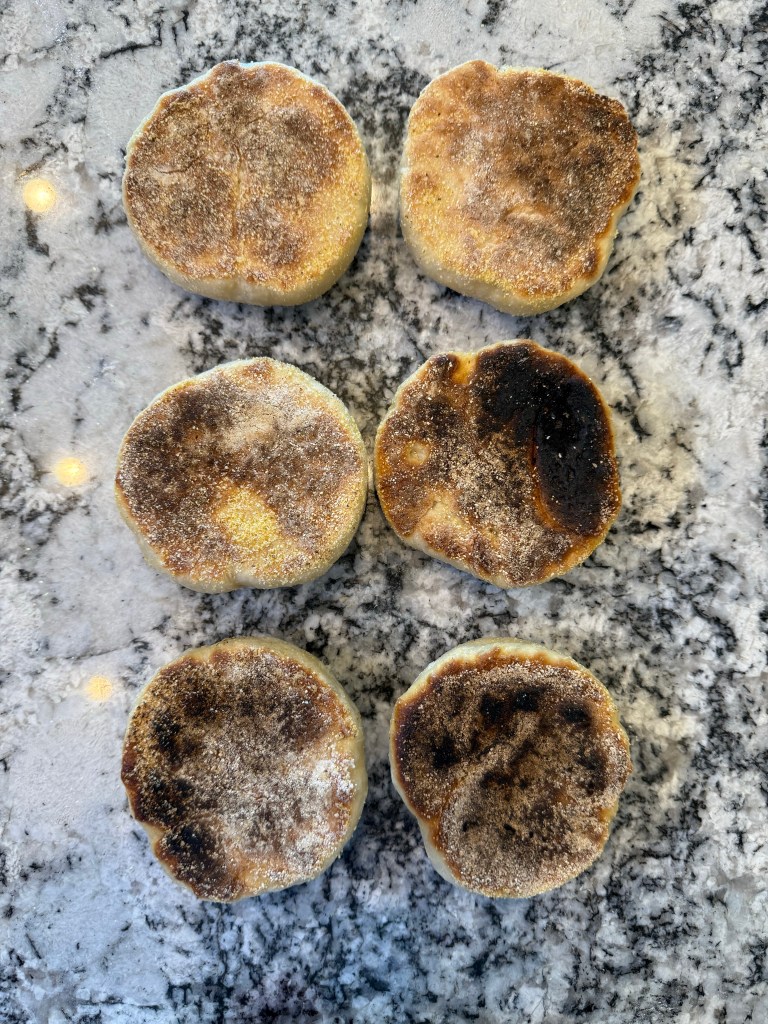
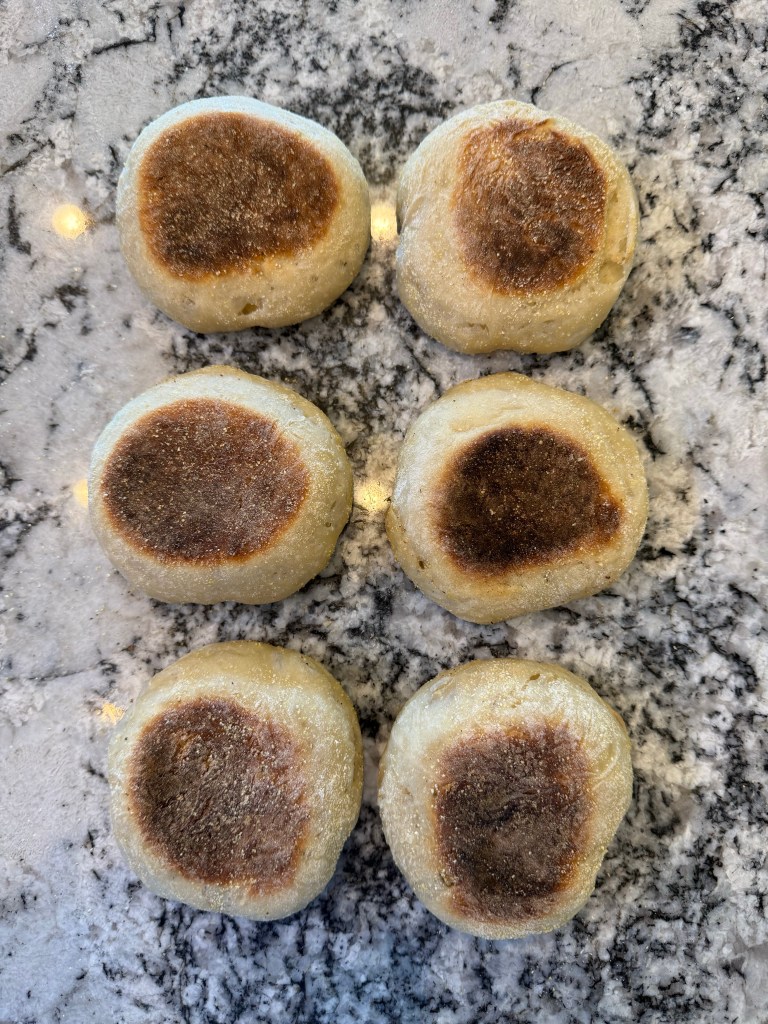
The King Arthur Baking School book instructs one to cook the English Muffins on a griddle. I don’t have a griddle, so I used a cast iron pan at the lowest heat on my stove. The dough expanded significantly and filled the rings after being placed in the hot pan.
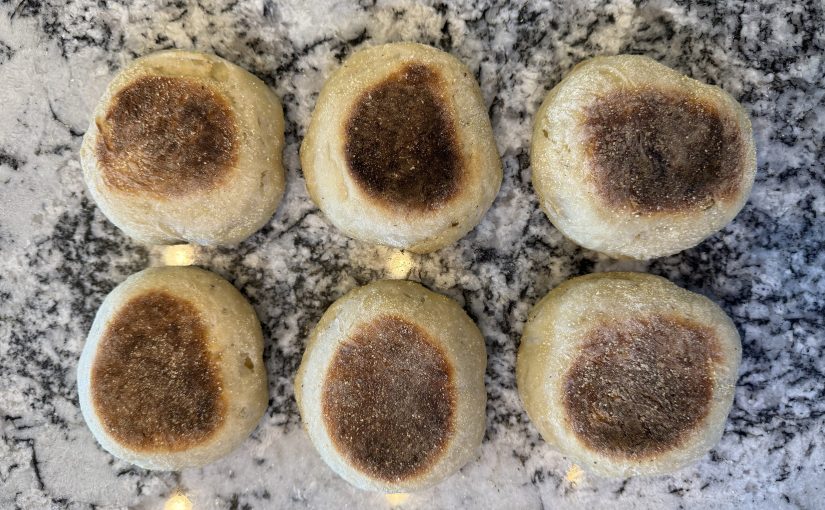
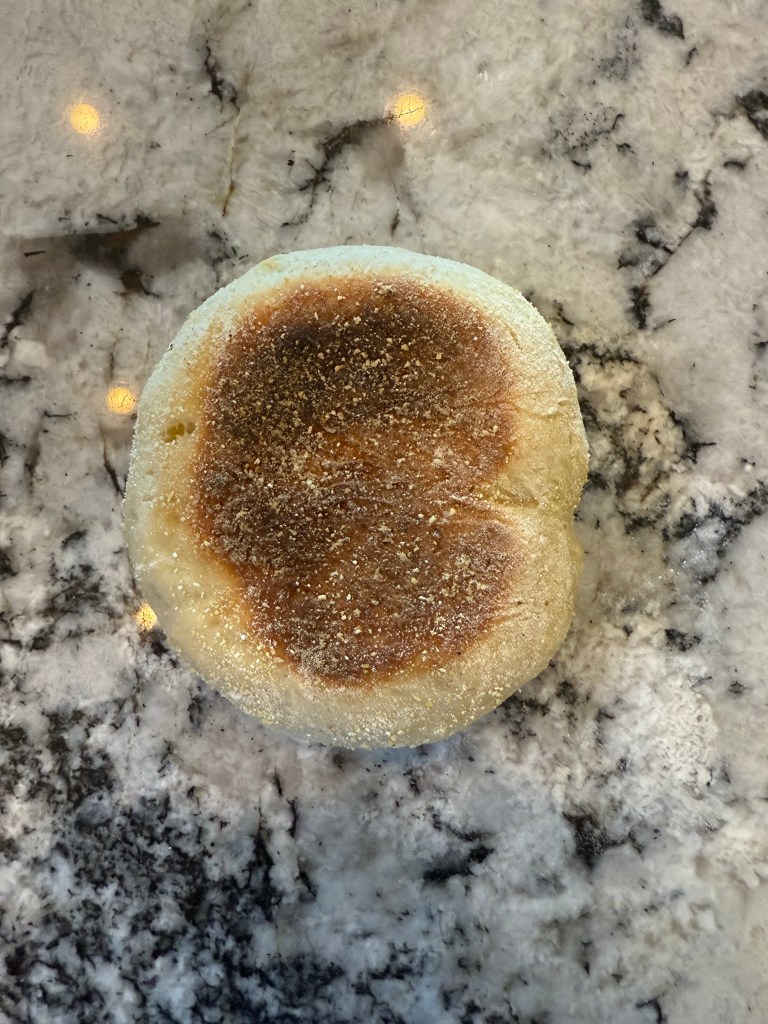
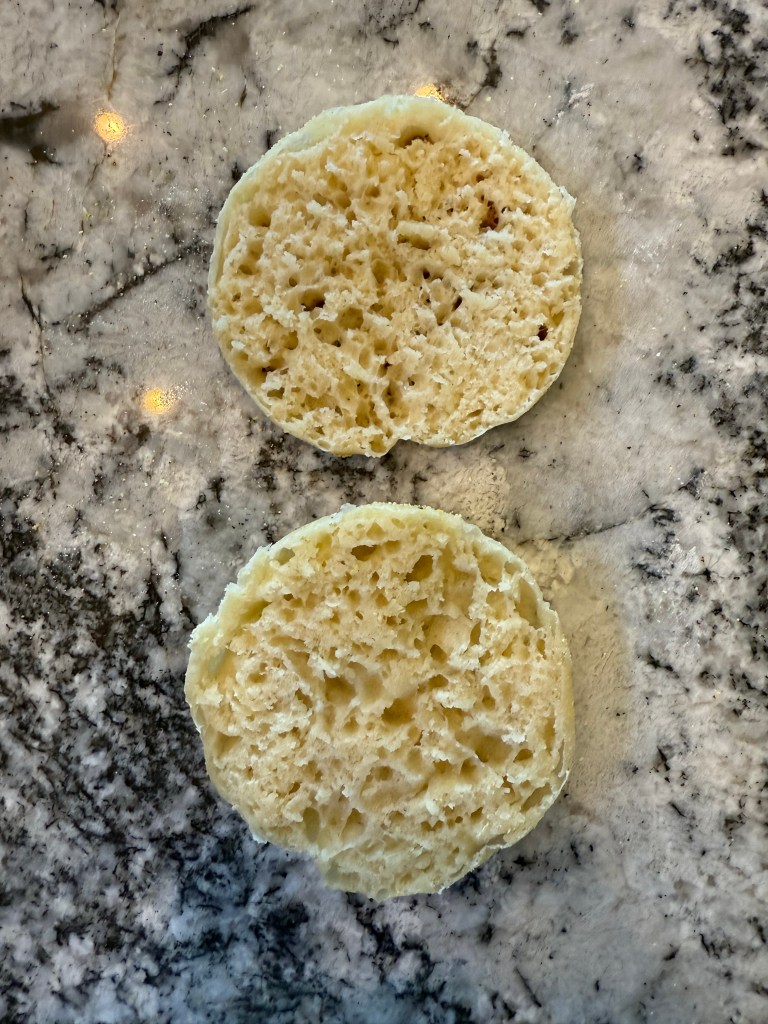
They turned out tender and full of flavor and with the lovely interior holes that are so indicative of a good English Muffin.
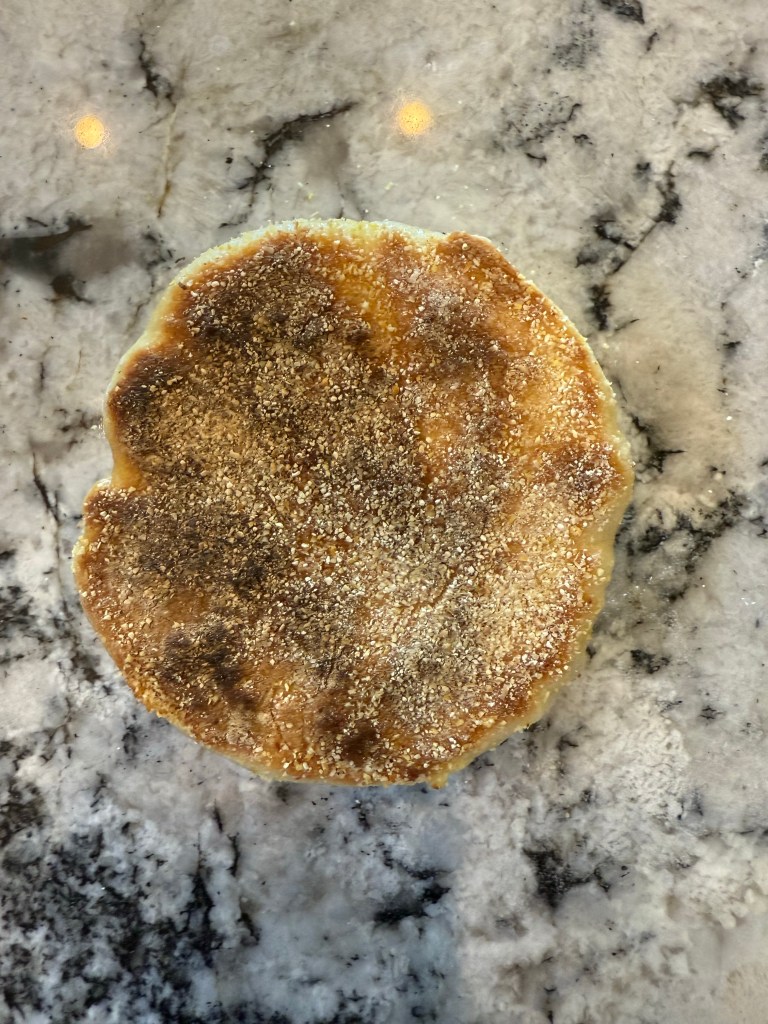
I’m not very practiced at baking bread in a pan, so some of my muffins got a little charred. I think next time I make these I will bake them on the baking stone in the oven for a more even bake.
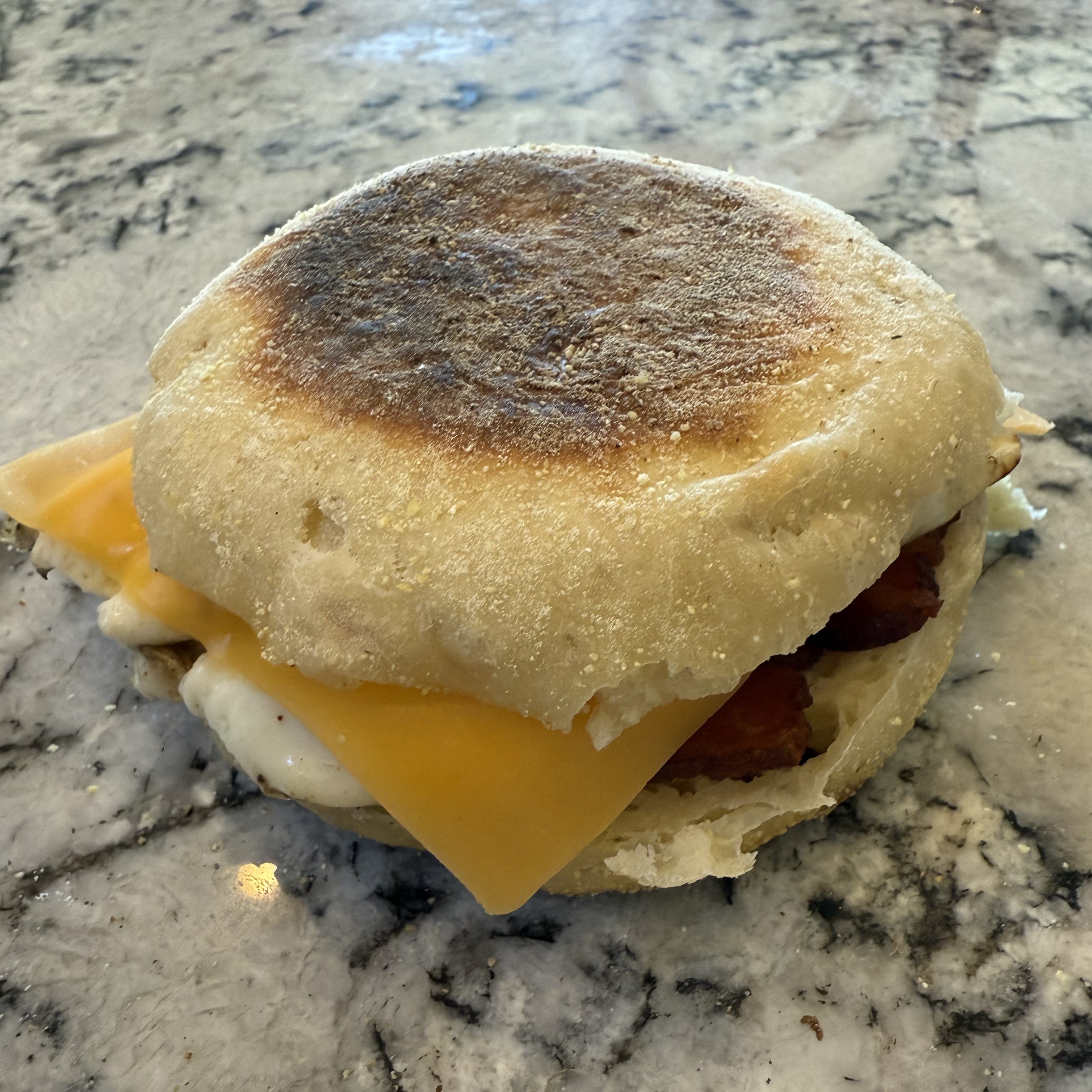
You’re supposed to let these cool briefly before eating, but we couldn’t help eating them straight out of the pan. These English Muffins make a next-level Bacon, Egg, and Cheese breakfast sandwich. They’re also fantastic with butter and jam.
Until the next time: may your yeast always rise and your flour never run out.
For these waffles I used a new (to me) starter that I bought in Seattle. The starter is from Alaska, and I like to imagine a gold-miner carefully tending to his starter while hoping to strike it rich in the Yukon. Although, I doubt he used his starter to make waffles. As usual, the recipe is from the King Arthur Baking School book.
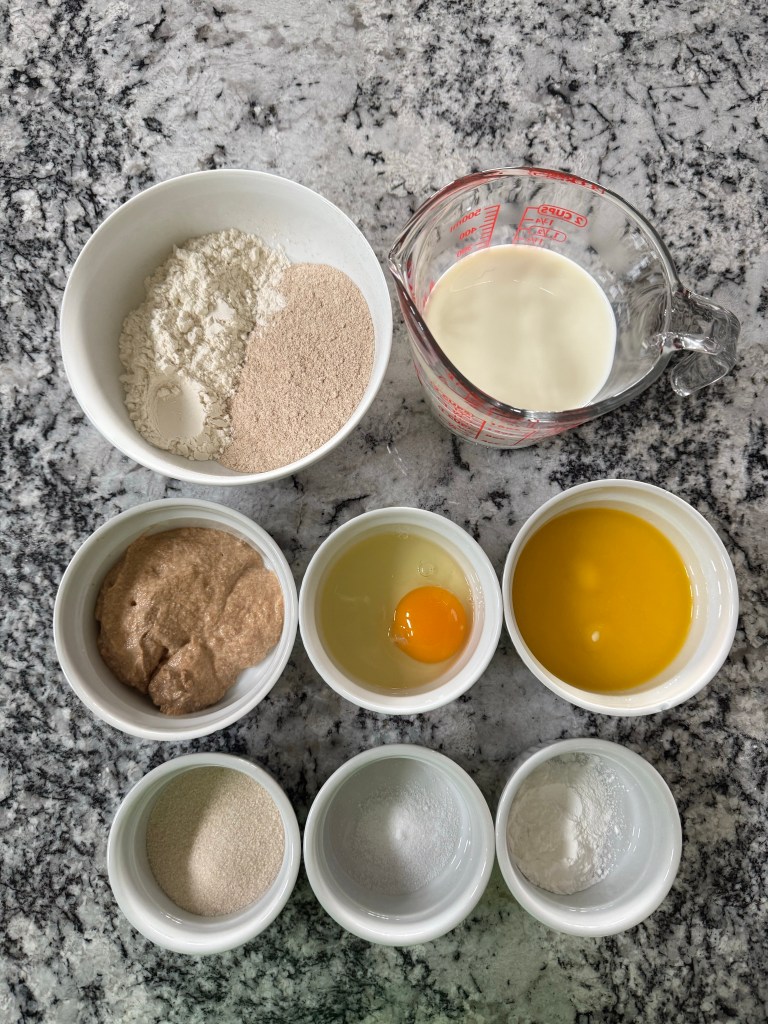
I gathered my mise en place. The recipe calls for all the flour in the recipe to be whole wheat, but relies on a starter fed with all purpose flour. I prefer to feed my starter with whole wheat flour, so to keep the ratio of flour types consistent I replaced 50g of the whole wheat flour in the recipe with all purpose flour.
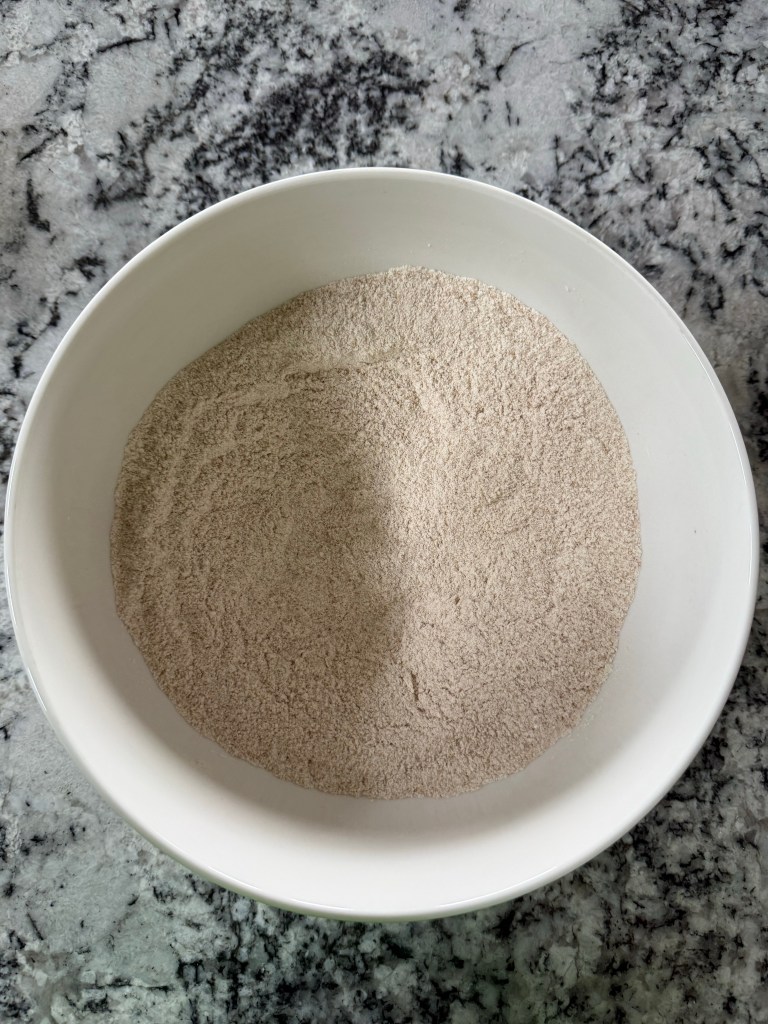
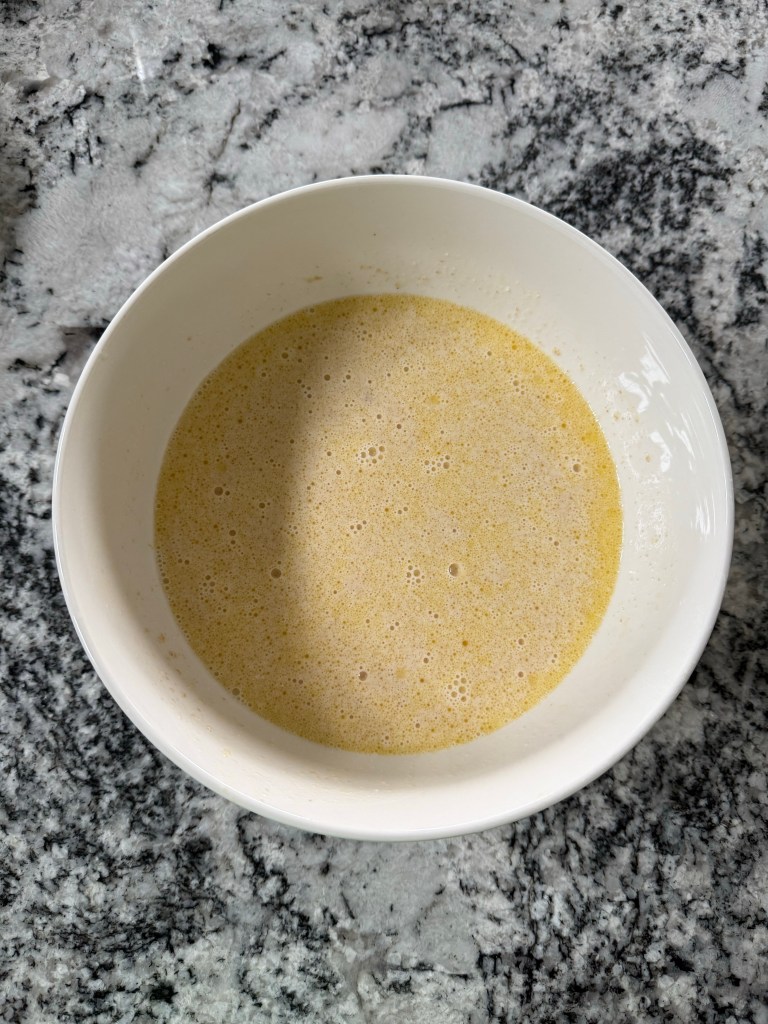
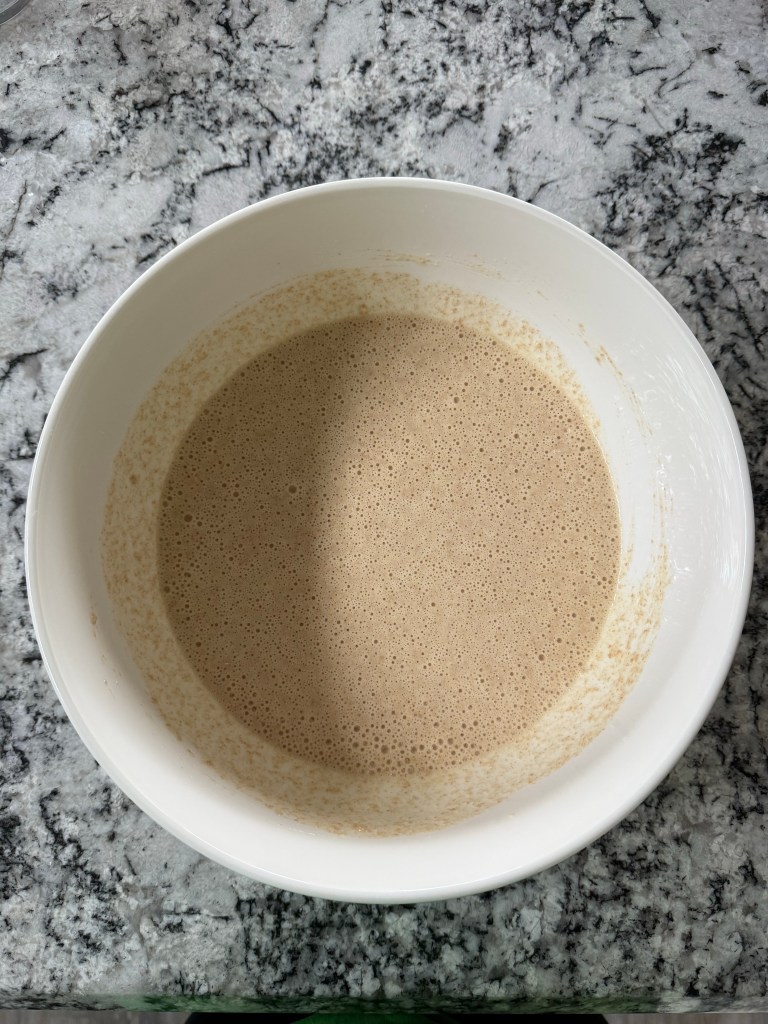
I combined the dry ingredients, whisked together the wet ingredients (including the starter), and then mixed them all together.
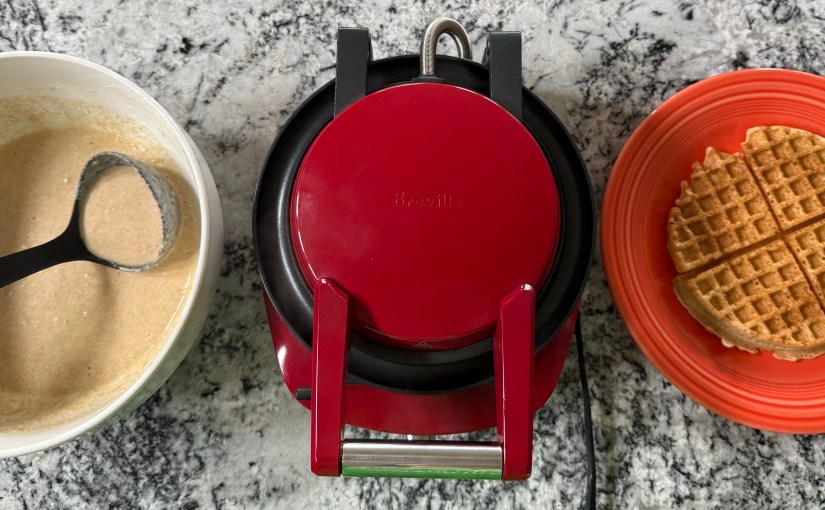
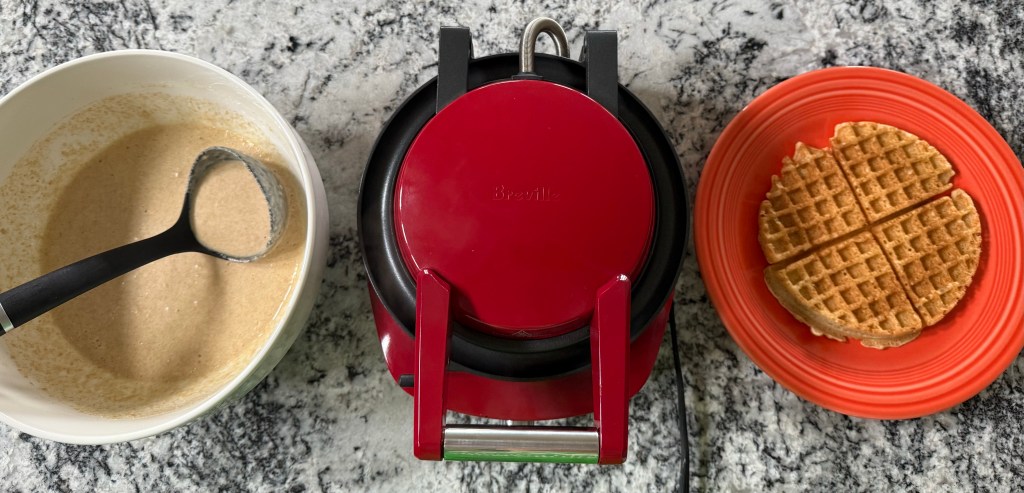
I heated up my waffle iron and started cooking waffles. As an aside, are waffles baked or fried?
These waffles have a fantastic texture! They are quite crispy on the outside while still having a tender chew. There is a hint of sour flavor, but the tanginess is not overwhelming. I recommend brushing the waffles with butter, drizzling with maple syrup, and sprinkling with salt before devouring them. They are delicious.
Until the next time: may your yeast always rise and your flour never run out.
The second section of the King Arthur Baking School book is all about Sourdough baking, and I am so here for it! I have been baking with sourdough for quite a few years, so I have some OPINIONS on how things should be done, but I am trying to keep an open mind – who knows, I might just learn something new!
I started my sourdough culture back in the summer of 2019. I had bought Tartine Bread by Chad Robertson, and I was bought in to the idea of a sourdough lifestyle. My starter took close to a month to be fully established, rather than the 1-2 weeks you see in most books and online resources, and once she was established she was not very robust. I named her Constance in hopes that she would mimic her name. Later that year my husband and I went on a road trip across the country to visit family in Arizona and California, and I decided to bring Constance along. I set her out in a rainstorm to get some Arizona rainwater, and baked with her in California to get some California flour into her. When I brought her home, she was true to her name. She’s been strong and resilient since that trip. I adore baking with her.
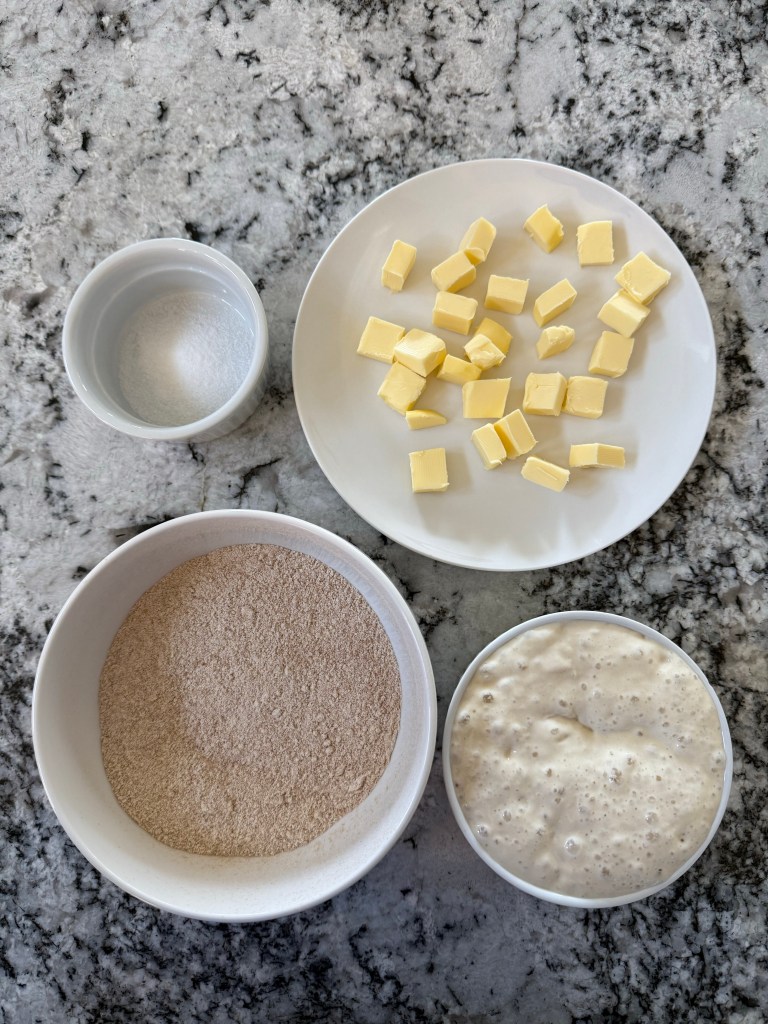
The first recipe in this section is sourdough crackers. I gathered my mise en place:
First I combined the flour and salt,
then I added the butter and beat it all until sandy,
and finally I added the starter and mixed until the dough was fully hydrated and smooth.
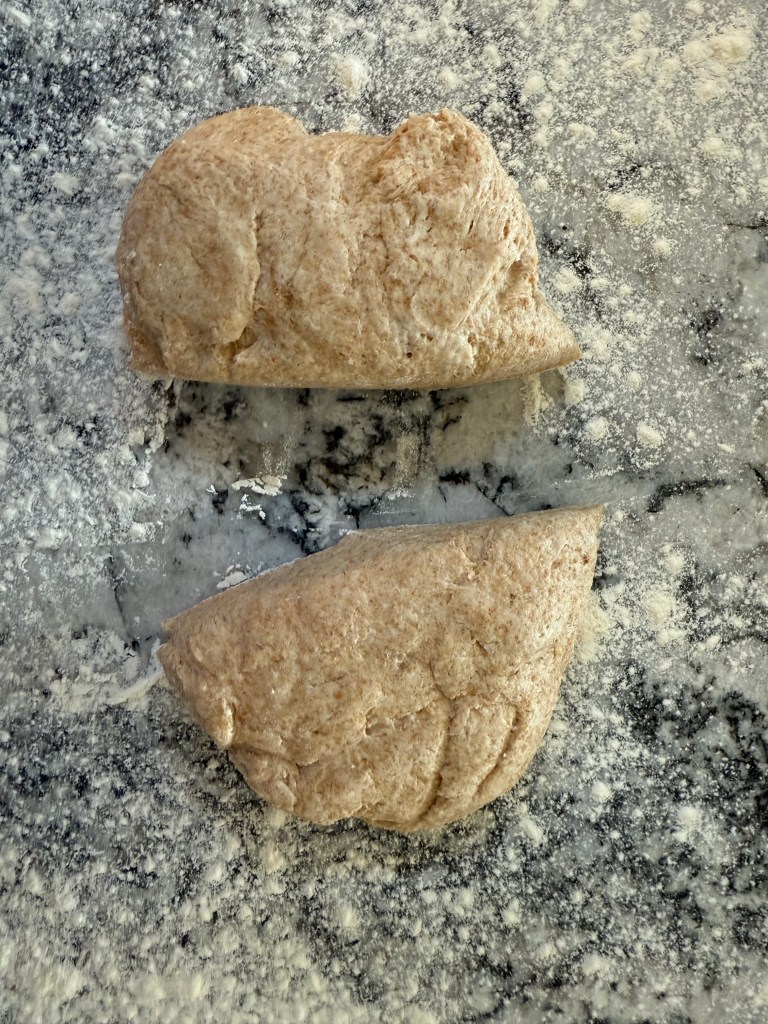
I let the dough rest for 15 minutes, then divided it in half.
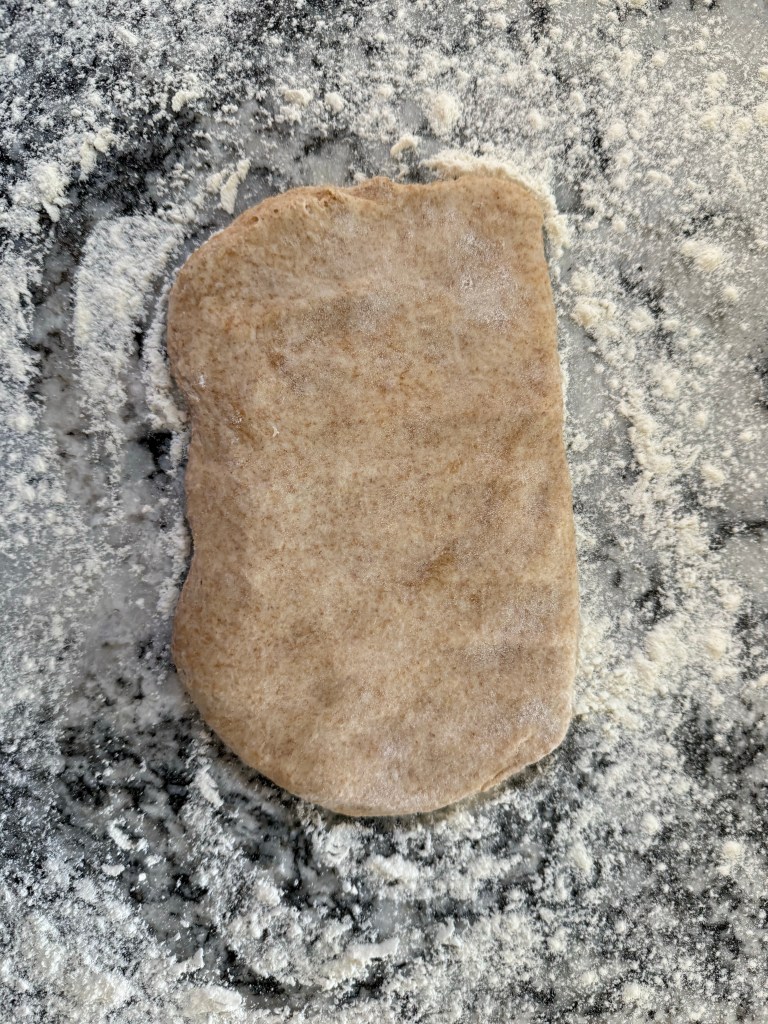
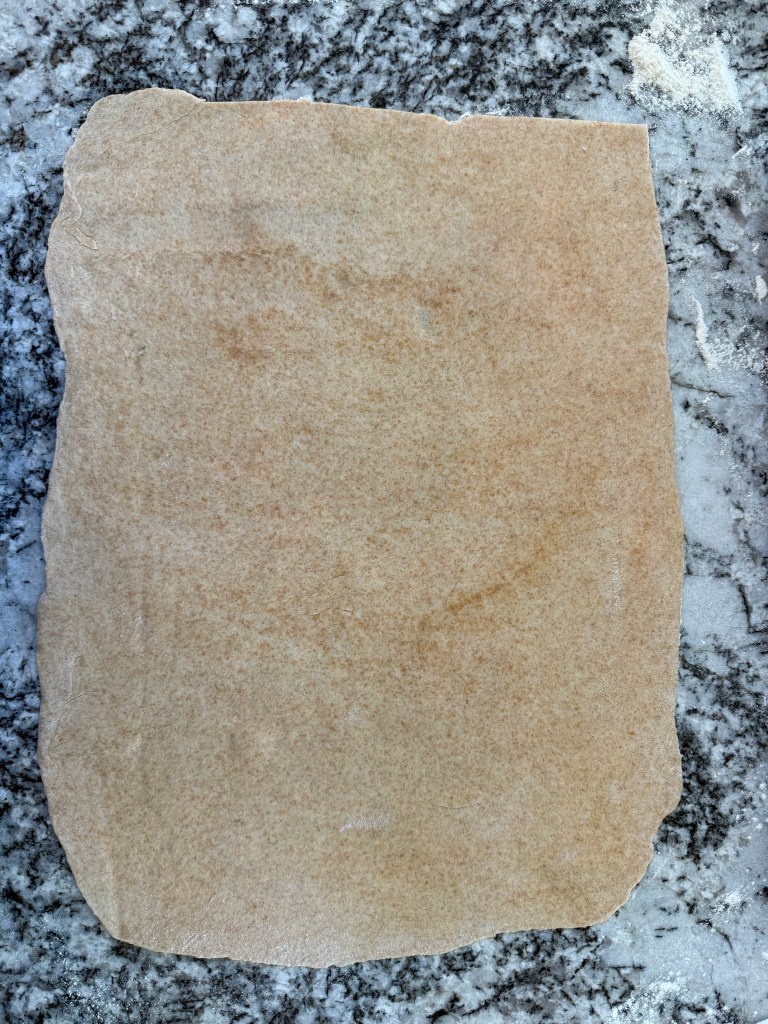
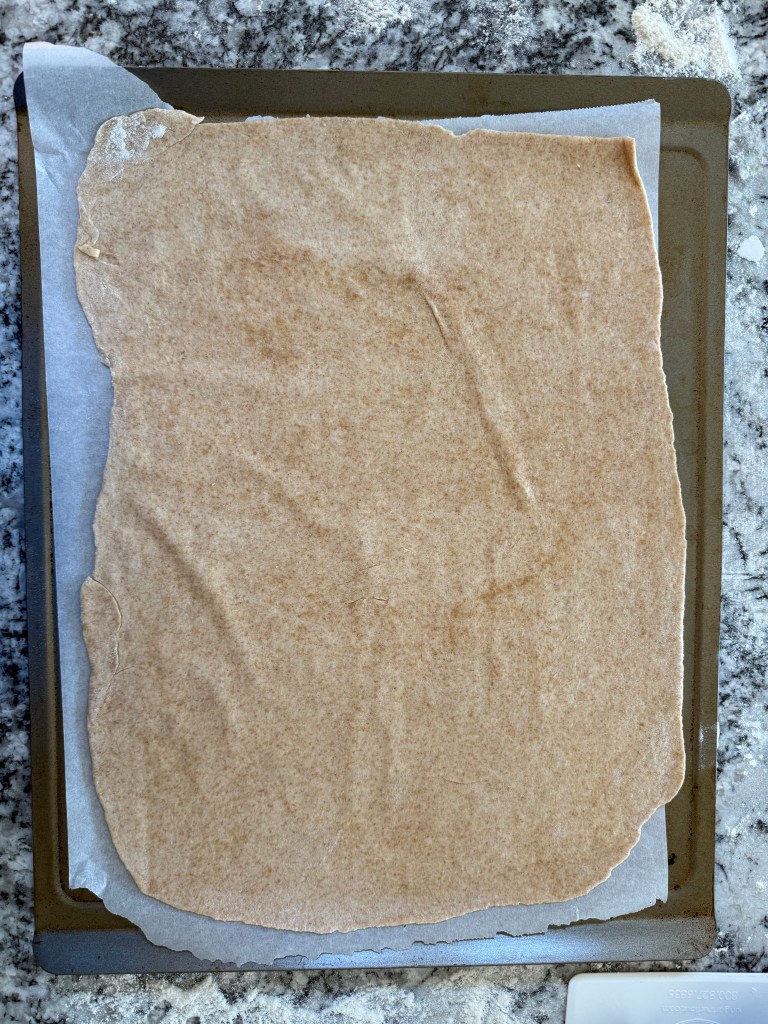
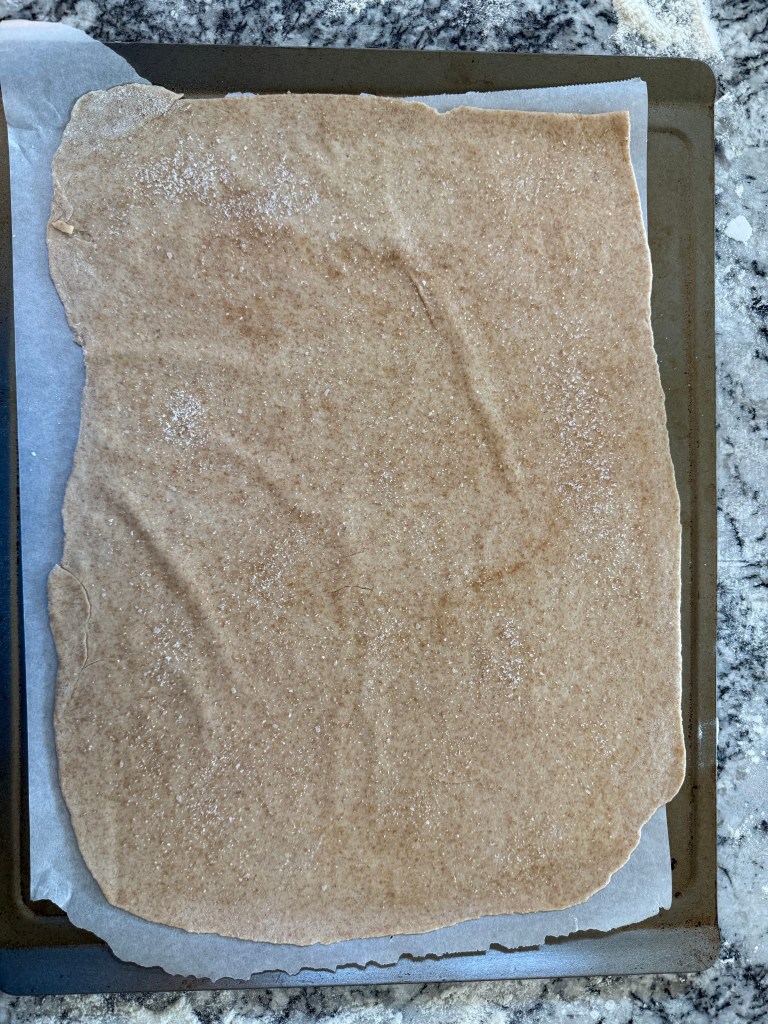
I rolled each half of the dough very thin. If you are making these crackers, you should transfer the rolled out dough to your baking sheet now. I learned this the hard way.
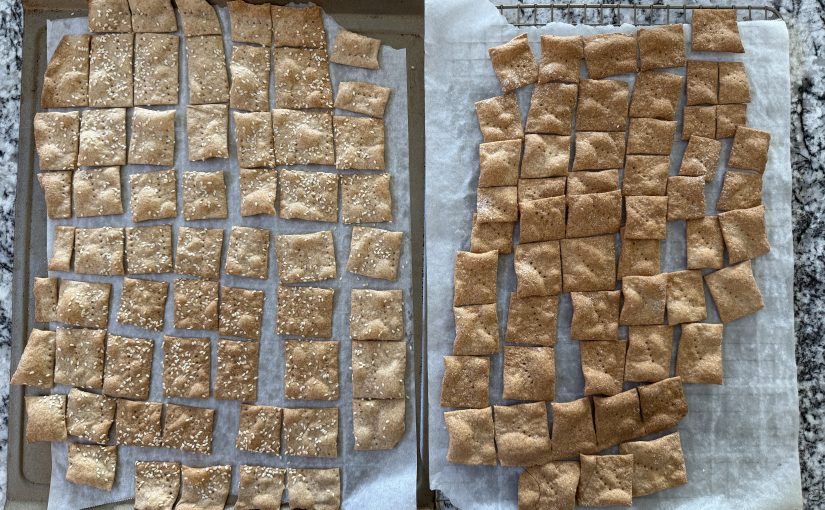
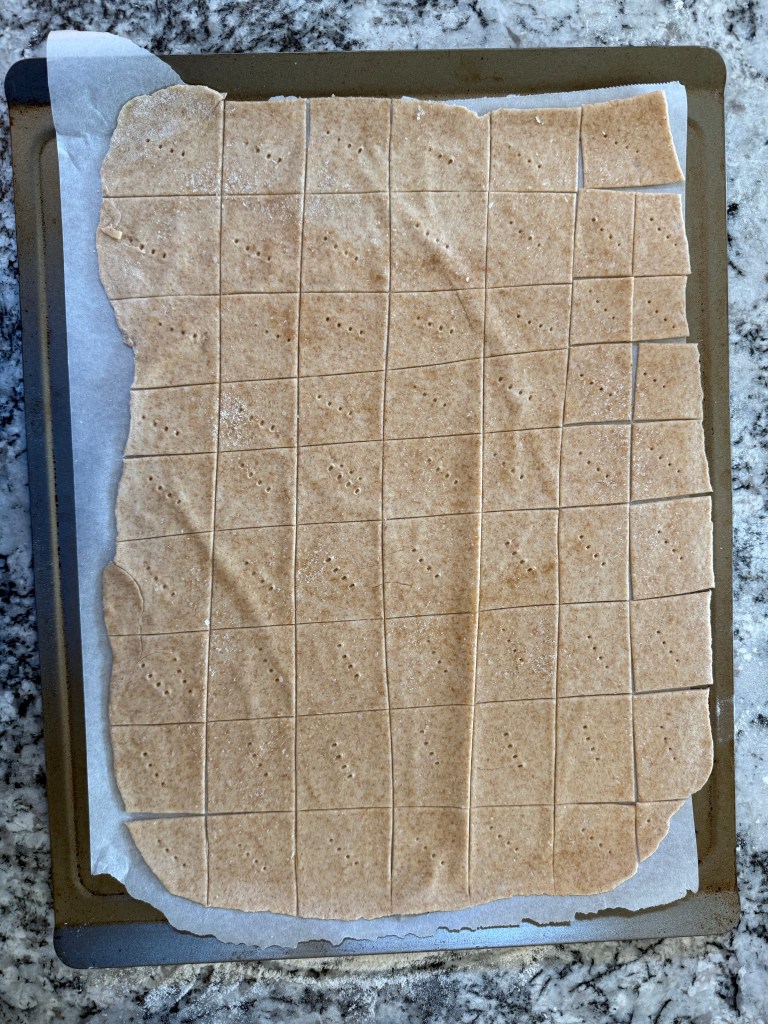
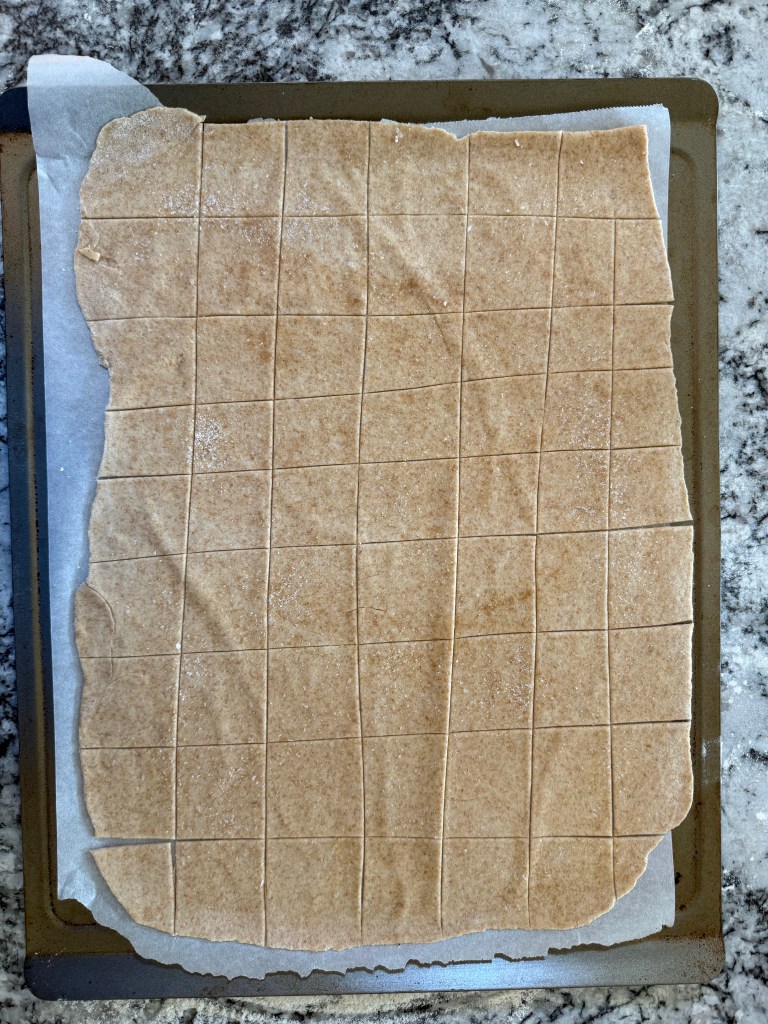
I sprinkled the dough with toppings (I used flaky salt for the first batch and sesame seeds for the second) and rolled those in, then docked the dough with a fork. Finally, I cut the dough into cracker shapes.
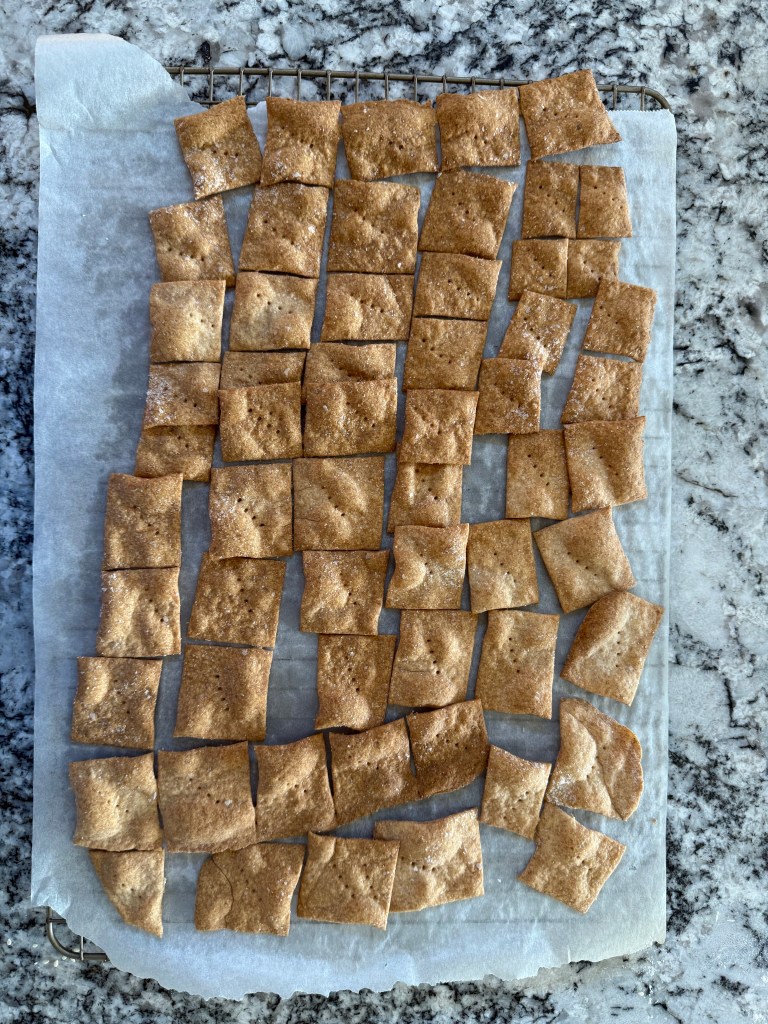
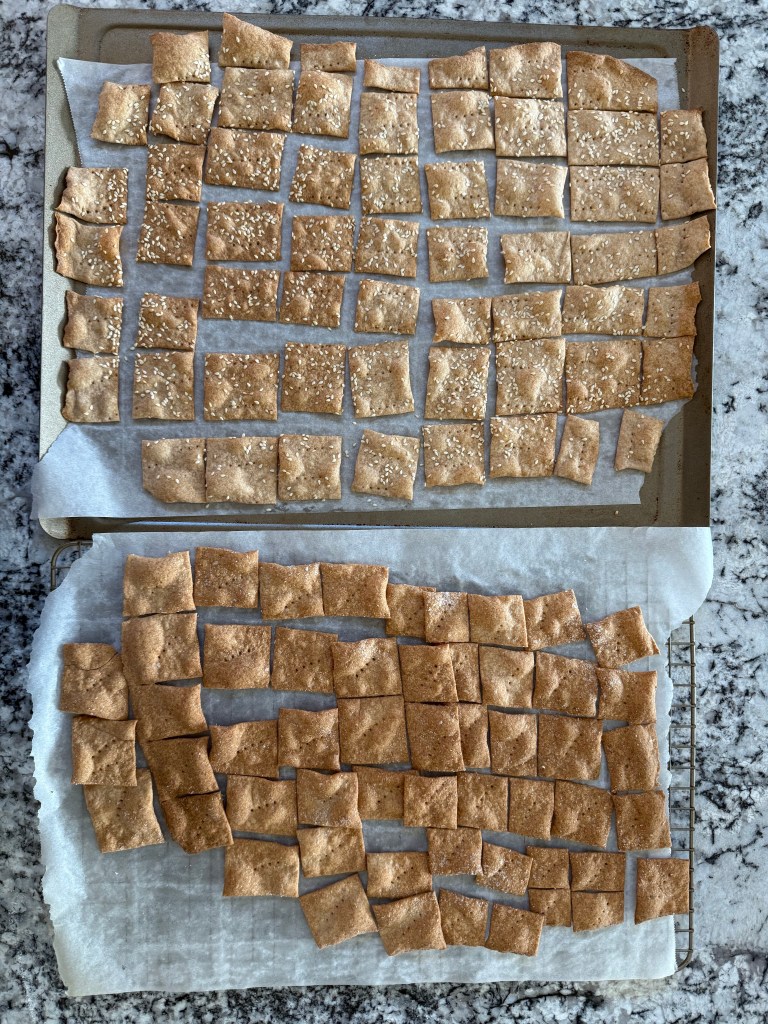
I baked the crackers until they seemed done. You can see that the crackers with salt are baked quite dark. This gave them a very nutty flavor and a bit of a crumbly texture. I didn’t bake the sesame crackers as long because I was afraid the sesame seeds would burn.
I loved how these crackers turned out! I ate almost all of them within a week. They are intensely snackable, but they still feel healthy because of the sourdough and the whole grains. Rolling out the dough is a bit annoying, but these crackers are worth the effort.
Until the next time: may your yeast always rise and your flour never run out.
This recipe comes from The Bread Baker’s Apprentice by Peter Reinhart. In the recipe notes I learned that what we know as Hawaiian bread is actually Portuguese, as the Hawaiians got the bread from the Portuguese.
The bread starts with a preferment that is allowed to ripen for 90 minutes.
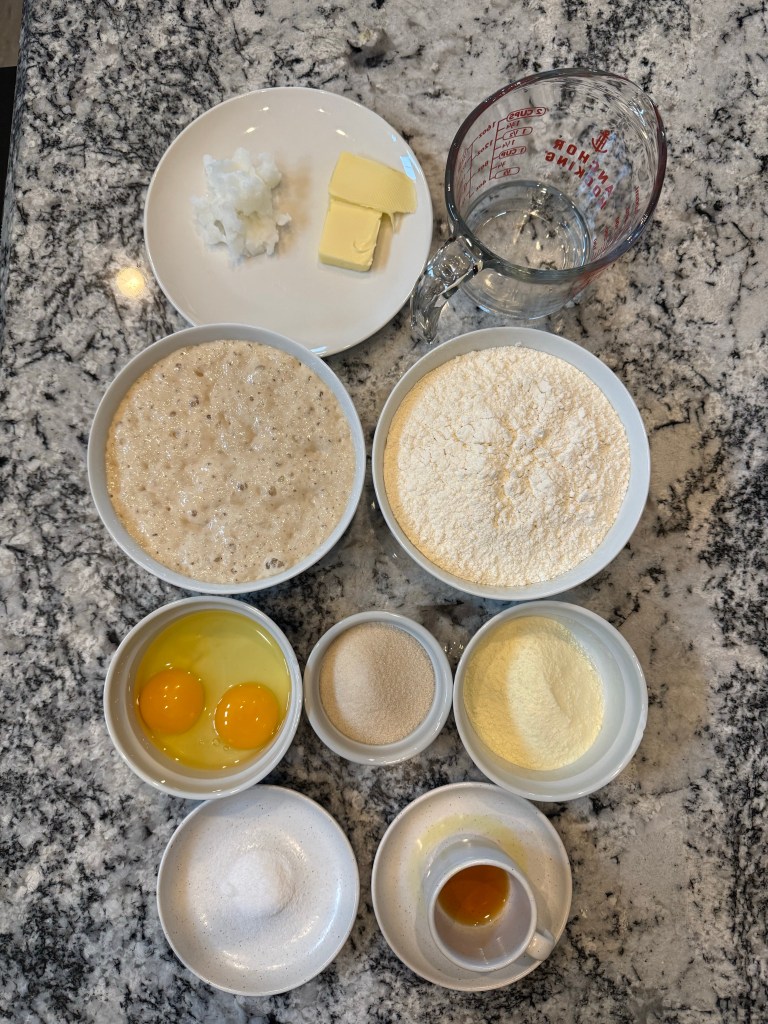
While the preferment ripened, I gathered my mise en place. I have tried to avoid substitutions in most of the recipes I’ve written about, but I made 3 in this bread: I substituted coconut oil for vegetable shortening, and I substituted lemon and orange essential oils for their respective extracts. I used 5-6 drops of each of the essential oils rather than the teaspoon of each extract called for in the recipe, and the flavors were perfect.
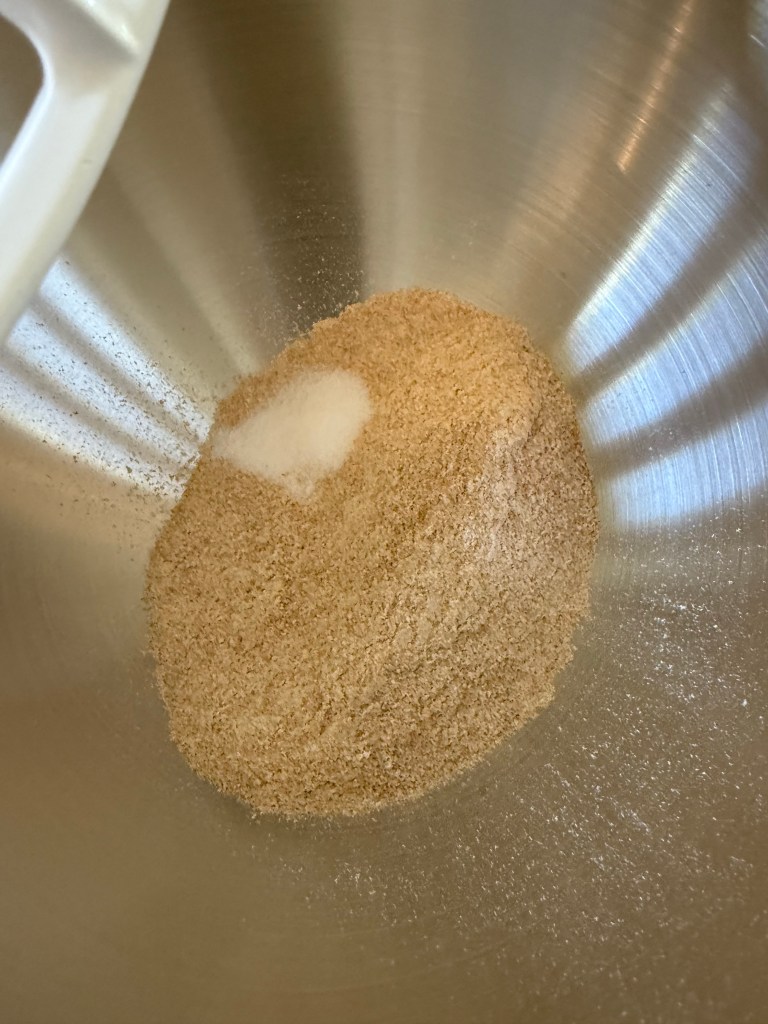
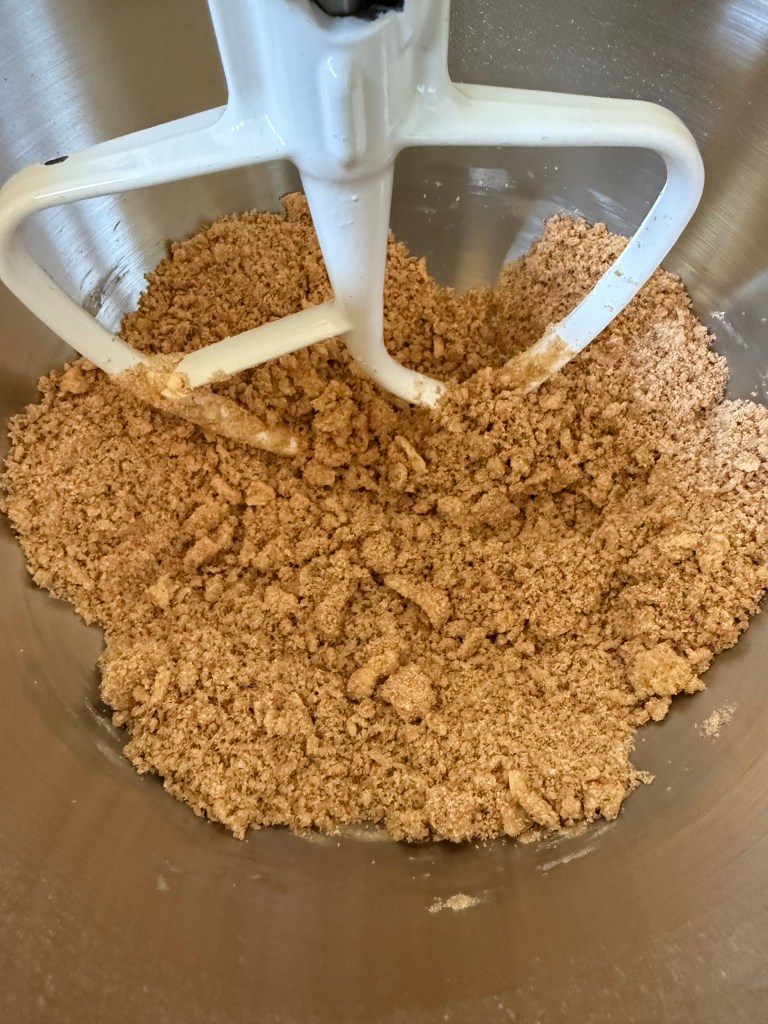
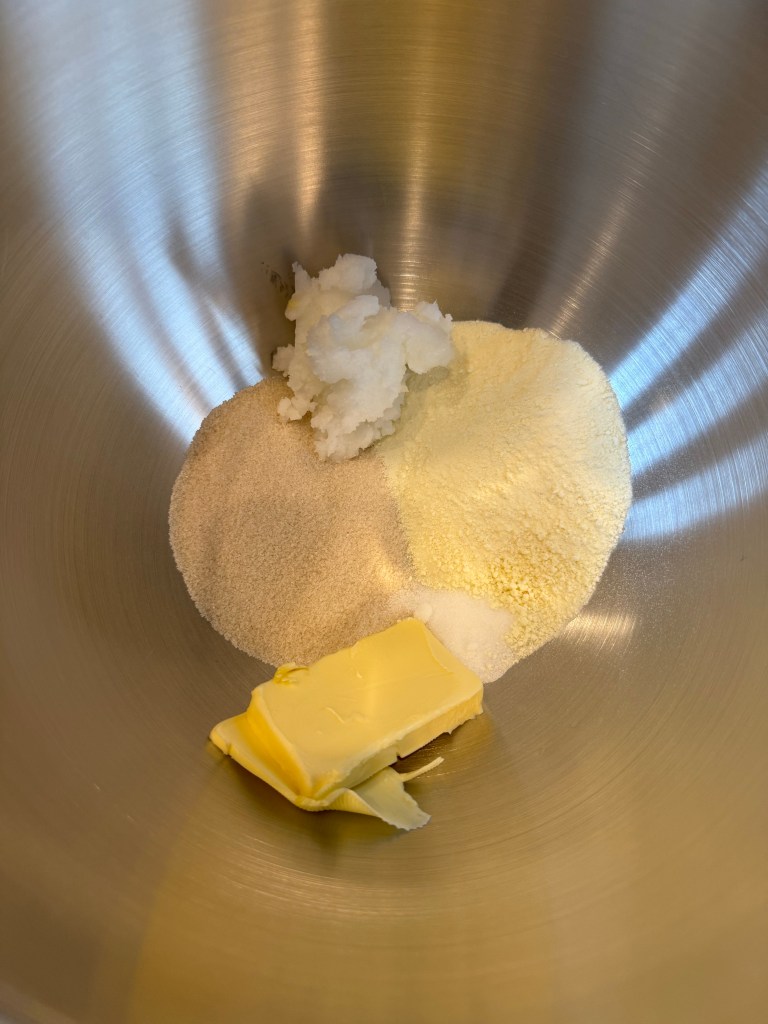
I combined the dry ingredients with the fats and beat the mixture in my KitchenAid mixer until it was sandy in texture.
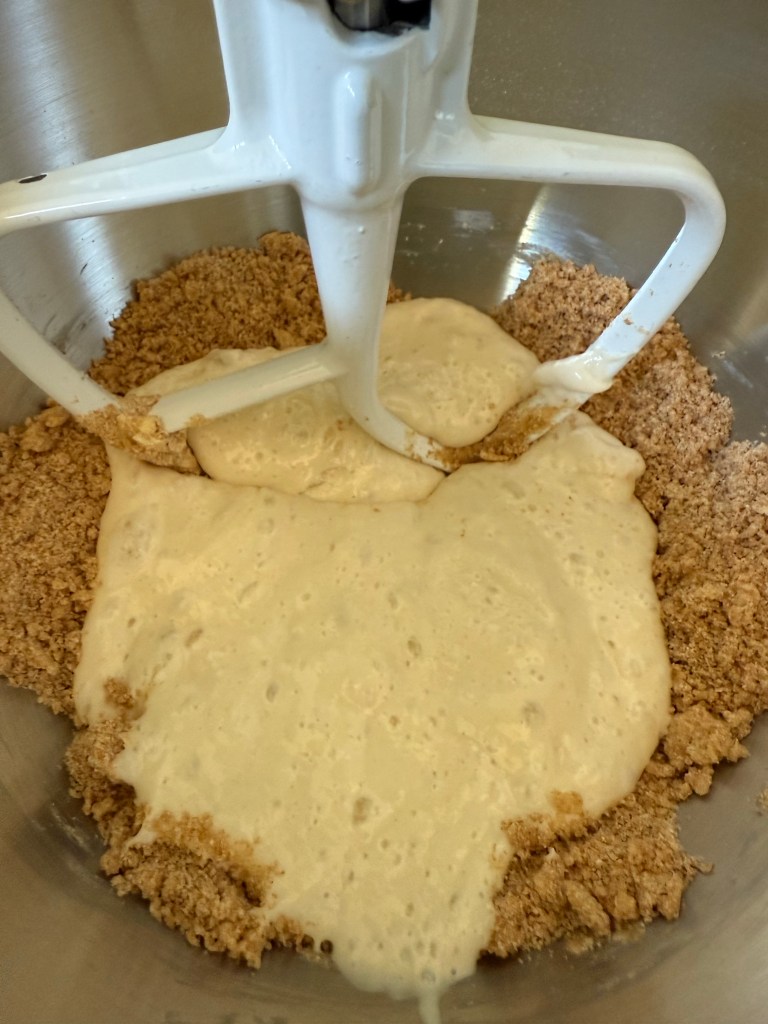
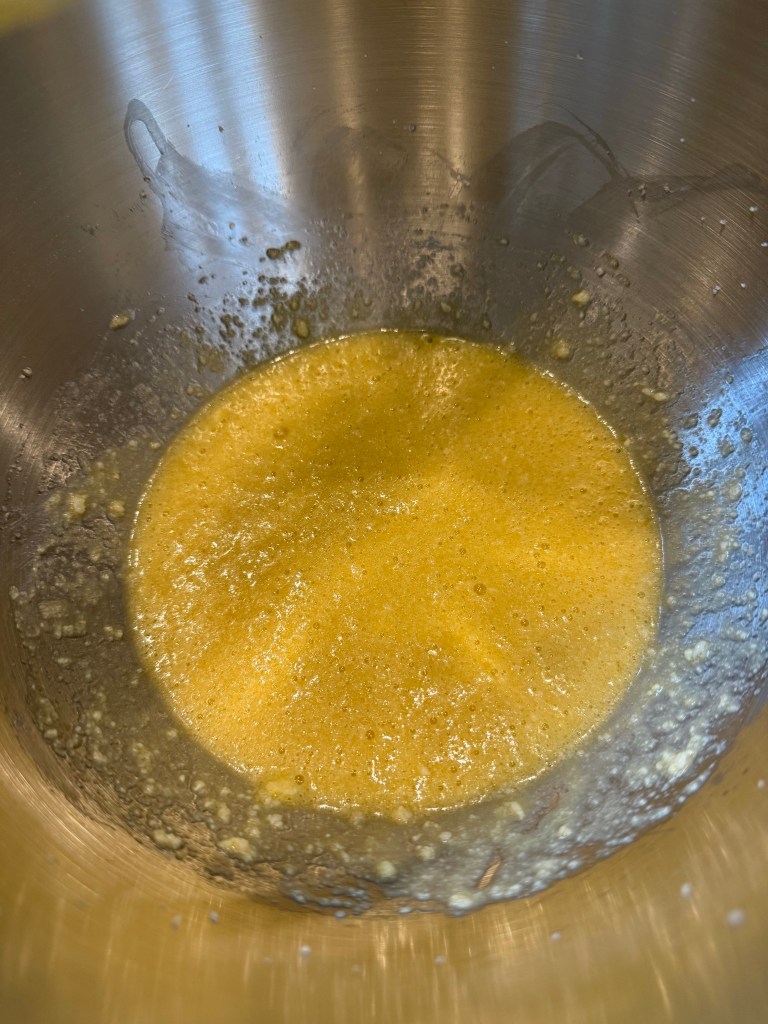
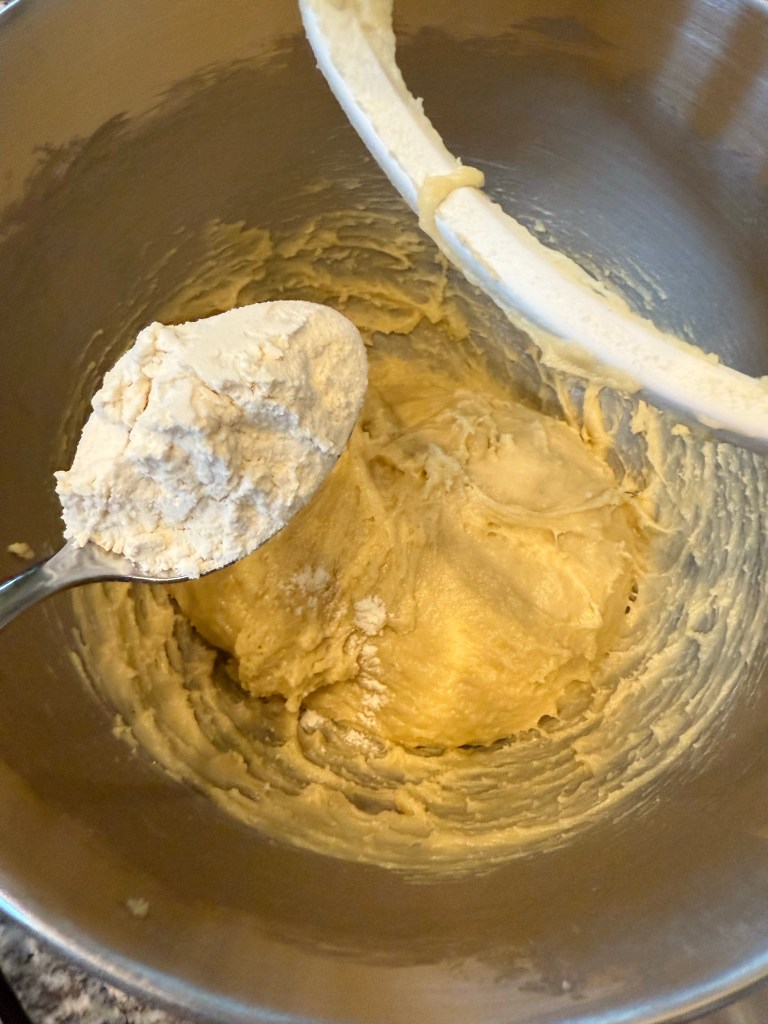
I mixed in the wet ingredients, then added a bit more flour since the dough seemed quite soft. I realized at this point that I had missed the instruction to not add in all the water at once. Oops.
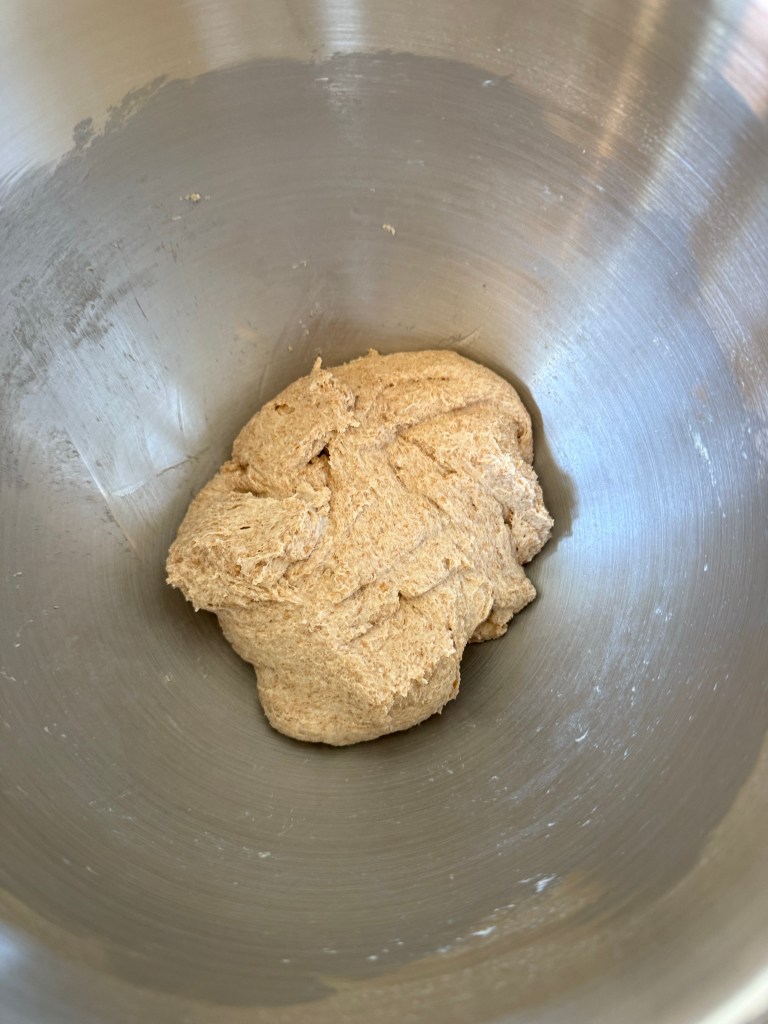
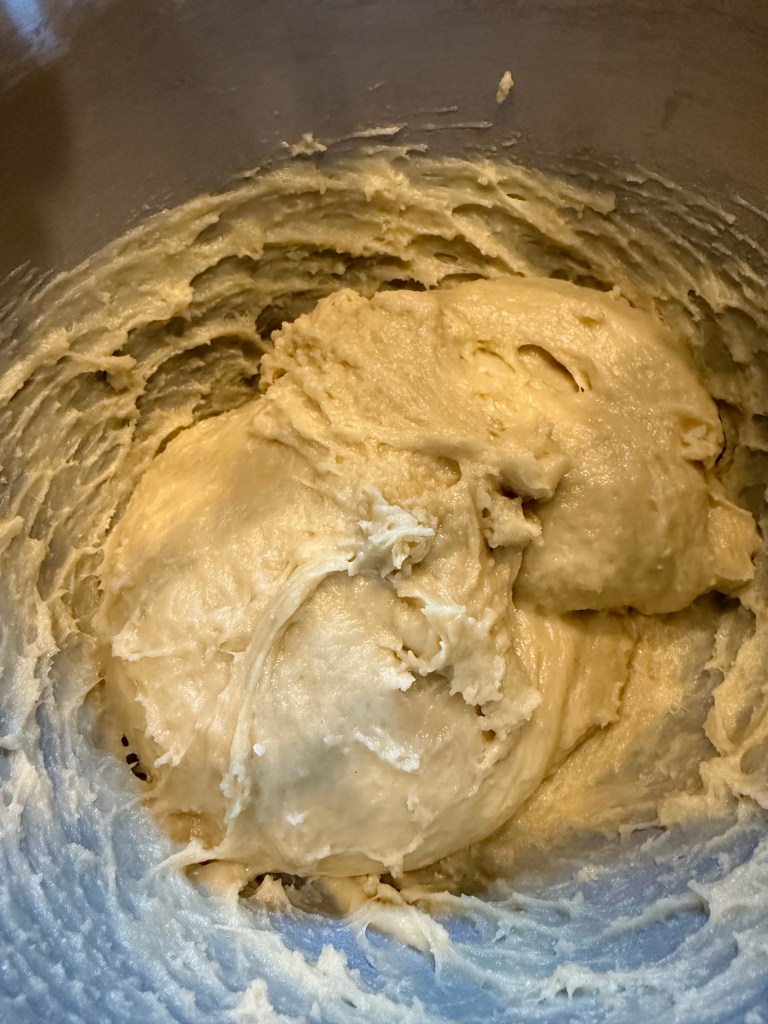
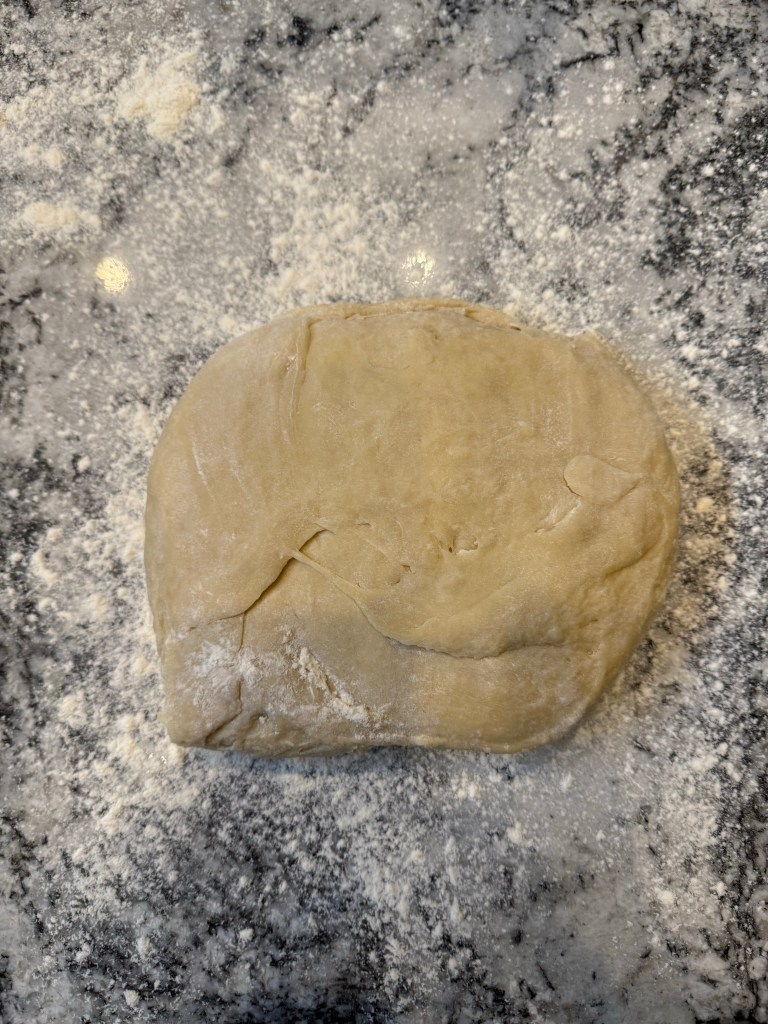
I intended to knead the dough in my stand mixer, but I ended up kneading it by hand as that allowed me to better gauge the dough’s texture and incorporate additional flour to get to the right texture.
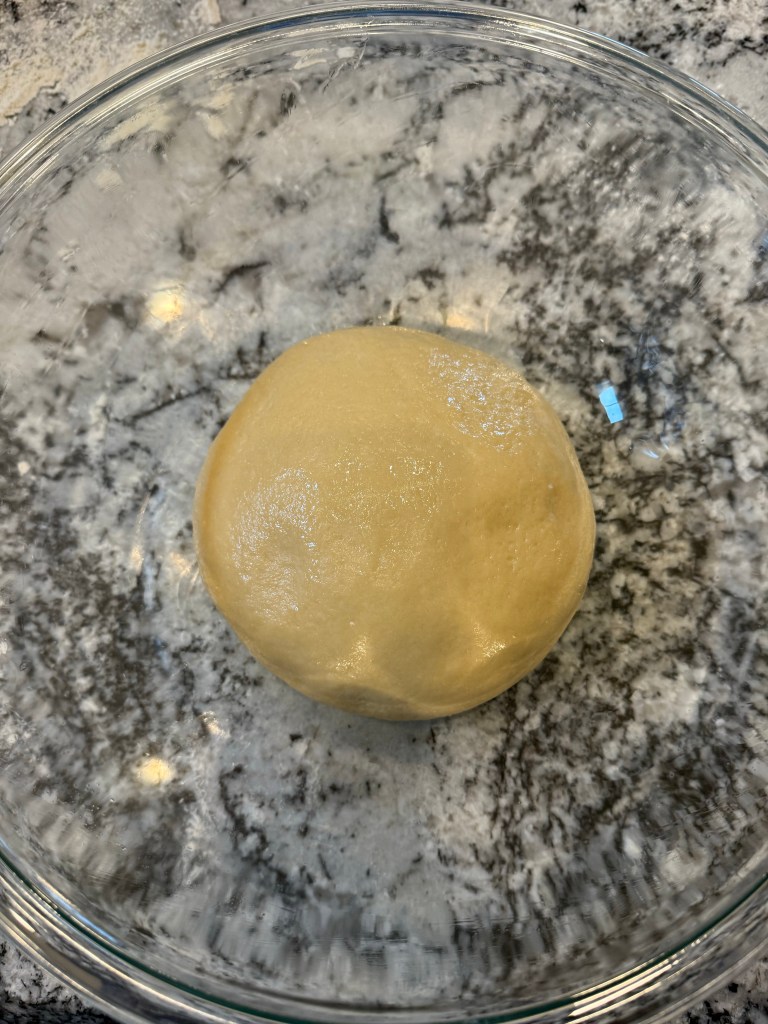
I let the dough rise for 2 hours.
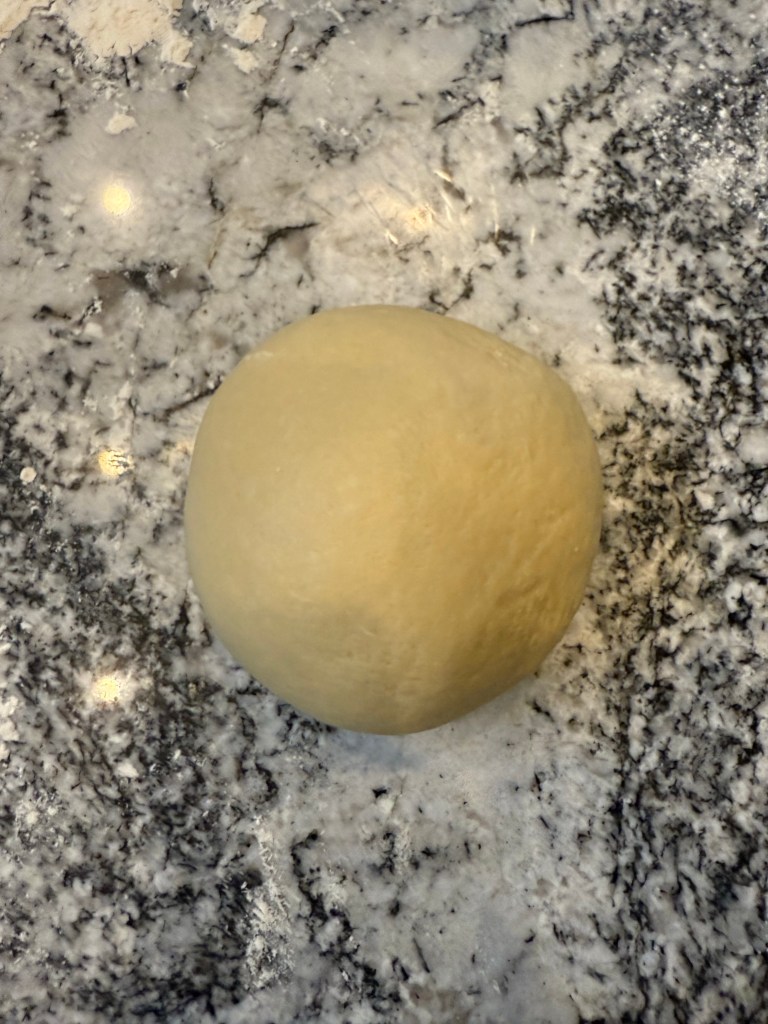
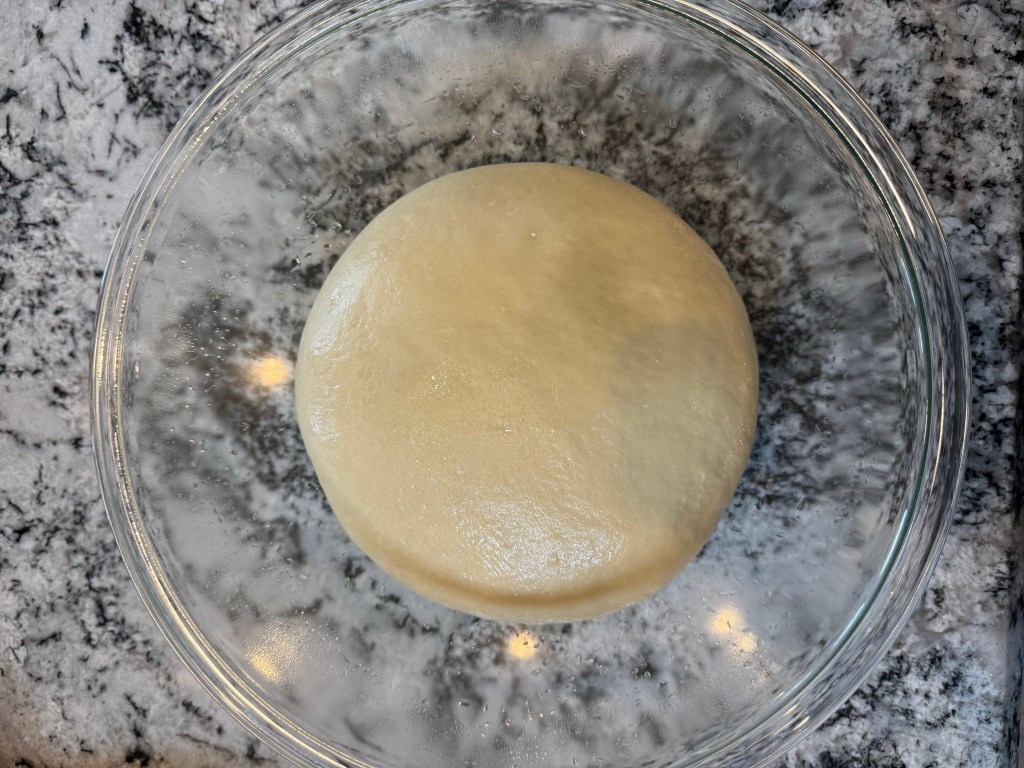
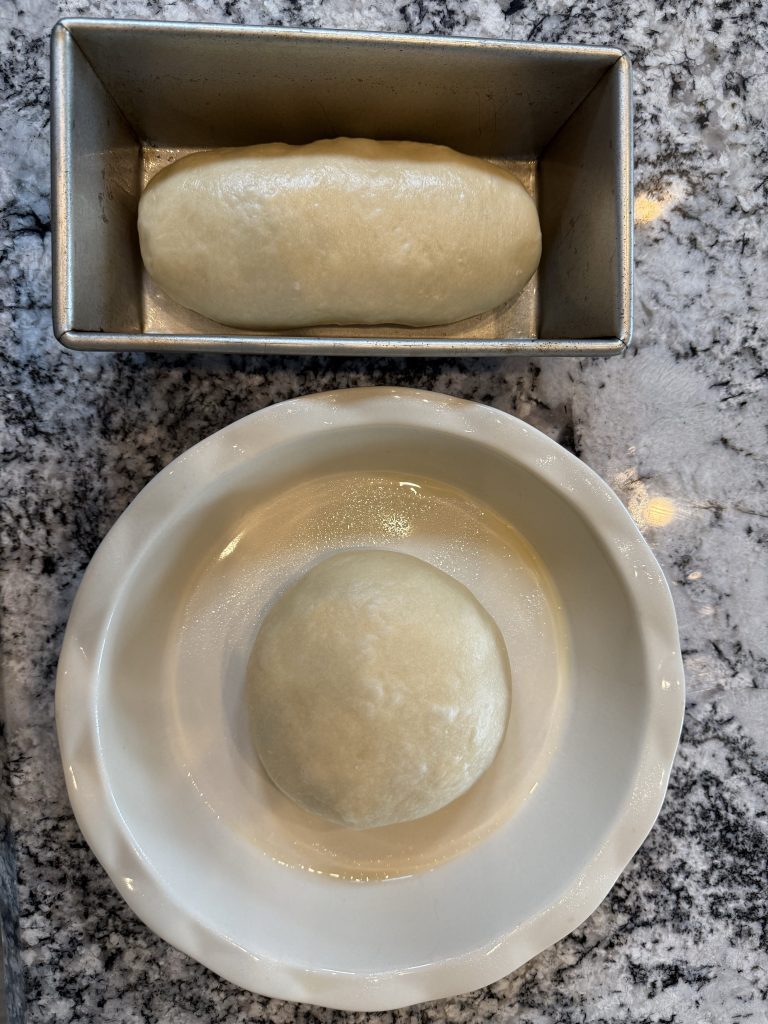
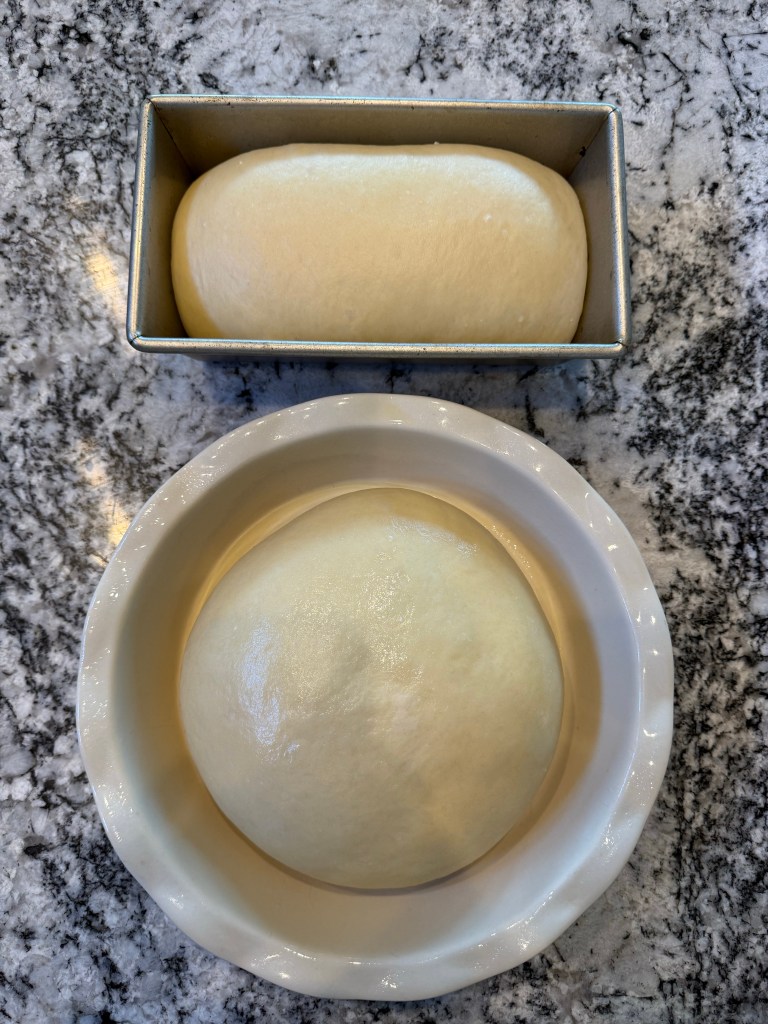
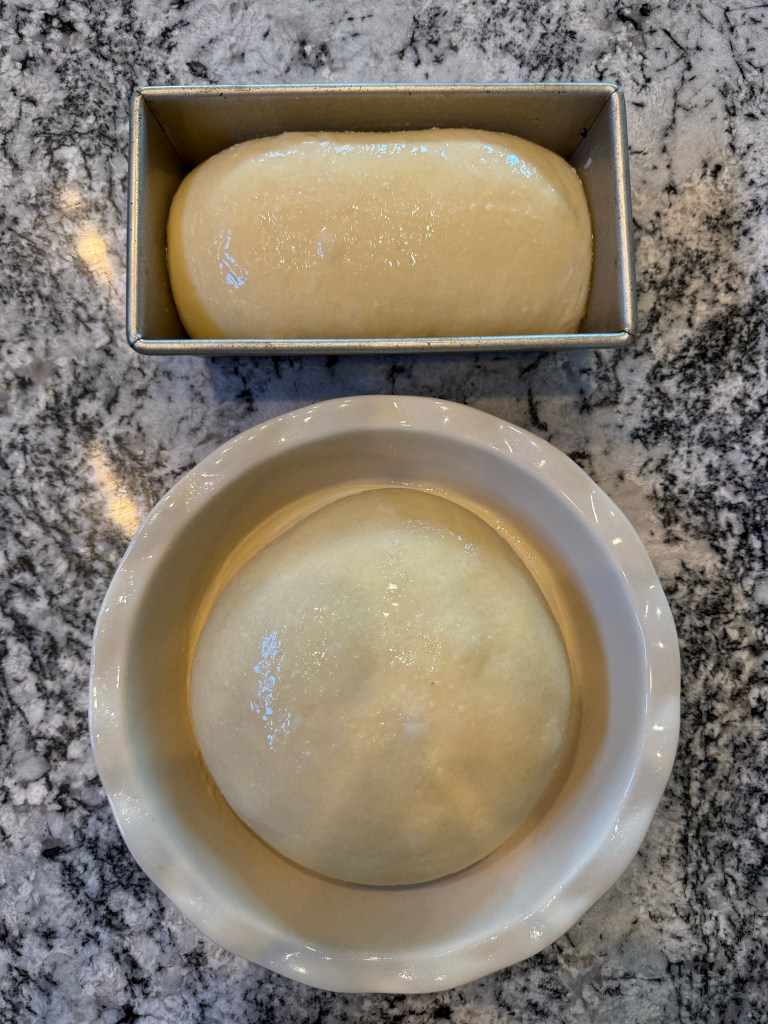
I divided the dough in two, then shaped half to fit in a loaf tin and half as a round, since this is the traditional shape for this bread. The shaped dough rose for 3 hours, until they filled the pans.
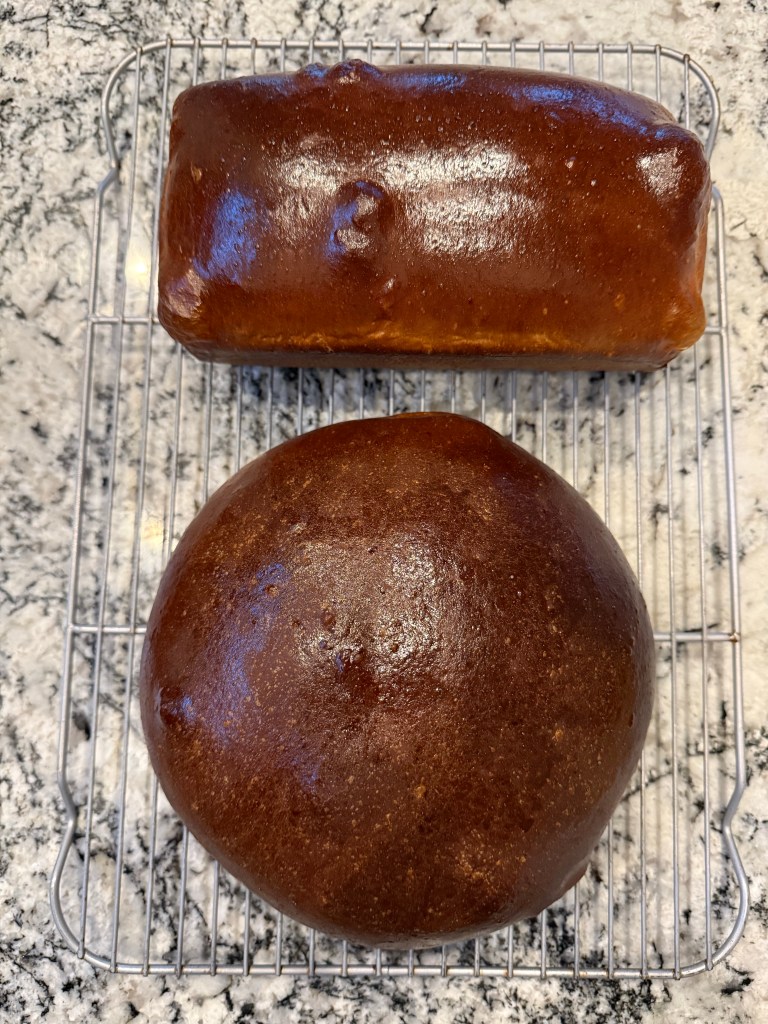
I brushed the top of each dough with egg wash, then baked the loaves. I was shocked at how dark these breads baked up! I was glad the recipe warned me about the browning, since I might have pulled them out of the oven too soon if I hadn’t been prepared.
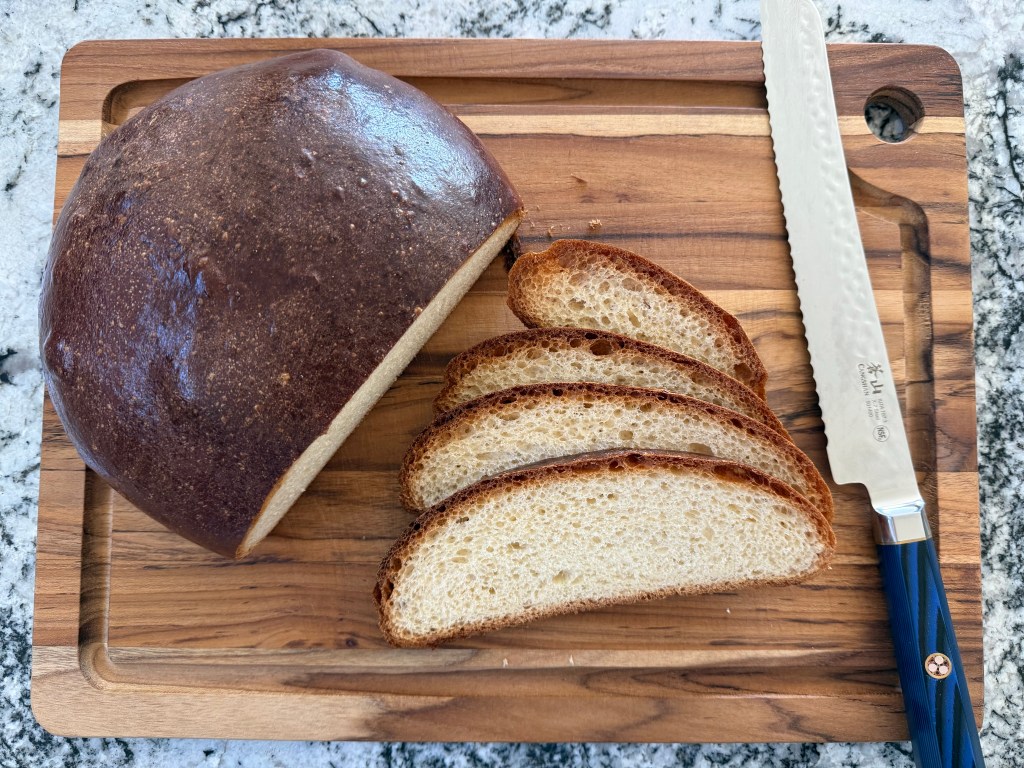
The bread is delicious and beautiful. The crust is very brown, but thin and soft, and the bread inside is a beautiful creamy colour. The texture is of the bread is fine-grained and soft, but dryer than many home-baked bread recipes. Because of this the bread toasts up beautifully.
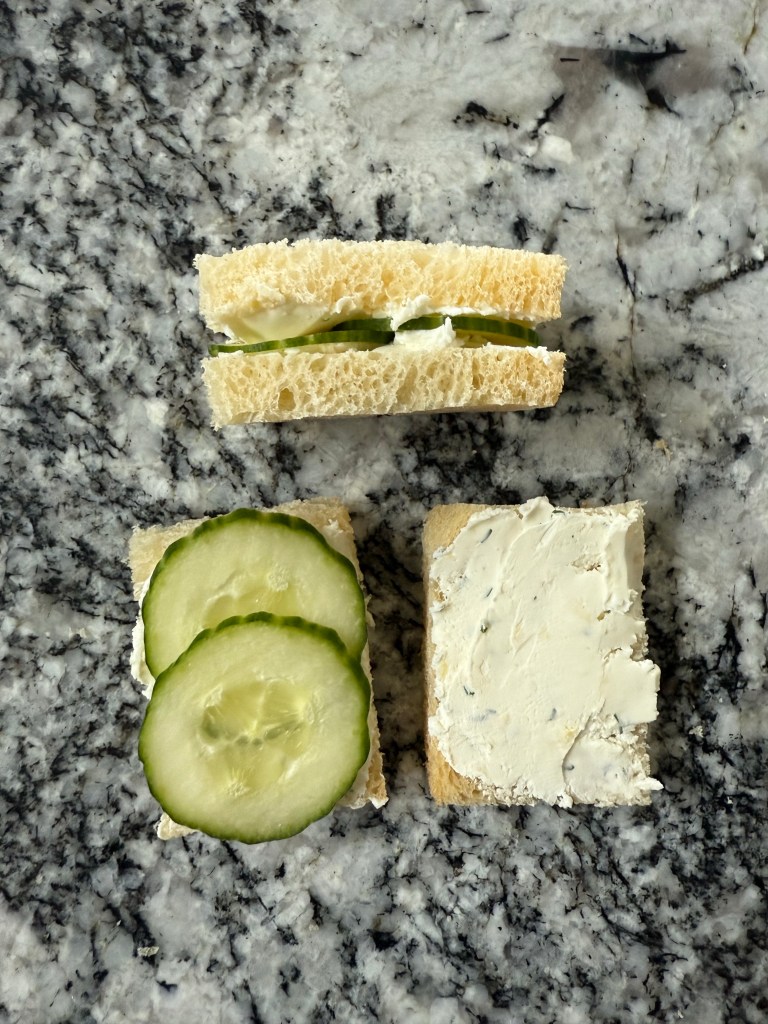
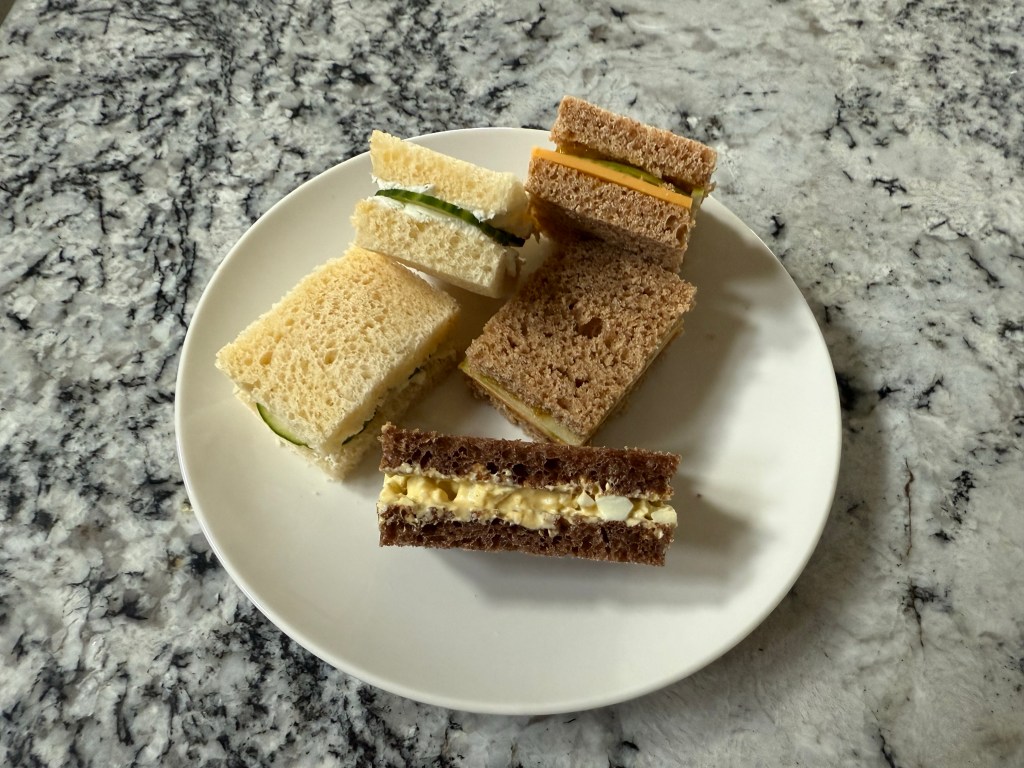
I used this bread to make cucmber sandwiches for my birthday tea party. The sweet bread was a perfect compliment for the delicate flavor of the cucumber and the tanginess of the cream cheese.
Until the next time: may your yeast always rise and your flour never run out.
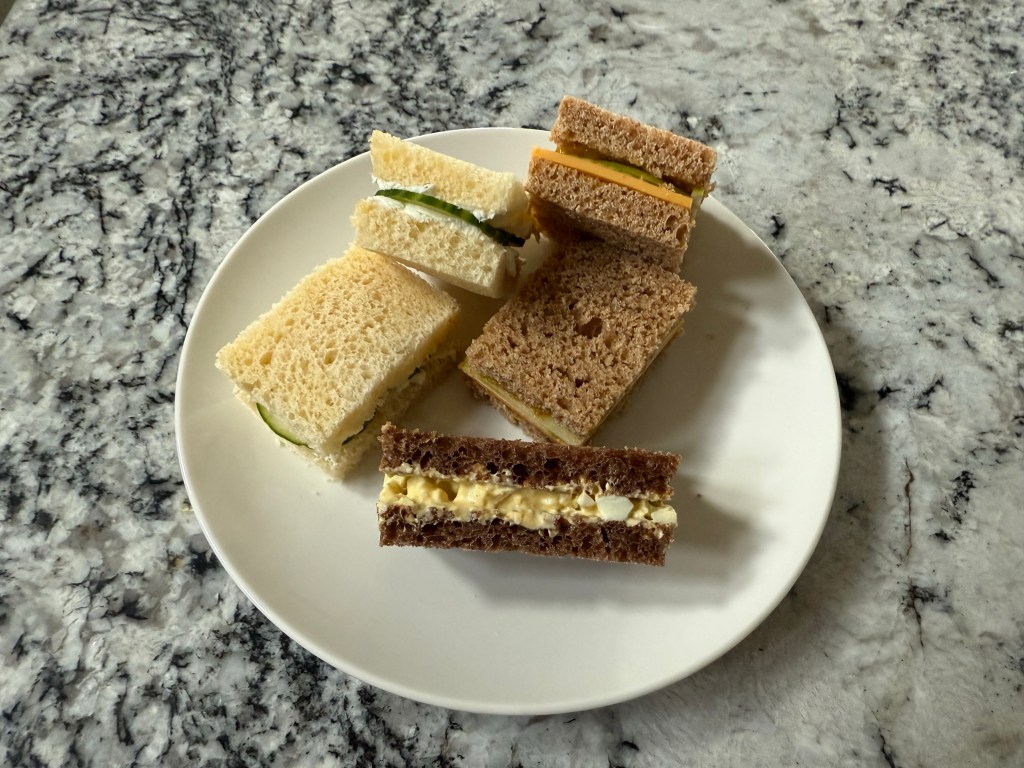
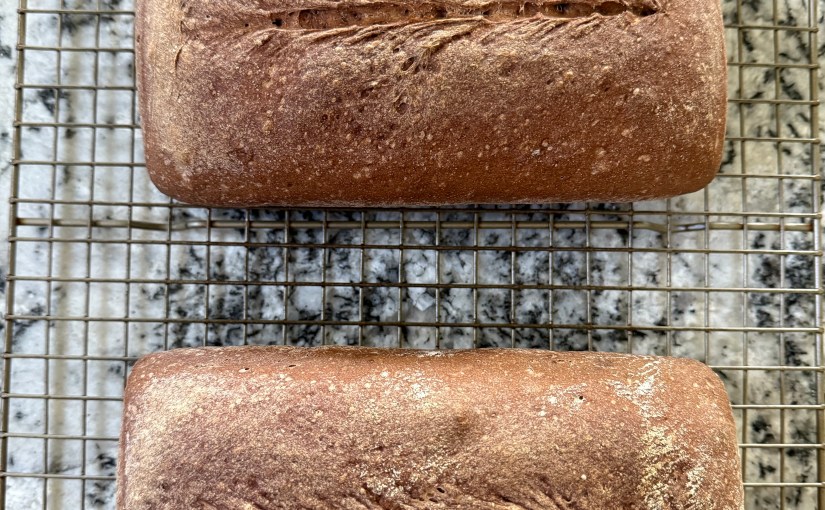
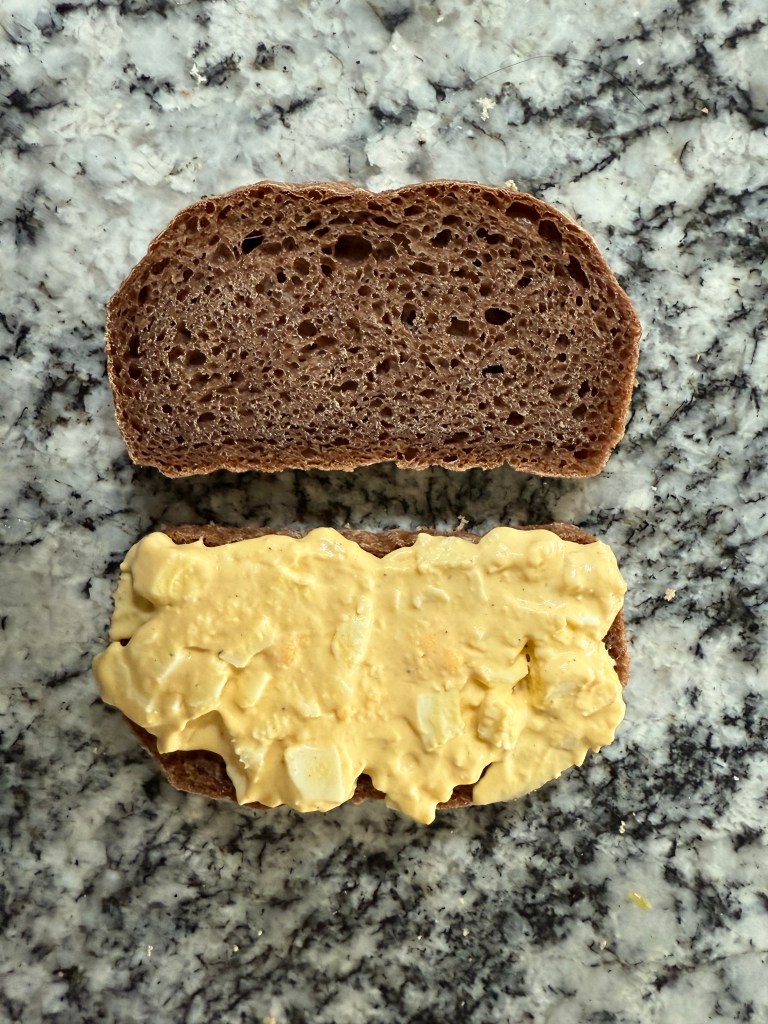
One of the sandwiches I made for my birthday tea party was egg salad on pumpernickel bread. In hindsight, the rye flavor was too strong for the egg salad, but the bread was very good. I used the King Arthur Pumpernickel Boule recipe.
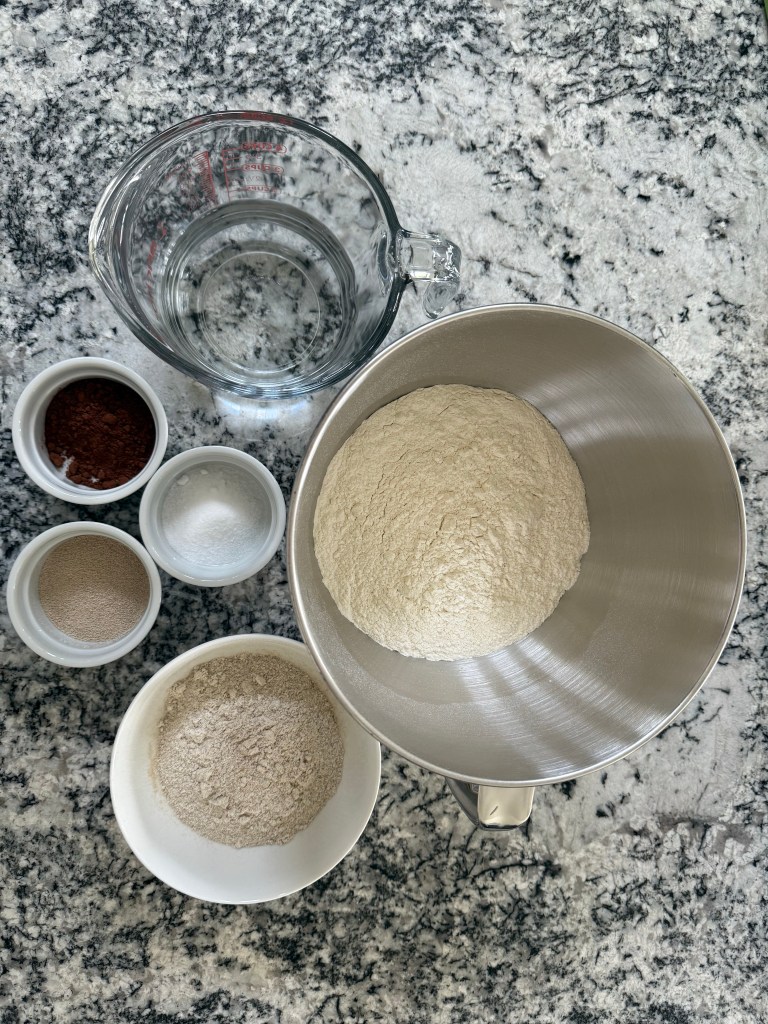
I gathered the mise en place: (I love that pumpernickel bread has cocoa powder in it)
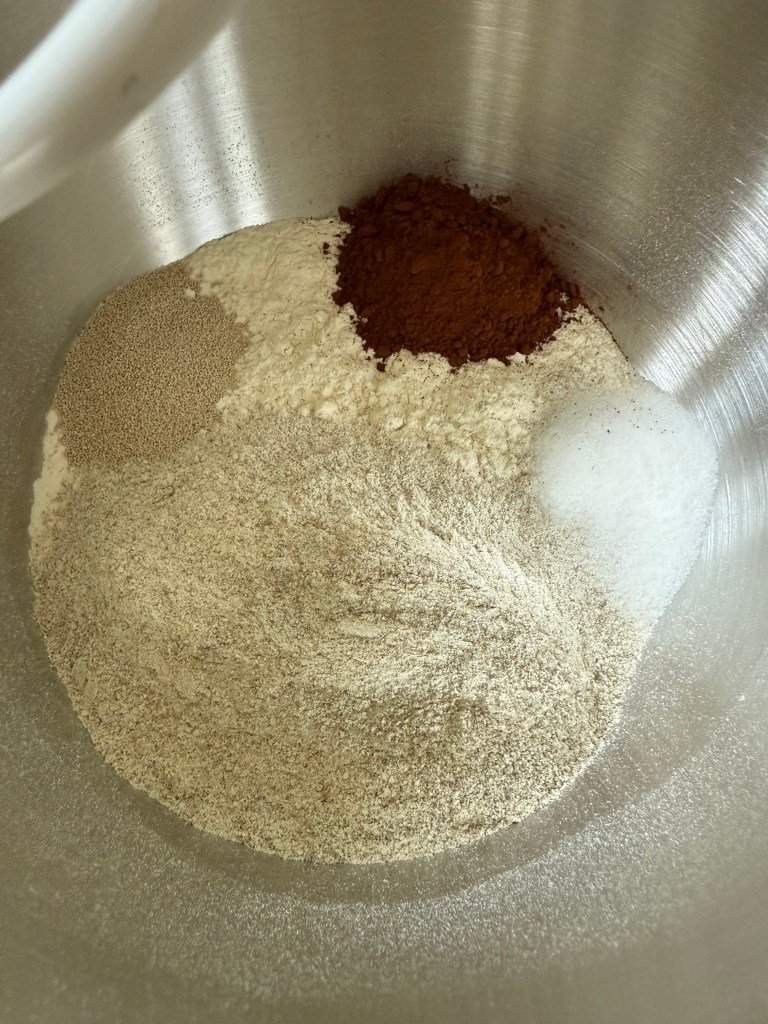
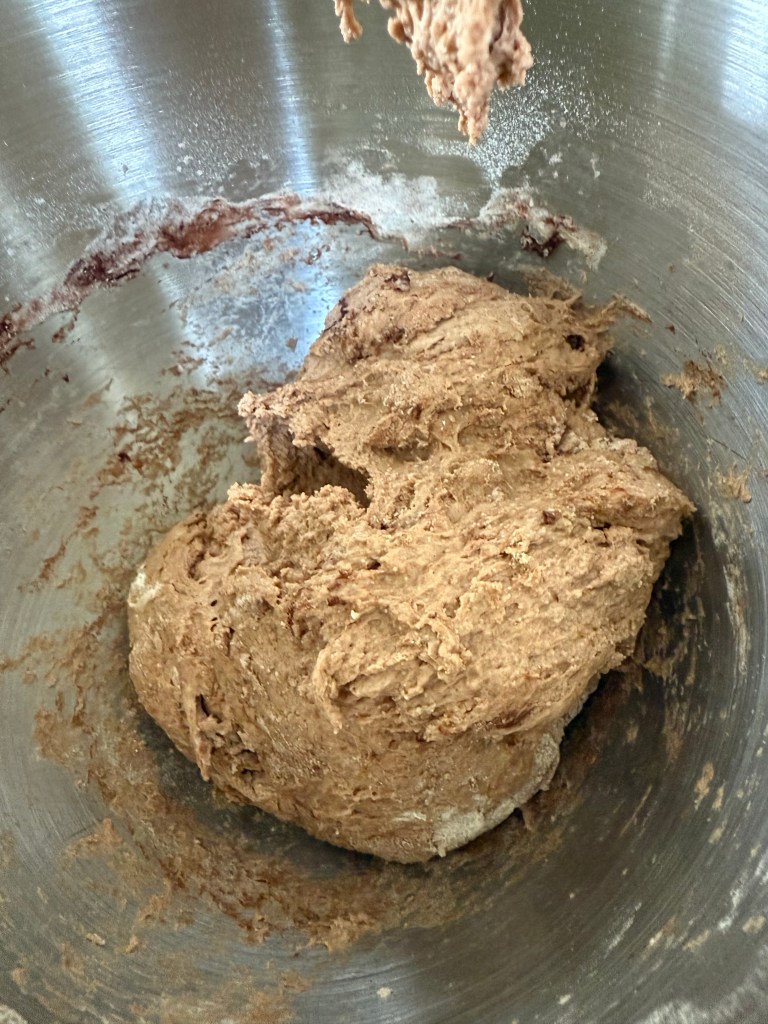
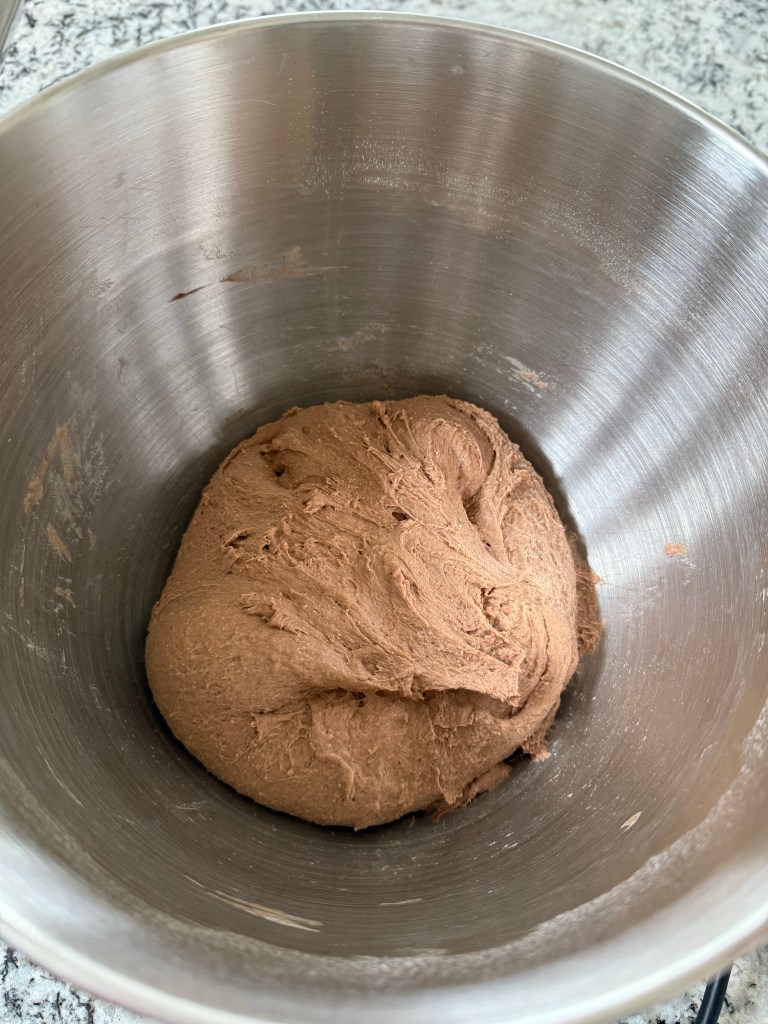
I combined the dry ingredients, then added the water, and kneaded in the stand mixer until it looked right.
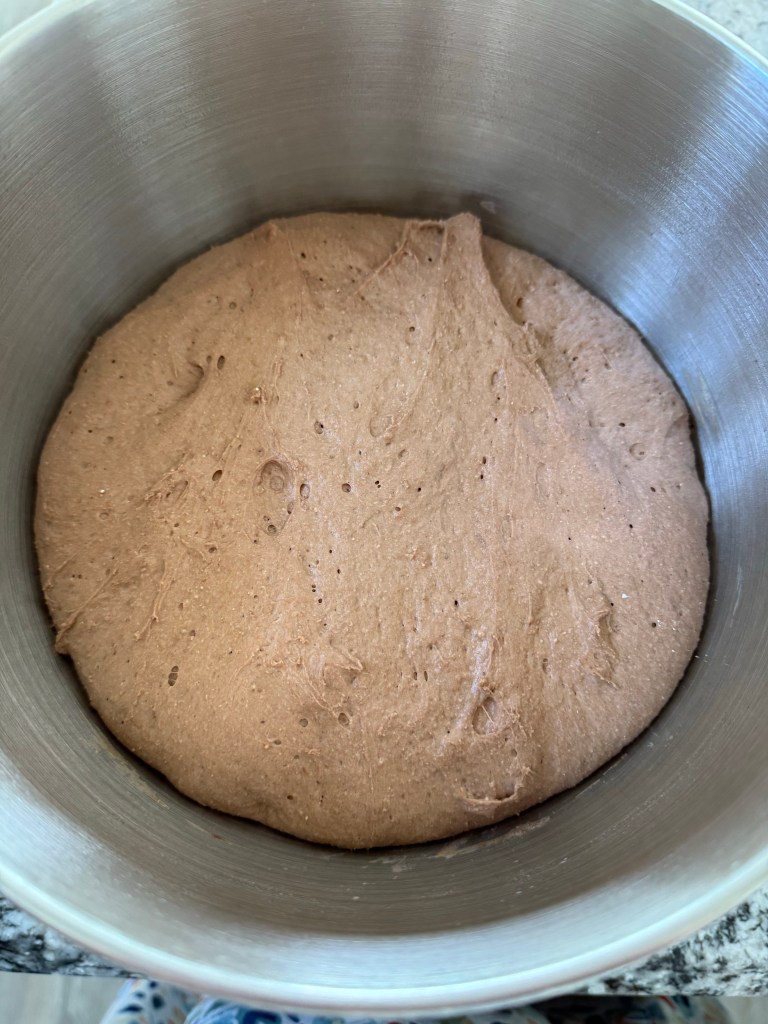
The dough rose for an hour…
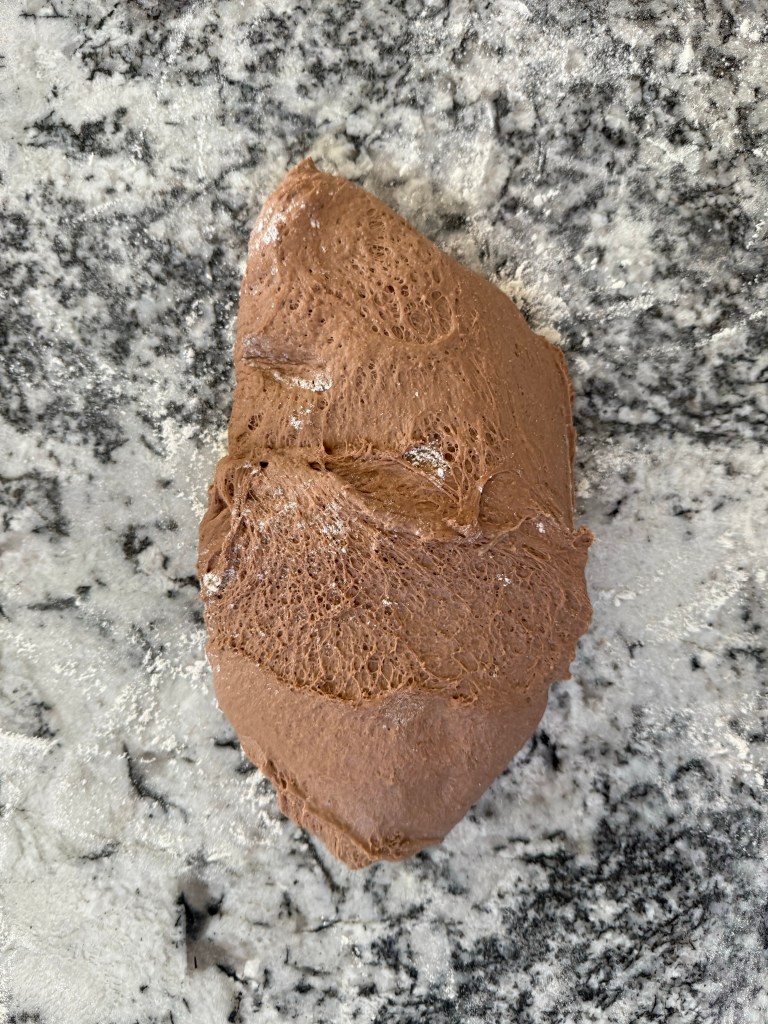
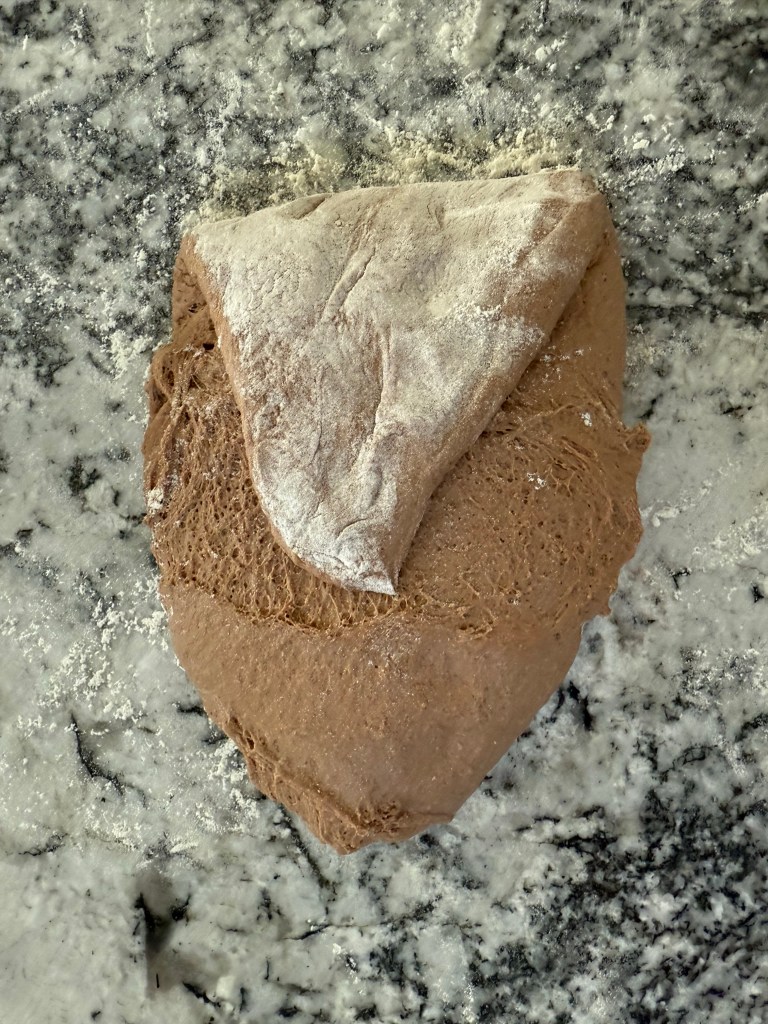
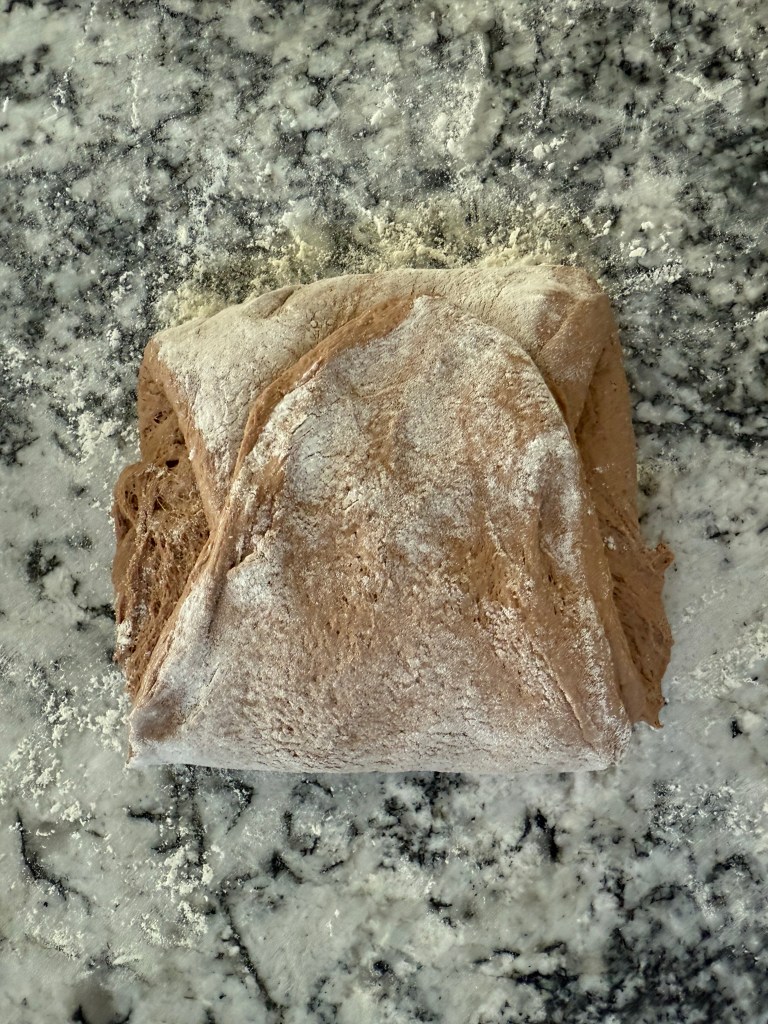
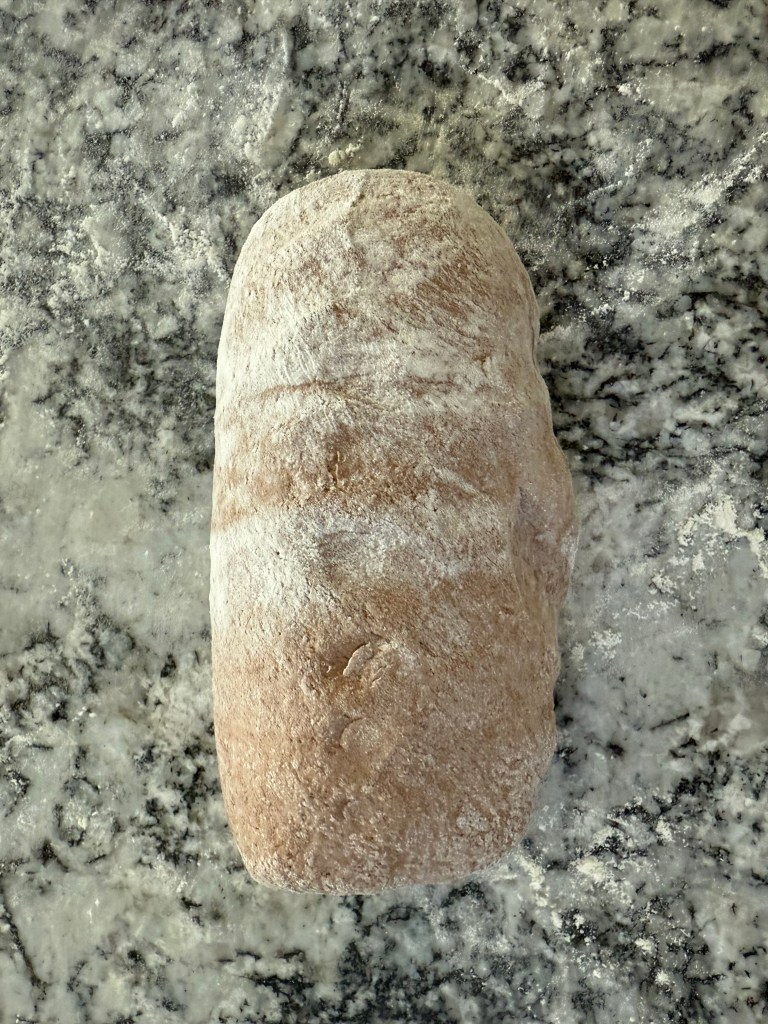
before I divided it into two and shaped each half into a loaf.
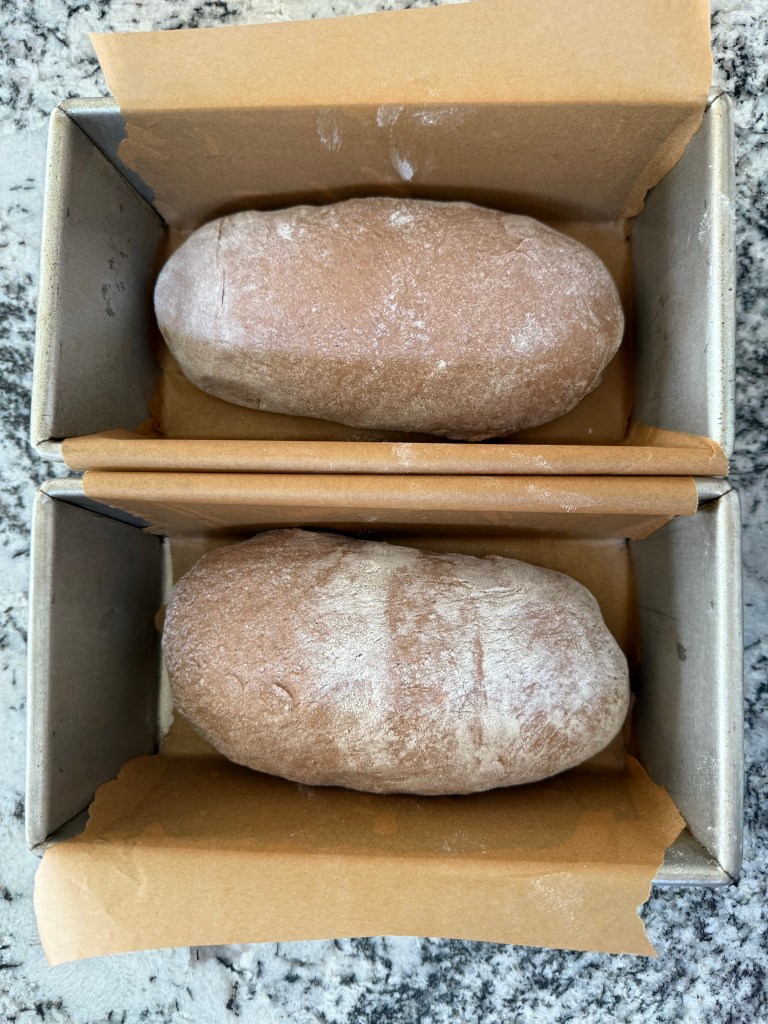
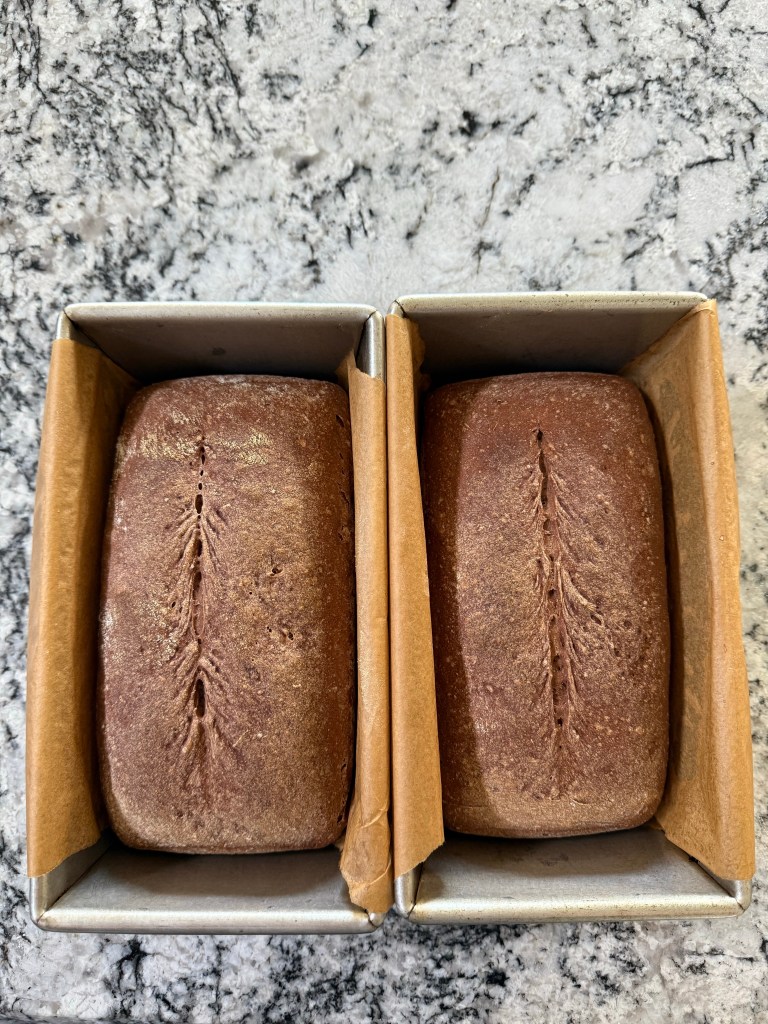
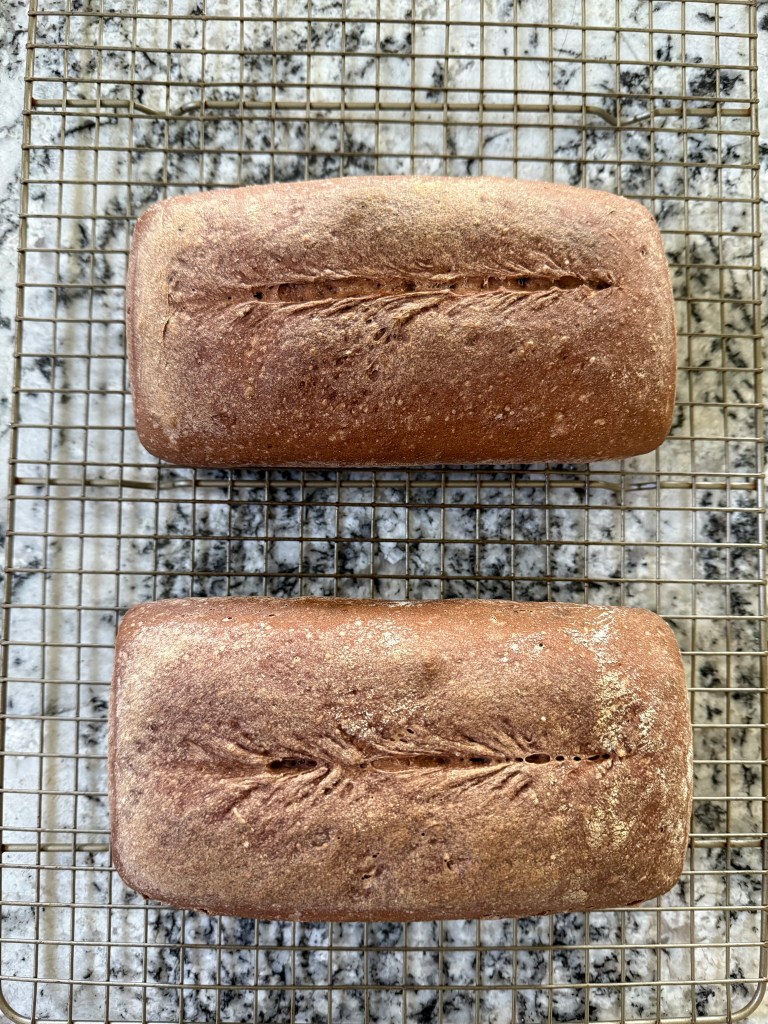
The loaves rose for 1 1/2 hours in the bread pans. I had a little trouble scoring them, since the dough was rather wet, then I put them into the oven to bake. When I took the bread out of the oven I noticed that the loaves had hardly any oven spring at all. I have baked this bread before and noticed the same thing. I contribue the lack of oven spring to the rye.
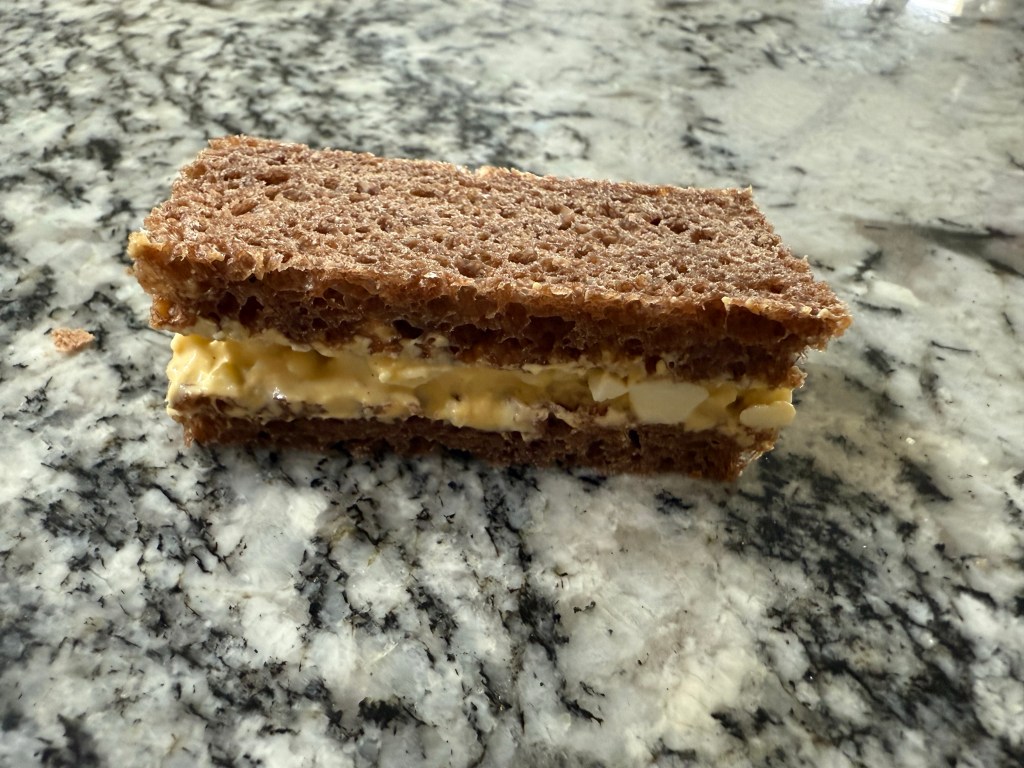
The loaves were pretty short, so I made long and thin sandwiches with all the crusts cut off.
These sandwiches were paired with classic cucumber and cream cheese sandwiches on Hawaiian bread and cheddar, apple, and chutney sandwiches on whole wheat bread.
Until the next time: may your yeast always rise and your flour never run out.






















 A Baker's Education