Semolina Sourdough: Perfecting My Technique

This semolina sourdough recipe is from Tartine Bread by Chad Robertson. This is the book I learned to make sourdough bread from, so this recipe feels like a bit of a homecoming for me.
Whenever I mix a dough that needs to ferment for more than a few hours I like to build myself a schedule. This helps me make sure I don’t have any scheduling overlaps and that I know when I can be away from my dough for a while if needed.
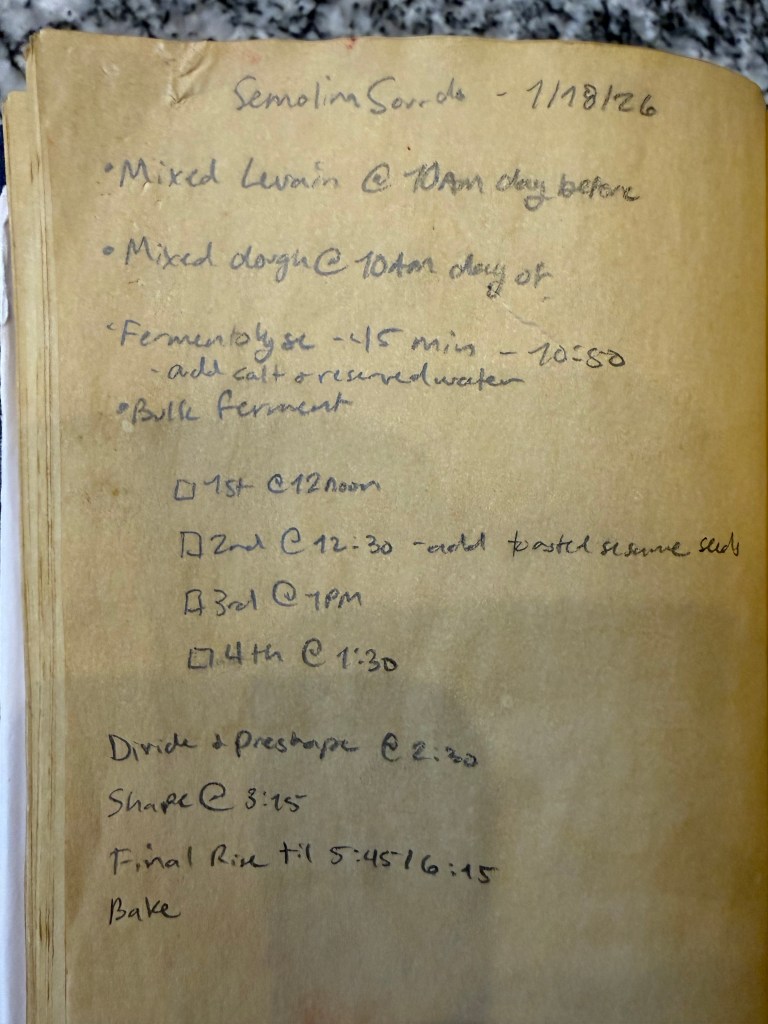
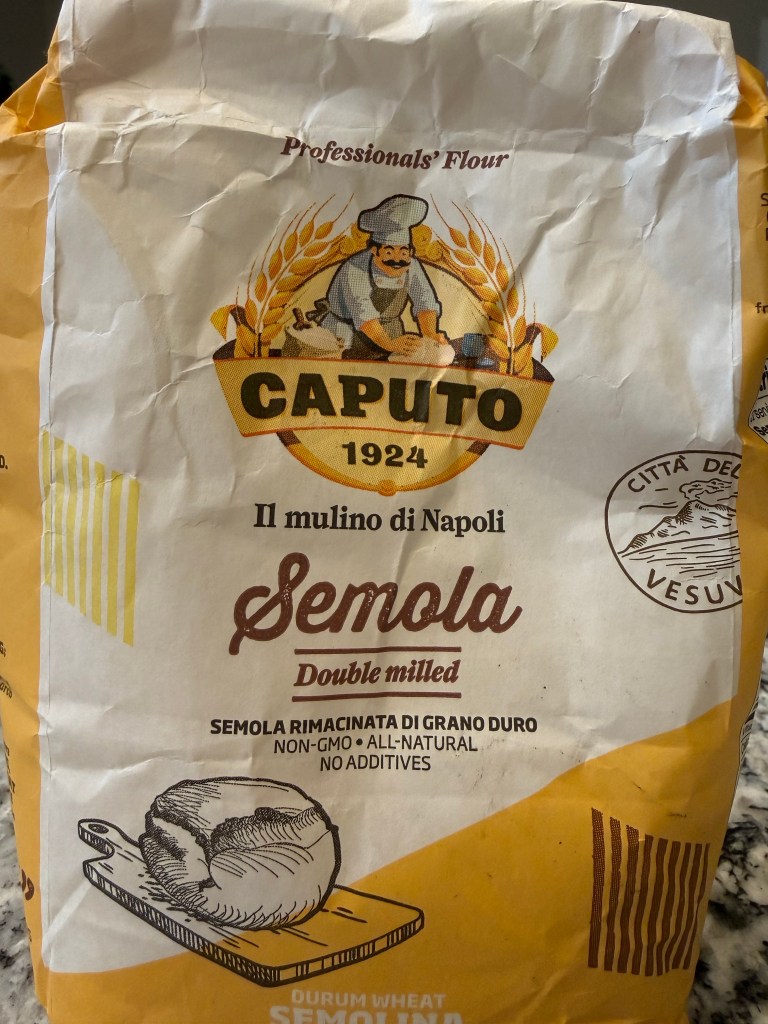
I gathered the mise en place:

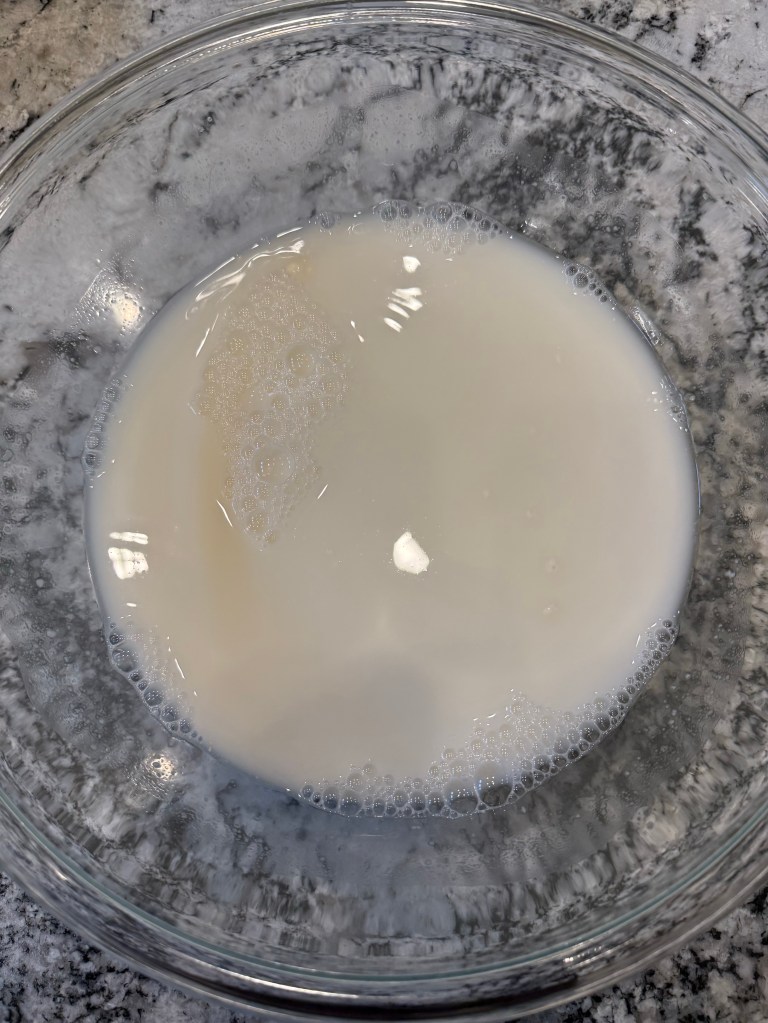
I started by pouring my starter into the water and marvelled that it floats. I’ve been baking sourdough bread since 2019, and floating starter still amazes me every single time. I mixed the starter into the water until reasonably-well distributed and the mixture looked milky. Do not be deceived: There were still small chunks of starter beneath the surface of the mixture.

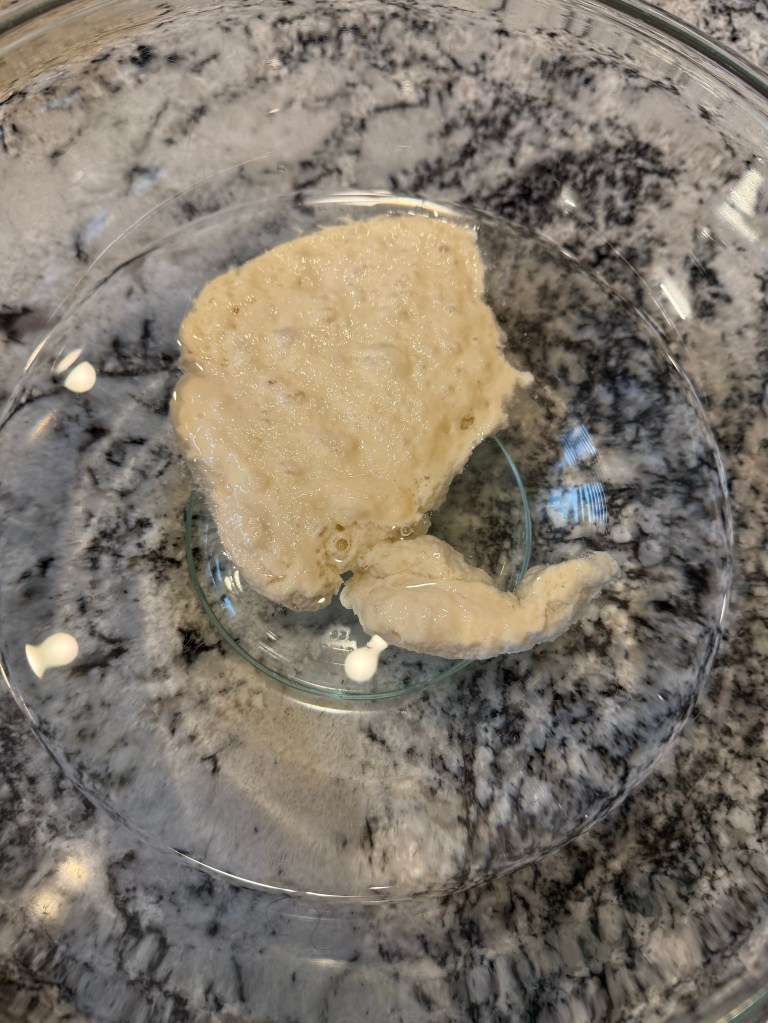
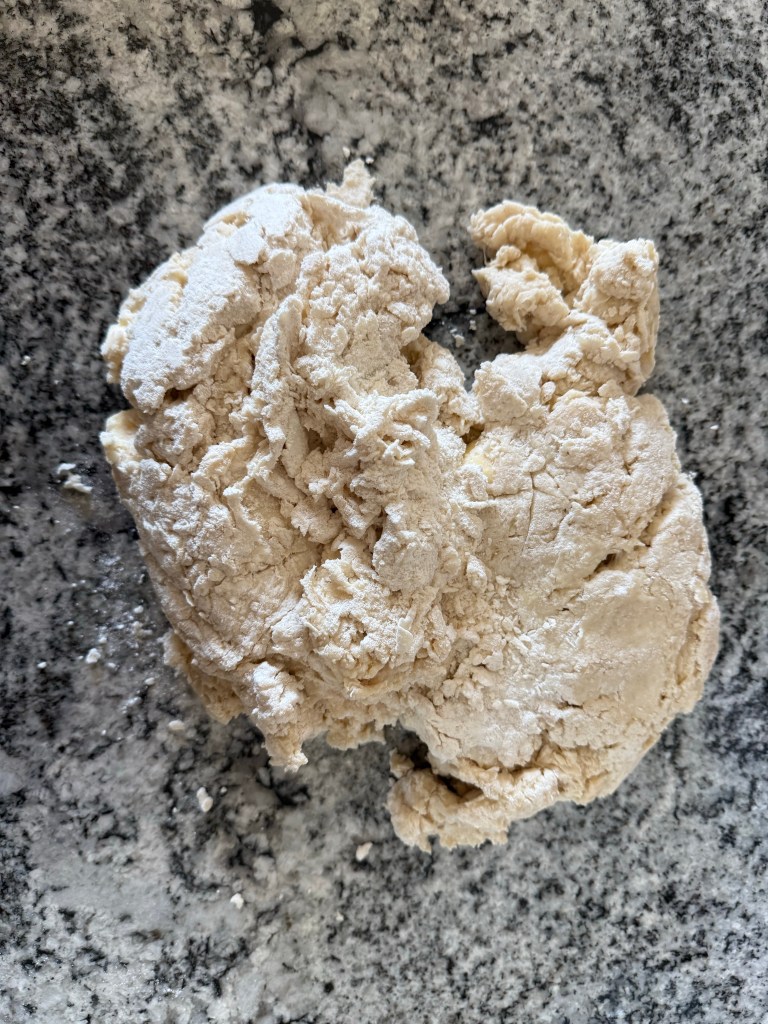
I mixed in the semolina and All-Purpose flours until the dough was shaggy. I set the dough aside to rest for 45 minutes. Chad describes this resting step as an autolyse, but technically an autolyse only includes flour and starter, and does not include any leavener. I’ve heard this step referred to as a fermentolyse when the starter is included. Since it is January and my kitchen is cold I put the dough in my countertop oven on the “Proof” setting (80 degrees Fahrenheit) to speed up the rise and hopefully limit sourness in the final loaf.
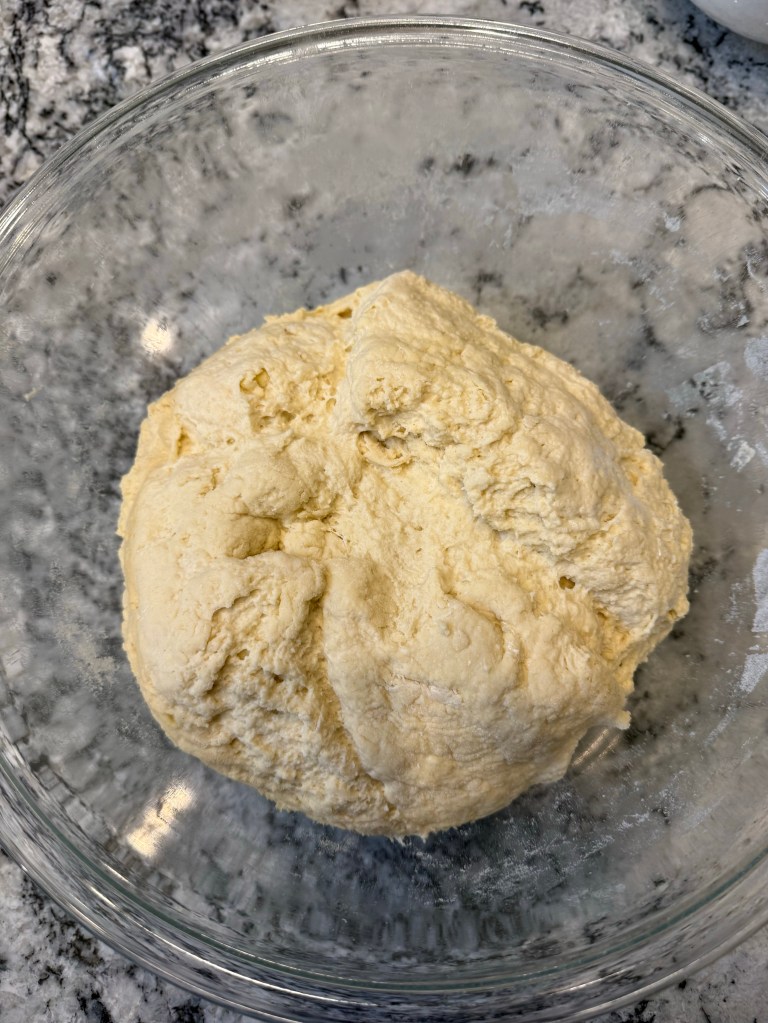
Regardless of what the rest is called, when 45 minutes had passed I added the salt and 50 grams of water that had been reserved at the beginning and mixed the dough well.
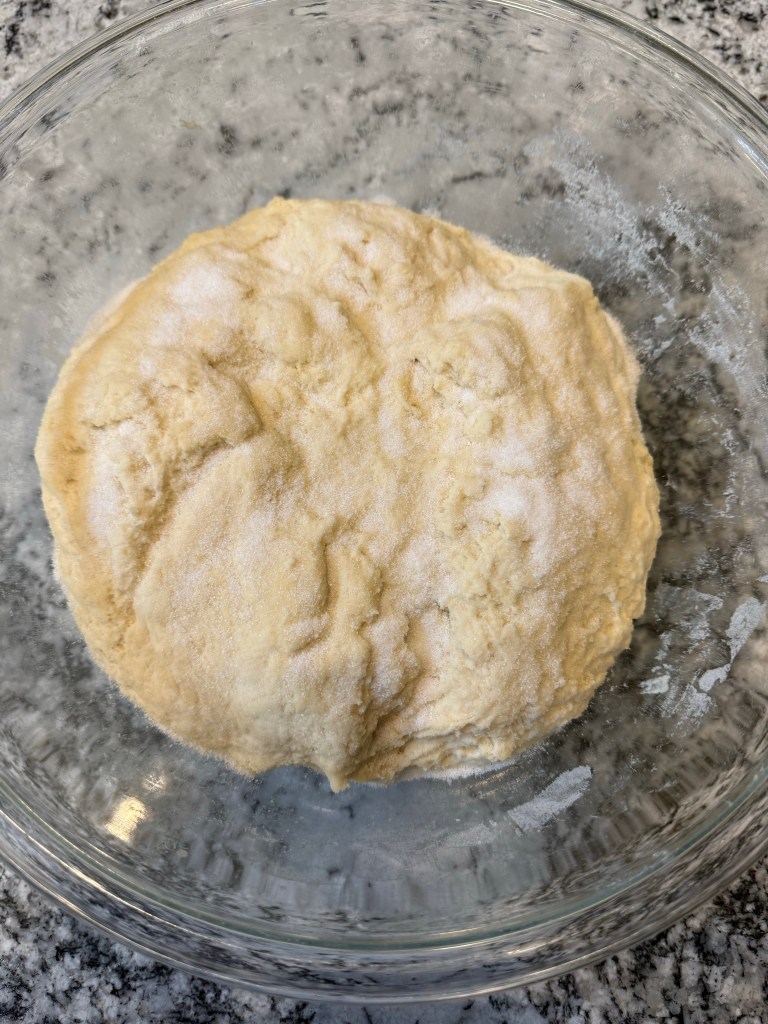
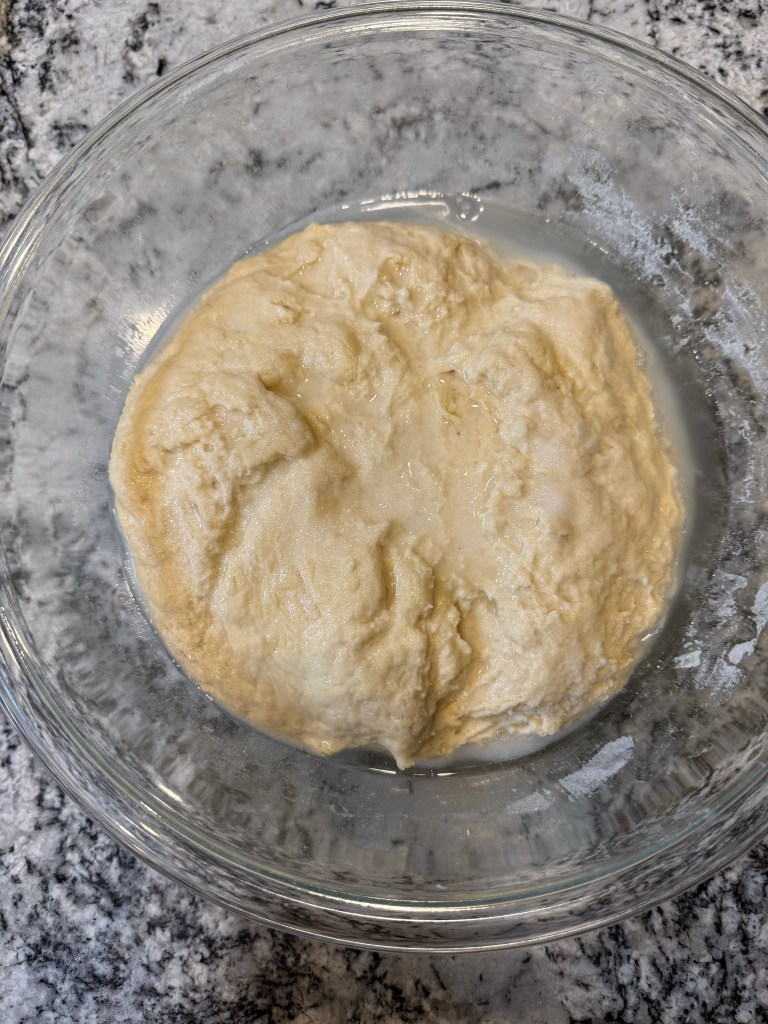
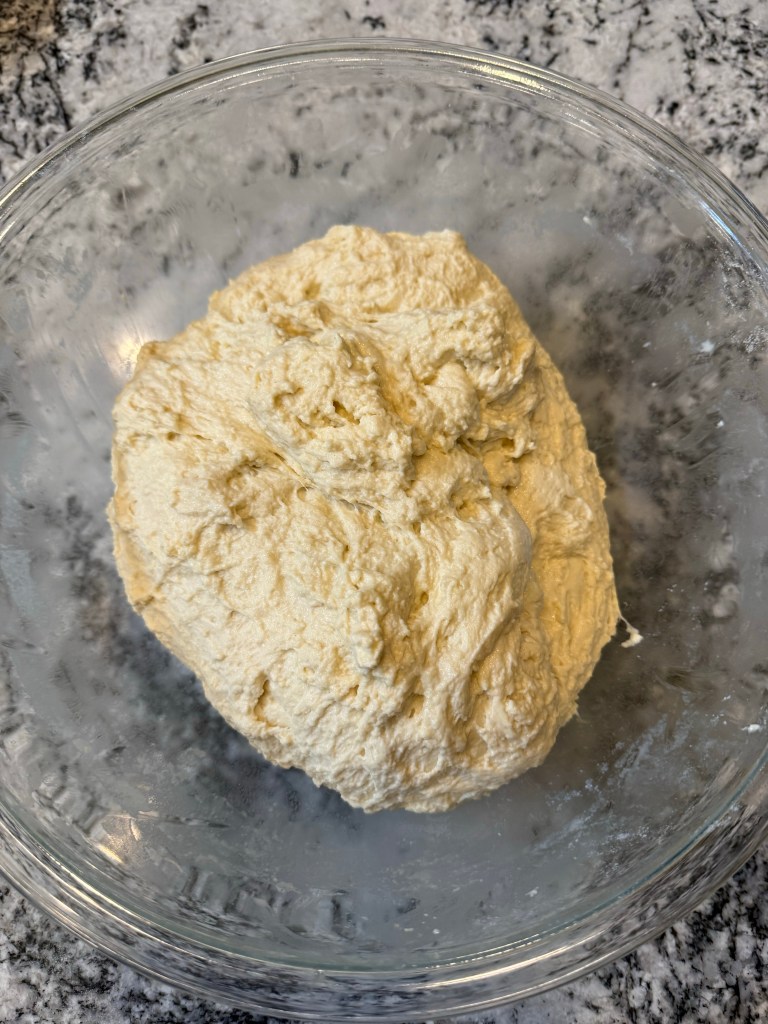
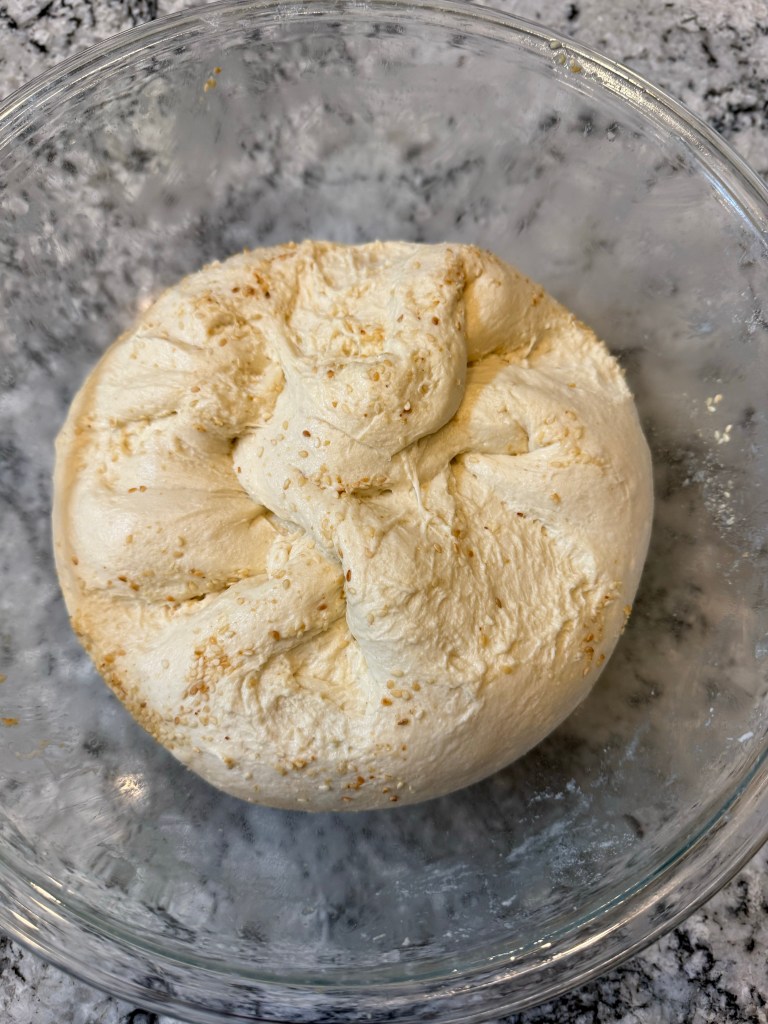
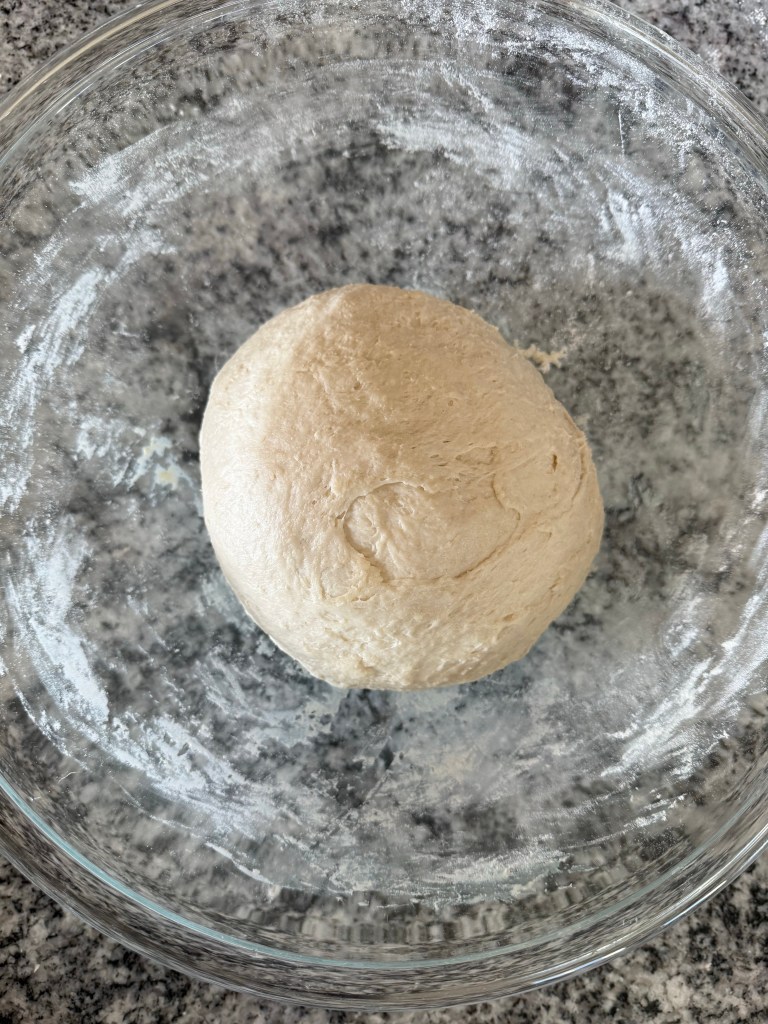
From here I did 4 “turns” or dough-folds in the bowl, every half hour. First turn (30 minutes in):
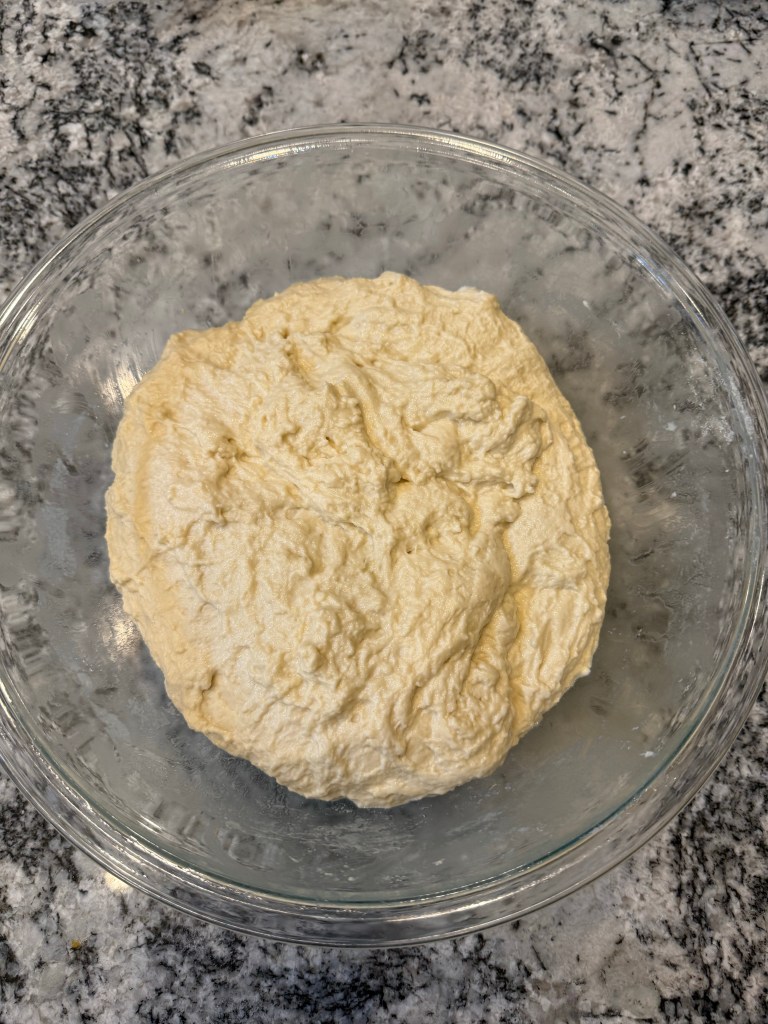
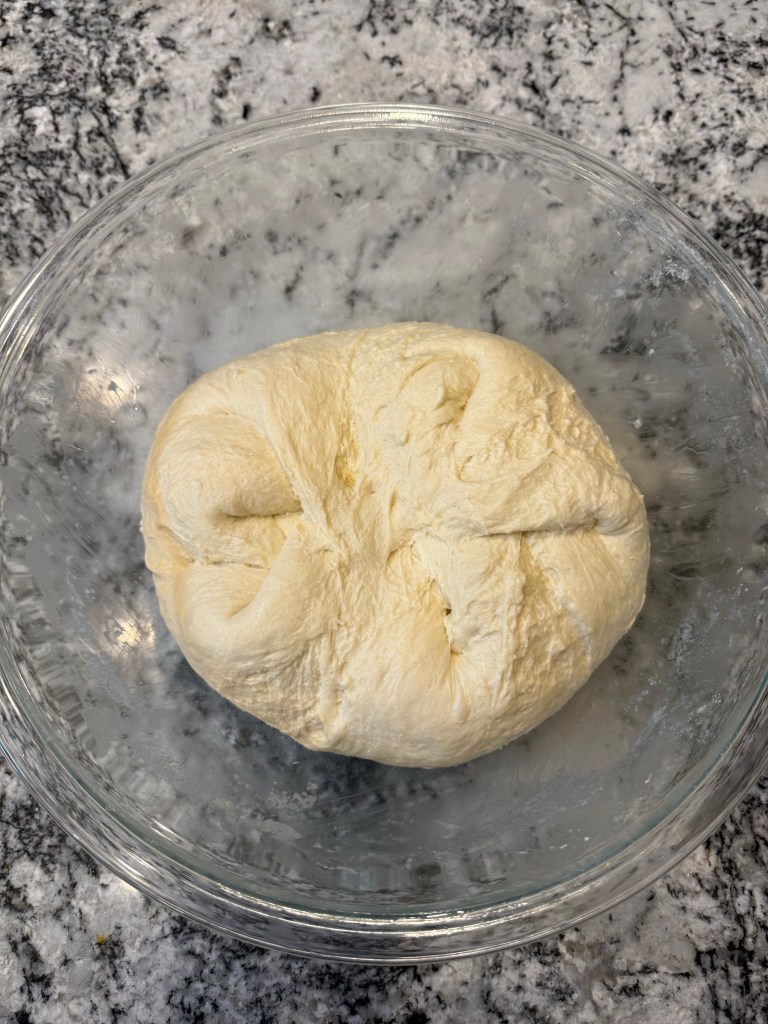
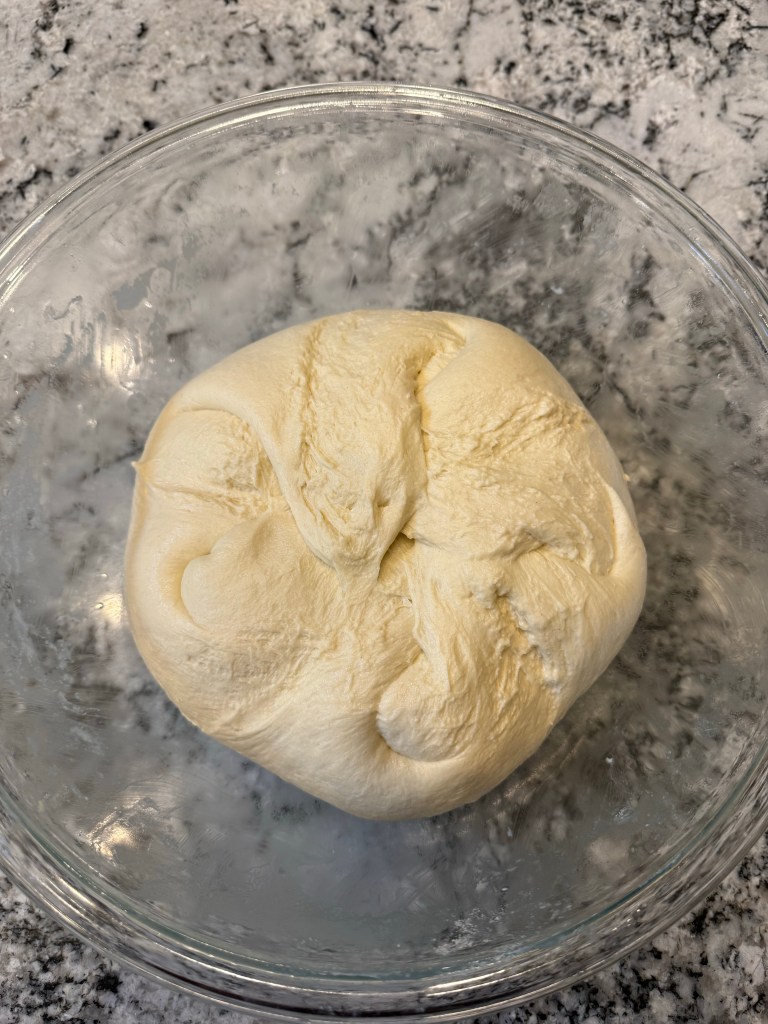
2nd turn (1 hour in):
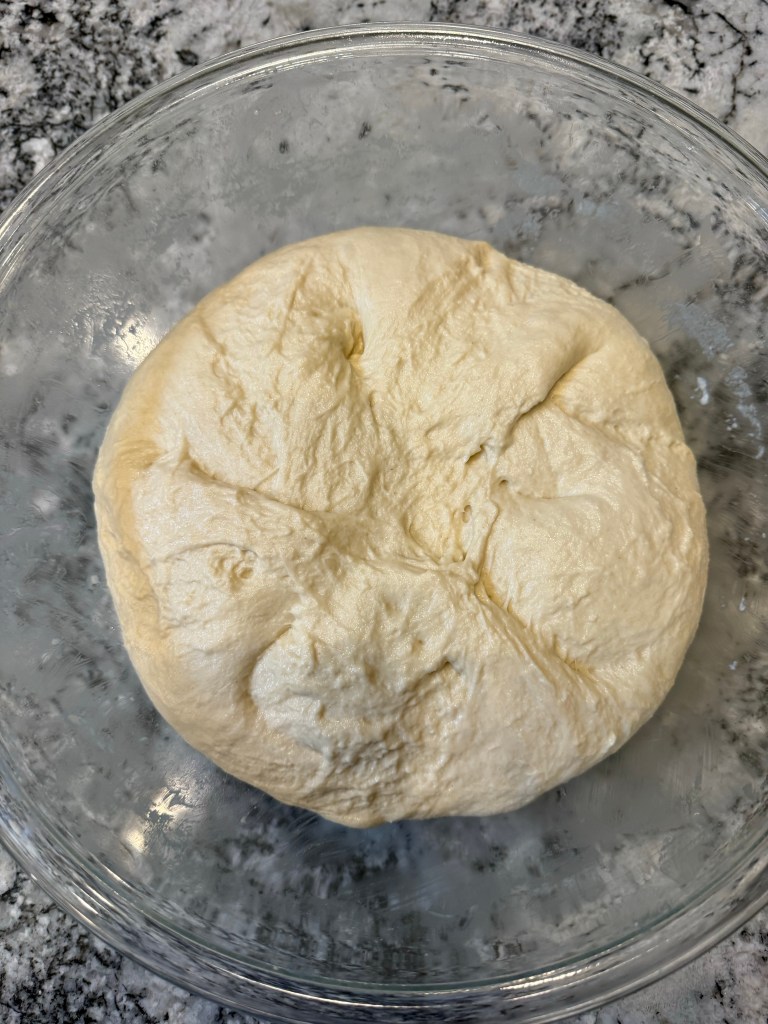
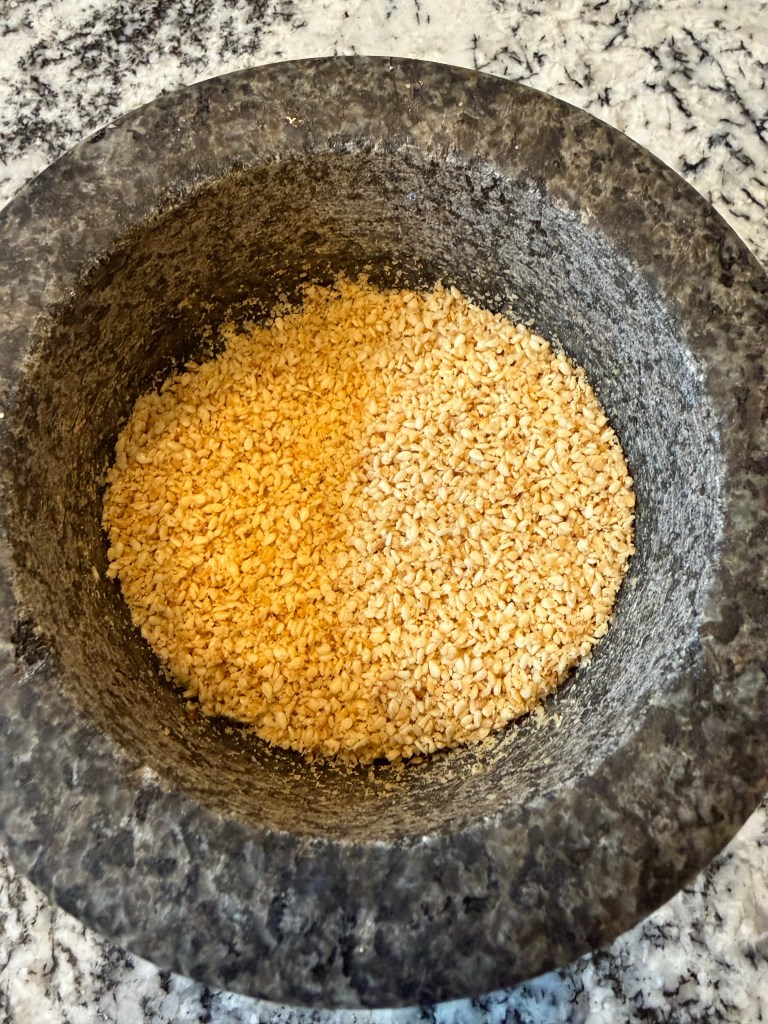
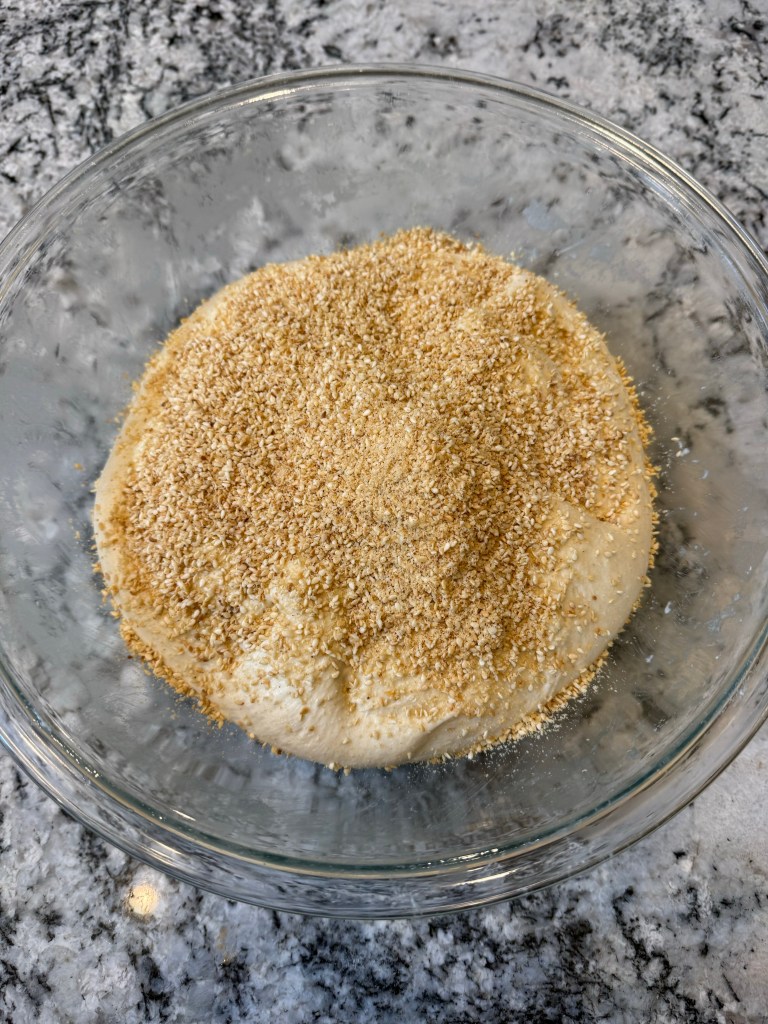
I was meant to add in some toasted and lightly ground sesame seeds during the 2nd turn, but I forgot, so I added them during the 3rd turn.
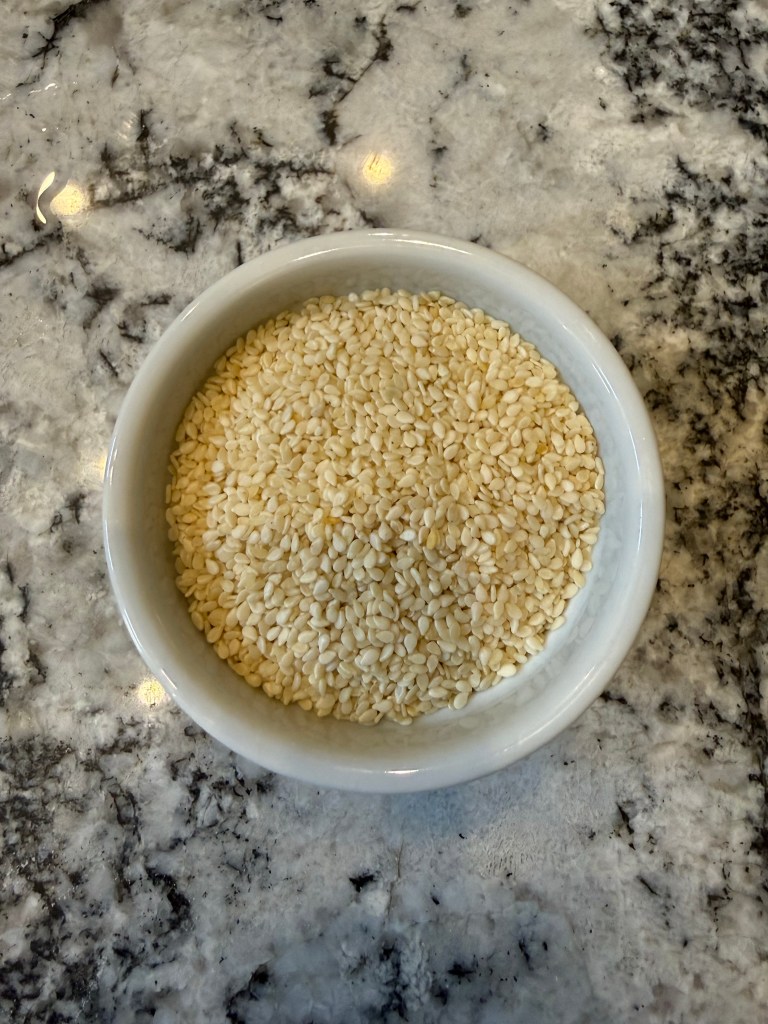
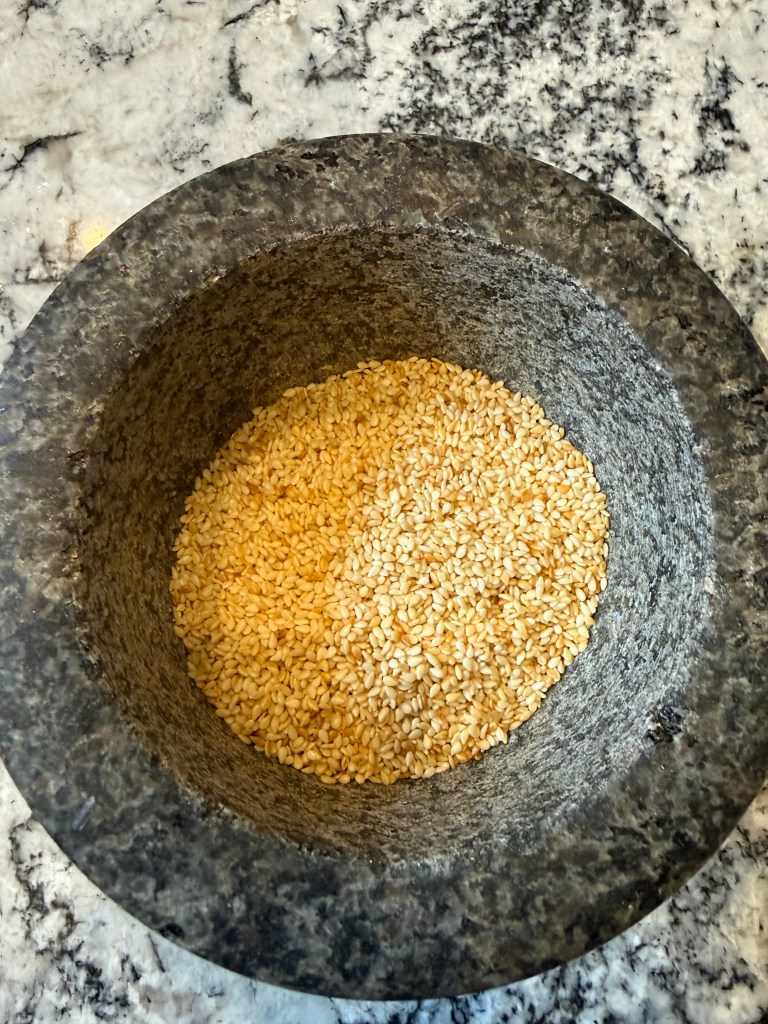
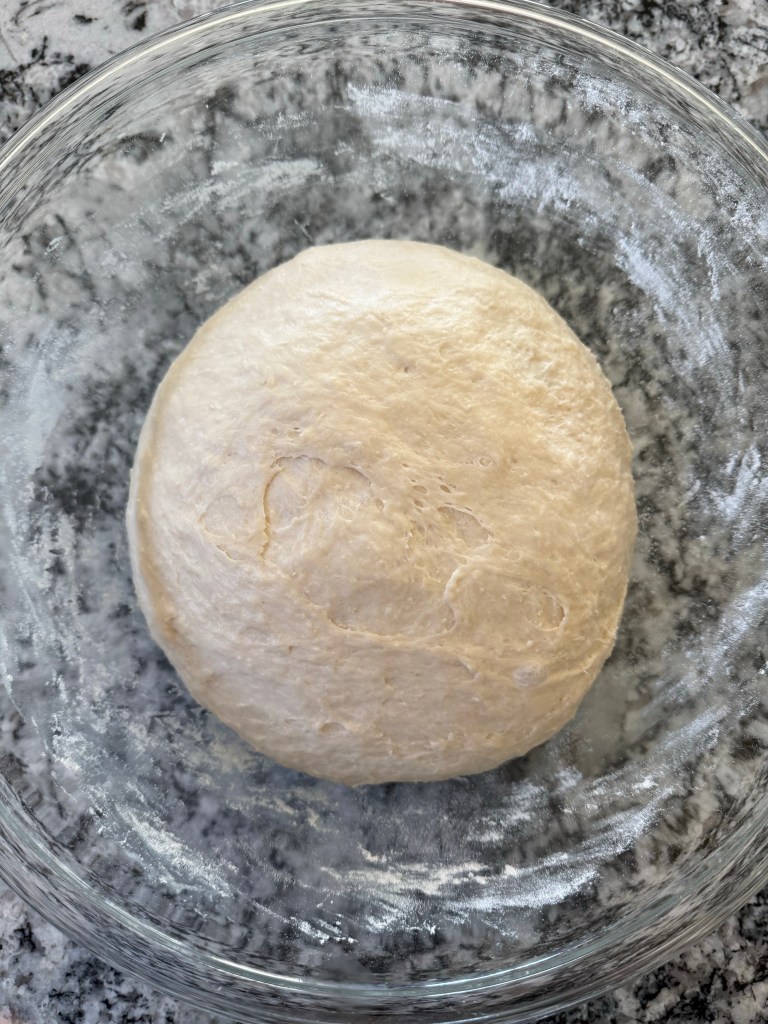
3rd turn (90 minutes in) with sesame addition and a little extra water to facilitate mixing:
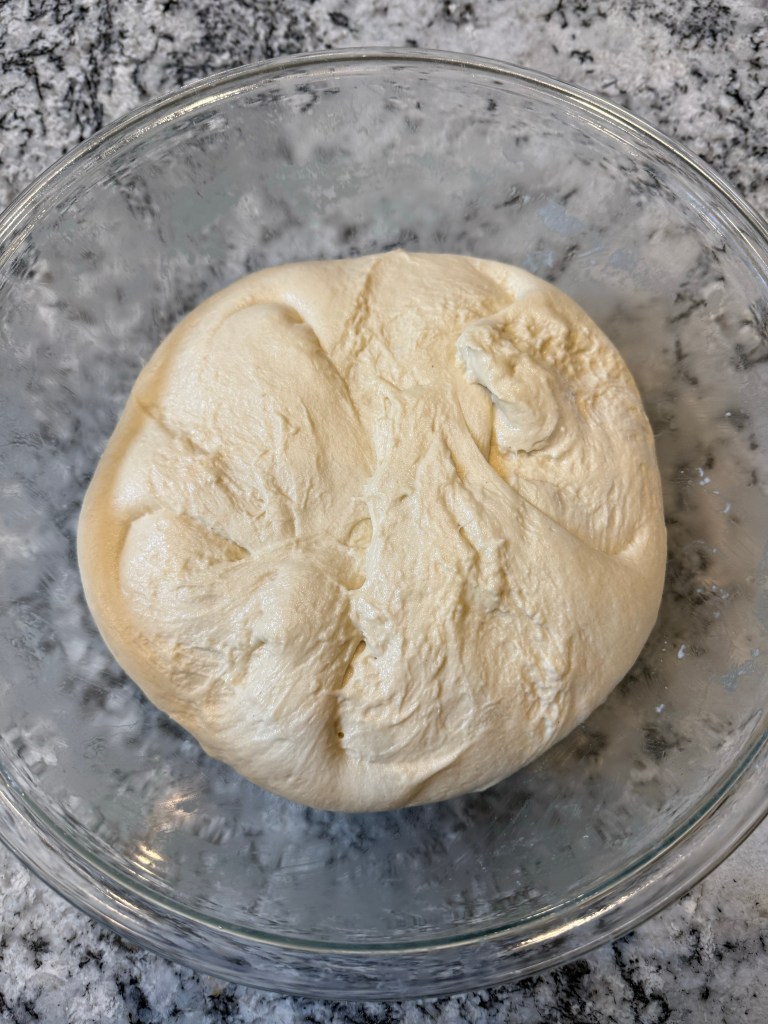
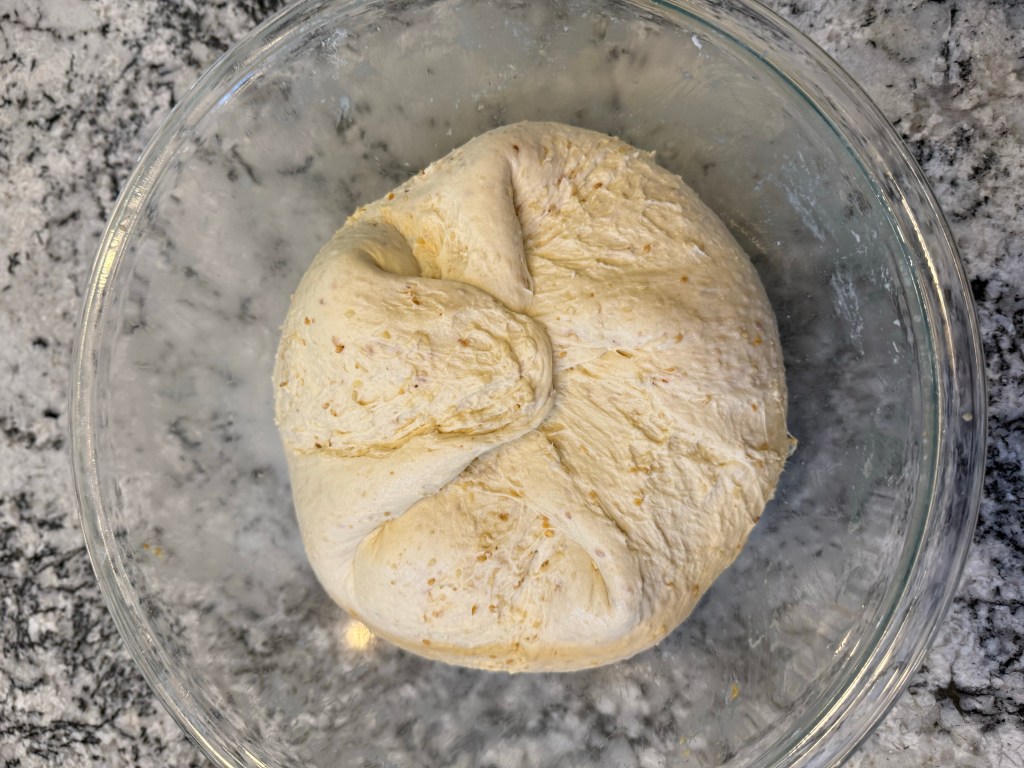
4th turn (2 hours in):
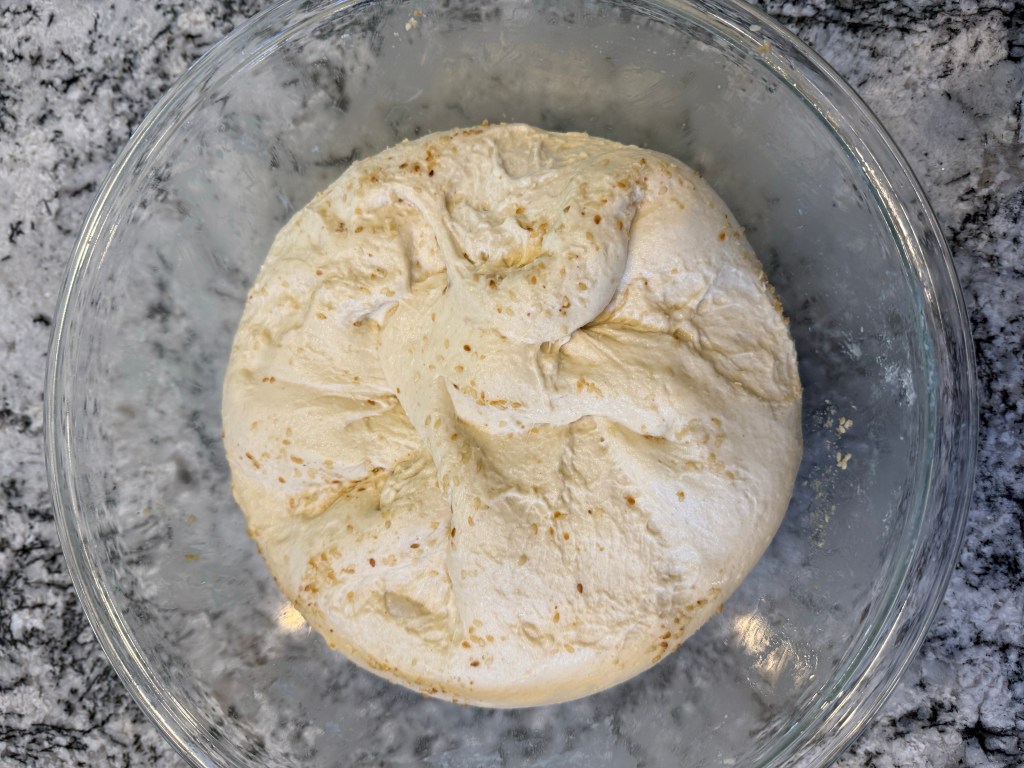
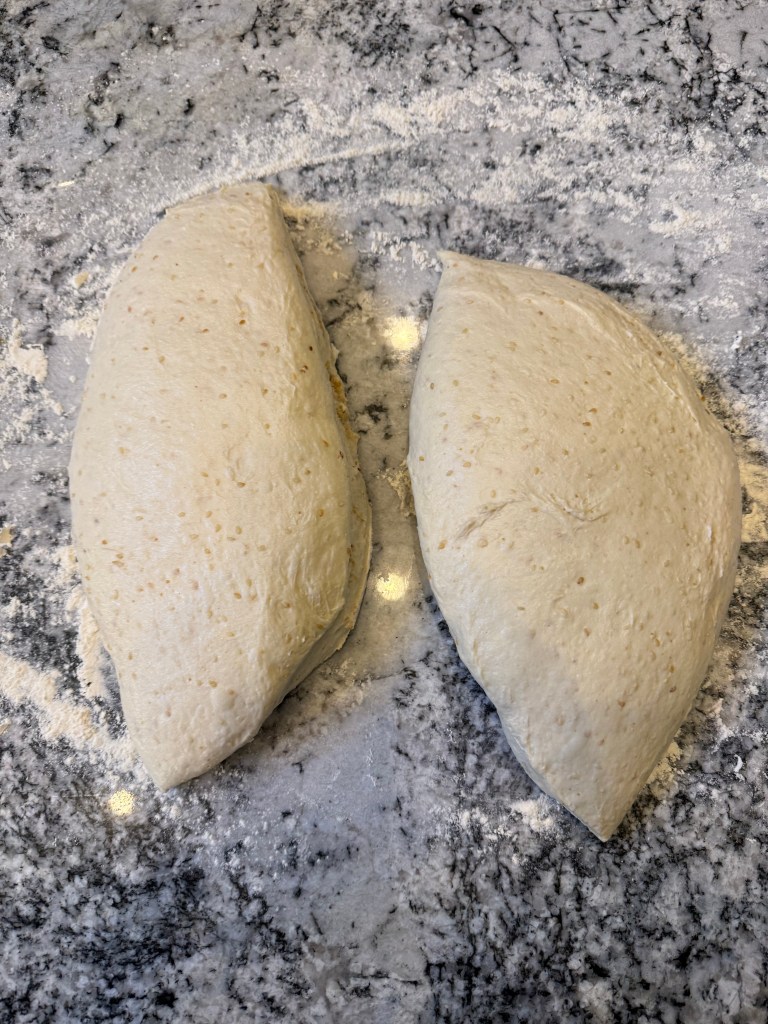
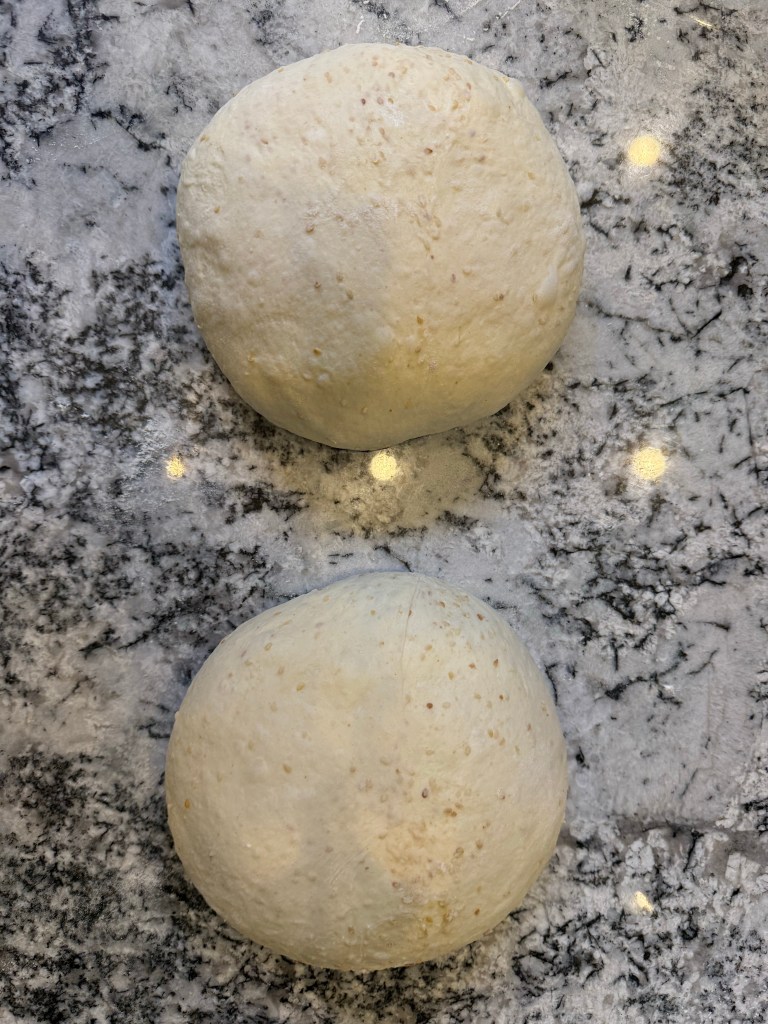
After the 4th turn I waited another hour, then divided and preshaped the dough into two rounds.
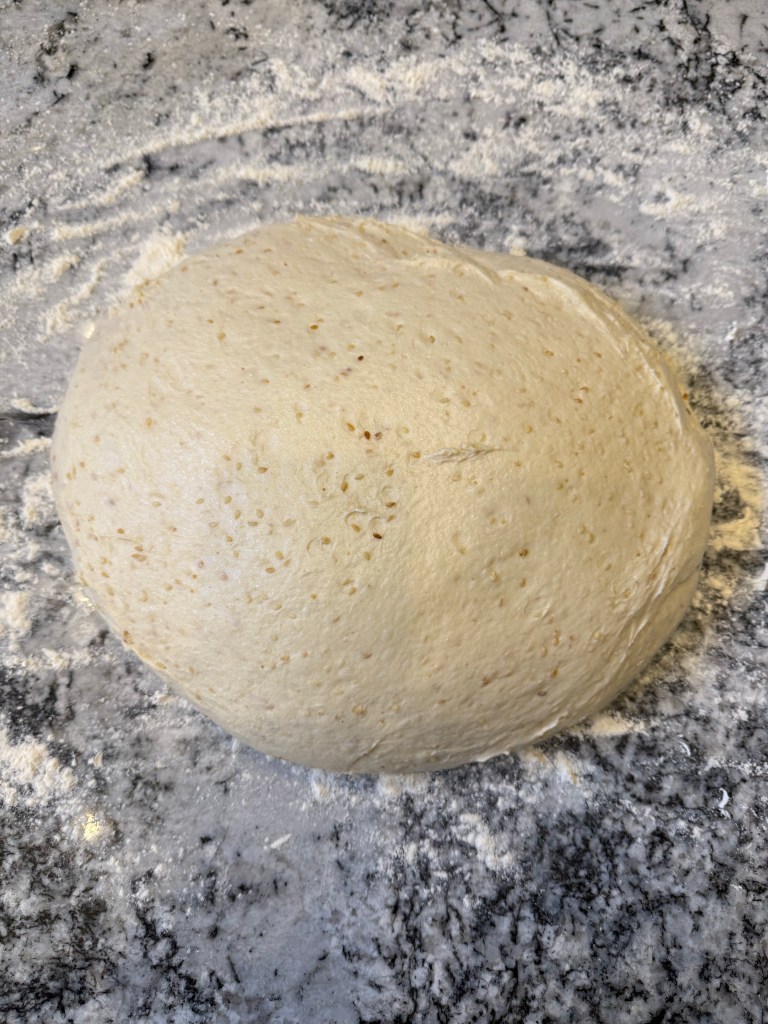
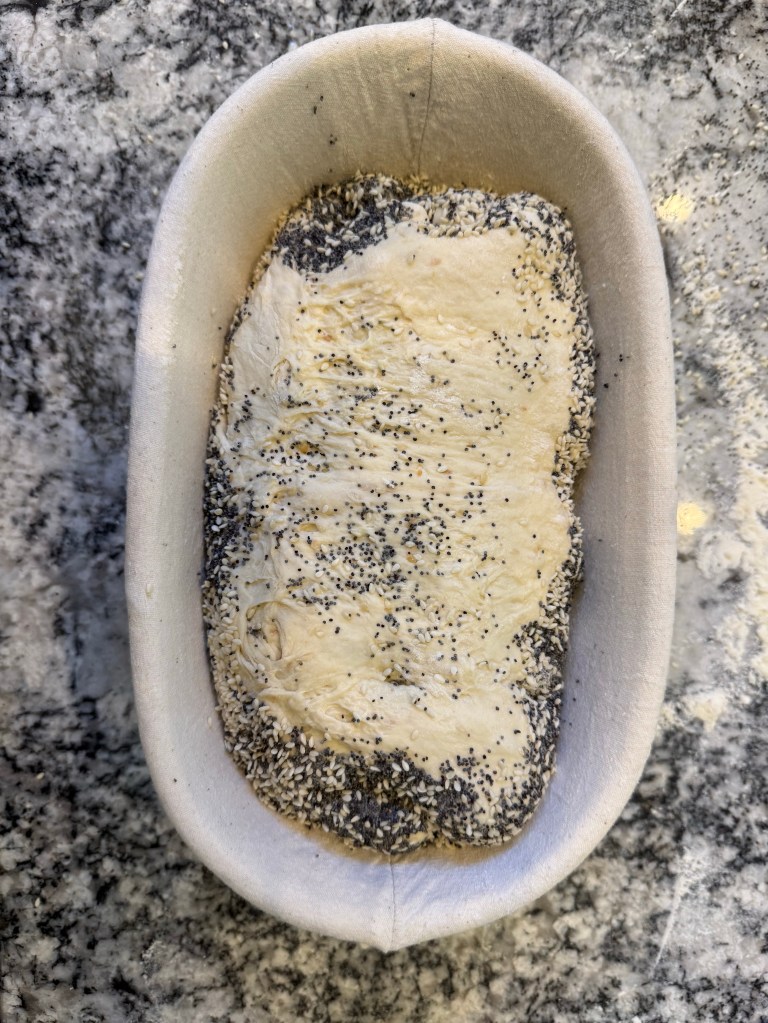
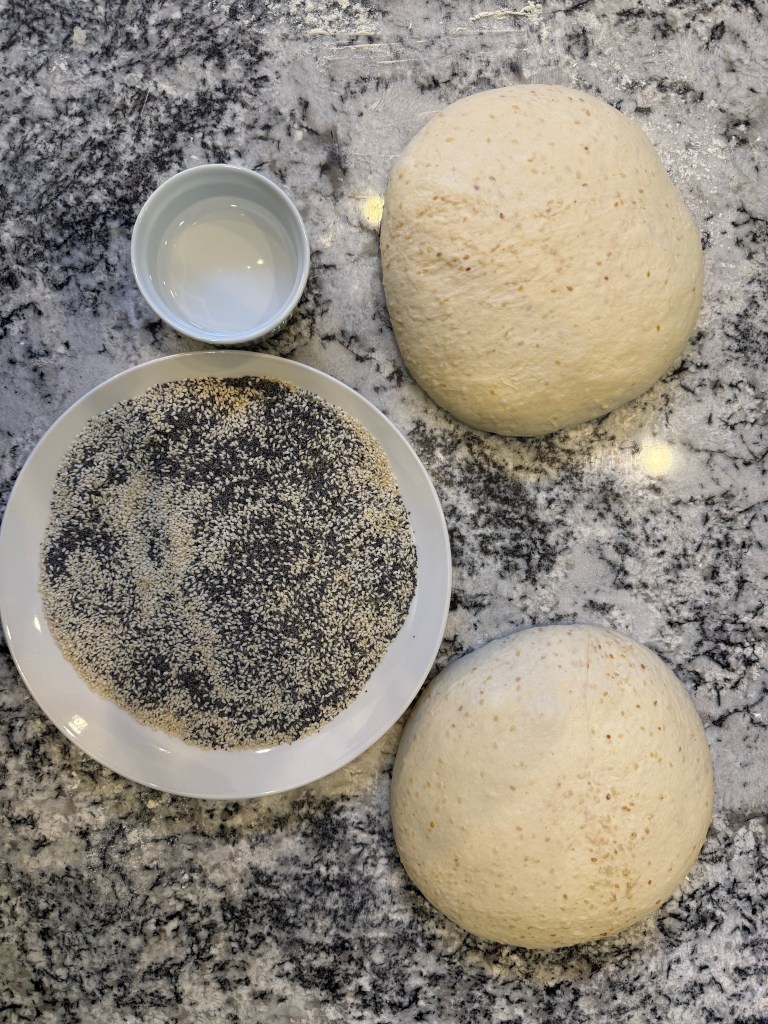
The rounds rested for 30 minutes before their final shaping. Before putting the dough into the bannetons I brushed each loaf with water and rolled them in a mix of sesame and poppy seeds.
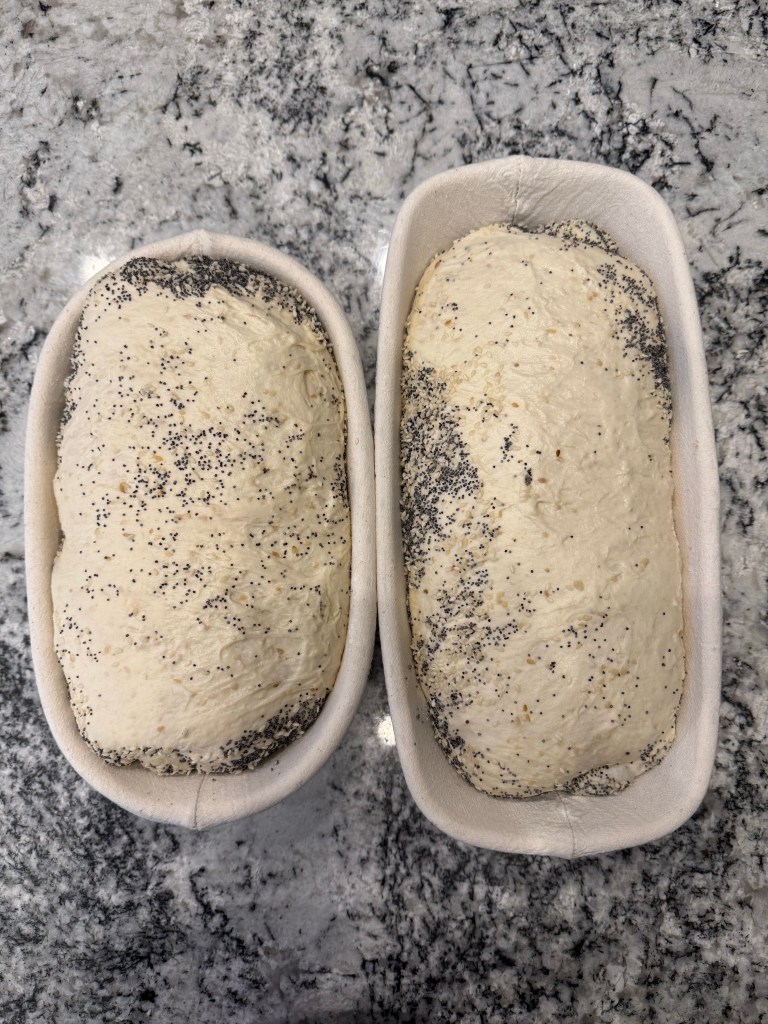
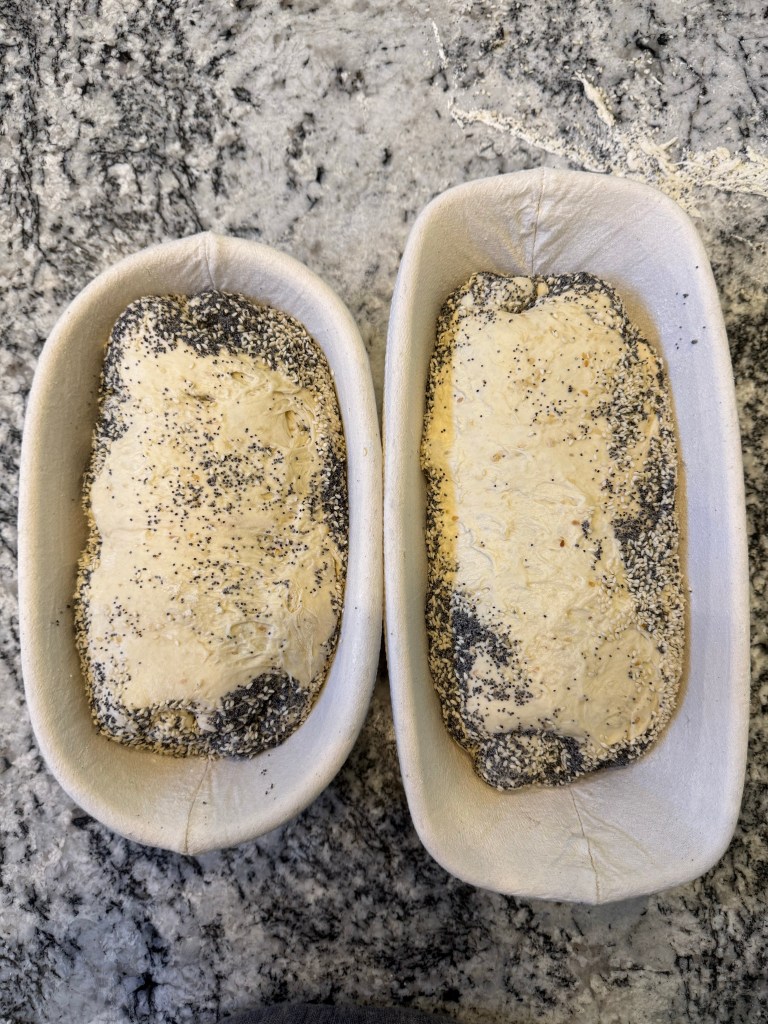
The dough rose for 2 hours. I was so pleased with how much rise I got during this time!
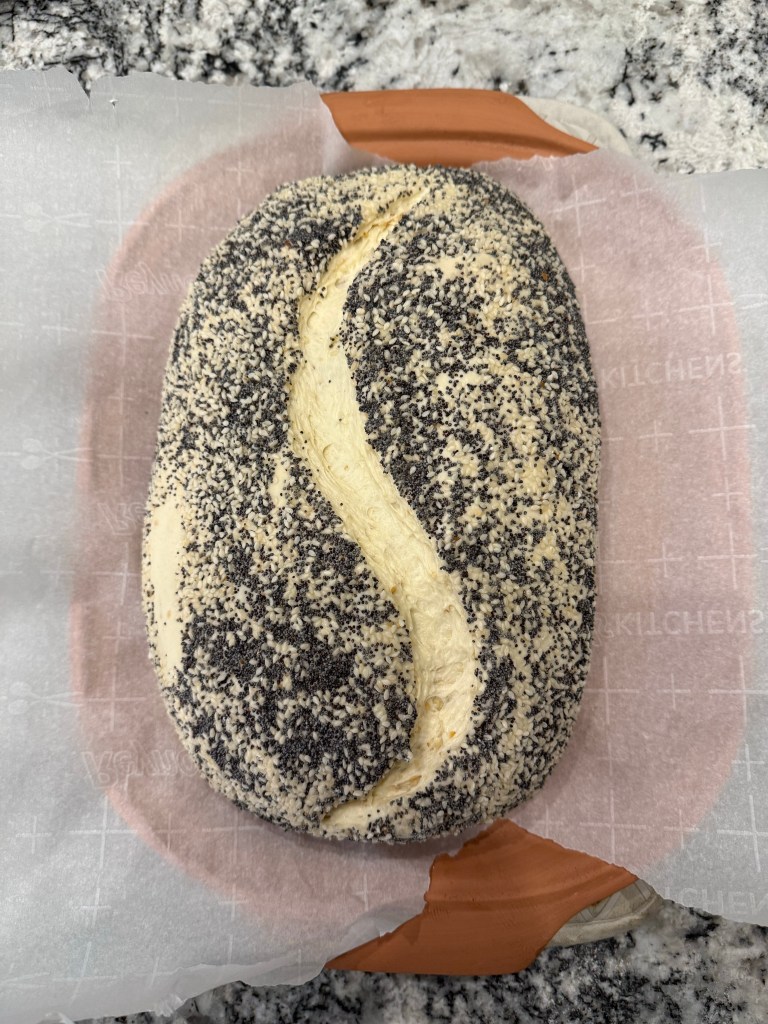
While the dough was rising I preheated my oven to 500 degrees Fahrenheit. Before baking I turned the dough out onto parchment paper and scored it.
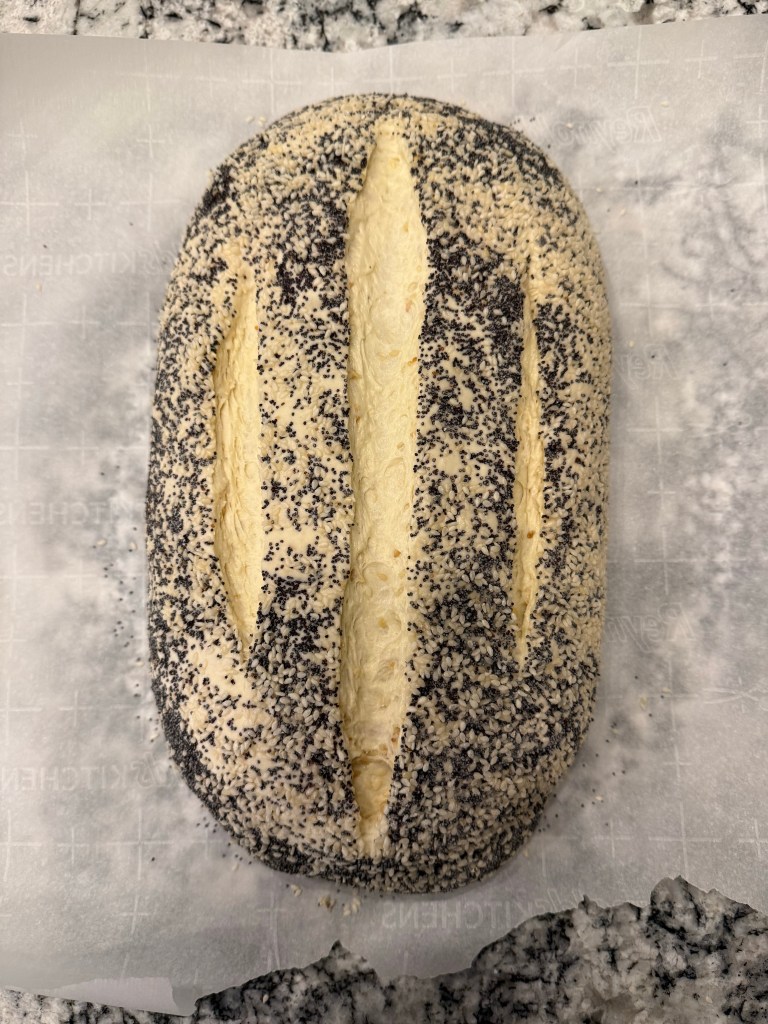
I placed each loaf into a covered baker, put them in the oven, and reduced the temperature down to 475 degrees Fahrenheit. I took the lids off 15 minutes into the bake, then let the loaves bake for another 30 minutes.
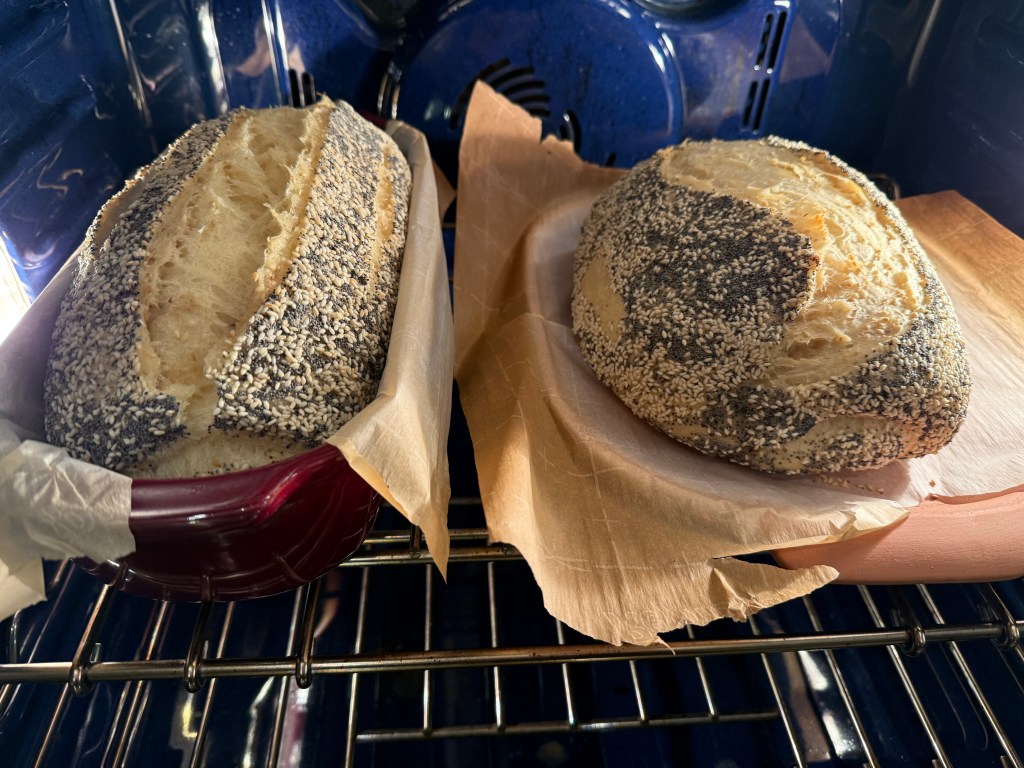
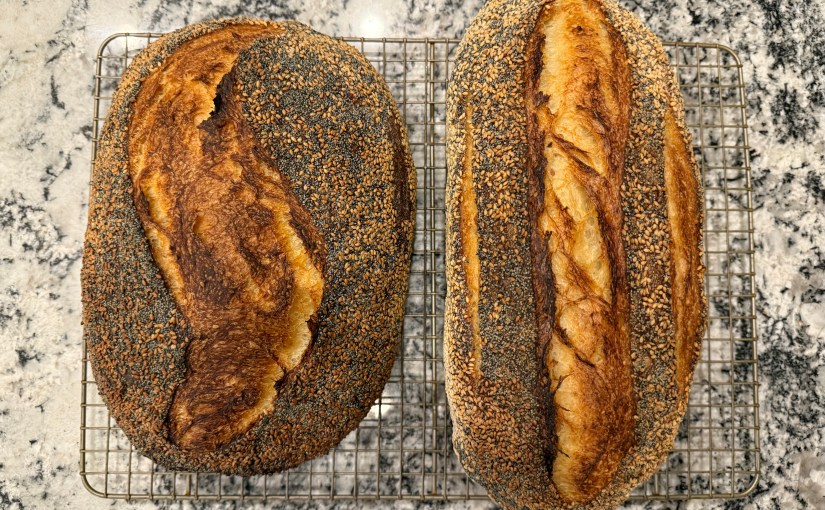
When I pulled these loaves out of the oven I was amazed at how beautiful they are! The seeded crust is just so gorgeous!
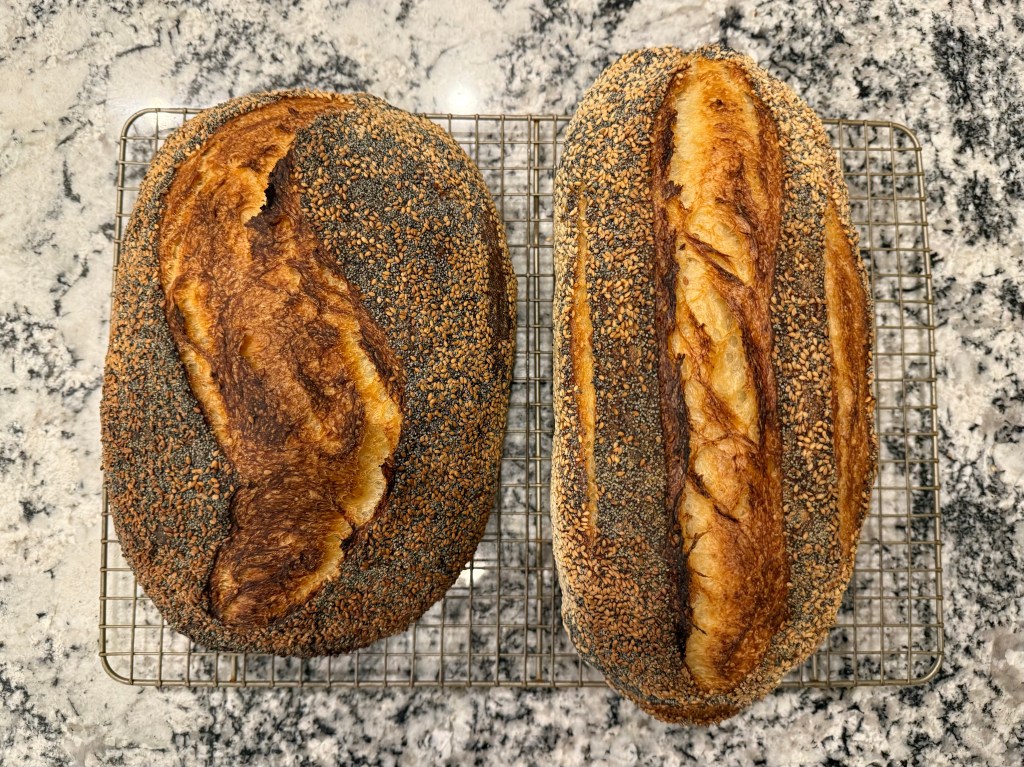
I am so pleased with how this bread turned out! The bread is lightly sour, which is something I was aiming for with the warmer and shorter proofing. It has a fluffy grain with a combination of large and small holes. The seeds on the crust are a little overwhelming. I think this dough could also use some additional salt – maybe 2.5% instead of 2% to help stand up to the nutty flavors.
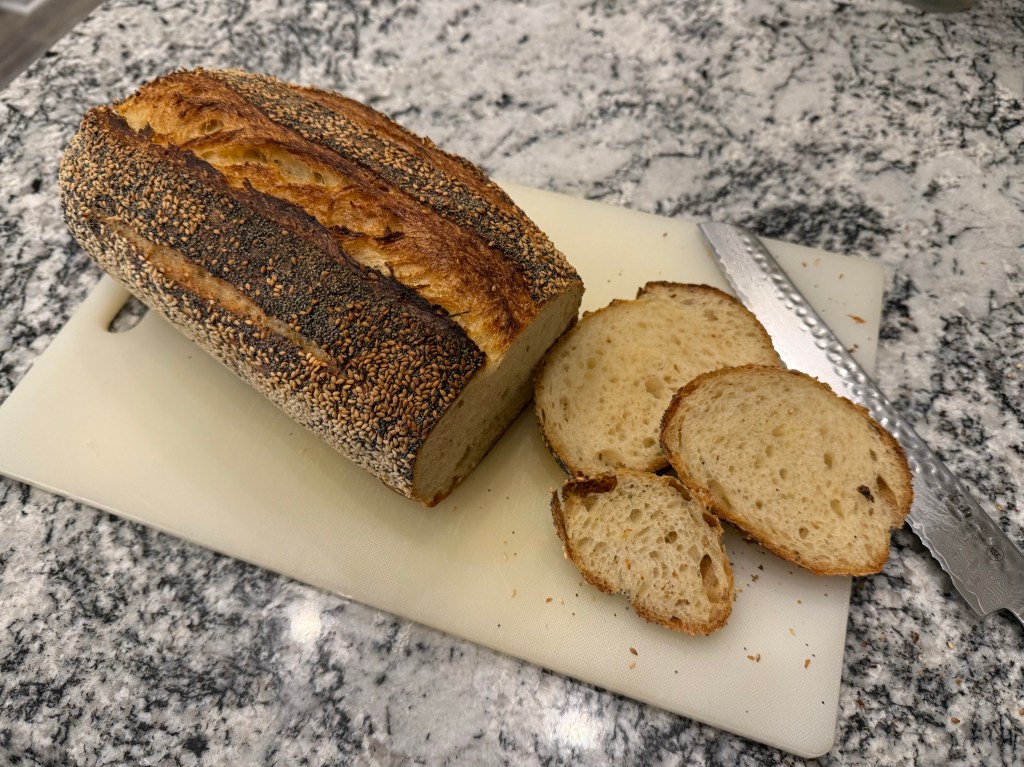
I can see a definite improvement in the rise of these loaves compared to my usual sourdough. I think this is due to a combination of factors: 1) the warm proofing environment; 2) additional folds during the bulk ferment – I went around the bowl twice per instance instead of once; and 3) Better shaping technique, specifically around building lots of tension in the dough prior to placing it in the Banneton.

It’s only been a few days and we’ve already eaten more than half of the first loaf. It’s so yummy.

Until the next time: may your yeast always rise and your flour never run out.

Sourdough Discard Chocolate Chip Cookies: Worth It?

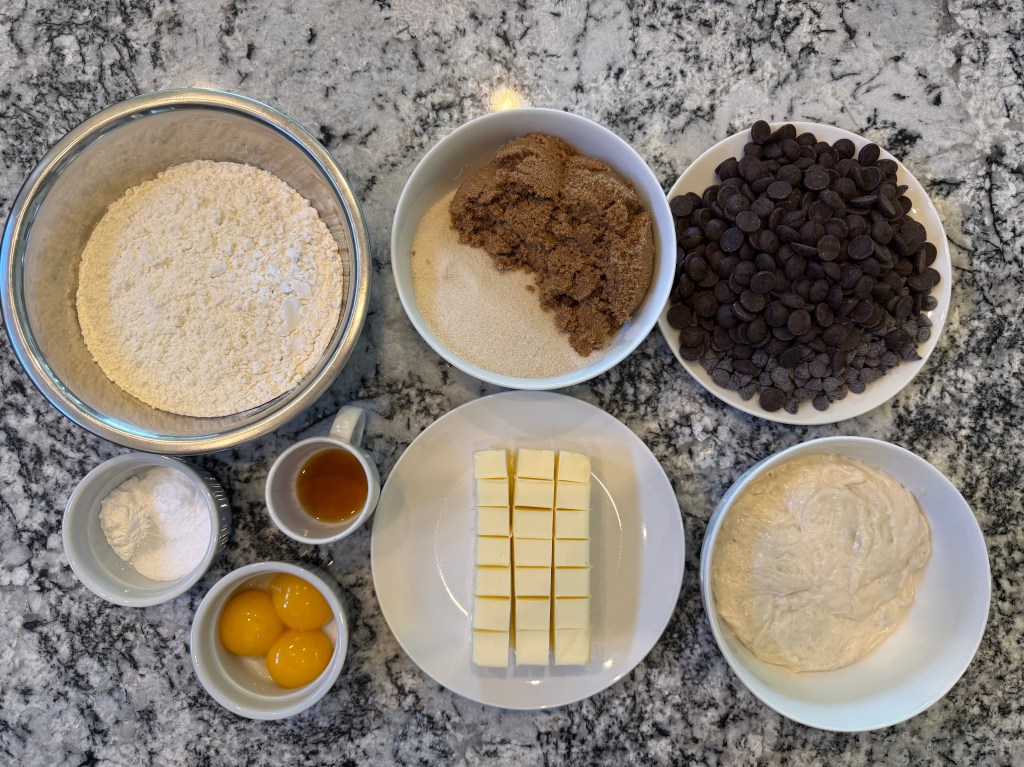
A while ago I read about a sourdough chocolate chip cookie recipe that was next level. My starter wasn’t active at the time, so I’ve been waiting to try this recipe for quite a while, and this seemed like the right time. The recipe can be found here.

I gathered the mise en place:

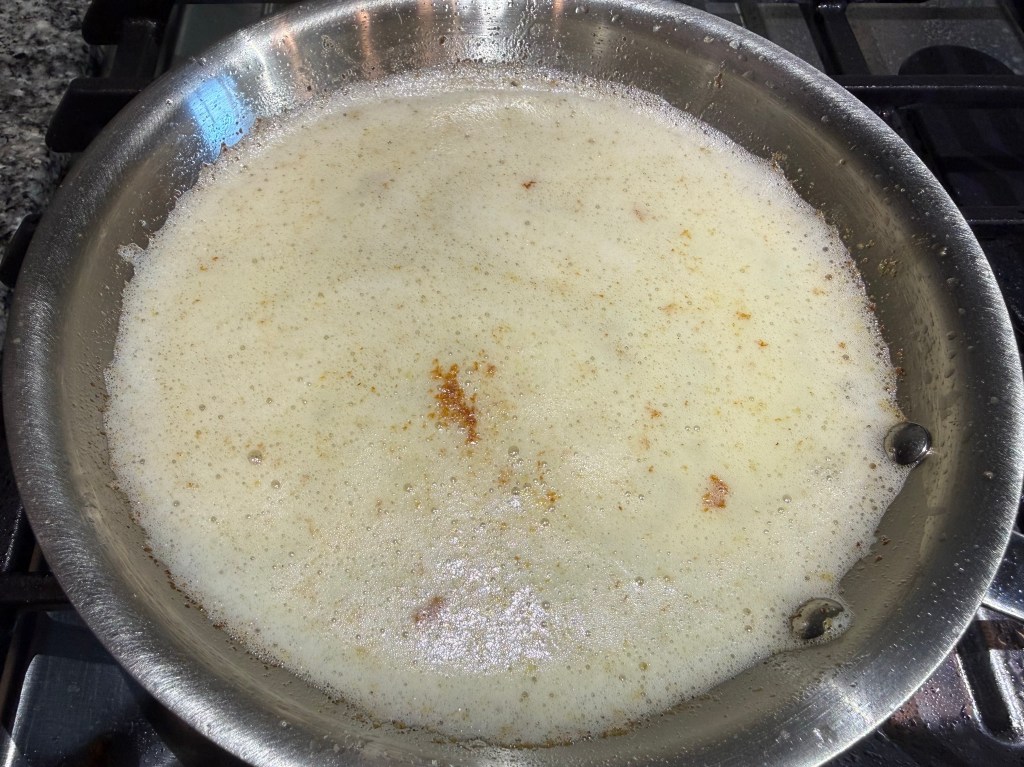
Before I could start mixing up cookies I had to brown the butter to get all the water content out of it. This lost water will be made up with some of the water in the sourdough starter. The goal is to start with 225g of butter and end up with 185g.

Once the butter was very foamy and the milk solids had browned I let it cool just enough that it would no longer burn me through the bowl. I weighed the browned butter and was tickled pink to see it weigh exactly 185g. I also combined the flour with the leaveners and salt at this stage.

Here’s my updated mise en place:

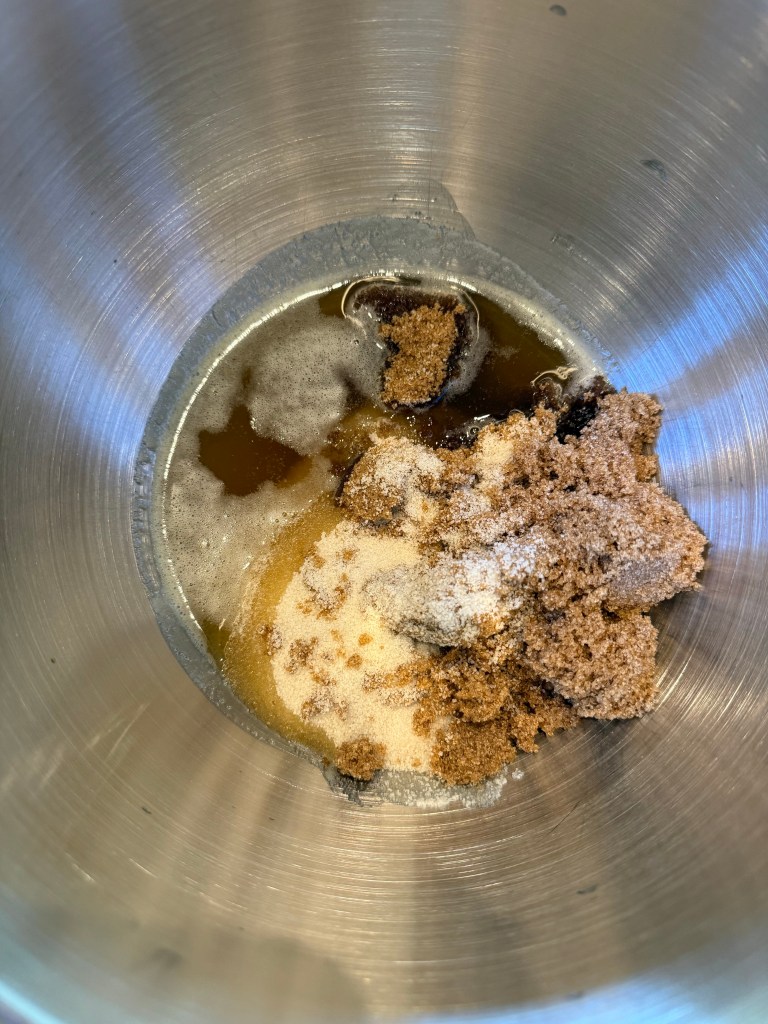
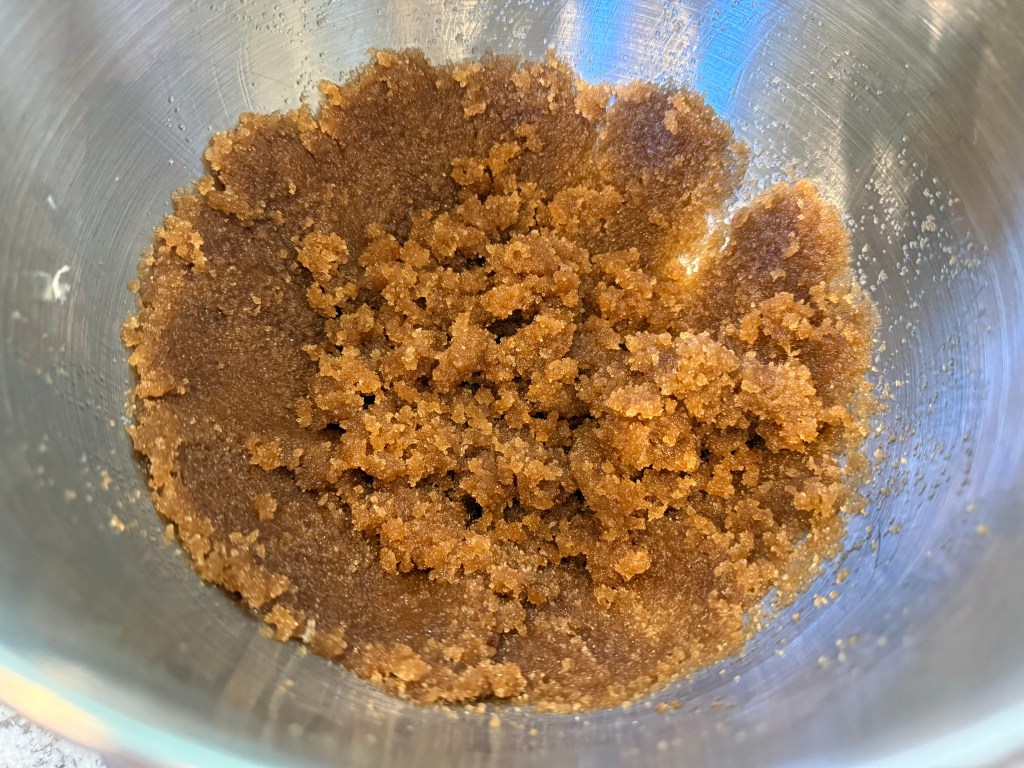
I mixed the butter and sugars.

Then I added the egg yolks and creamed the mixture. Normally I would cream the butter and sugar before adding anything else, but since the butter no longer has any water content it won’t cream with the sugar properly. The egg yolks have just enough water content to get the sugar to cream up nicely.

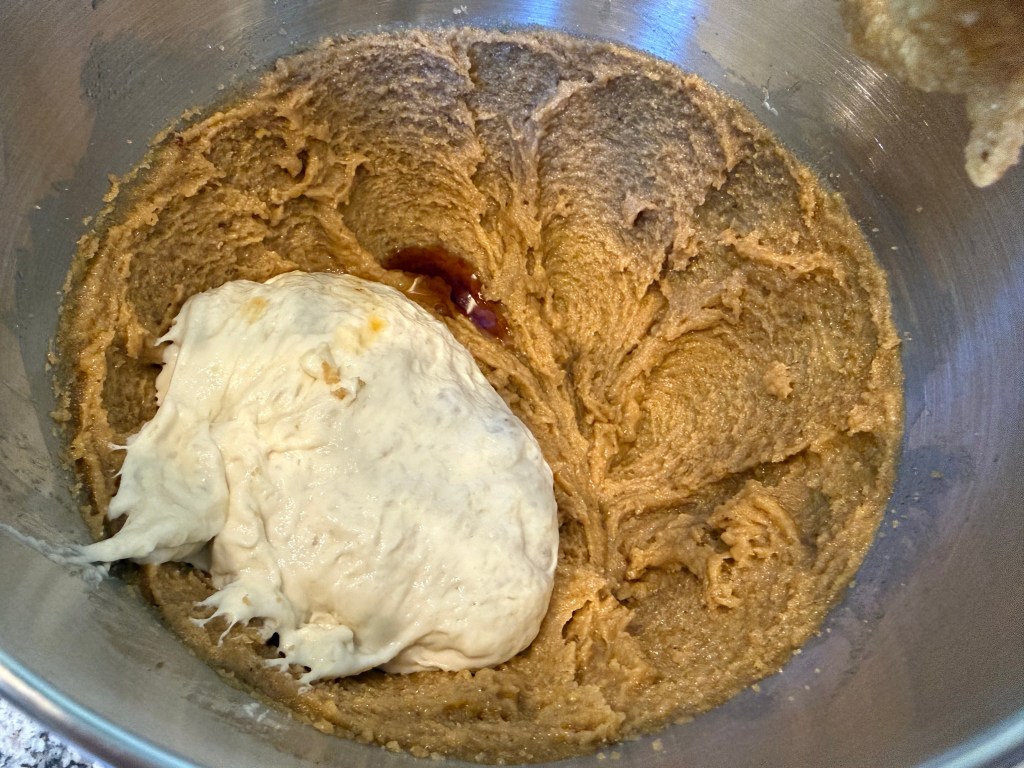
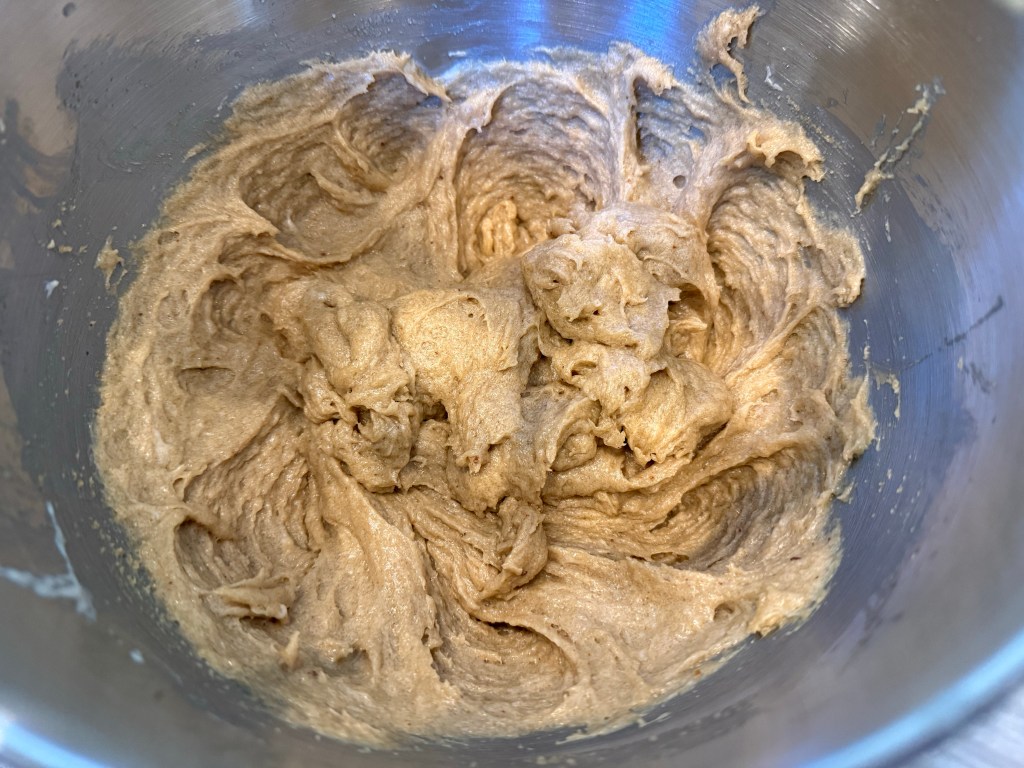
I added the starter and vanilla and mixed until homogeneous.

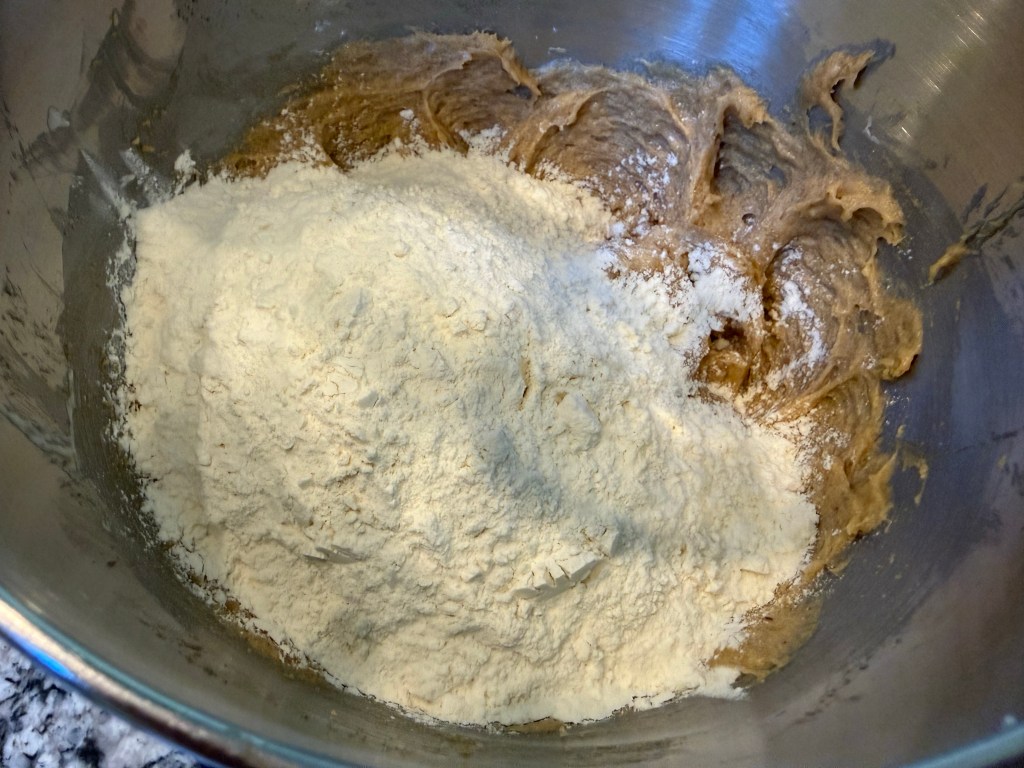
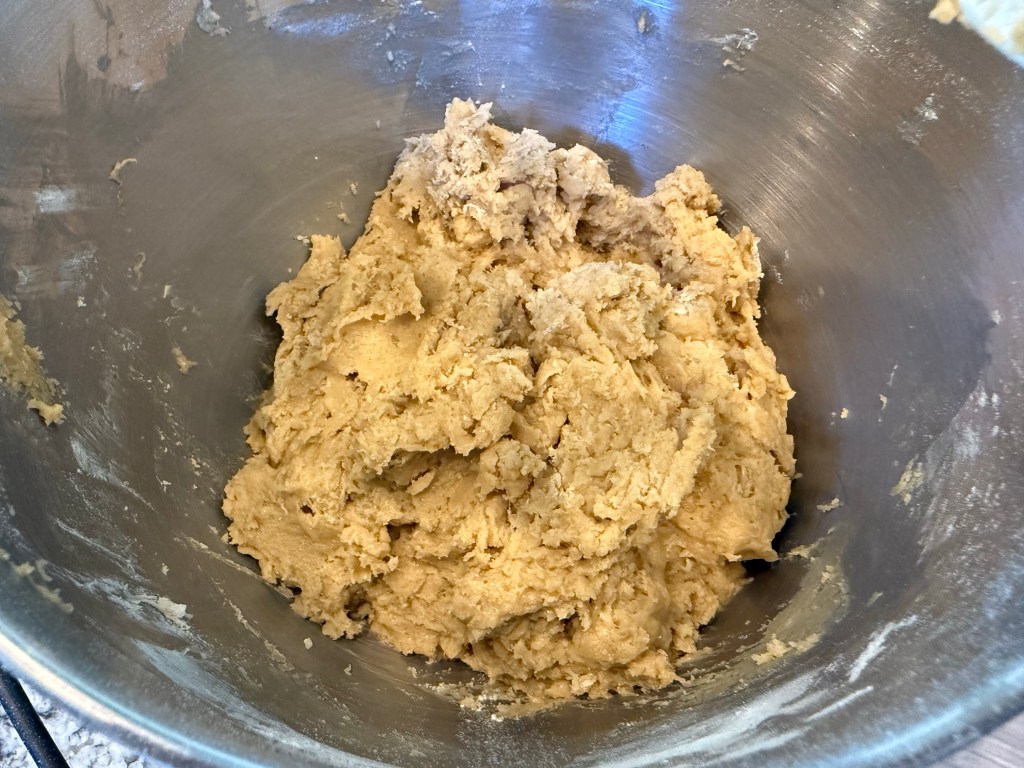
I added the flour and mixed until just combined.

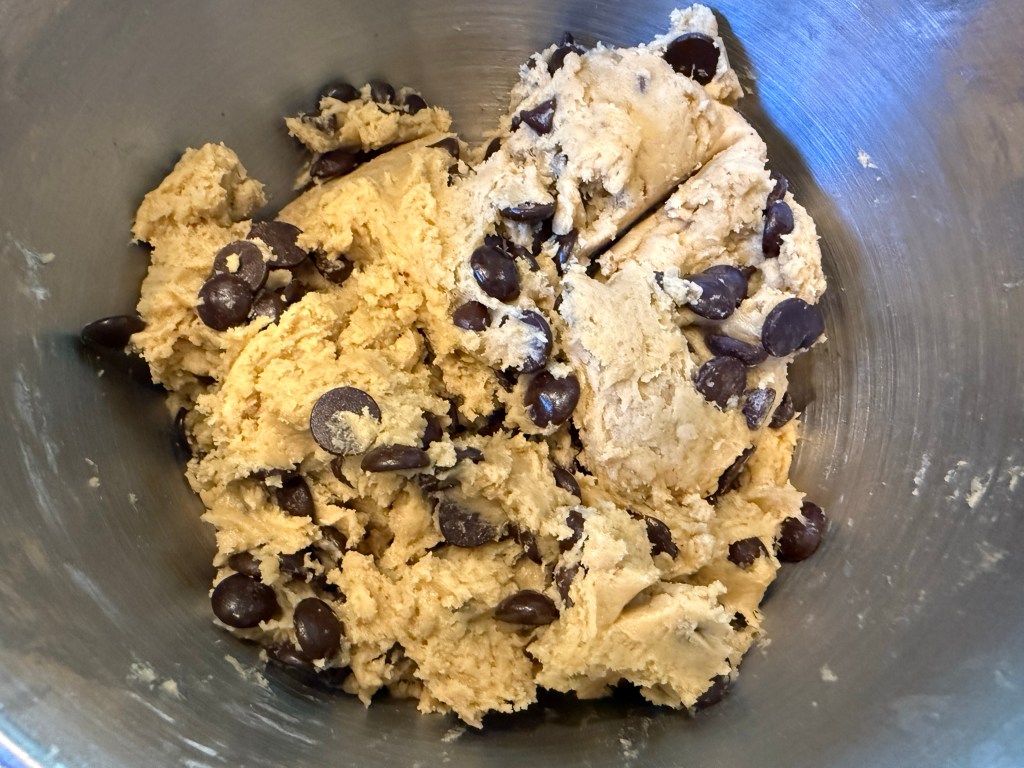
Finally, I added the chocolate chips and pulsed in my stand mixer for just a few seconds until the chocolate was well-incorporated. At this stage the dough was very soft and malleable and quite easy to mix.

I refrigerated the dough for 4 hours (apparently that is the minimum amount of time to chill a cookie dough incorporating melted butter for the cookie to still have good structure when baked).

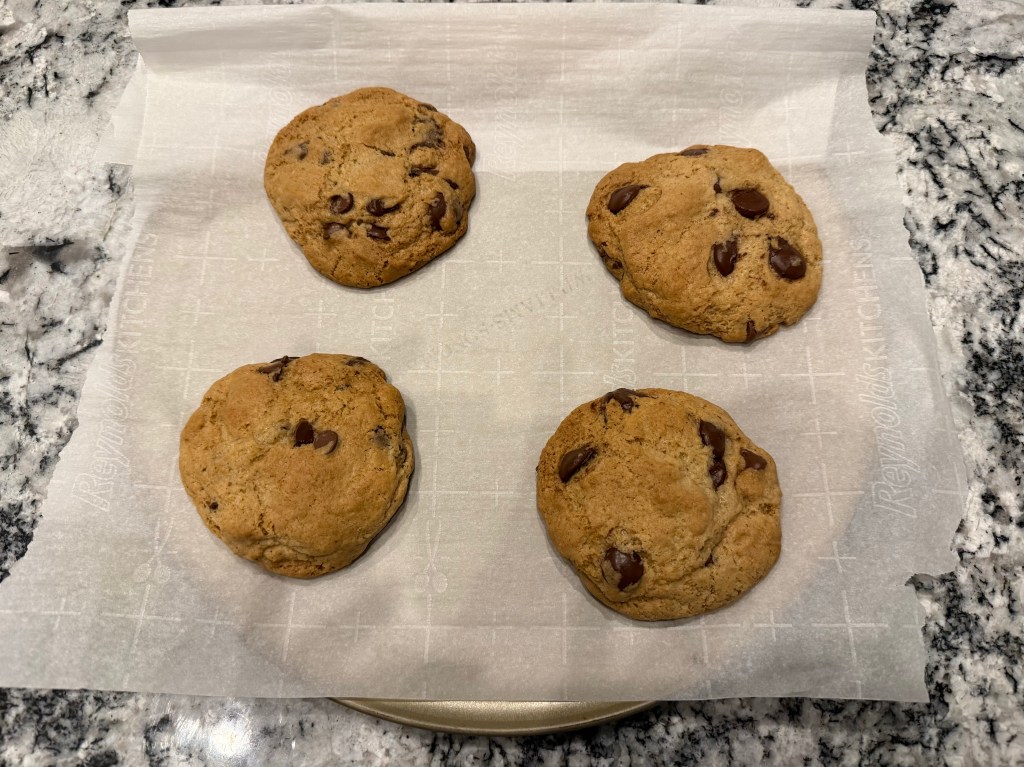
Once the dough was thoroughly chilled I measured the dough into 70g portions as directed and rolled each portion into a ball. I baked a few, and froze the rest.

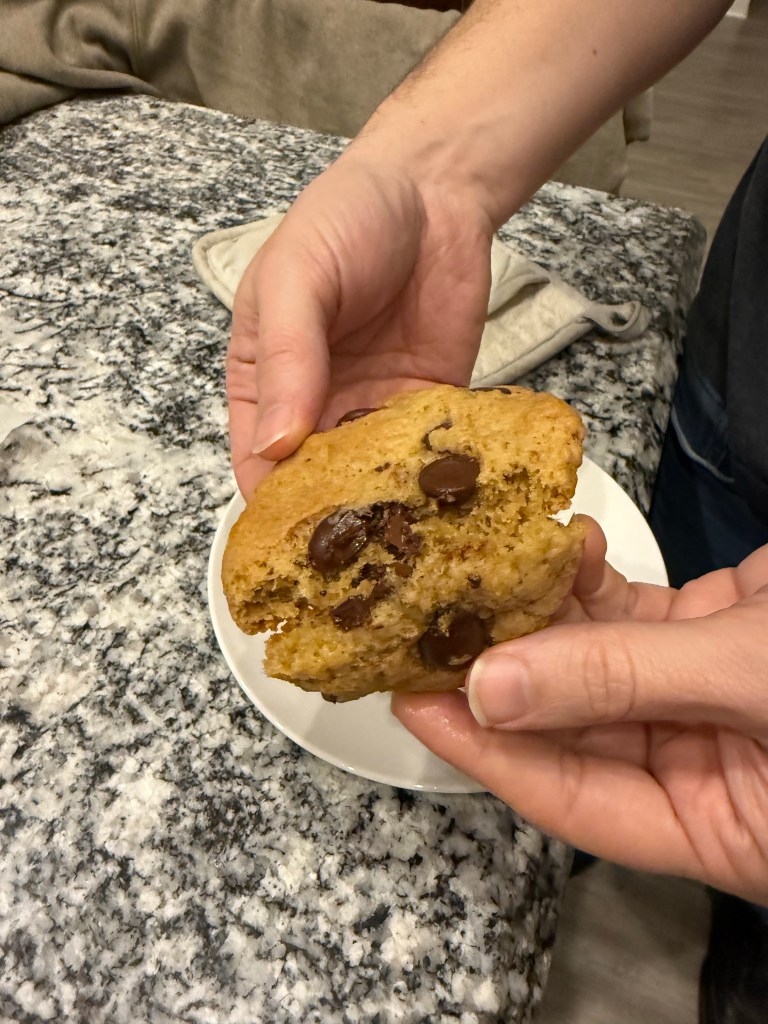
So: the good: The cookies are soft and pillowy inside. They have good flavor, and my husband is very much enjoying being able to pull cookie dough out of the freezer and bake a fresh cookie on demand. This recipe makes A LOT of cookies.

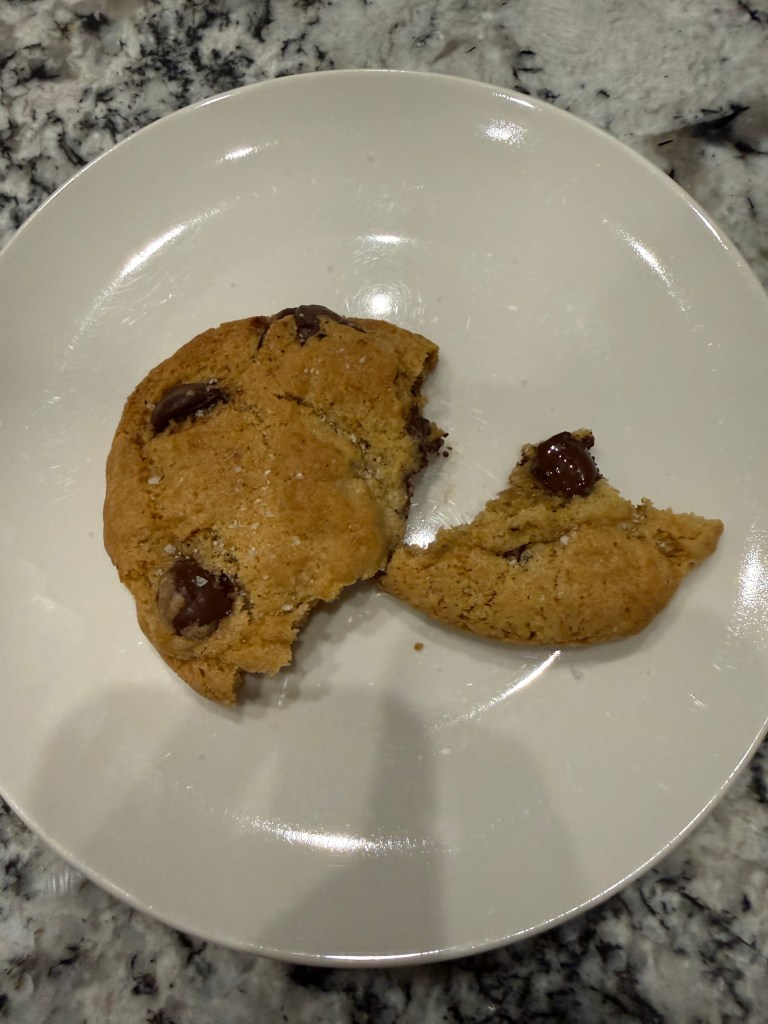
The not so good: The cookies are are just a touch cakey, which is not my preferred cookie texture. This is likely in part because of the natural yeasts in the sourdough starter. Because the cookies go onto the baking tray cold they also don’t spread as wide or as thin as cookies that are baked straight from the mixing bowl.

The cookies don’t have enough salt to my taste, but a sprinkling of flakey salt on top solved that problem and made me feel fancy.

They also seem a bit too sweet to me. If I made these again I would use 3/4 of the sugar in the recipe. Sugar helps cookies form their structure, so this does make me worry that the texture of the cookies could be impacted by a smaller amount of sugar.

These are big cookies, but not absolutely ginormous. If I made these again I would measure out 50g portions instead of 70g.

I had such high hopes for these cookies, but after making them I feel pretty ‘Meh’ about the final product. It felt like a lot of effort to make these for a pretty average tasting cookie. I probably will not make these again (our current favourite chocolate chip cookie recipe is this one).

BUT! I learned so much from reading about the process of creating the recipe and making these cookies, and that is a huge win in my book!

Until the next time: may your yeast always rise and your flour never run out.
Sourdough Sandwich Bread: Better Than Expected

The King Arthur Baking School takes us into the world of Sourdough baking gently. The next recipe is for Sourdough sandwich bread, but while it does incorporate sourdough starter, it is mainly leavened with baker’s yeast. This gives us some advantages of both worlds: the bread has better flavor and keeping qualities because of the sourdough, but it rises more quickly and isn’t as sour as true sourdough bread.

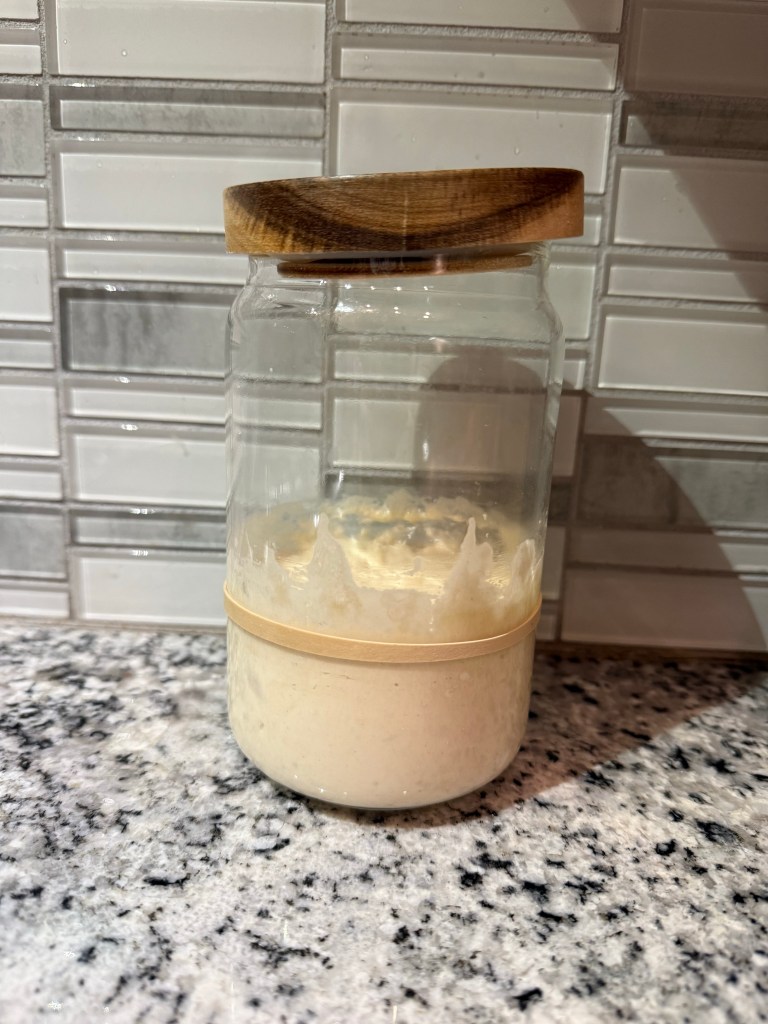
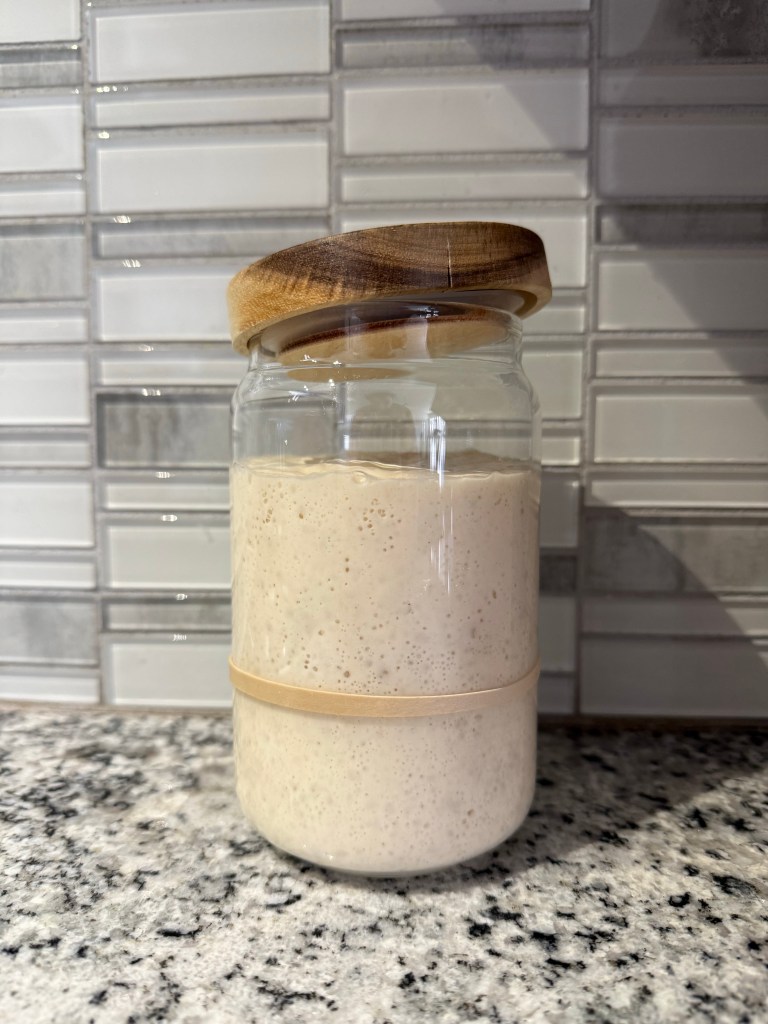
I prepped my starter the night before baking. I used to feed my starter exclusively with whole-wheat flour, but I recently learned (through following the directions in the Baking School book) that starters are able to rise much higher when using an all-purpose flour than when using whole wheat. Who knew?

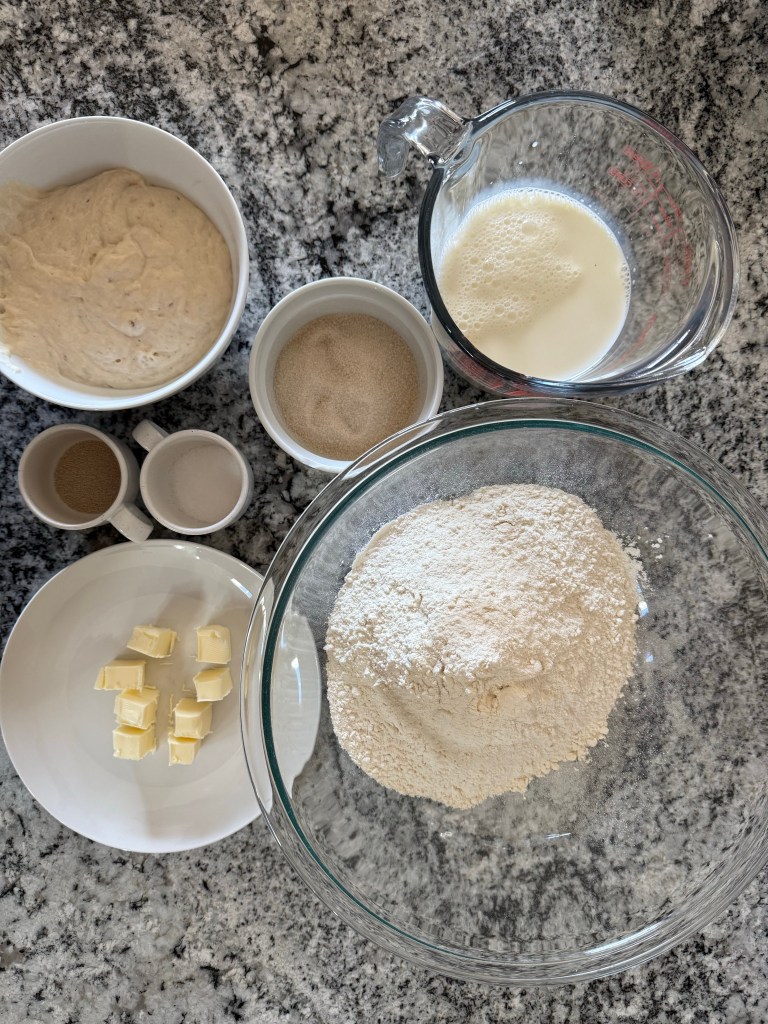
With my starter risen I gathered my mise en place.

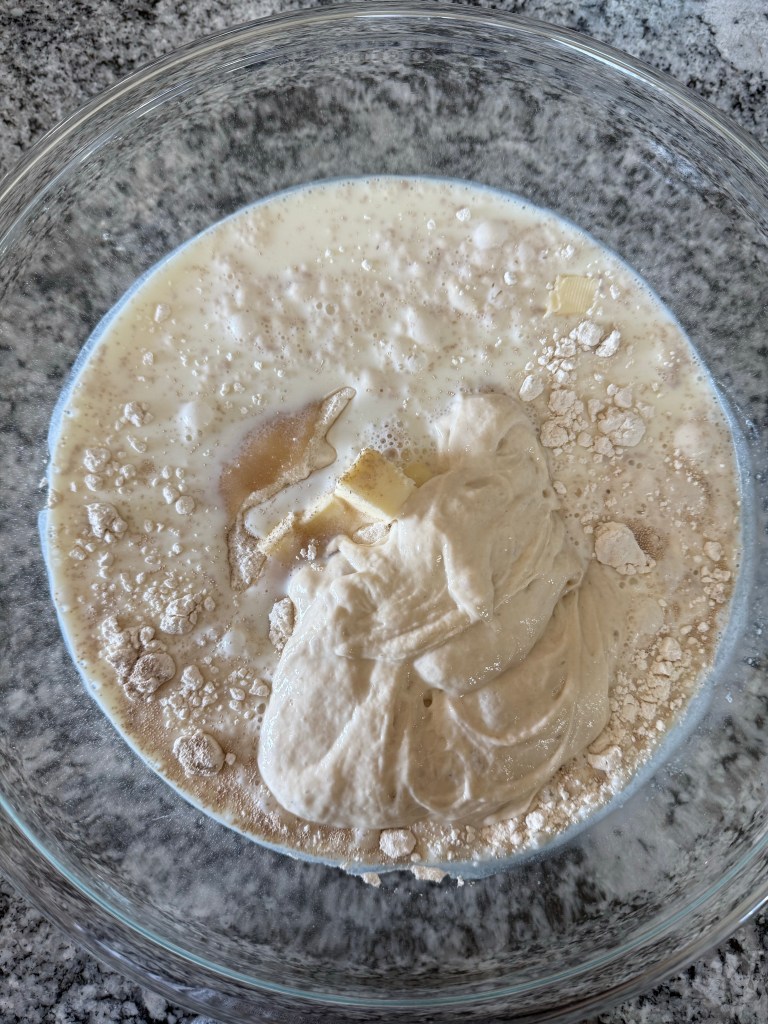
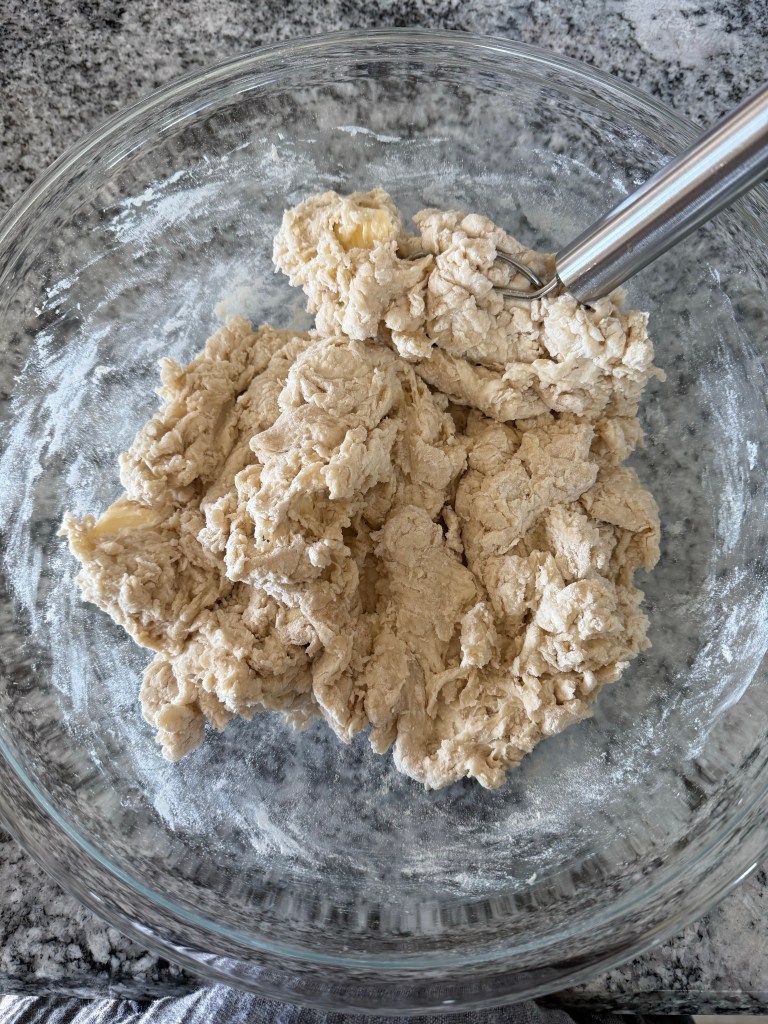
I mixed all the ingredients into a shaggy dough. My kitchen was cold, so the butter didn’t incorporate well. I probably should have let the butter soften for longer before mixing my dough, but that’s how we learn.

After mixing I kneaded the dough by hand for 5 minutes, adding flour only once the butter started to melt out of the dough and stick to the counter.

I set the dough aside to rise for 2 1/2 hours rather than the 2 hours directed in the book (it is winter, and my kitchen is cold).

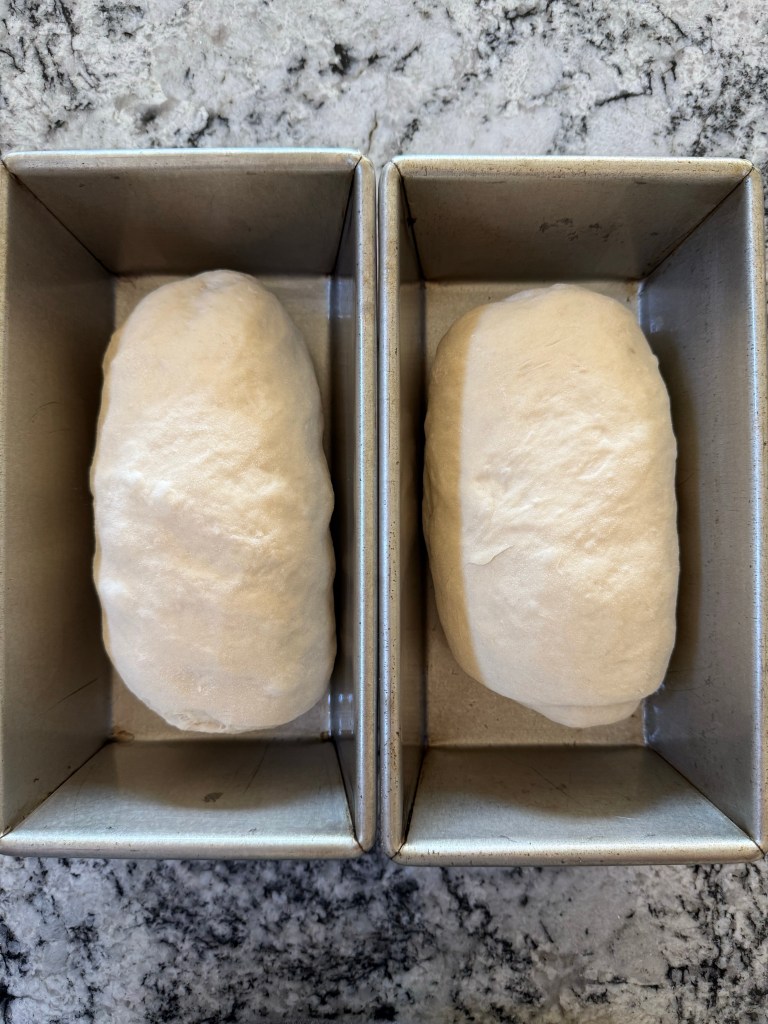
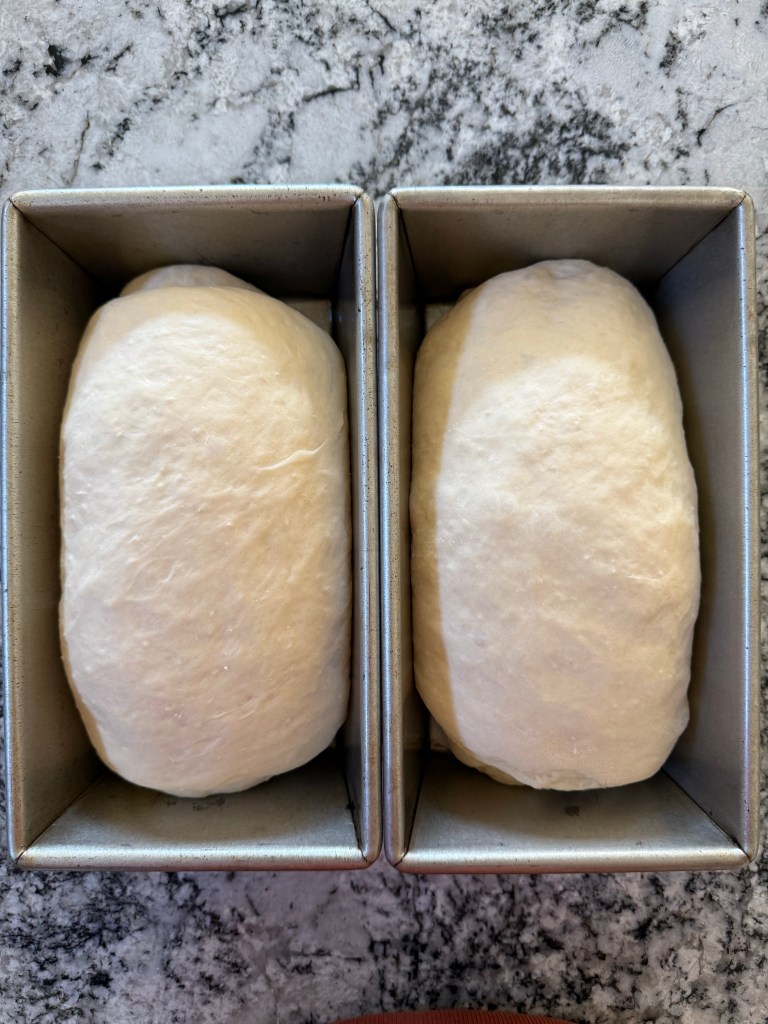
I divided the dough into two and shaped each half into a loaf, then put the loaves into loaf pans to rise. The book instructs to allow the dough to rise for 2 more hours, but I was coming up against a hard stop and needed to speed the last rise up. I put the loaf pans into the oven with the proofing setting on (80 degrees Fahrenheit) for 1 hour, then increased the tempterature to 95 degrees for half an hour for a total rise time of 1 1/2 hours.

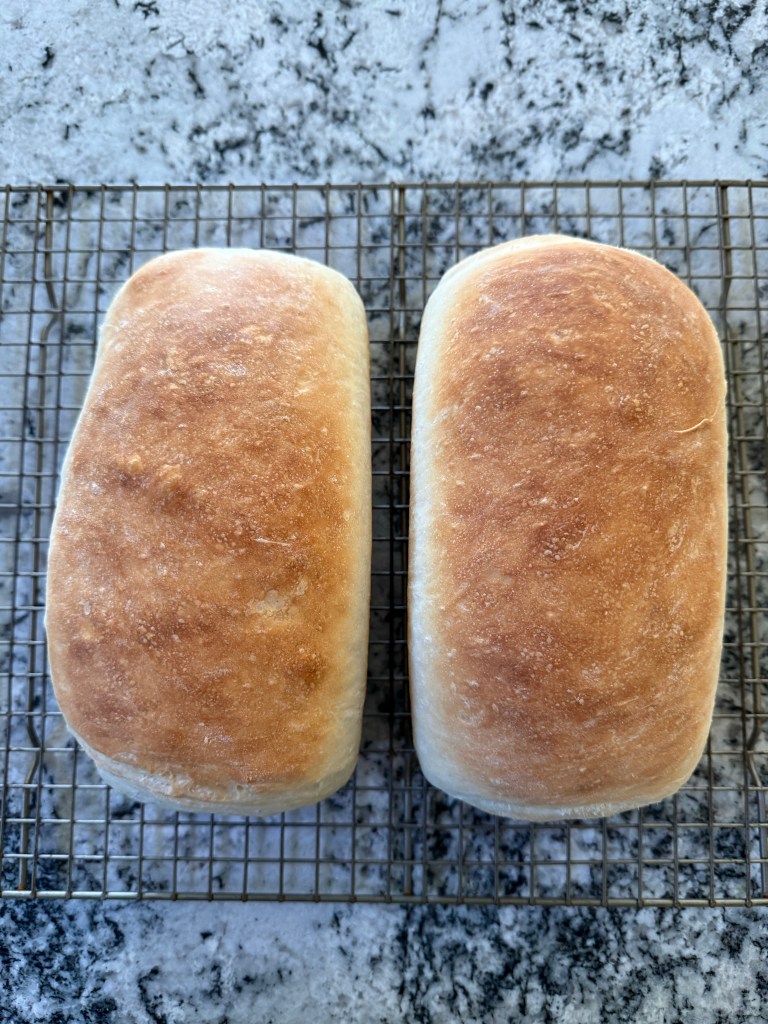
I could have probably let the dough rise for another 20-30 minutes, but I was out of time, so I preheated the oven and baked the bread.

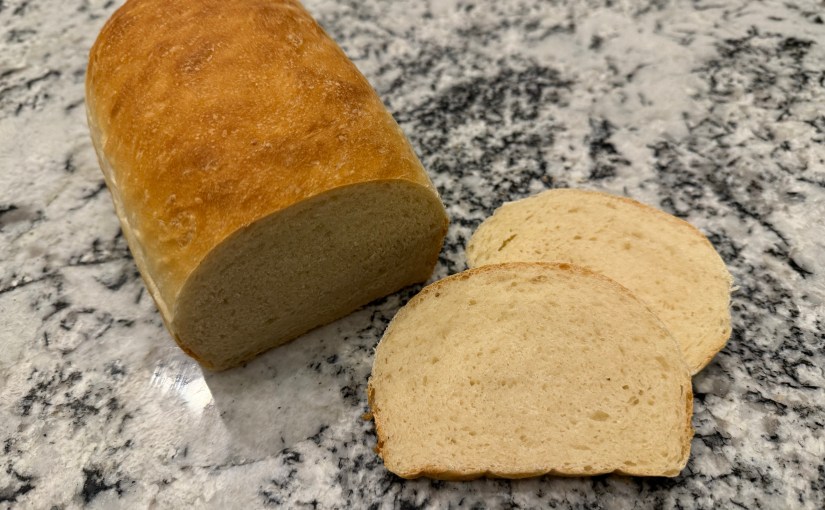
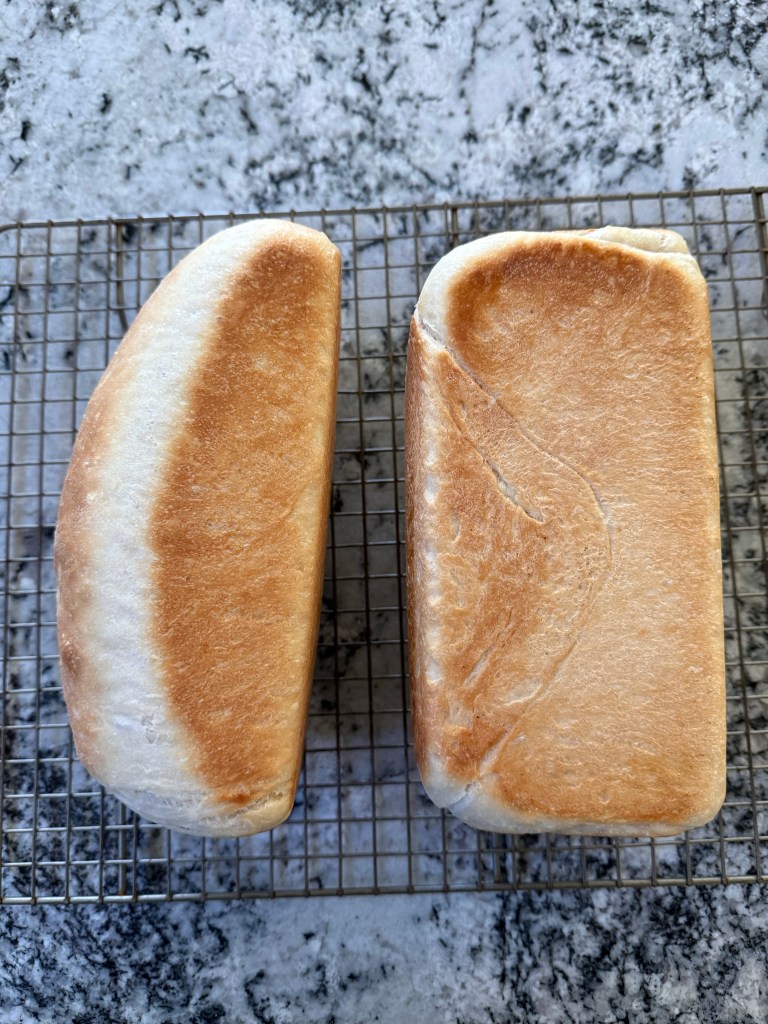
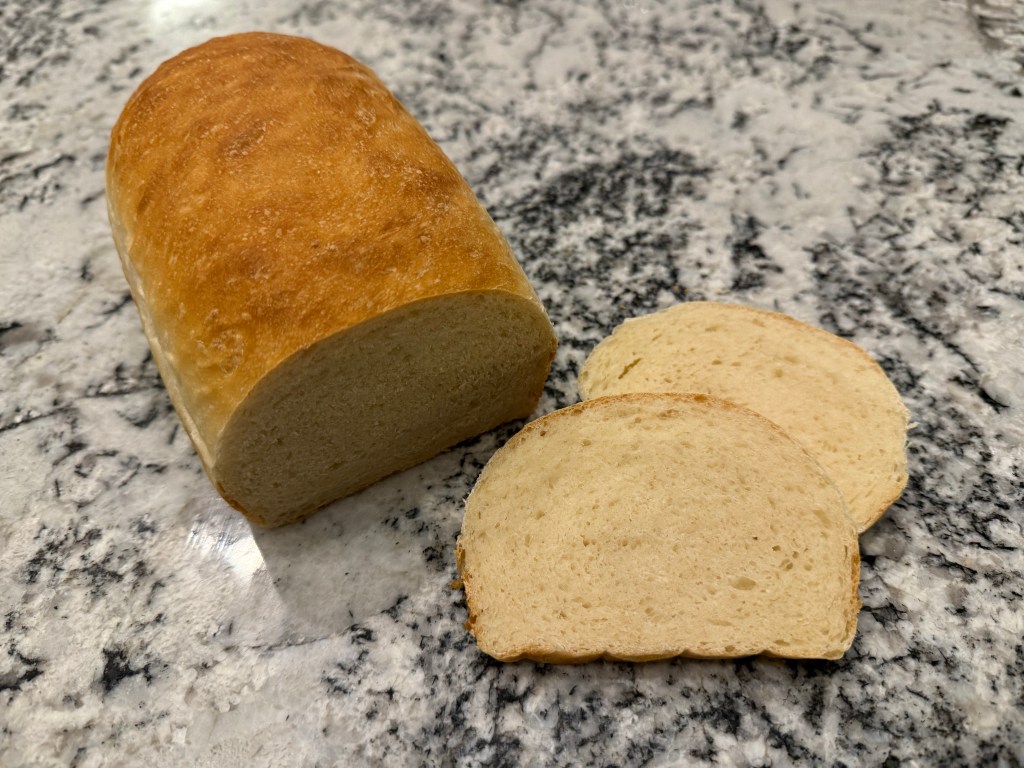
The finished bread smells like sourdough, but tastes sweet, almost like a dinner roll. It has a tight crumb and chewy texture. It would stand up to a sandwich without crumbling, which is better than I can say for most homemade sandwich breads. The bread toasts well and would be good in BLTs. This may be my new go-to sandwich bread.

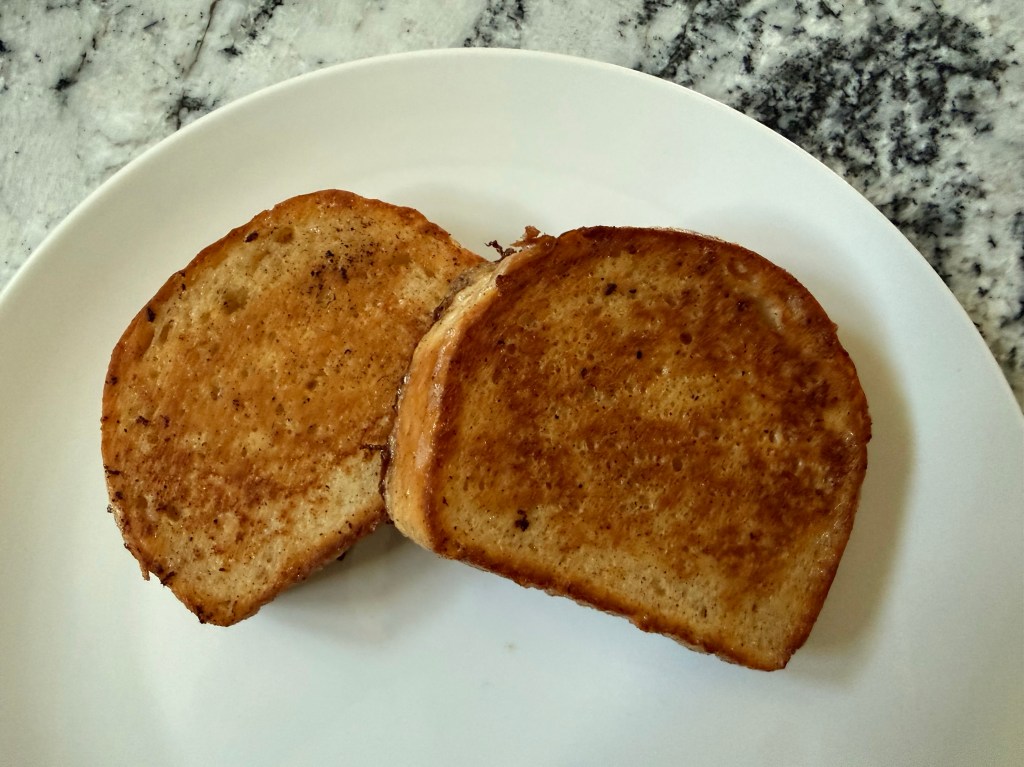
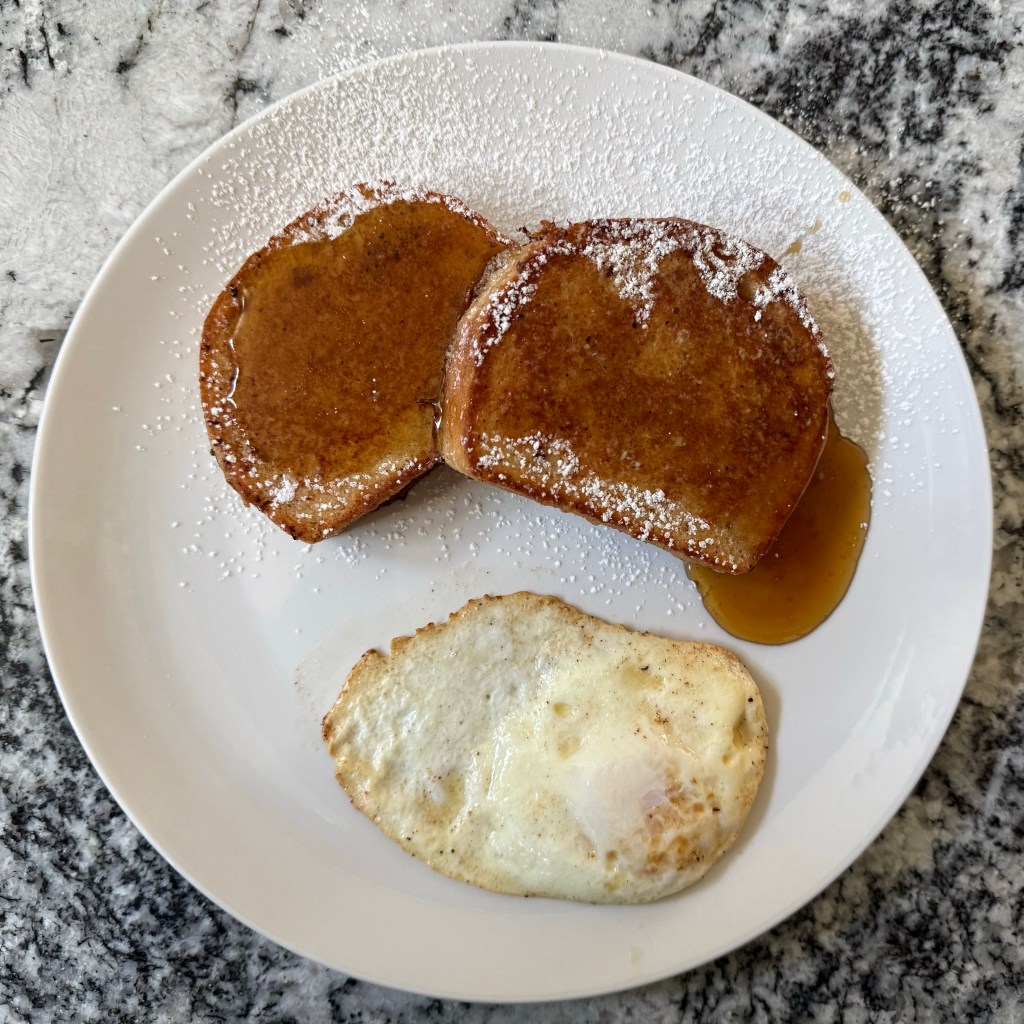
We made excellent French Toast using this bread. The hint of sourness sets off the sweet sugar and syrup beautifully.

Until the next time: may your yeast always rise and your flour never run out.