Celebrate Yourself: The Joy of Baking Your Own Birthday Cake

When I was a kid my mom would always make me a birthday cake. I got to choose the cake flavor, and her doing that for me always made me feel really special and loved. When I went to college my brother and my friends bought me cakes, but they were never as special as the ones my mom made for me. Over the years I started baking birthday cakes for my husband, my sister, and friends, but there was still no one to bake a cake for me, and that made me sad. Several years ago I decided to stop feeling sad and show myself the love I showed others by baking a cake for myself. Making my cake is now one of my treasured birthday traditions. This year the recipe for my birthday cake came from the King Arthur Baking School book.

I started with the mise en place:

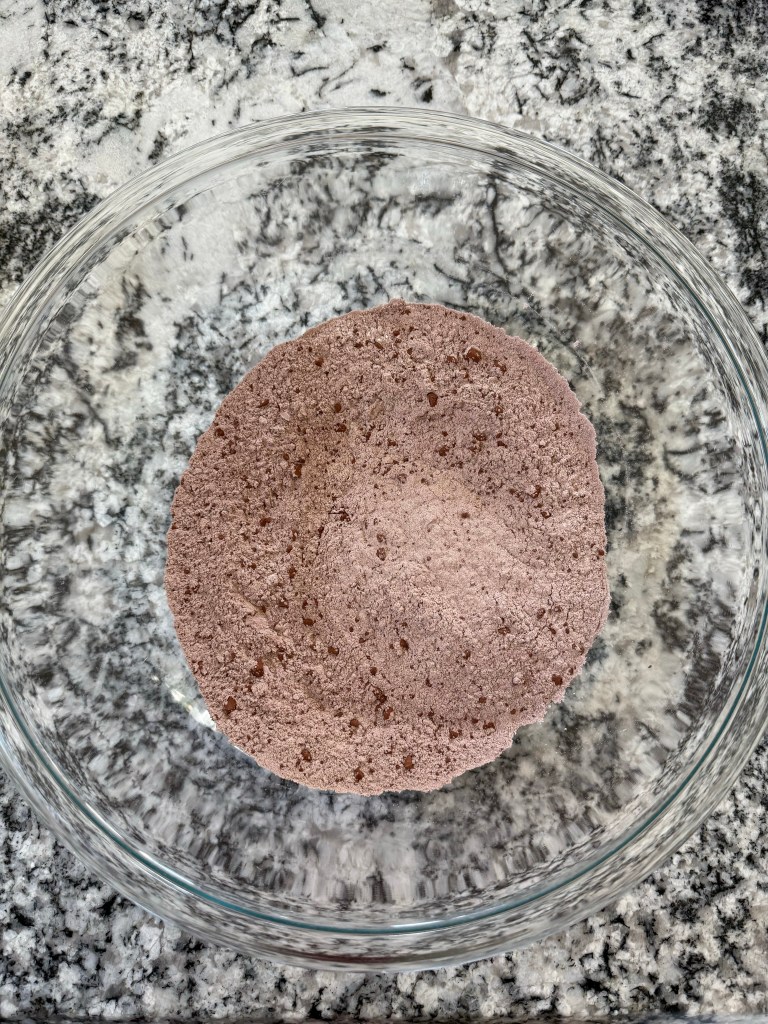
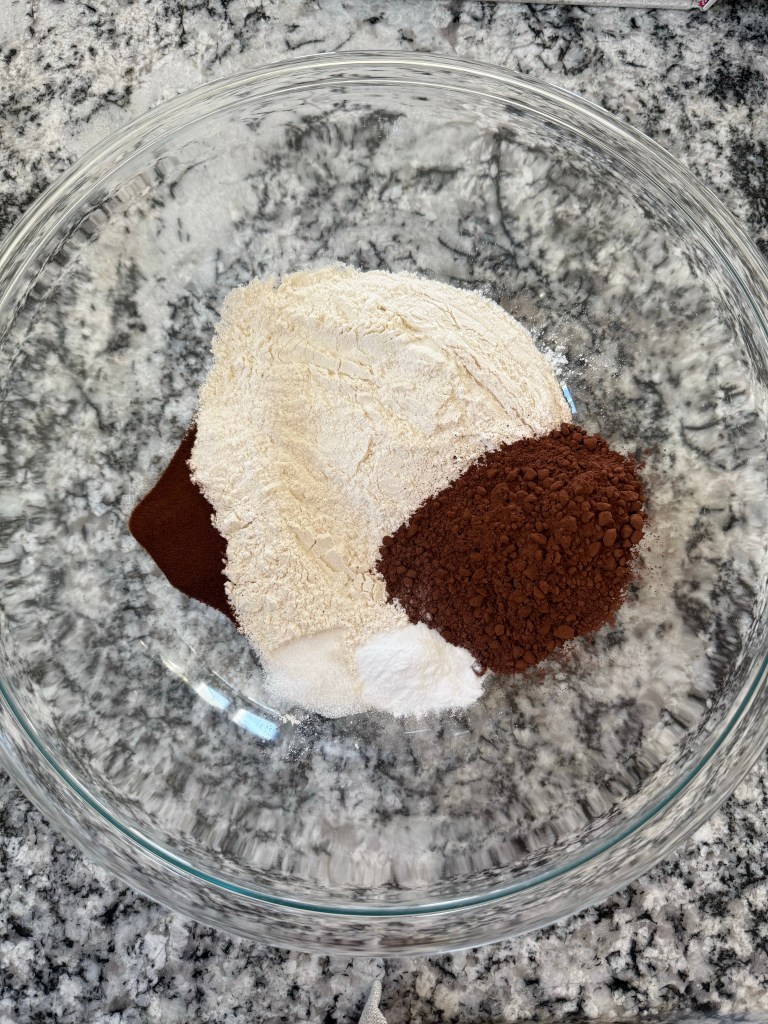
I mixed dry ingredients,
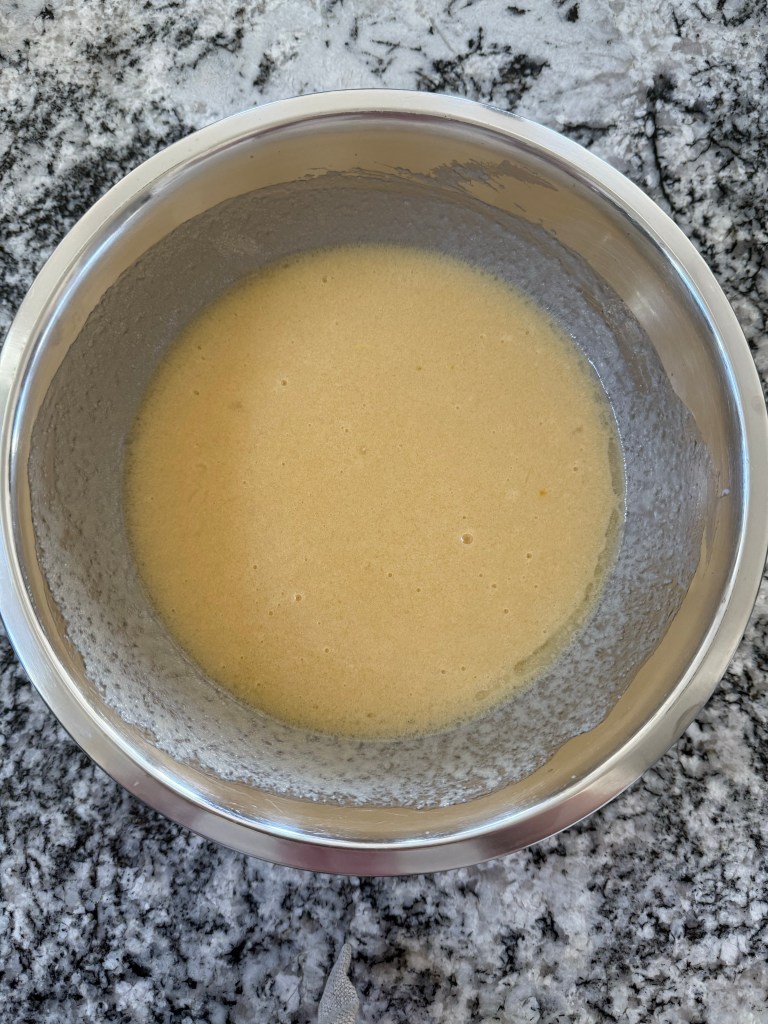
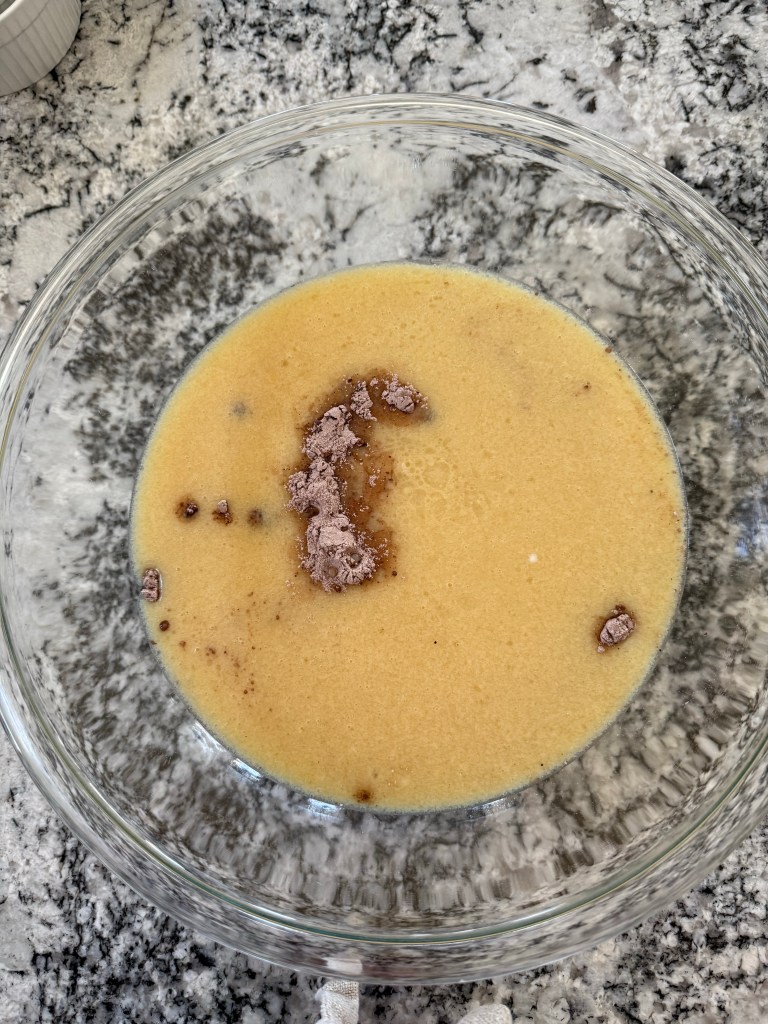
then the wet ingredients,

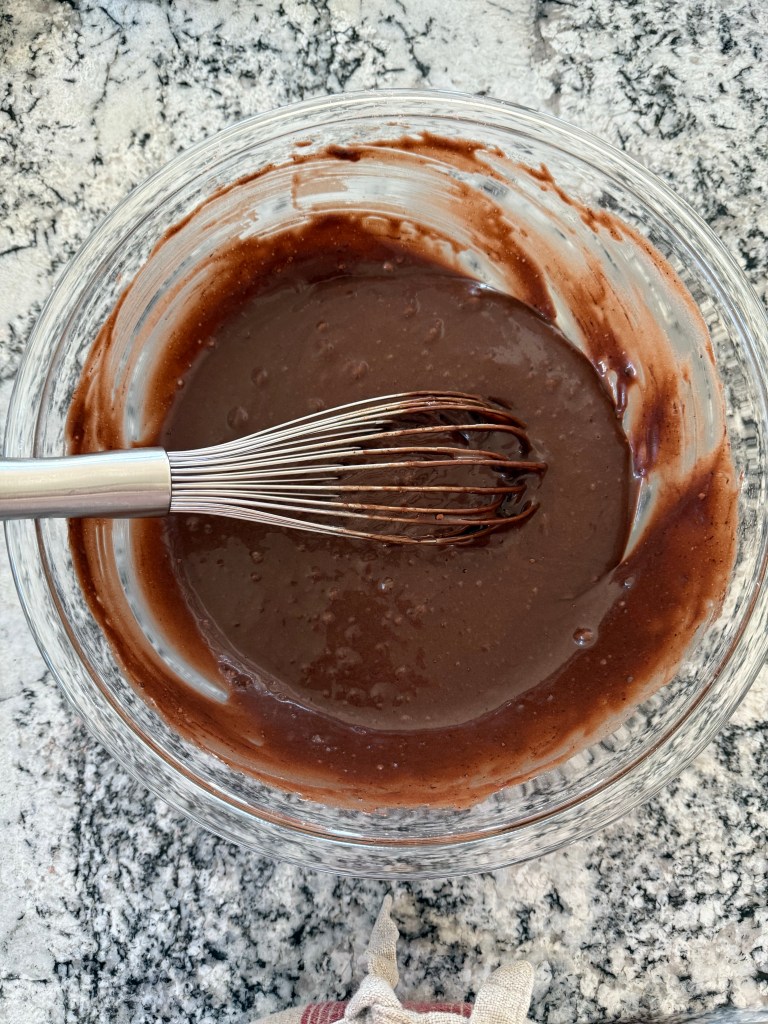
then combined the wet and dry mixtures. That’s all you do for this batter. It’s so easy.
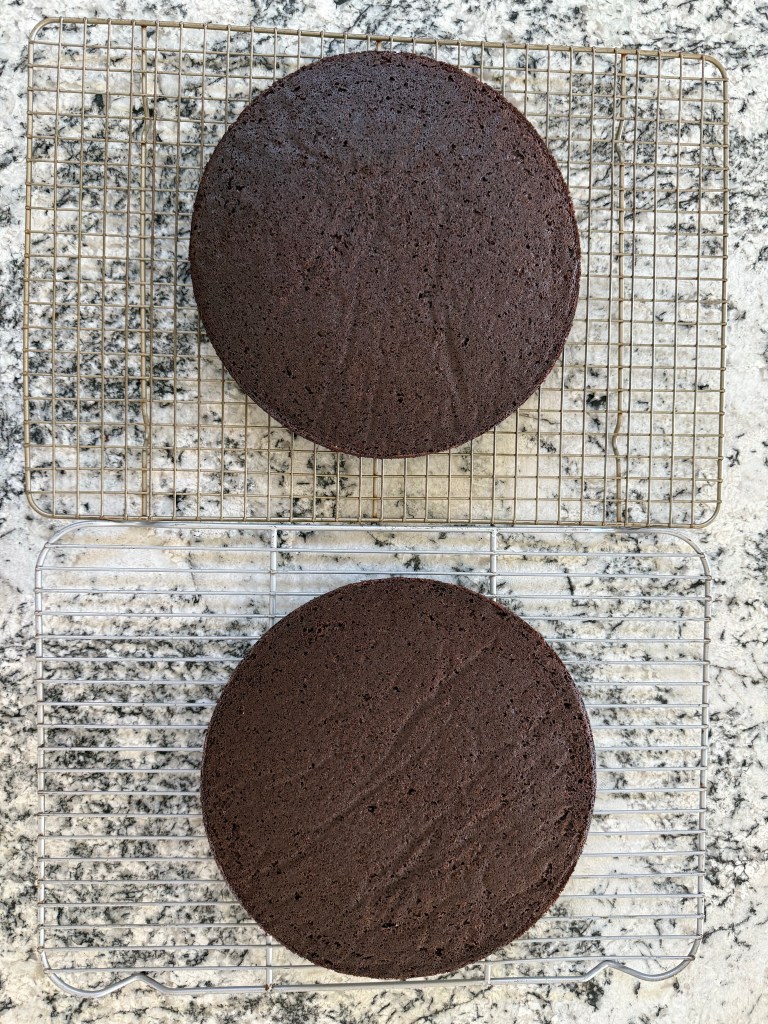
I divided the batter into 2 cake pans and baked them, then let them cool completely at room temperature.
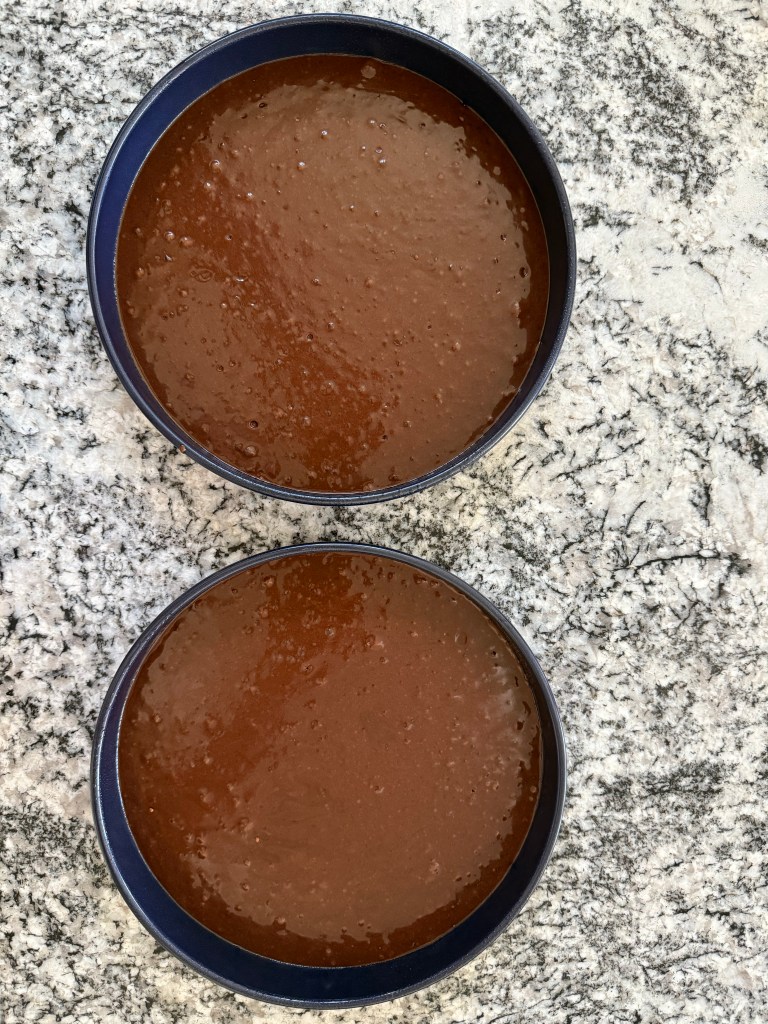
While the cake cooled I made the frosting.

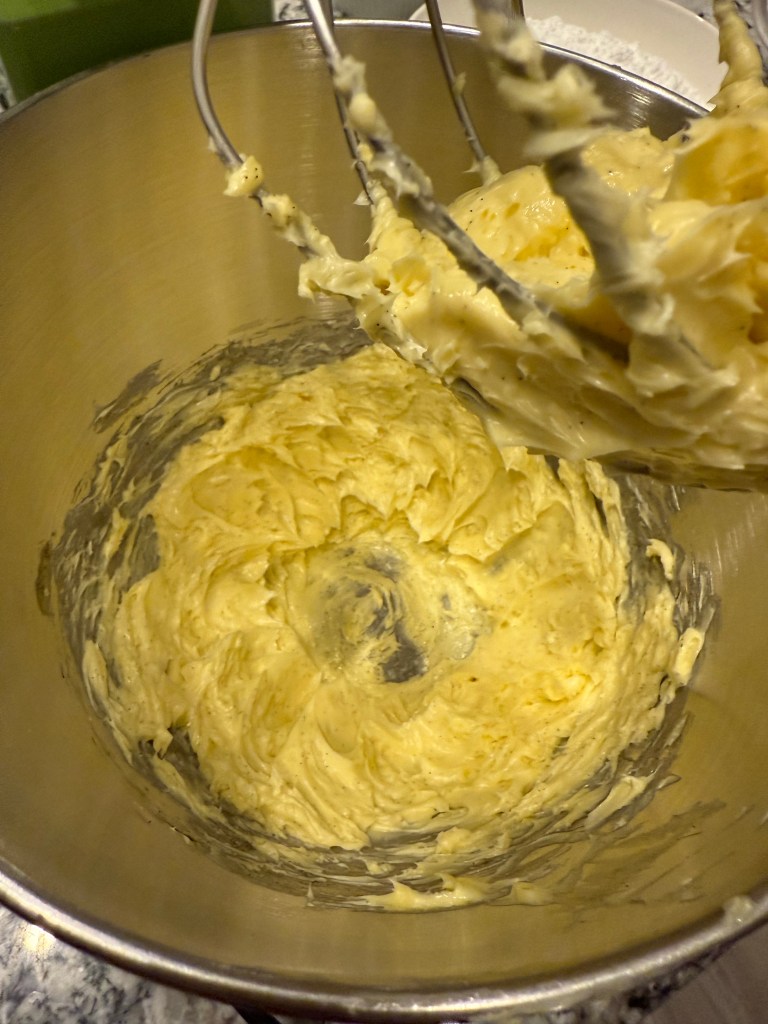
I creamed the butter, salt, and vanilla together,
added the cocoa powder,
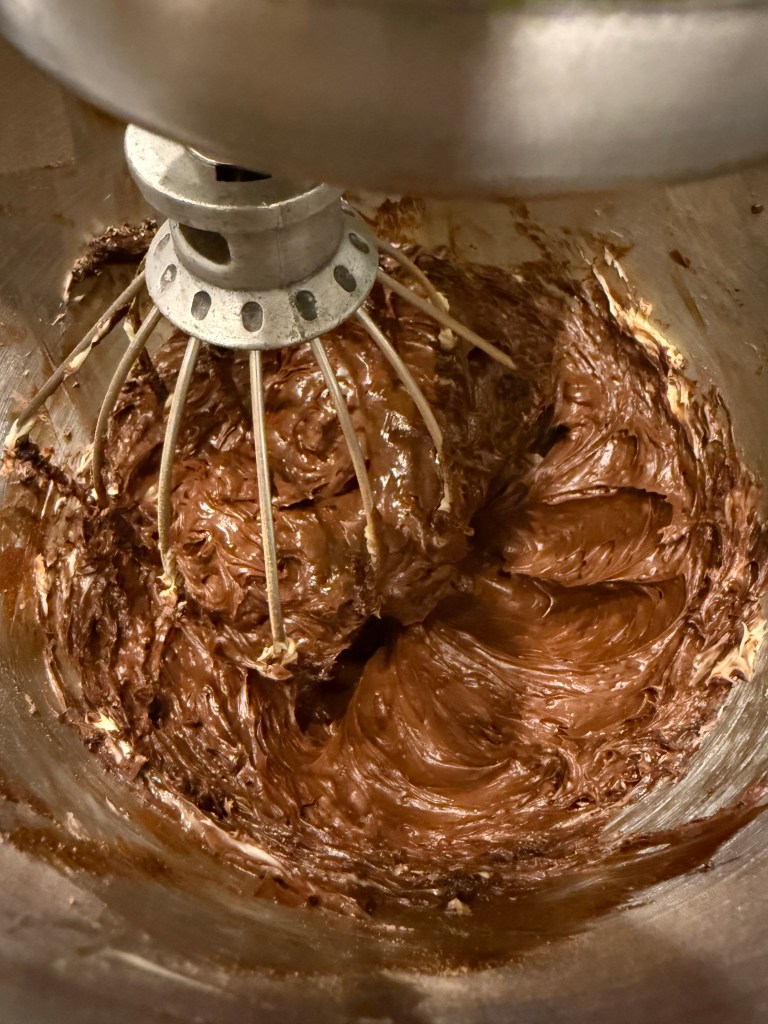
mixed in the heavy cream,
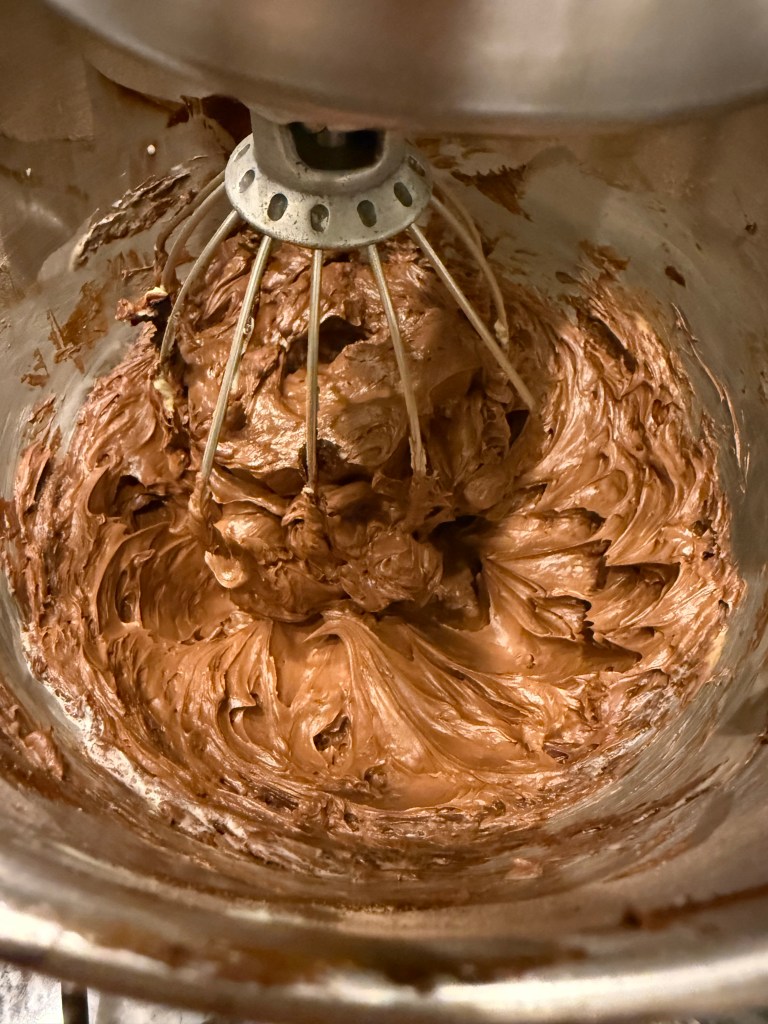
and then added the powdered sugar.
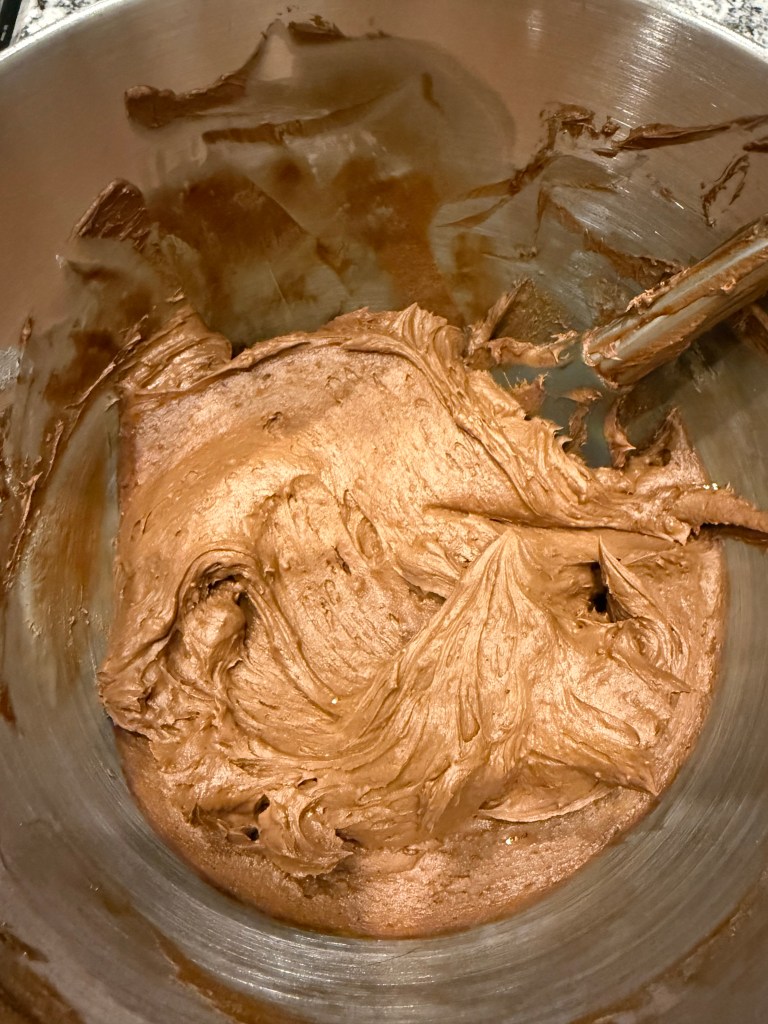
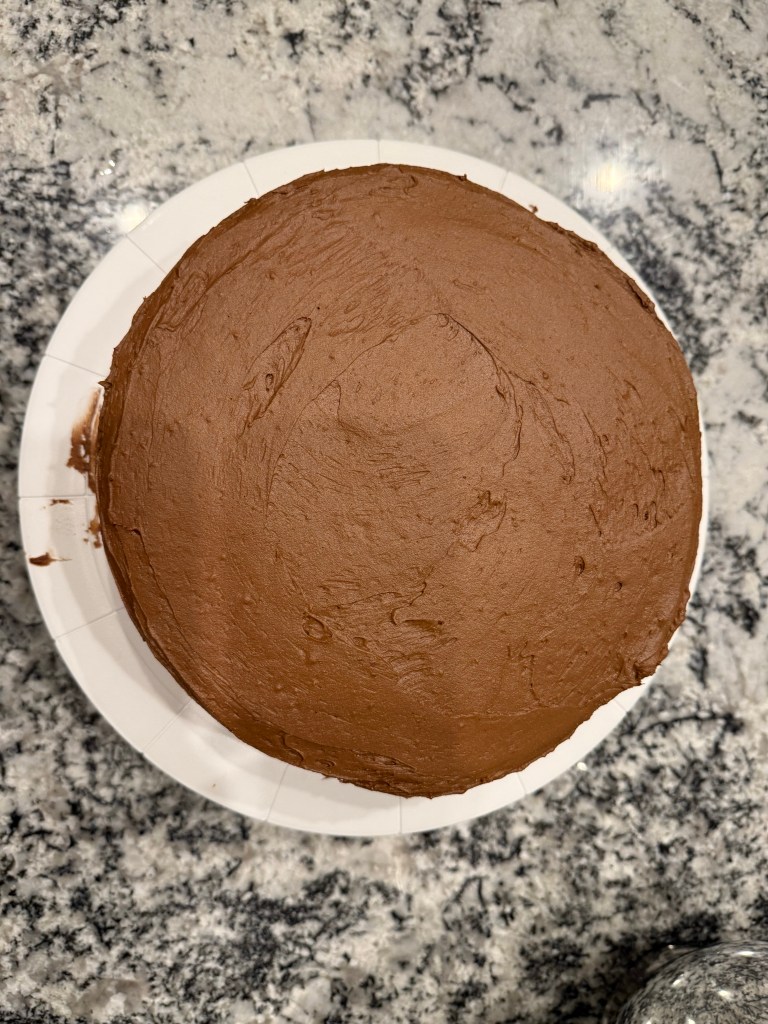
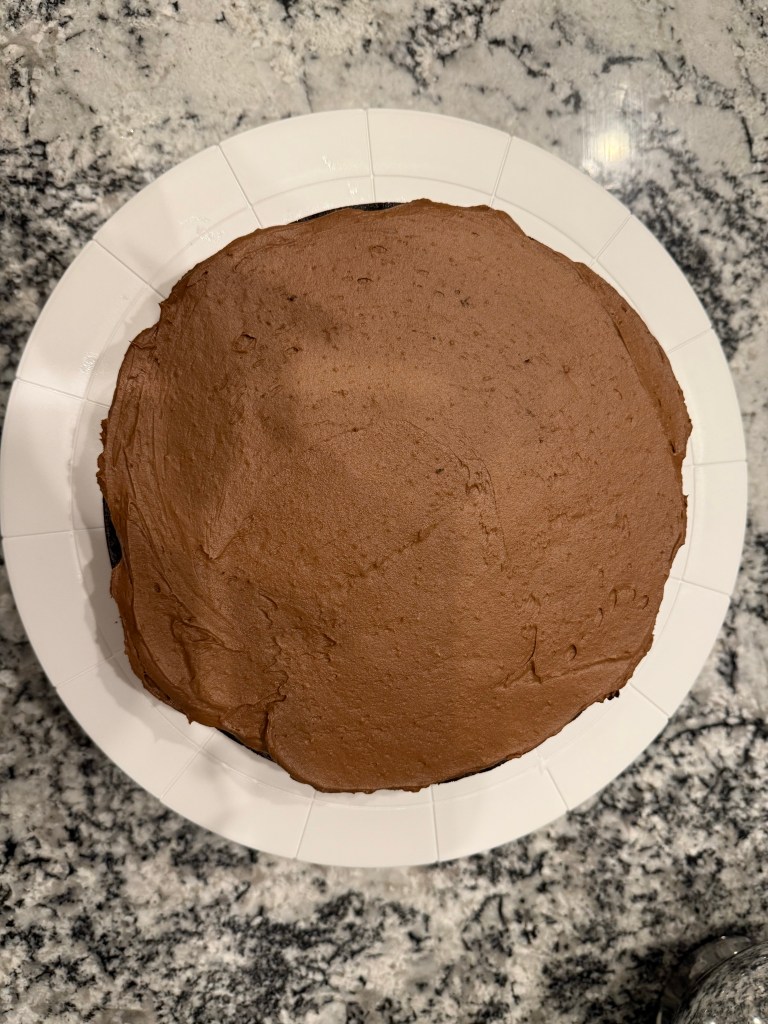
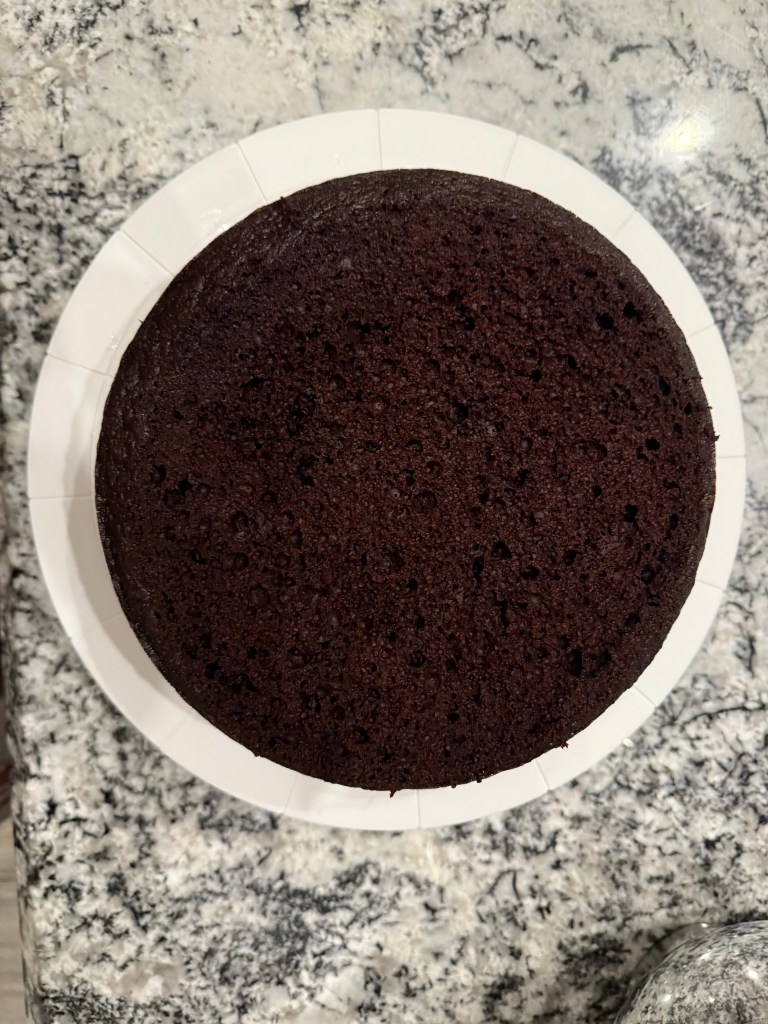
Once the cakes were cool trimmed the tops to be level, then I assembled the cake on my new cake turntable (it was a birthday gift). I frosted the first layer, then laid the second layer on and frosted the top and sides.
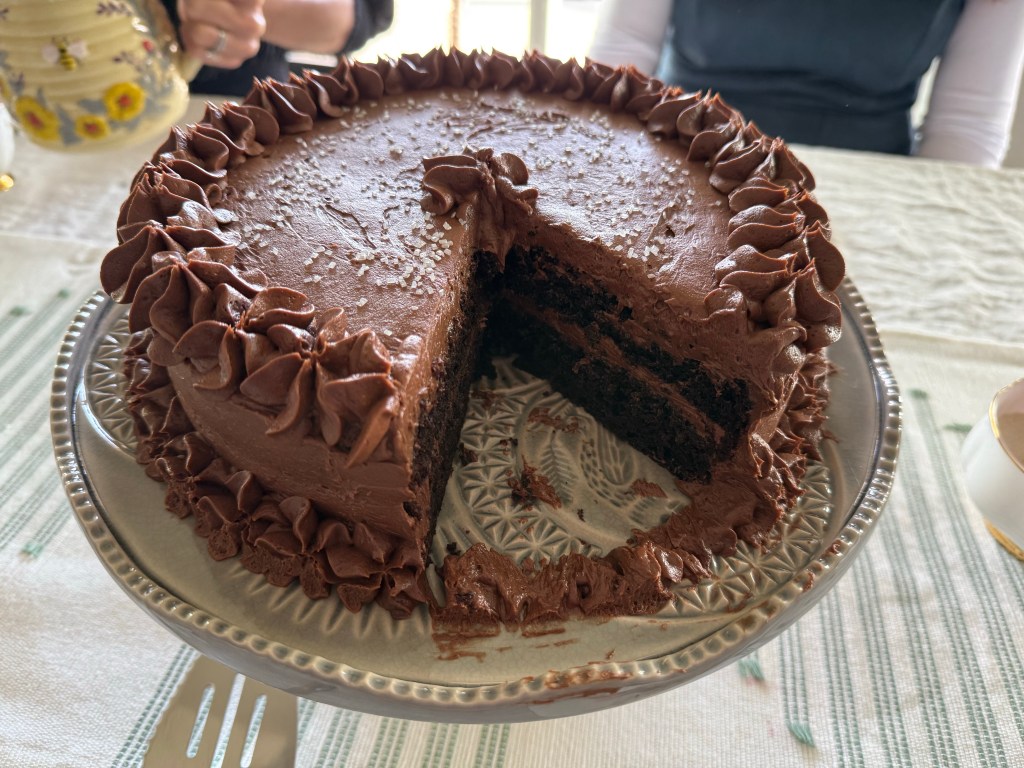
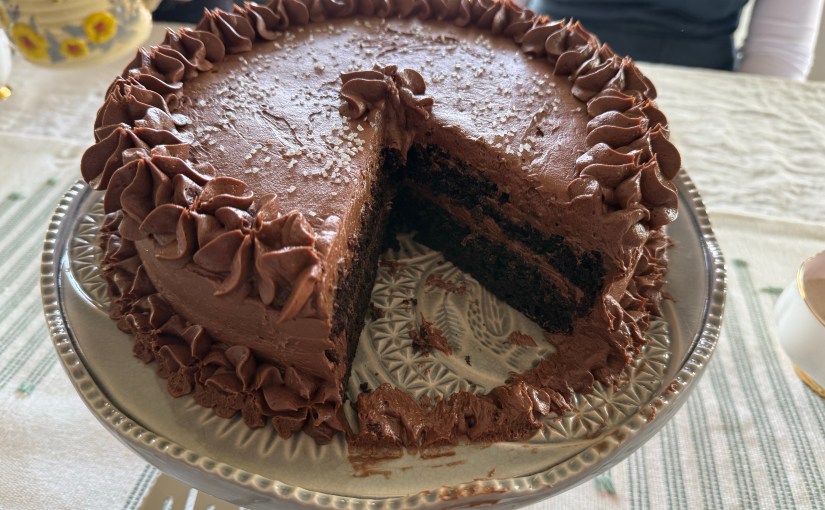
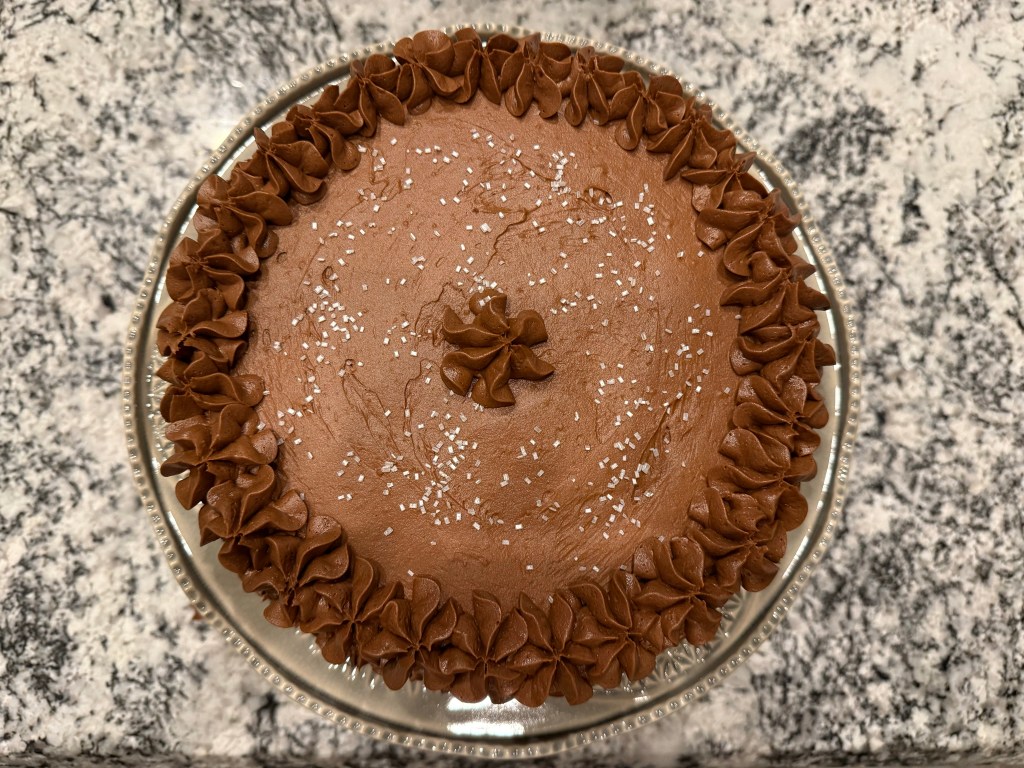
The last step is always the most fun: decoration. I transferred the cake to my cake plate, then I used a star tip to pipe a row of stars around the base of the cake as well as the top edge of the cake. I finished with a star in the center of the cake and some pearl sugar.
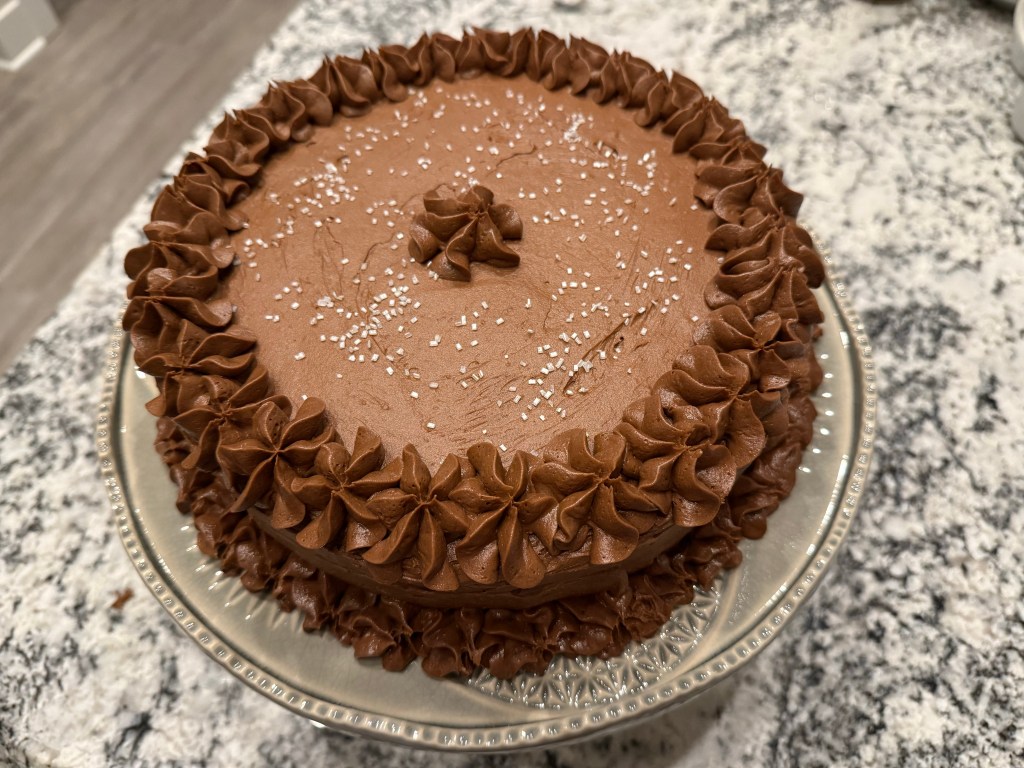
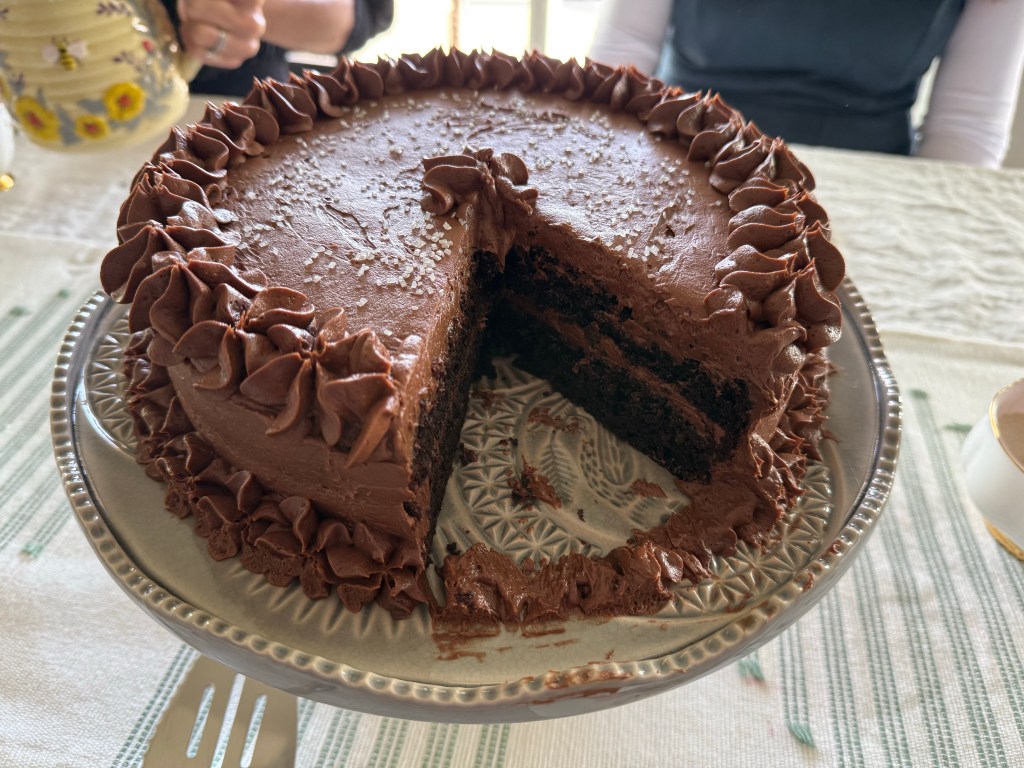
I forgot. The best part of making a cake is eating it. This cake is so moist and really delicious! The cake together and the frosting are such a good pairing. The cake has a more bitter chocolate flavor compared to the frosting, and the frosting is sweeter. It’s amazing that such an easy cake tastes so good!
Until the next time: may your yeast always rise and your flour never run out.

Mastering Macarons: Tips for Perfect French Cookies

Making macarons always makes me feel like a member of the in-group. They aren’t technically that difficult to make, but you can’t be in a rush when making them, and you can’t cut corners. I’ve used the same pair of recipes to inform my macaron baking for a few years now. I like how this recipe has a lower amount of sugar, and I like the flavor suggestions for the fillings from this recipe. Both have good instructions.

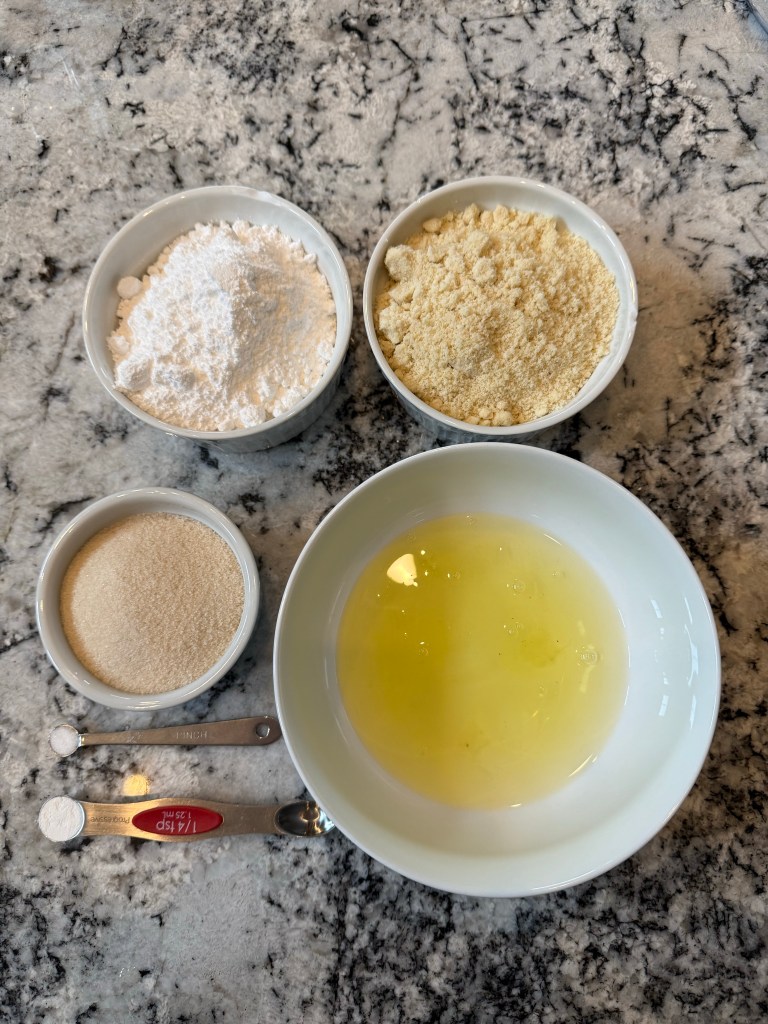
As always, I started by gathering my mise en place.

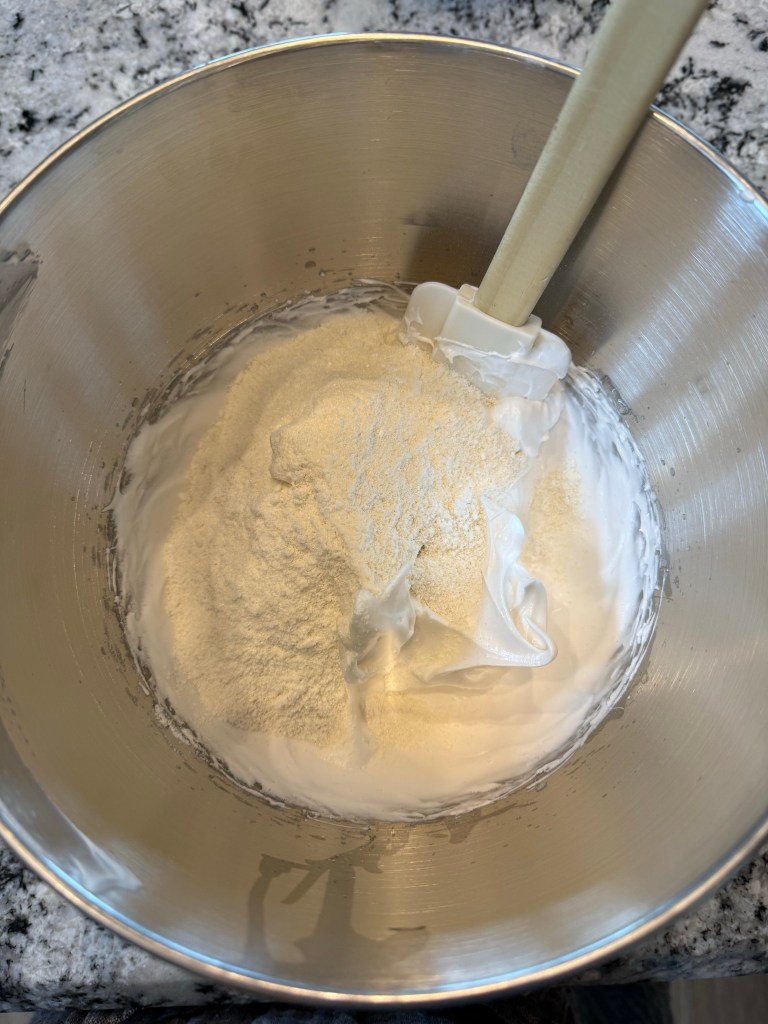
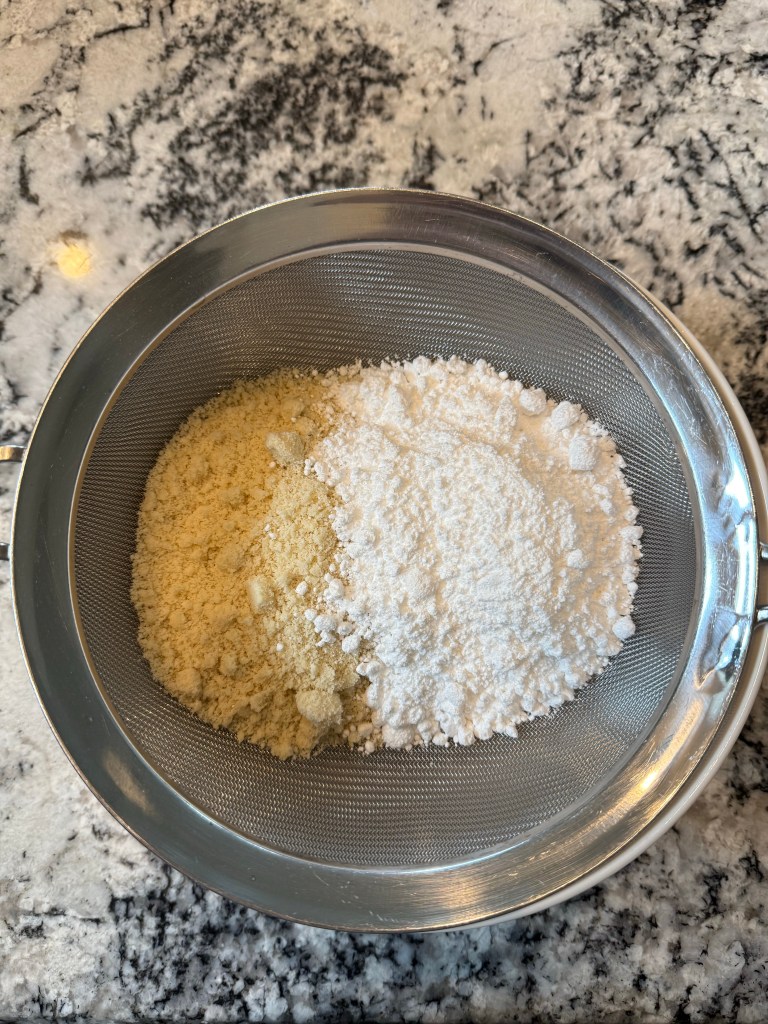
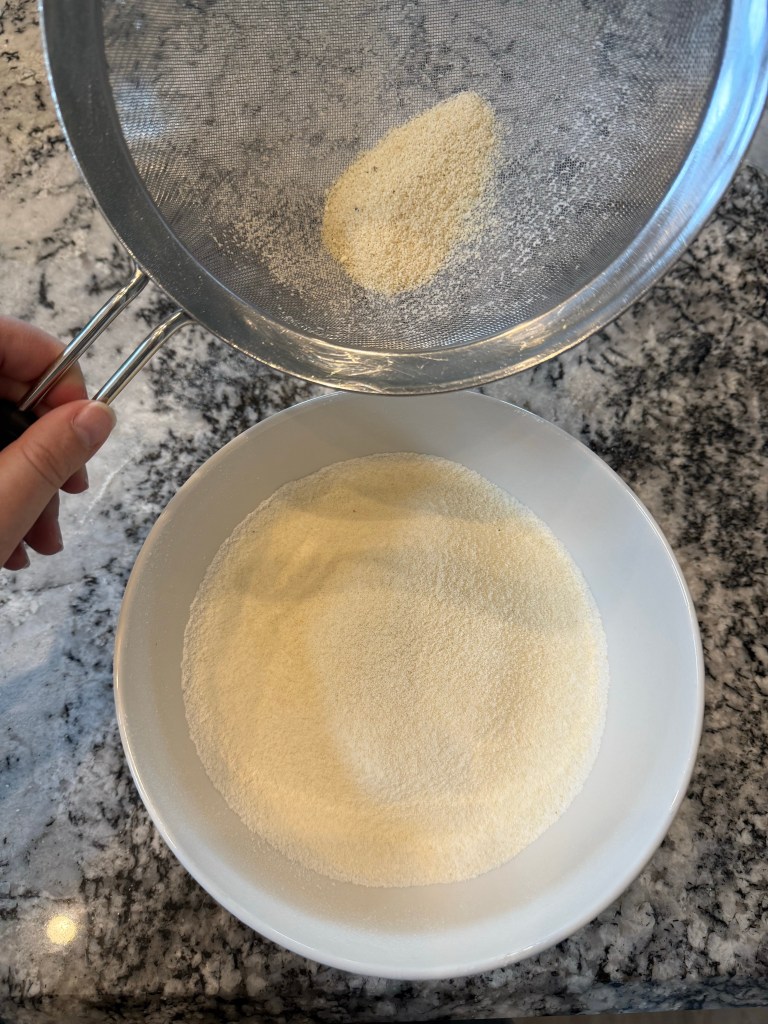
I combined the almond flour and powdered sugar in a sieve over a bowl and sifted them together. Almond flour is quite a bit more course than most wheat flour, so this process takes some time and effort. It’s important to work as much of the almond flour through the sieve as possible so the ratios of the recipe don’t become skewed.

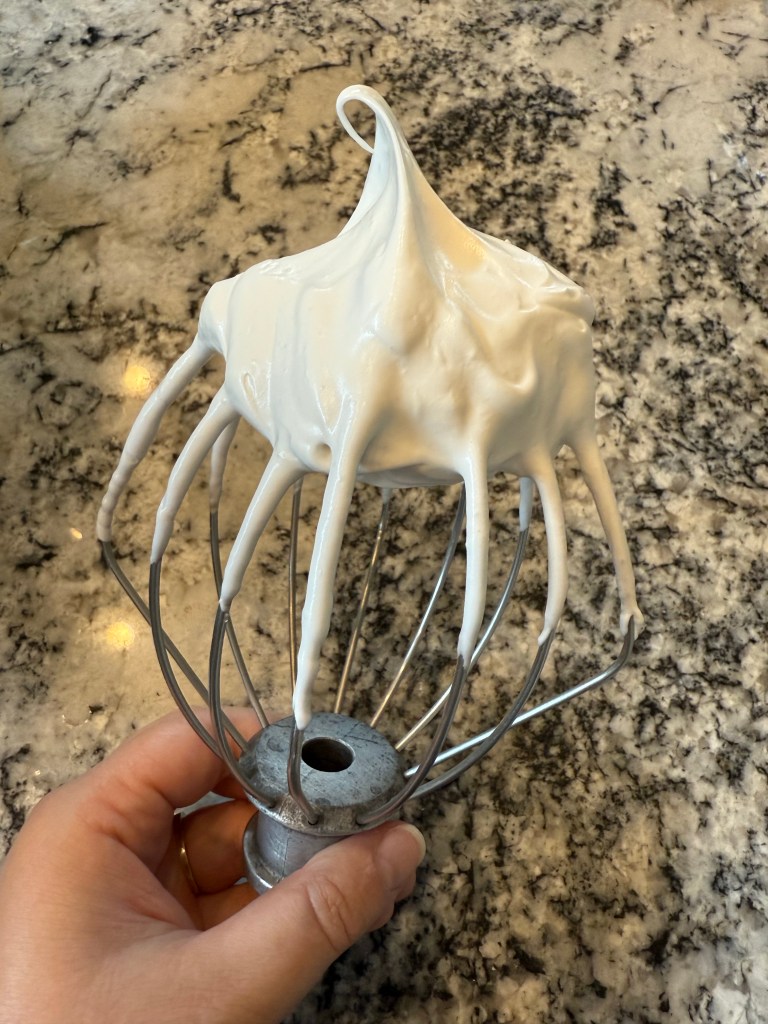
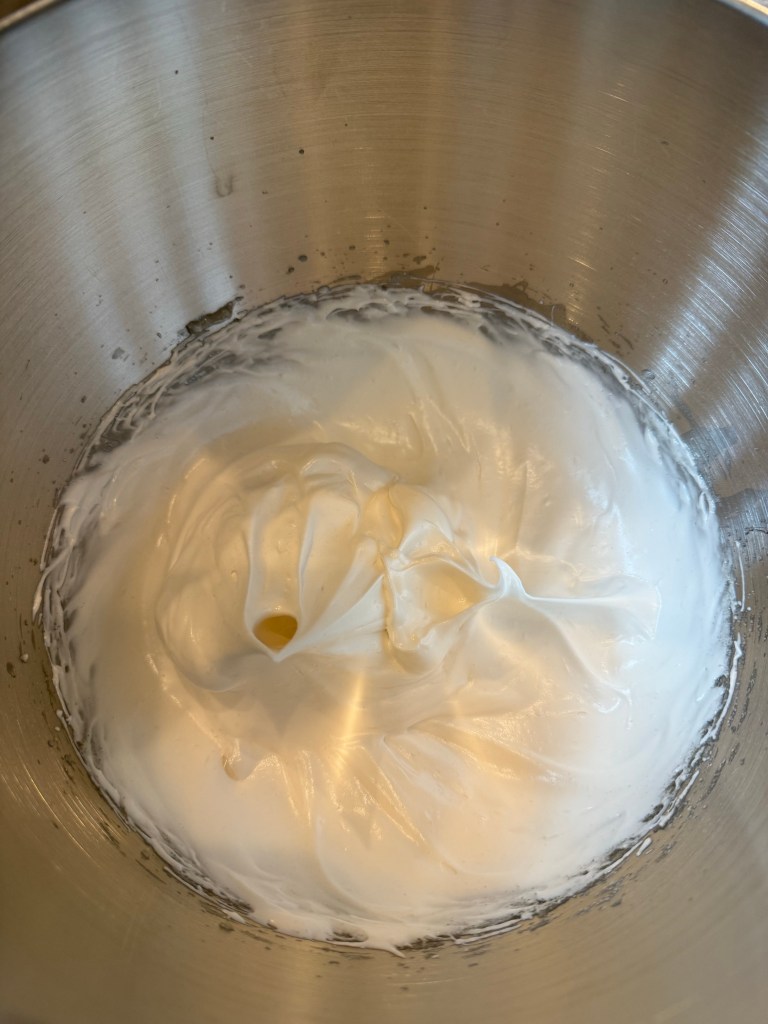
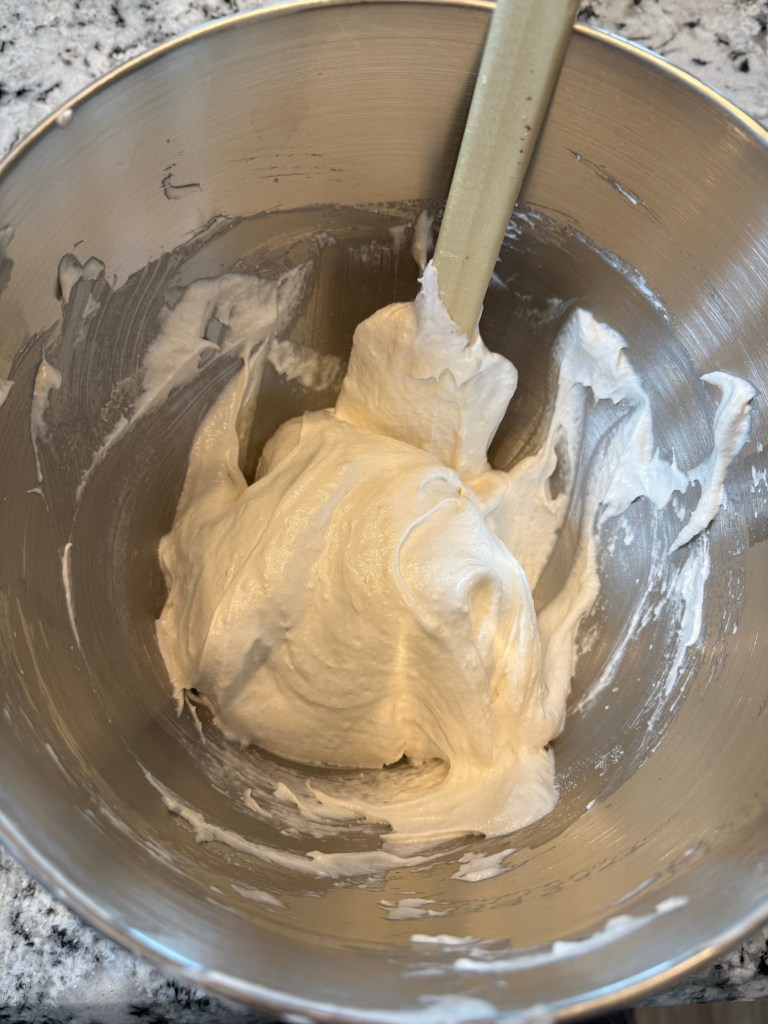
In a separate bowl I whisked the egg whites , salt, and cream of tartar until they were frothy, then turned on the speed on my KitchenAid mixer and slowly poured the granulated sugar in. I continued whipping until the eggs were at stiff peaks.

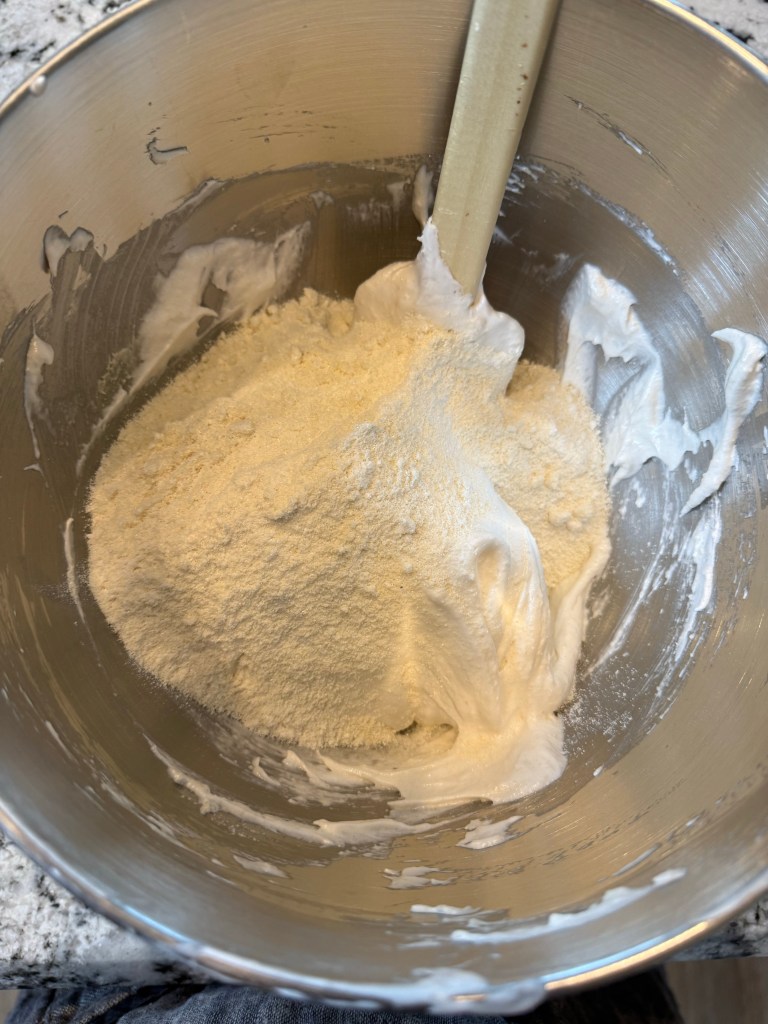
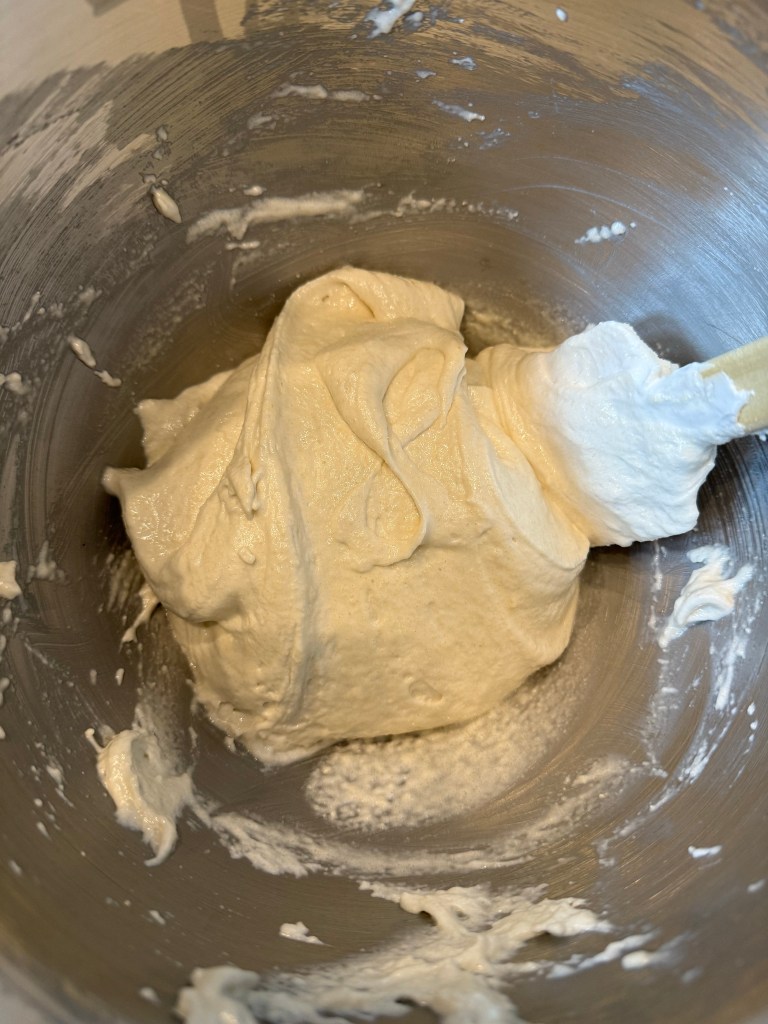
I gently folded the almond flour mixture into the egg whites in two parts, then continued folding until the batter could slowly run off my spatula to form an unbroken figure-8. This is the macaronage, and it is another part of the process that requires patience and attention to detail.

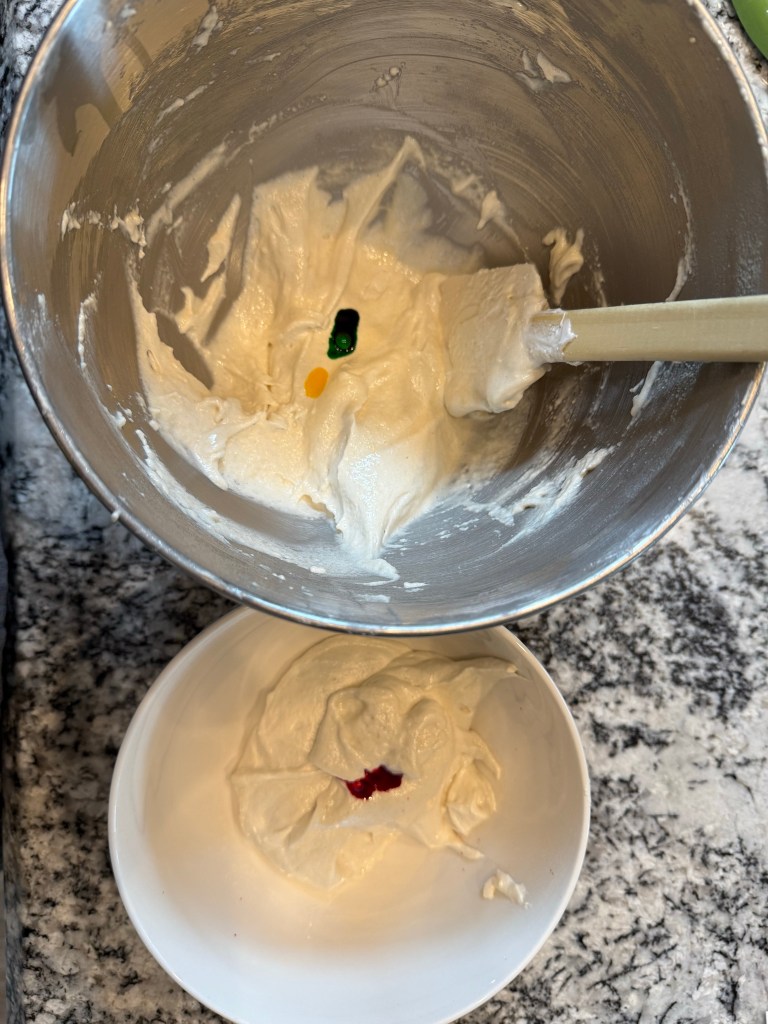
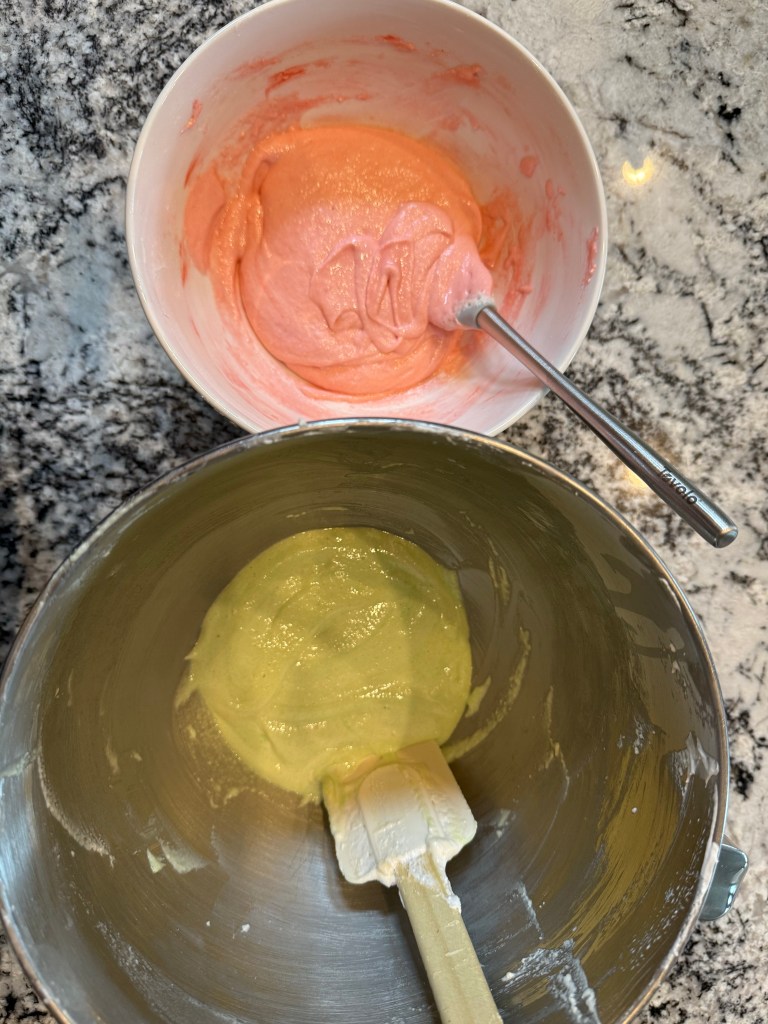
I divided the batter in half and added a few drops of food coloring, then folded the color in until the batter was evenly tinted. I also double-checked the macaronage at this point.

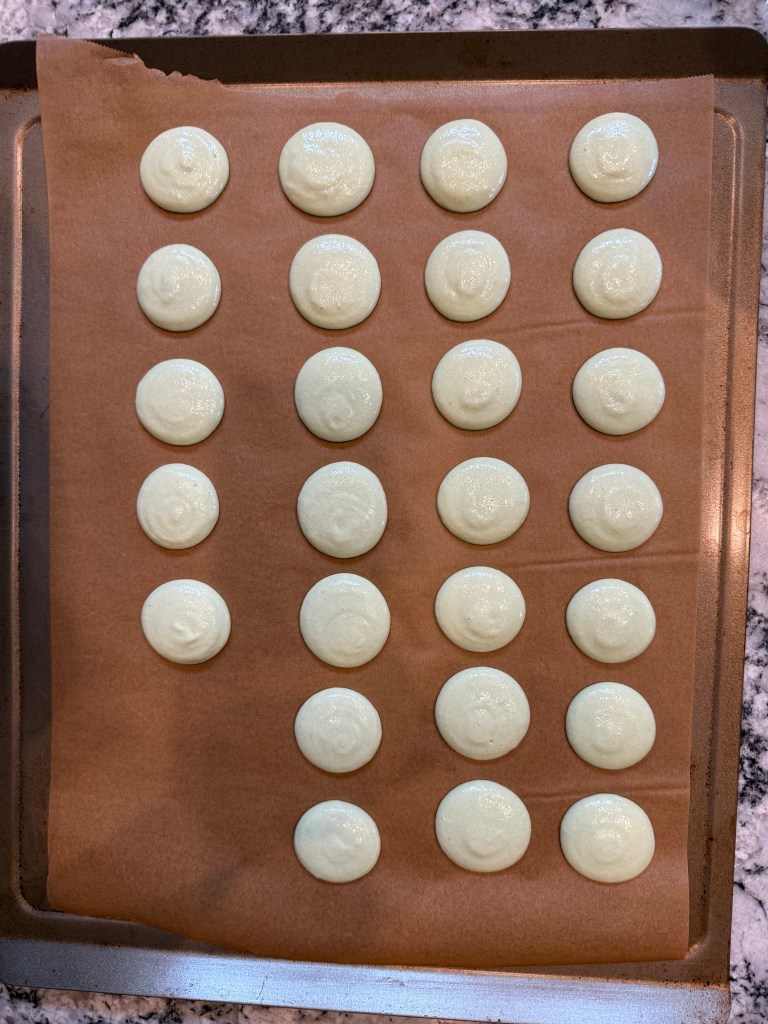
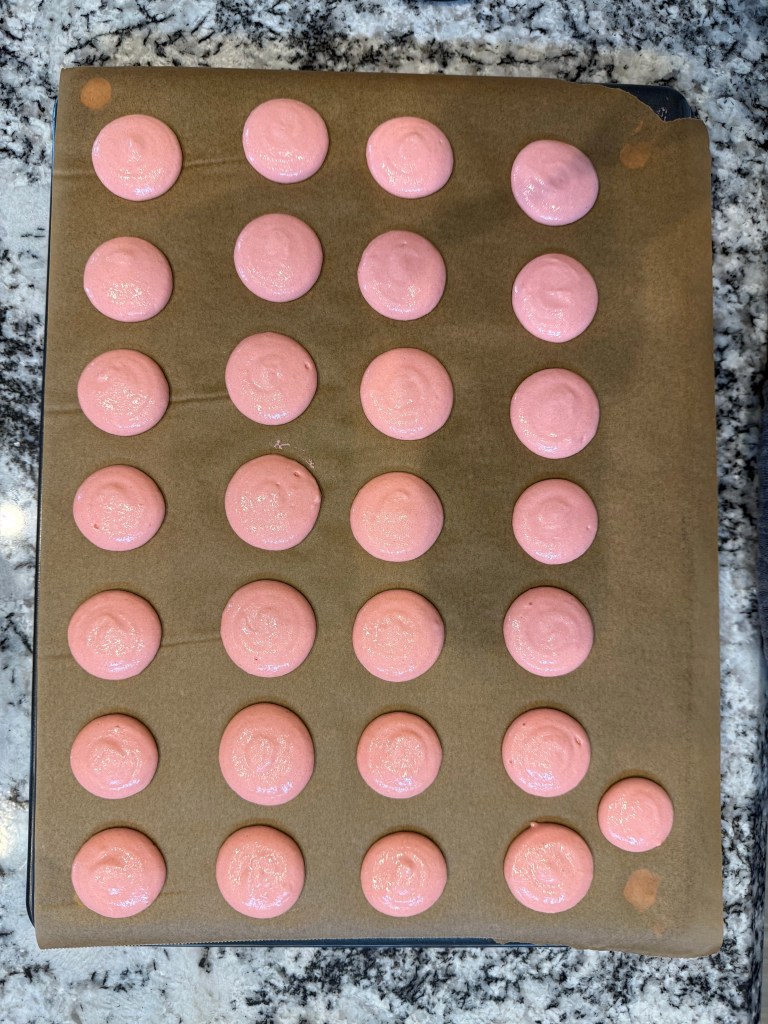
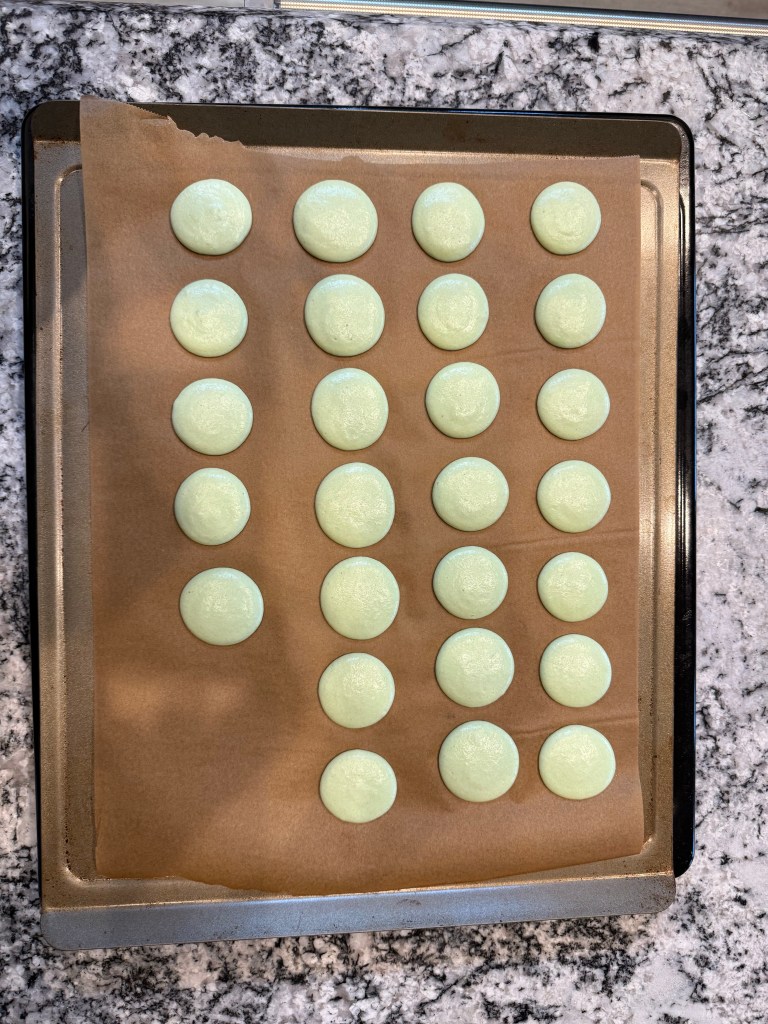
I poured both batters into untipped pastry bags, cut the ends of the bags, and piped the macarons.

Normally I like to wait for a dry day in the Spring or Autumn to make macarons because the air is dryer, which helps the macaron shells dry more quickly and bake dryer. The day I had set aside for baking these macarons turned out to be a rainy day, so the macarons needed to rest for an hour before the top of each cookie was sufficiently dry to be baked.

I baked the macarons for 14 minutes, rotating the baking sheet about 2/3 through each bake.

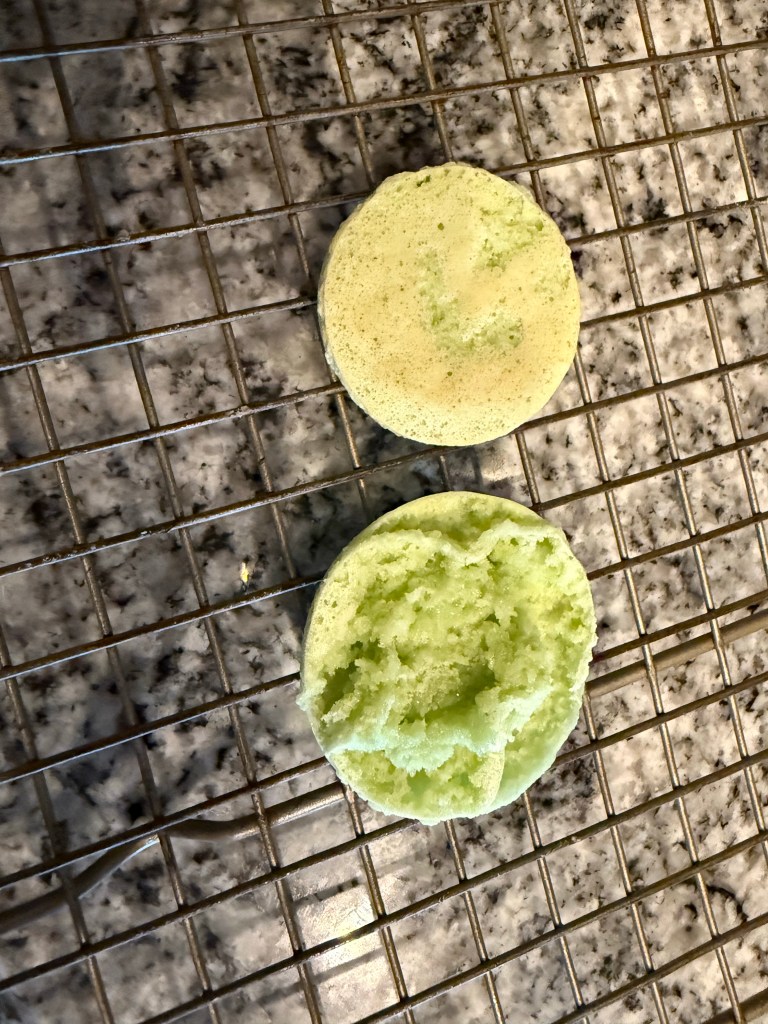
The macarons developed a lovely foot (the crinkly edge on the cookie) and the bake was gentle enough to not add any colour to the shells, but either they were ever so slightly underbaked, or the wet weather made them seem so. Either way, several shells didn’t pass quality assurance and were disposed of as test runs for my fillings. You know, in the name of science.

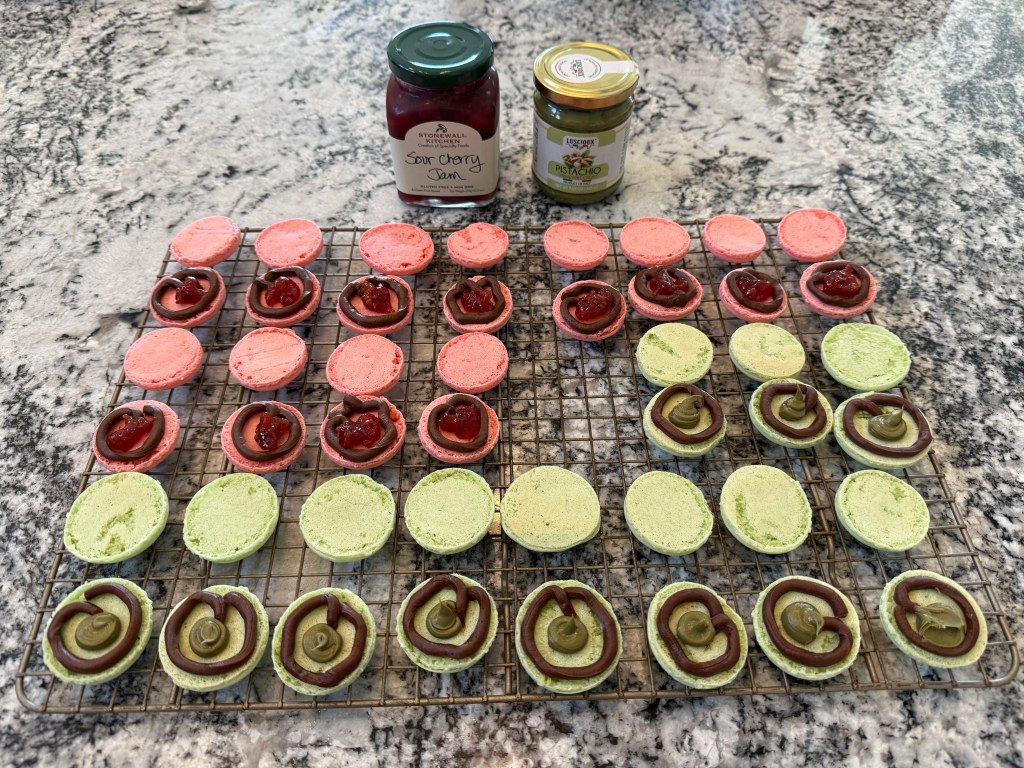
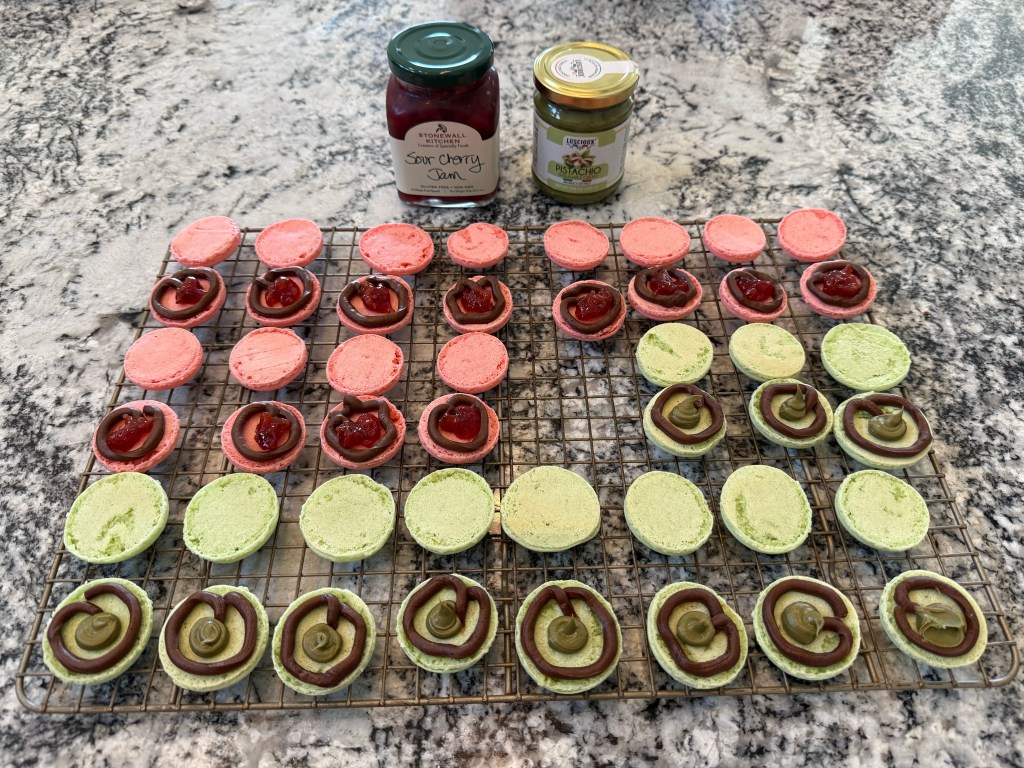
I baked the macaron shells 6 days before my tea party. I put the shells in a container and the container in a plastic bag and froze them until a day or two before the party. On the day of the party I filled them. The green shells got a ring of chocolate buttercream (leftover from decorating my cake) and a dollop of pistachio cream. The pink shells got a ring of chocolate buttercream and a bit of sour cherry jam.

These macarons always turn out so delicious. I’m so glad I included them in my tea party menu. I wish I had included a little more pistachio cream in the green macarons since the chocolate buttercream was much stronger in flavor than the pistachio. The tartness of the chocolate-cherry macarons was delightful, especially against the backdrop of chocolate cake.

Until the next time: may your yeast always rise and your flour never run out.
Currant Scones with Clotted Cream

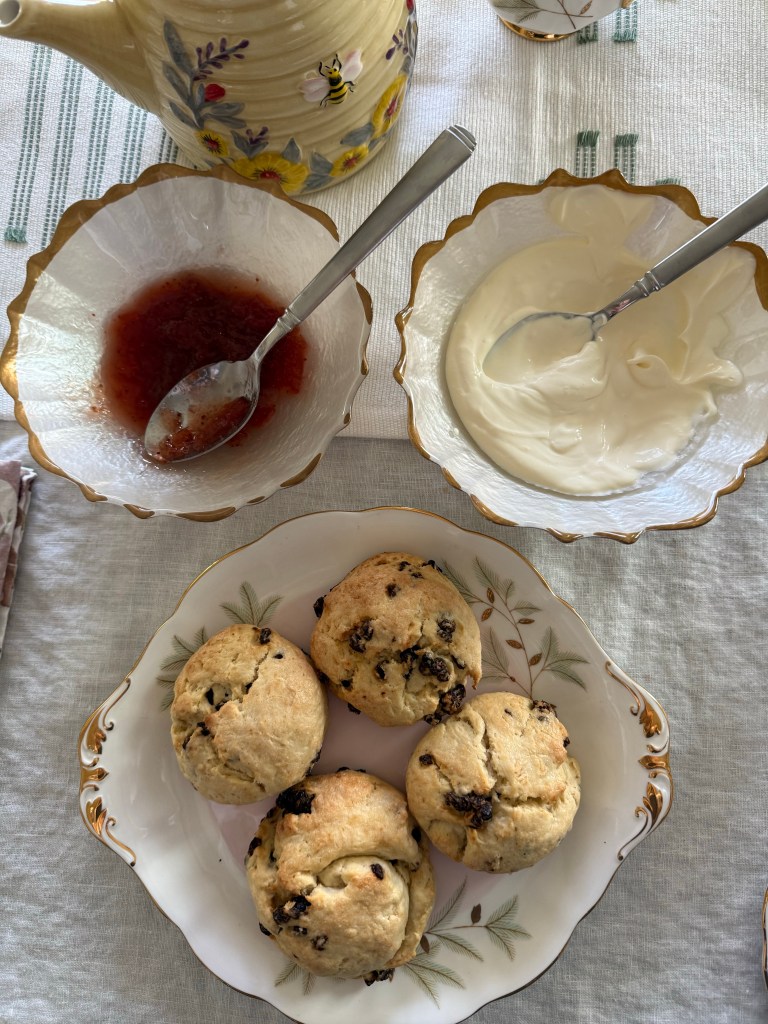
One cannot host a tea party without serving scones, and currant scones are such a classic. Scones are especially delightful because of how quick they are to make.

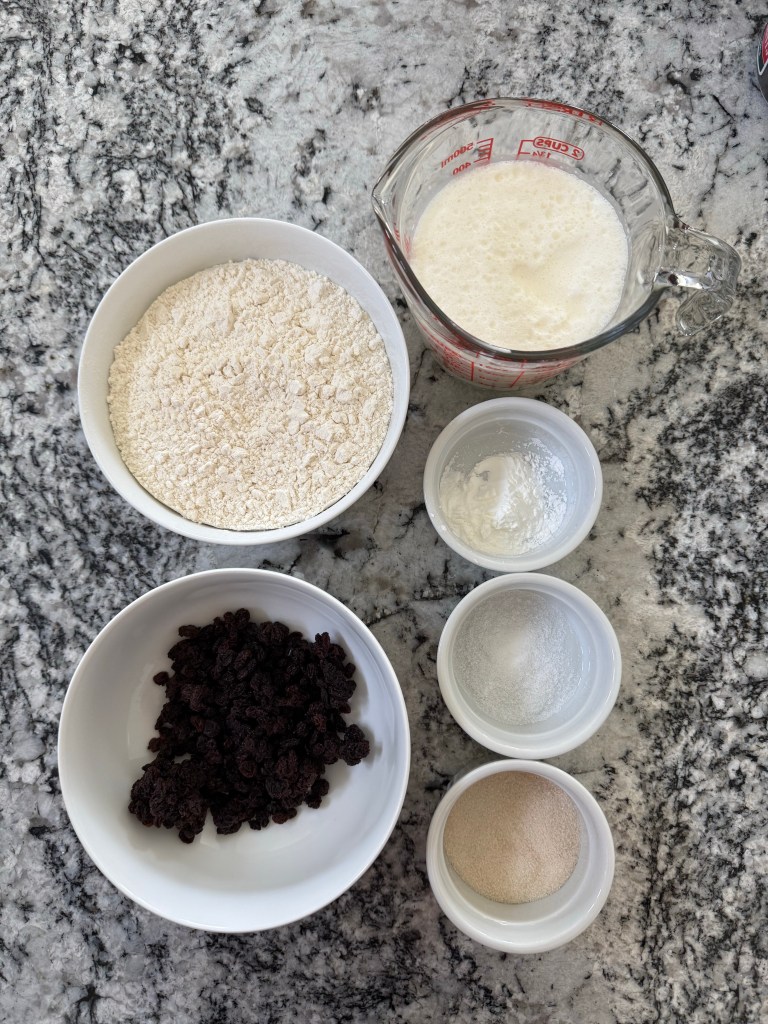
I gathered the mise en place:

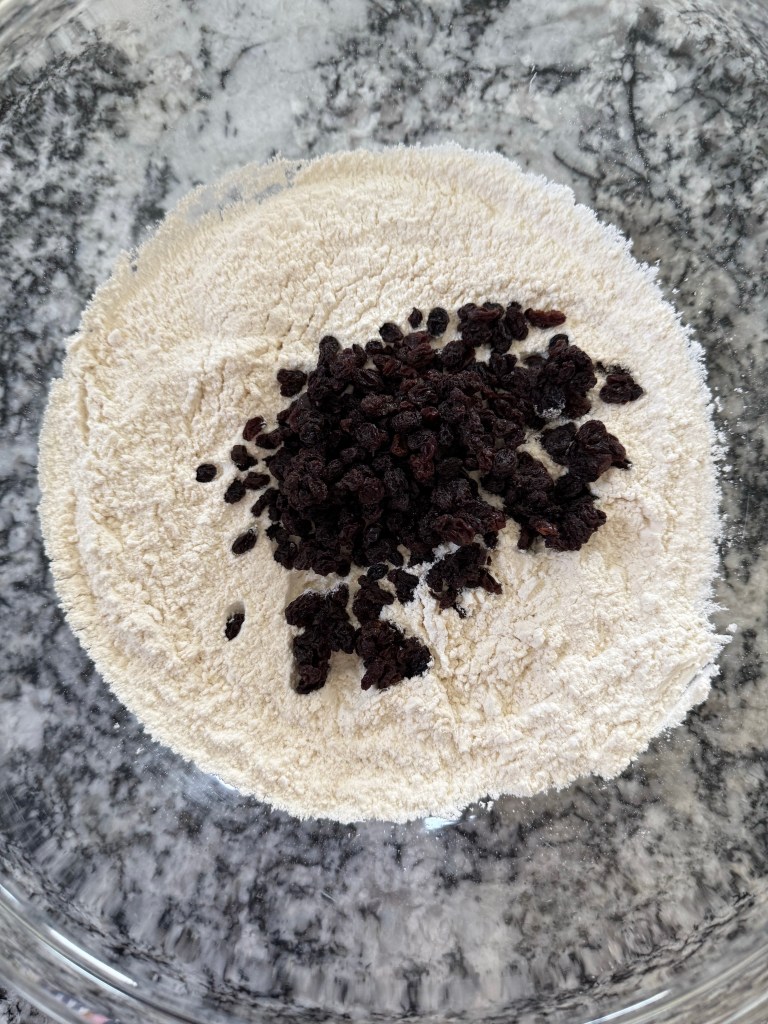
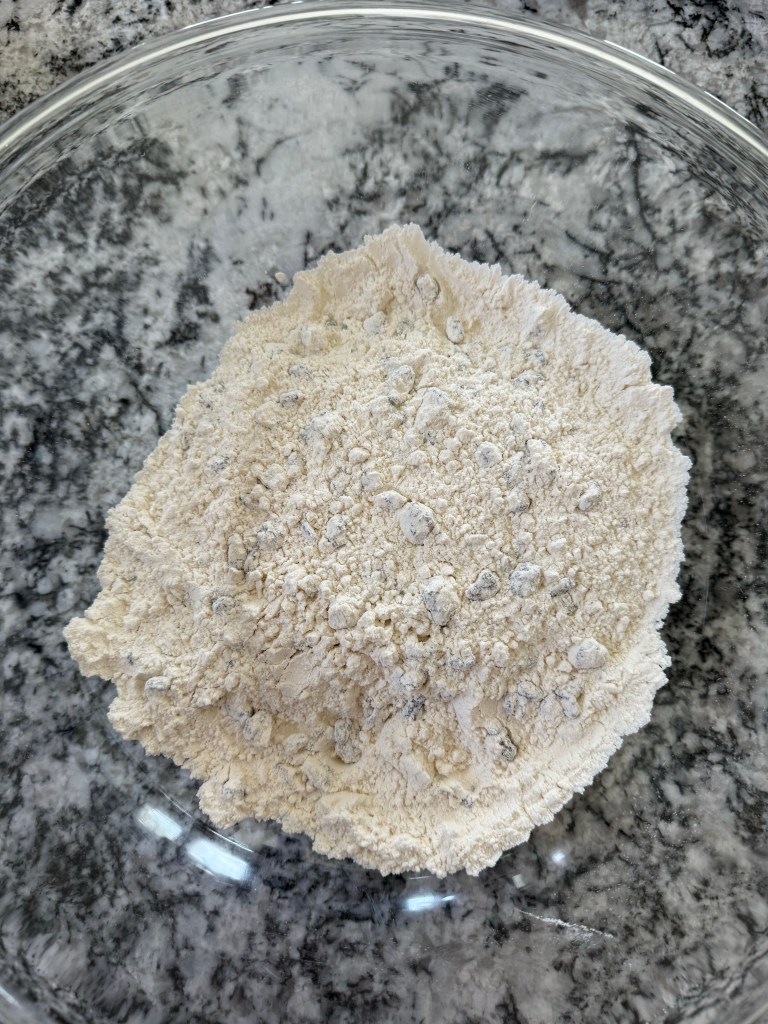
First, I combined the dry ingredients.

I added in the currants and made sure any clumps of fruit were broken up.

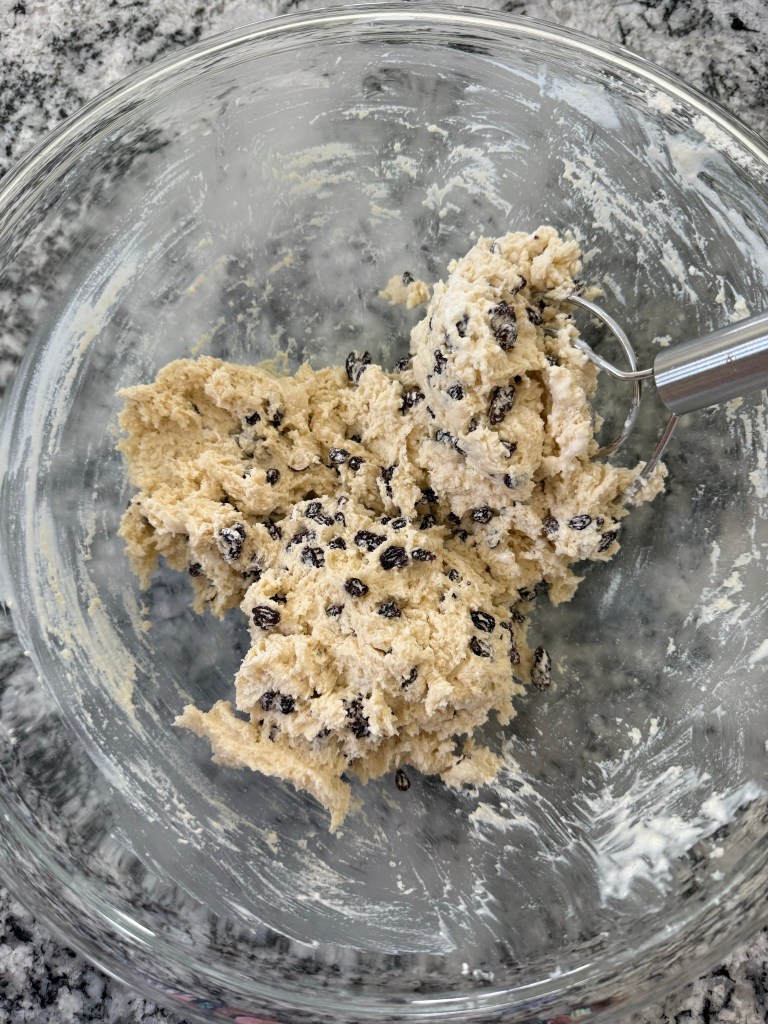
Lastly, I added the cream and stirred until the flour was all incorporated and I had a shaggy dough.

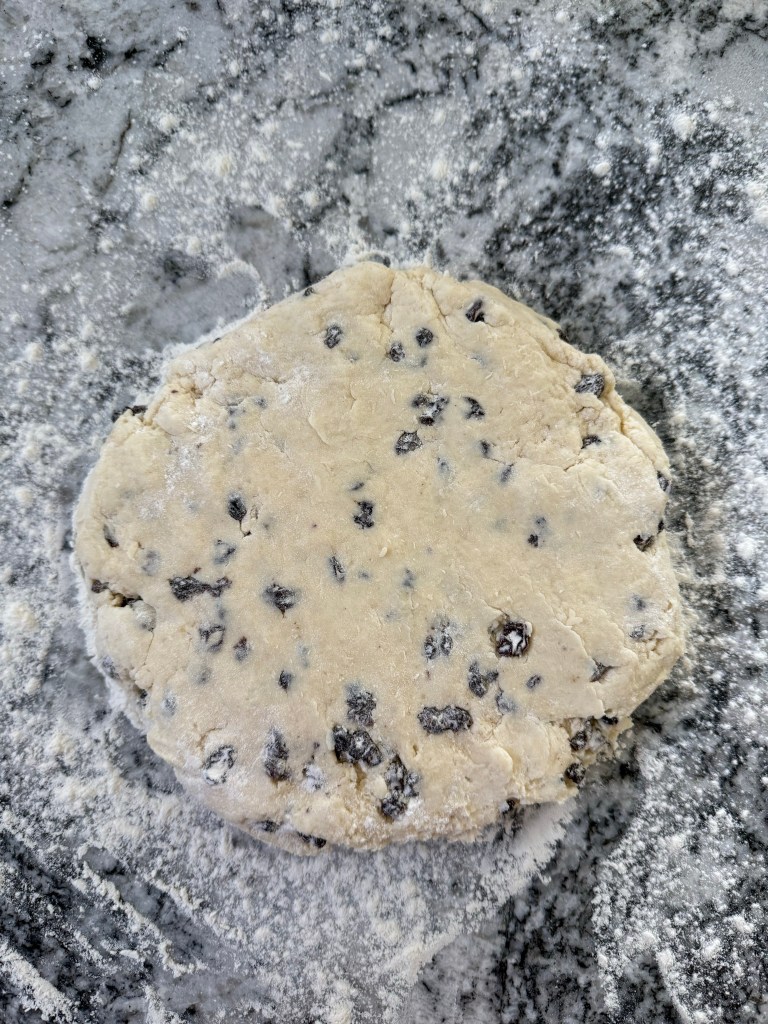
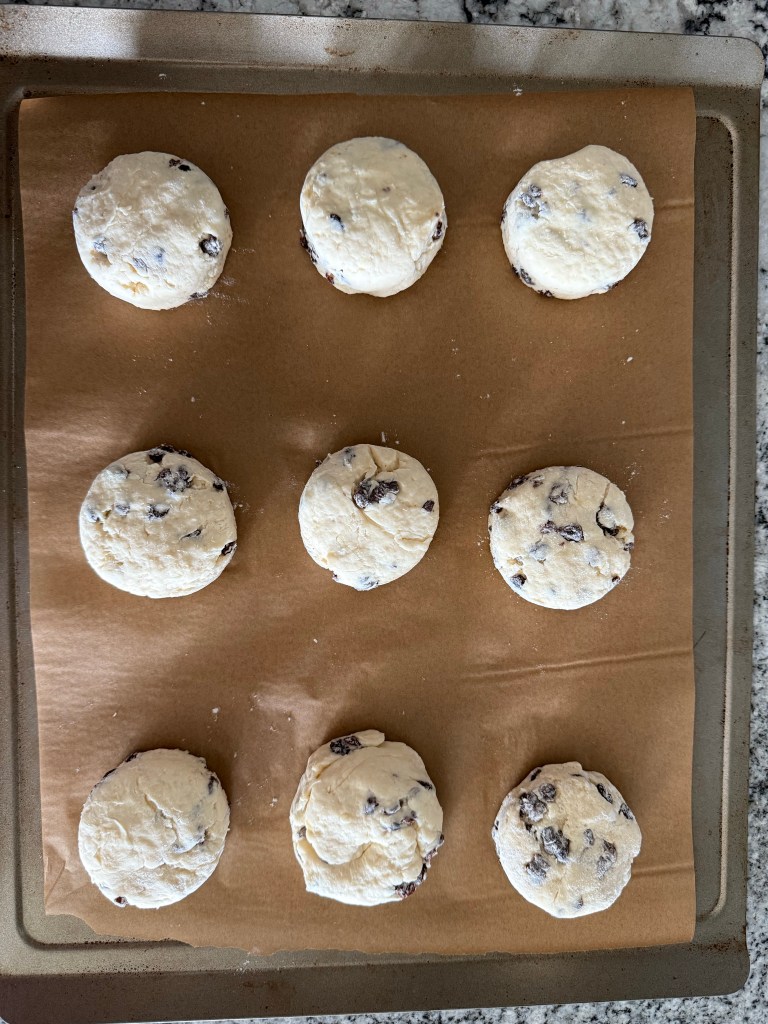
At this point I departed from the recipe. Instead of shaping the dough into one large round and cutting it into 8 wedges, I cut out 9 rounds.

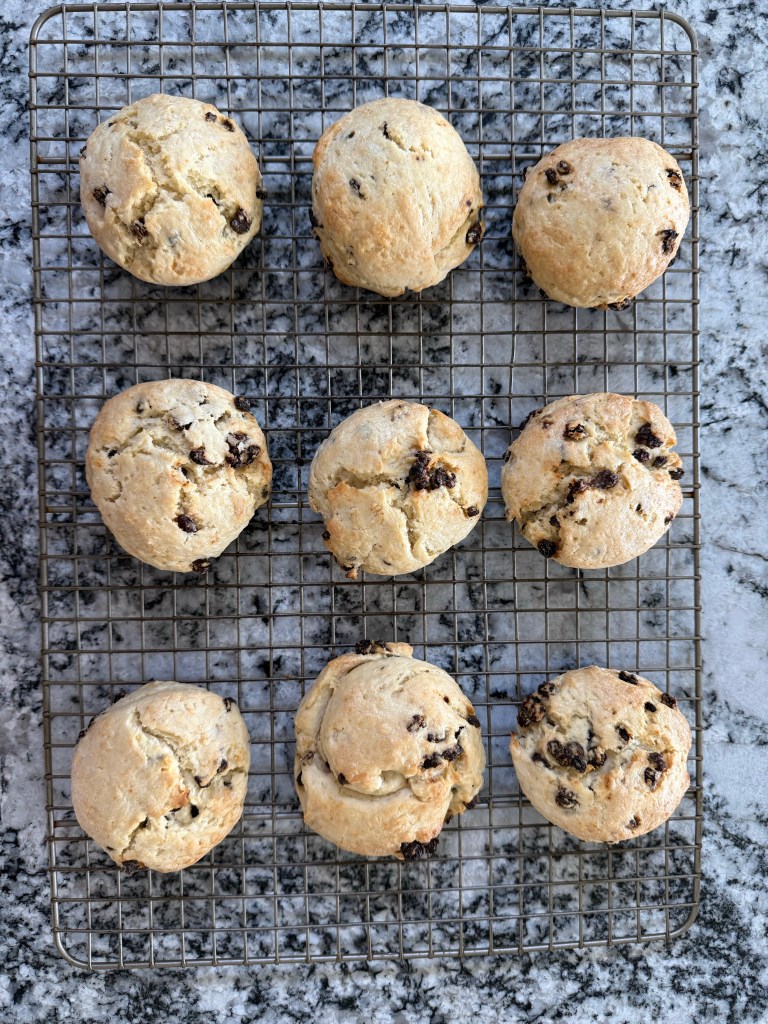
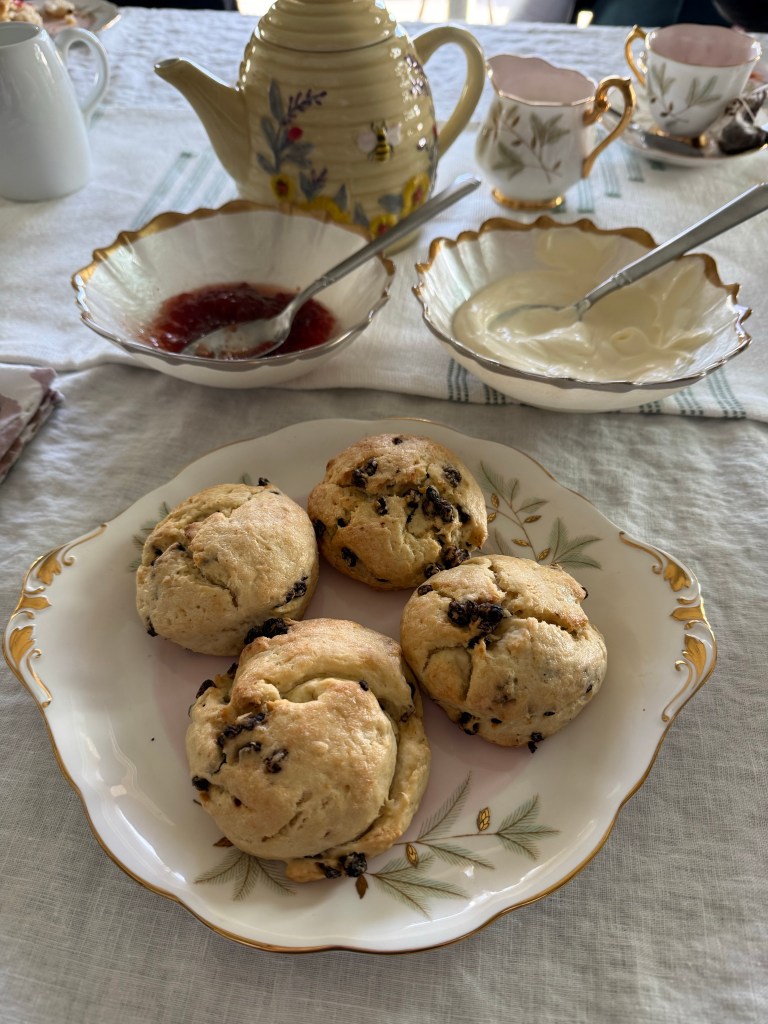
I brushed the tops of the scones with heavy cream, and baked them until the tops were beginning to become golden. This took 26 minutes for me, instead of the recommended 15-20 minutes.

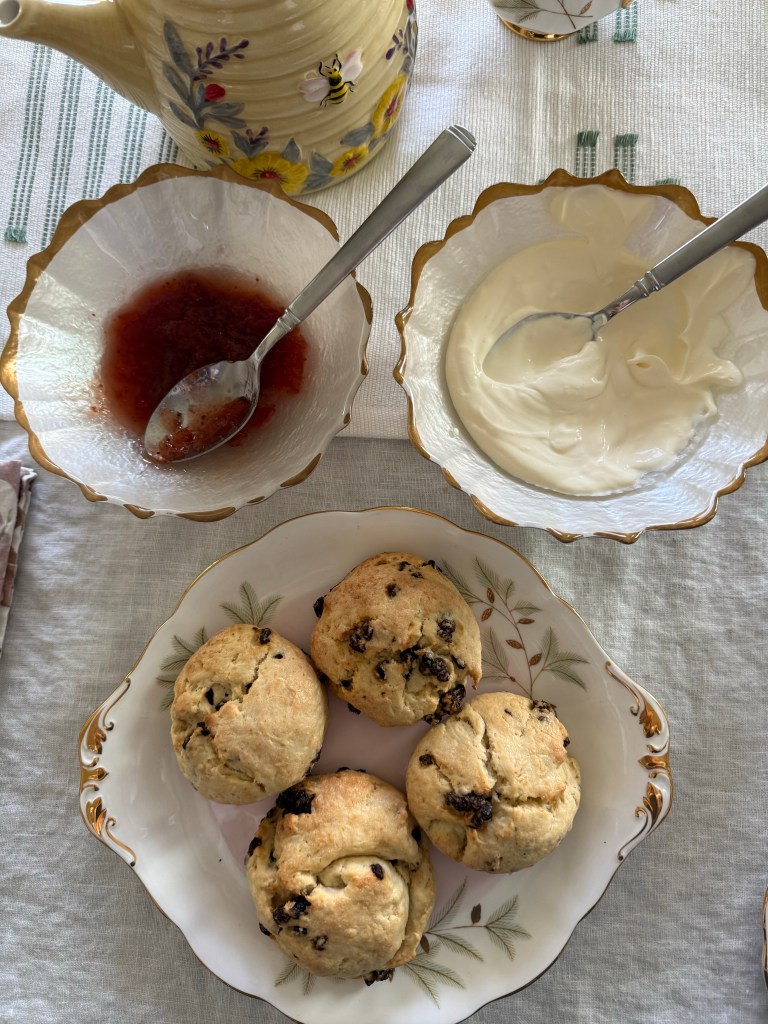
Scones are traditionally served with clotted cream and jam. Clotted cream is rather difficult to find, so I decided to make my own. The making of clotted cream does take a good 24 hours, so I started this a few days before I baked the scones.

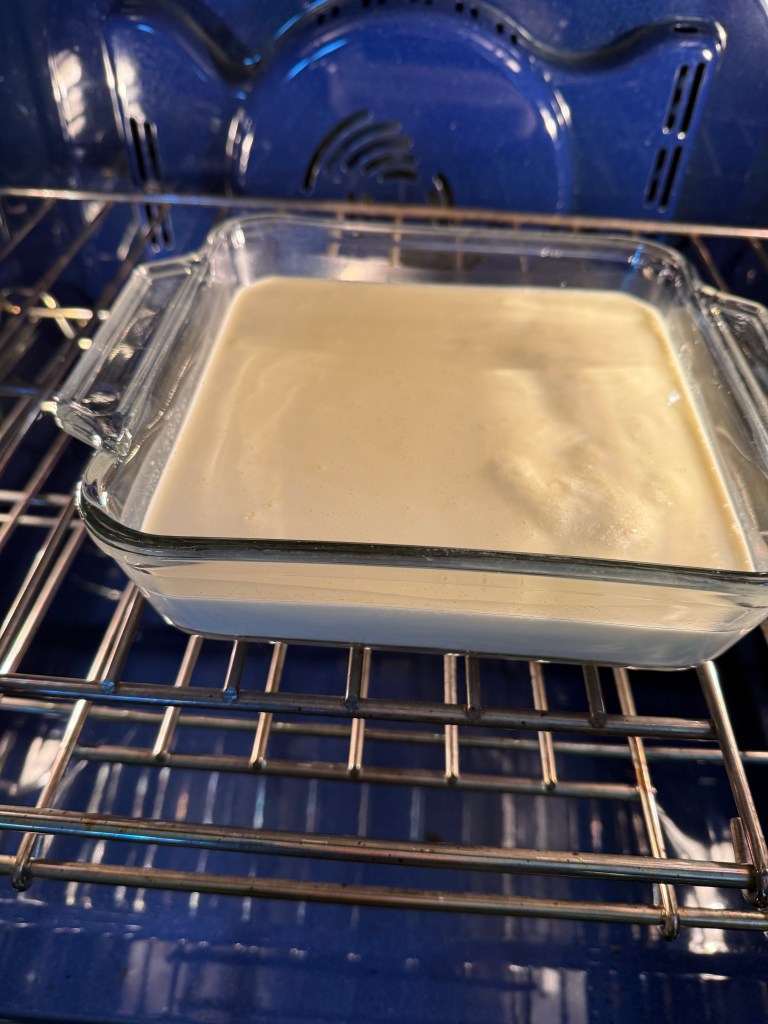
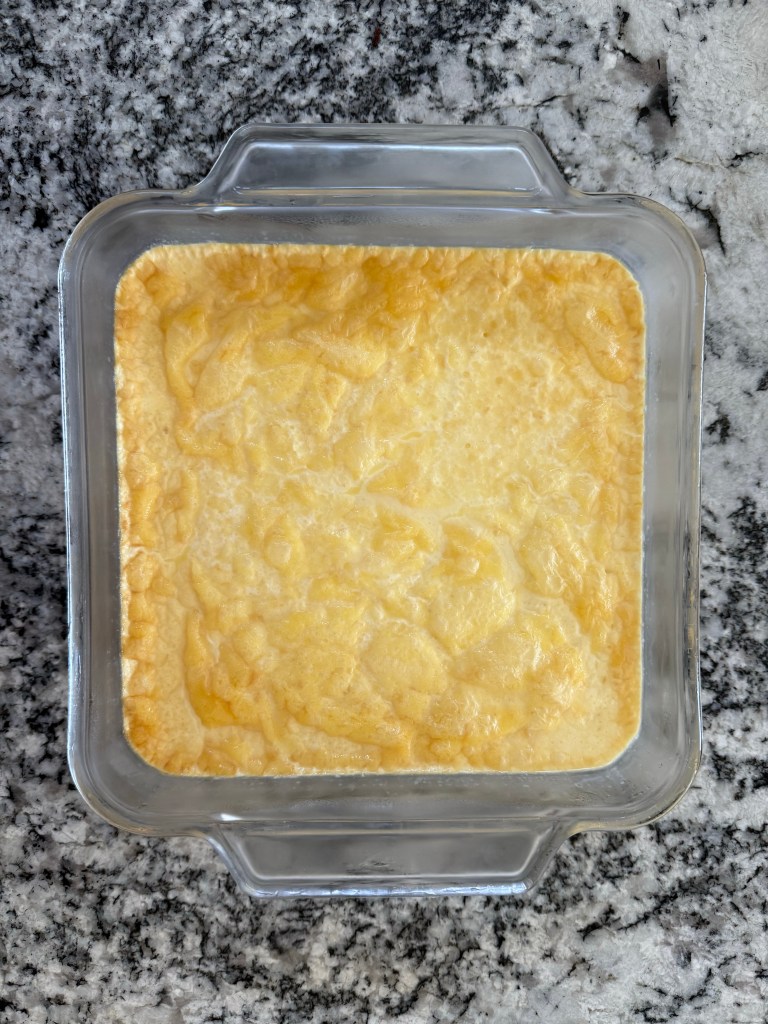
I used this recipe. I was able to find pasteurized (but not ultra-pasteurized) heavy cream at my grocery store as recommended in the recipe. I poured the whole quart of cream into a baking dish, and baked it at the lowest temperature my oven would allow. I set the oven to 180 degrees Fahrenheit, but it was closer to 225 degrees Fahrenheit for most of the bake. After 9 hours the top of the cream was golden brown, and you could see a separation of the cream from the whey.

I allowed the cream to cool overnight, then poured off the whey. The golden bits on the top were rather crunchy, and that wasn’t the texture I was going for, so I strained the remaining cream through a sieve before serving.

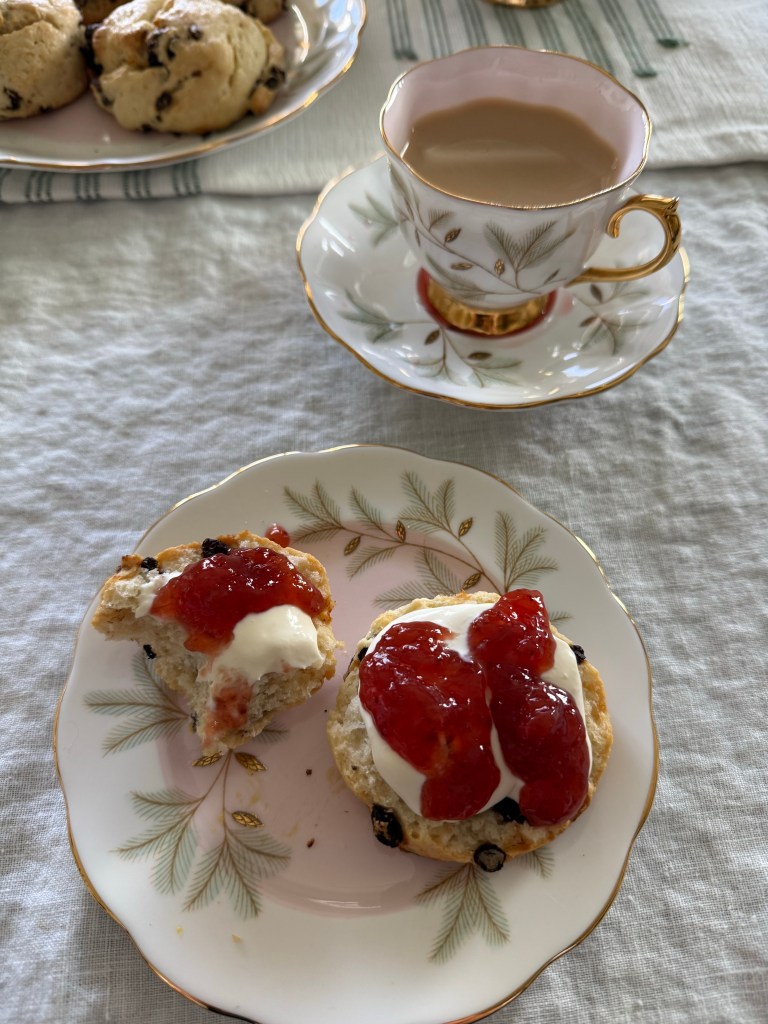
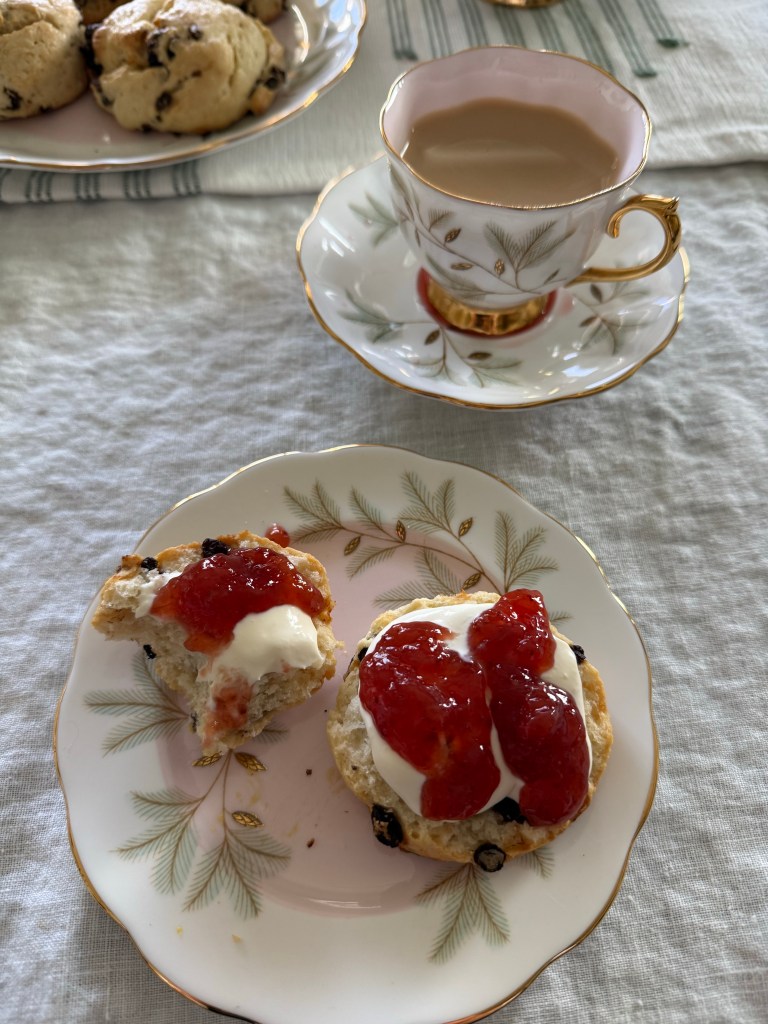
The scones were lovely, and the combination of scones, cream, and jam was so wonderful. My neighbor, who is from Scotland, said these are the best scones he’s had in a very long time (he also approved the clotted cream).

Until the next time: may your yeast always rise and your flour never run out.
Baking my Birthday Tea Party

My birthday was at the end of October, and I celebrated by hosting a tea party. I wanted a 3-course afternoon tea, and I wanted to bake everything I served. I consulted a tea magazine my husband had bought me, and used the King Arthur Baking School book, The Bread Baker’s Apprentice, and online resources for the recipes and planning.
Here is the menu I came up with:

Tea sandwiches:

  • Apple, cheddar, and chutney on whole wheat bread. This was my favourite of the three sandwiches. Sweet and sour and umami all in the same bite. Major Grey’s Chutney is a revelation!
  • Cucumber sandwiches on Portuguese bread. Classic. The key is to dry the cucumber slices. Delicious.
  • Egg salad sandwiches on Pumpernickel bread. I had high hopes for this sandwich, but the dark rye and cocoa were a bit too strong in flavor for the egg salad.

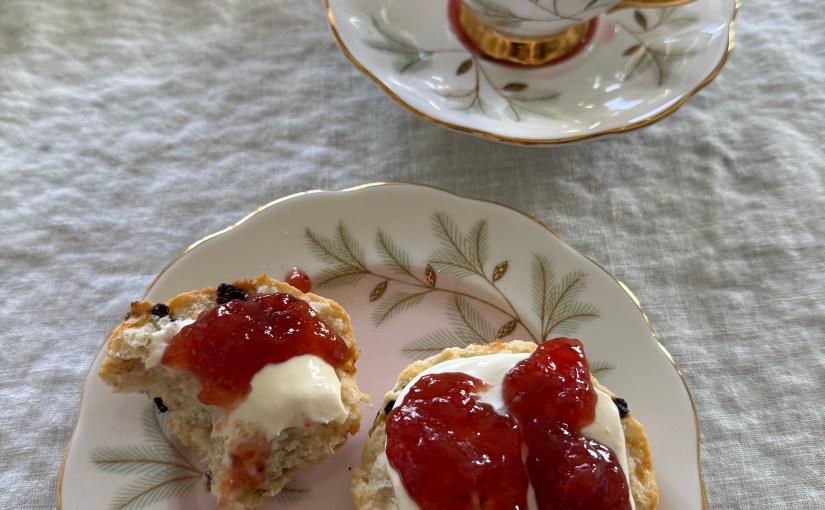
Scones: I went with a classic – currant cream scones from the Baking School cookbook. They turned out delicious, though I did have to bake them 6 minutes longer than instructed. I served the scones with strawberry jam and homemade clotted cream. The clotted cream was delightful, and much less expensive to make than to buy (though more time-consuming).

Sweets:

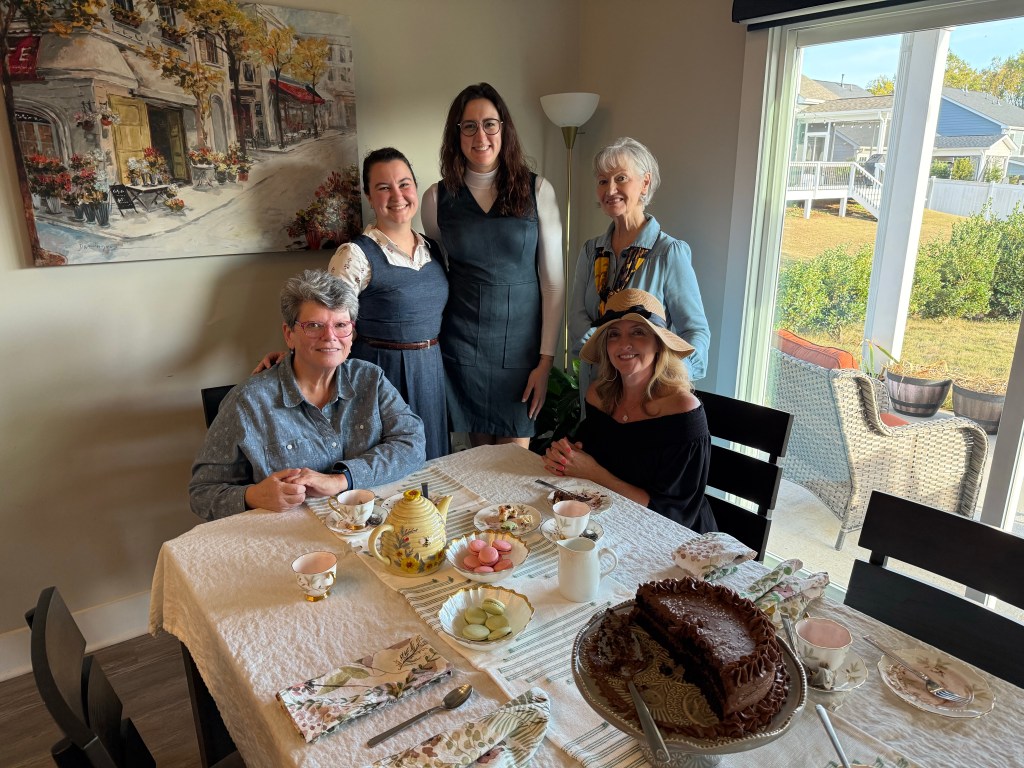
I started baking my breads 2 weeks before the party. The remaining bread and the macaron shells were baked a week ahead. The cake was made the day before the party. The macarons were filled, sandwiches assembled, and scones were baked on the day of the party. I was finishing up preparations as my guests arrived, and I found that stressful, but once they were all here I had the best time having tea with my friends.

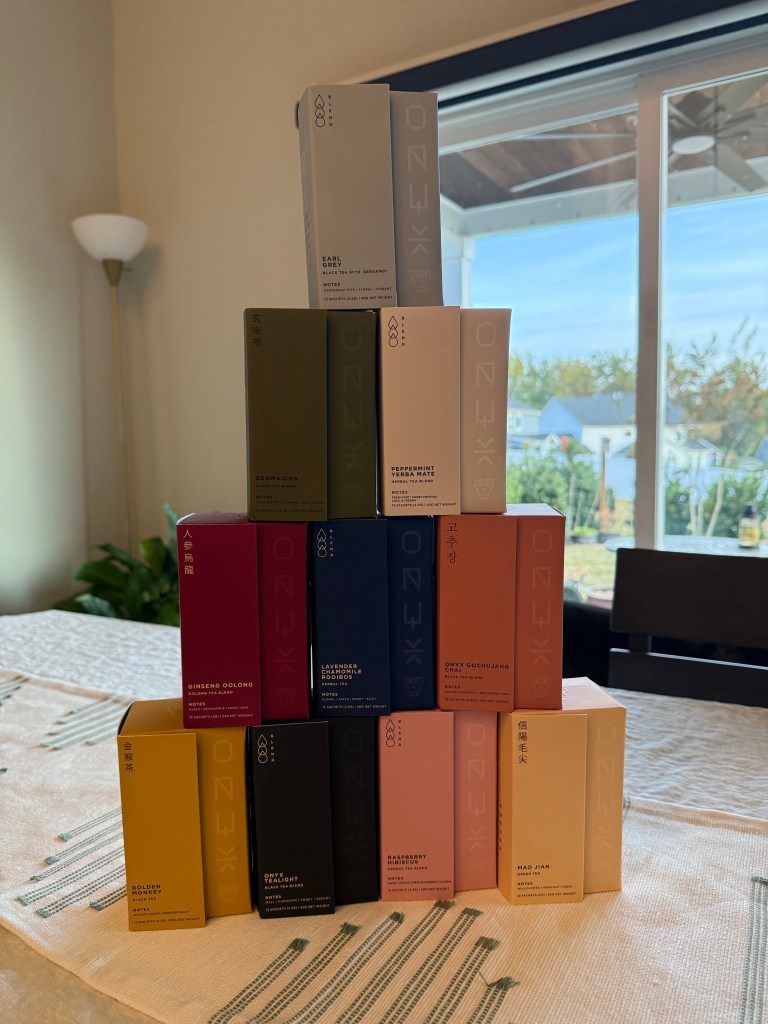
My husband is the most thoughtful person. He bought me a whole selection of nice teas so we could all choose whichever teas we wanted to have with each course. I had the Raspberry Hibiscus tea with the sandwiches, the Earl Grey with the scone, and Golden Monkey with the sweets.

Planning and executing this tea party was a big task, and I can see how my baking skills and confidence are improving. I’ve wanted to do tea parties in the past, but I never knew where to start or how to make it all happen. I’m so pleased with how this all came together and proud of myself.

Until the next time: may your yeast always rise and your flour never run out.